
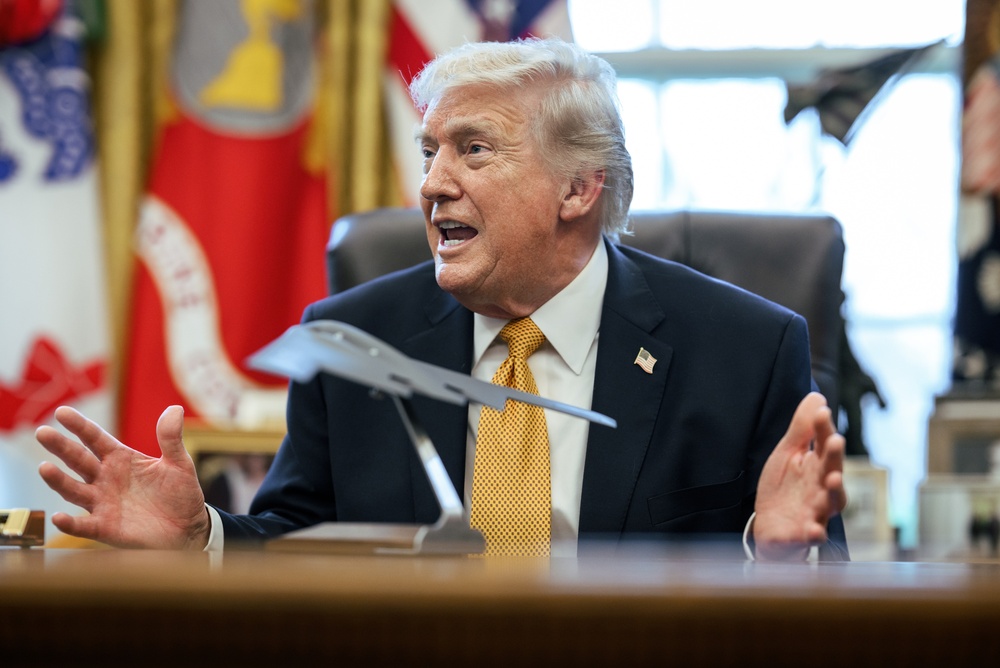
President Donald Trump has taken aim at California Governor Gavin Newsom over his controversial plan to commute the death sentences of 548 prisoners, bringing victims’ families to the Department of Justice to challenge the decision. The president accused the Democratic governor of taking away a form of justice that relatives had spent decades fighting to secure.
The confrontation also provided the backdrop for a major announcement on federal executions. Trump signed a directive instructing prosecutors to pursue the death penalty in certain murder cases involving children, rape and human trafficking, while calling for federal executions to be expedited. The competing approaches have reopened one of America’s most divisive criminal justice debates.
Trump Uses Justice Department Appearance To Attack Newsom
Trump delivered his remarks at the Department of Justice in Washington, DC, on November 23, 2026. Attorney General Todd Blanche joined him, alongside relatives of people who had been murdered by prisoners currently on California’s death row. The event focused on Newsom’s November 5 announcement that he intended to commute all 548 death sentences in the state to life imprisonment without the possibility of parole.
The president described the proposed commutations as an extraordinary injustice and accused Newsom of disregarding the experiences of victims’ families. Trump argued that relatives had spent years waiting for the sentences imposed by juries to be carried out, only to discover that the governor intended to replace them with life sentences.
“We’re here today to talk about one of the most shocking acts of injustice our country has ever seen,” Trump said at the department. He subsequently described the prisoners as “548 of the most evil monsters on the face of the Earth” and accused Newsom of standing with convicted murderers rather than the families affected by their crimes.
Trump also suggested that the governor had removed the possibility of closure for relatives who believed execution was the punishment their loved ones’ killers deserved. “Newsom, a terrible governor in so many other ways, came along and stole away the only closure those families might ever have,” the president said. His remarks placed the governor’s clemency decision at the centre of a wider political confrontation between the two men.
Trump Signs Directive Targeting Federal Death Penalty Cases

While much of the event focused on California, Trump also announced a separate federal policy initiative. He signed a presidential directive instructing the Justice Department to seek capital punishment for people convicted of murdering children and for rapists and human traffickers who kill their victims. The directive also calls on the attorney general to accelerate the execution process for prisoners on federal death row.
“Once juries have spoken, capital punishment will be swift and certain,” Trump said while describing the administration’s approach. He presented the policy as part of an effort to strengthen punishment for some of the most serious crimes prosecuted under federal law.
The president also called on Congress to approve the Just Punishment for Murder Act, introduced by Republican Representative Brandon Gill of Texas. Trump said the legislation would place elements of his directive into federal law and expand the circumstances in which prosecutors could pursue death sentences, including certain murders involving defendants who are in the country illegally.
The proposed legislation would require congressional action before becoming law. Trump’s directive, meanwhile, concerns federal prosecutions and does not automatically change sentences imposed under California state law. The distinction is particularly important because the 548 prisoners at the centre of the Newsom dispute were sentenced through California’s criminal justice system.
Newsom Says All 548 Prisoners Will Remain Behind Bars
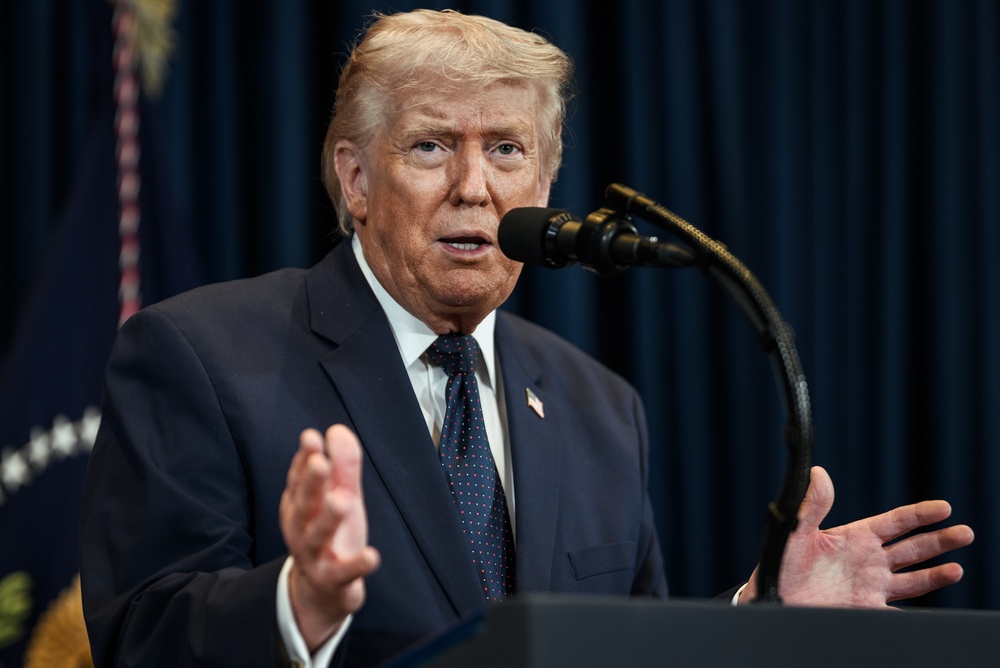
Newsom announced his proposed clemency action on November 5, explaining that he intended to replace every death sentence in California with life imprisonment without the possibility of parole. His decision followed years of opposition to capital punishment and continued a policy he introduced shortly after becoming governor in 2019.
In March of that year, Newsom imposed a moratorium on executions, preventing California from carrying out death sentences during his administration. The state had already gone years without an execution, with its last one taking place in January 2006. However, the prisoners remained under death sentences, and their cases continued through the lengthy appeals process.
In his open letter to Californians, Newsom explained why he believed the state should abandon executions. “I take this action because I firmly believe that state-sanctioned killing is incompatible with California’s values, undermines the foundations of our legal system, and diminishes each of us,” he wrote.
The governor acknowledged that many Californians believe people responsible for particularly brutal crimes deserve to die. However, he argued that an imperfect legal system creates the possibility of irreversible mistakes and that the government should not carry out executions.
Newsom also addressed concerns that his decision could allow dangerous prisoners to return to society. Under his proposal, every affected inmate would remain incarcerated for life without eligibility for parole. His administration has stressed that the action would change the punishment attached to their convictions, not erase the convictions themselves or release anyone from prison.
Victims’ Families Challenge The Governor’s Decision

Several relatives of murder victims appeared at the Justice Department to describe the consequences of the crimes and explain their opposition to Newsom’s plan. Their accounts included cases involving murdered children, multiple family members and law enforcement officers killed while responding to dangerous situations.
Marc Klaas, father of Polly Klaas, was among the speakers. Twelve-year-old Polly was kidnapped during a sleepover at her Petaluma home in 1993 and later murdered. Richard Allen Davis was convicted of the crime and sentenced to death, leaving the Klaas family believing that the sentence would eventually be carried out.
Klaas described the decades his family had spent seeking justice and explained why the proposed commutation had affected them. “While nothing can bring Polly back, her life mattered,” he said. “The pain inflicted on our family was real, and the pursuit of justice should not become a political exercise.”
Another speaker was Sandy Friend, whose eight-year-old son Michael Lyons was abducted, tortured and murdered in 1996 while walking home from school in Yuba City. Robert Boyd Rhoades was convicted of killing the child, and Friend recalled the personality and interests that made Michael such an important part of her family’s life.
She remembered his love of fishing, Ninja Turtles and campfire stories, along with his habit of bringing her flowers. Friend directed an emotional appeal towards the governor during the event, saying, “Governor Newsom, we deserve to be heard.” Her remarks reflected the concerns of relatives who believe the clemency process has not adequately considered their experiences.
Placer County Sheriff’s Lieutenant Jason Davis also spoke about his brother, Detective Michael Davis, who was killed during a 2014 crime spree that also claimed the life of Sacramento County Sheriff’s Deputy Danny Oliver. He explained that he had forgiven the man responsible for his brother’s death but continued to believe that serious crimes must carry consequences.
“But forgiveness does not eliminate accountability or erase consequences,” Davis said. His comments illustrated how relatives can distinguish between personal forgiveness and their expectations of the criminal justice system.
Newsom Responds Directly To The Families And Trump

Newsom responded to the Justice Department appearance through a video posted on X. He acknowledged the pain experienced by the relatives who attended the event but defended his decision by emphasizing that none of the prisoners would be released.
“To the families standing with him today, your grief is real,” Newsom said. “That’s why every person, every person on California’s former death row will die in prison. No one walks out.” The governor’s response sought to separate the question of execution from the question of whether convicted murderers should remain incarcerated.
He also accused Trump of hypocrisy over the use of presidential clemency powers. Newsom argued that the president had used pardons to benefit political allies and wealthy associates while criticizing California for exercising its own constitutional authority.
In his public statements, the governor called for changes to federal pardon practices and accused Trump of turning the power of mercy into a political and financial arrangement. He maintained that the president’s criticism overlooked the consequences of his own clemency decisions.
Newsom had also released statements from families who supported his position ahead of Trump’s appearance. Among them was Jess Nichol, the sister of murder victim Polly Klaas, who argued that victims deserve practical assistance and support rather than relying exclusively on executions as a form of justice.
“When victims are this divided, the death penalty shouldn’t be the answer,” Nichol said in a statement released by the governor’s office. She called for counselling, medical care and financial assistance for survivors, arguing that these forms of support could help families deal with the consequences of violent crime.
The competing statements demonstrated that victims’ relatives do not hold a single position on capital punishment. Some want executions to proceed, while others believe the justice system should focus on supporting survivors and preventing further harm.
California’s Legal Process Could Delay The Commutations
Despite Newsom’s announcement, the proposed commutations have not all taken effect. California’s constitutional procedures require additional steps before the governor can complete the action, particularly for prisoners convicted of multiple felonies.
Of the 548 affected inmates, 382 require a recommendation from the California Supreme Court before their death sentences can be commuted. Newsom’s administration has said it will wait for the court to act before proceeding with those cases.
The proposal has attracted legal opposition from prosecutors and victims’ advocates who argue that the governor’s decision bypassed important procedures. A coalition of relatives and California prosecutors petitioned the state’s highest court, asking the justices to halt the proposed commutations.
The petitioners argued that victims’ families should have received an opportunity to be heard before the governor pursued the sweeping clemency action. Newsom’s administration has defended its approach, arguing that the governor was acting on his own constitutional authority rather than responding to individual applications from prisoners.
The legal dispute therefore concerns both the governor’s clemency powers and the procedural protections available to victims and their relatives. The California Supreme Court invited additional legal briefs through November 24, leaving the proposed action subject to further judicial consideration.
The governor’s office has also maintained that the commutations would not remove the prisoners’ underlying convictions, restitution obligations or eligibility restrictions. Each affected person would continue serving a life sentence without the possibility of parole if the process is completed.
Death Penalty Support Remains A Divisive National Issue

The dispute has brought renewed attention to public attitudes towards capital punishment across the United States. Supporters argue that execution is an appropriate punishment for particularly serious murders, especially cases involving children, multiple victims or people killed while performing public duties.
Opponents point to the possibility of wrongful convictions, unequal application and the financial costs associated with lengthy death penalty cases. They also question whether executions provide meaningful closure for victims’ families, particularly when relatives themselves disagree about the appropriate punishment.
A November Gallup poll cited in reporting on the dispute found that 49% of American adults supported the death penalty. It was the lowest level recorded by the polling organisation since 1971, suggesting that public support has changed considerably over several decades.
The Death Penalty Information Center has also reported that approximately 202 people formerly sentenced to death were later exonerated. Its research has highlighted the risks associated with wrongful convictions and the possibility that innocent people could be executed before new evidence emerges.
The main arguments raised in the current dispute include:
- Victims’ rights: Opponents of Newsom’s plan argue that relatives deserve a meaningful opportunity to be heard before death sentences are changed.
- Wrongful convictions: Death penalty opponents argue that the possibility of executing an innocent person makes capital punishment especially dangerous.
- Life imprisonment: Newsom’s proposal would keep all affected prisoners behind bars without the possibility of parole.
- Government authority: The dispute raises questions about the extent of a governor’s constitutional clemency powers after a jury and court have imposed a death sentence.
- Public opinion: Americans remain divided over whether execution should remain an available punishment for serious crimes.
California has also previously seen voters reject proposals to abolish the death penalty. Measures to end capital punishment were defeated in 2012 and 2016, although the state has not carried out an execution since 2006.
Trump’s Administration Has Already Pursued A Wider Execution Policy
Monday’s announcement follows several actions taken by Trump since returning to office in January 2025. On his first day back in the White House, he directed the Justice Department to prioritize seeking and carrying out lawful death sentences.
The administration subsequently moved to reinstate its previous lethal injection protocol and expand the available methods for federal executions. In April 2025, the Justice Department announced changes intended to make federal executions easier to carry out.
Trump has also previously pushed for the death penalty to become the expected punishment in certain cases involving the murder of law enforcement officers. His administration has supported expanding the circumstances in which federal prosecutors can seek execution, including murder cases involving undocumented immigrants.
During his first presidential term, Trump oversaw 13 federal executions, the highest number under any US president in several decades. The executions took place during his final months in office after a lengthy federal pause on capital punishment.
The administration’s latest directive continues that policy direction. However, federal death penalty cases remain subject to legal proceedings, appeals and constitutional requirements. A presidential directive cannot simply eliminate those safeguards or guarantee that every requested execution will take place.

Trump Adds Law Enforcement Measures During The Announcement
The Justice Department appearance also included announcements about other public safety initiatives. Trump said he was directing the Department of Housing and Urban Development to strengthen screening requirements for public housing tenants and make it easier for authorities to remove residents considered dangerous.
He also announced nearly $150 million in Justice Department grants intended to support public safety programmes and help recruit more than 1,000 additional law enforcement officers. The funding was presented as a way to improve policing resources and speed up responses to reports of domestic violence and sexual assault.
These measures broadened the event beyond the disagreement over California’s death row. Trump used the occasion to promote his administration’s approach to violent crime, law enforcement recruitment and public protection.
The president also briefly discussed areas where he believed his administration could work with Democrats, including reducing prescription drug prices and improving healthcare. However, he drew a clear distinction between those issues and his position on violent crime.
“When it comes to defending the lives and safety of American people, there can be no compromise,” Trump said. He maintained that his administration would continue pursuing its criminal justice priorities despite political opposition.
The Dispute Leaves California’s Death Row In Legal Uncertainty
Trump’s confrontation with Newsom has turned California’s proposed commutations into a national political issue, with both sides using the debate to defend sharply different approaches to criminal punishment. The president wants federal prosecutors to pursue more death penalty cases and accelerate executions, while the California governor wants every existing death sentence replaced with life imprisonment without parole.
For victims’ relatives, the disagreement involves deeply personal questions about justice, accountability and the promises made by the courts. Some believe execution remains essential after the most serious crimes, while others support ending capital punishment and directing greater resources towards survivors.
The immediate decision rests with California’s legal process. The 548 prisoners remain behind bars, and the proposed commutations must still clear the relevant constitutional requirements. Until that happens, Trump’s criticism and Newsom’s defence remain part of a dispute whose final outcome has yet to be determined.