
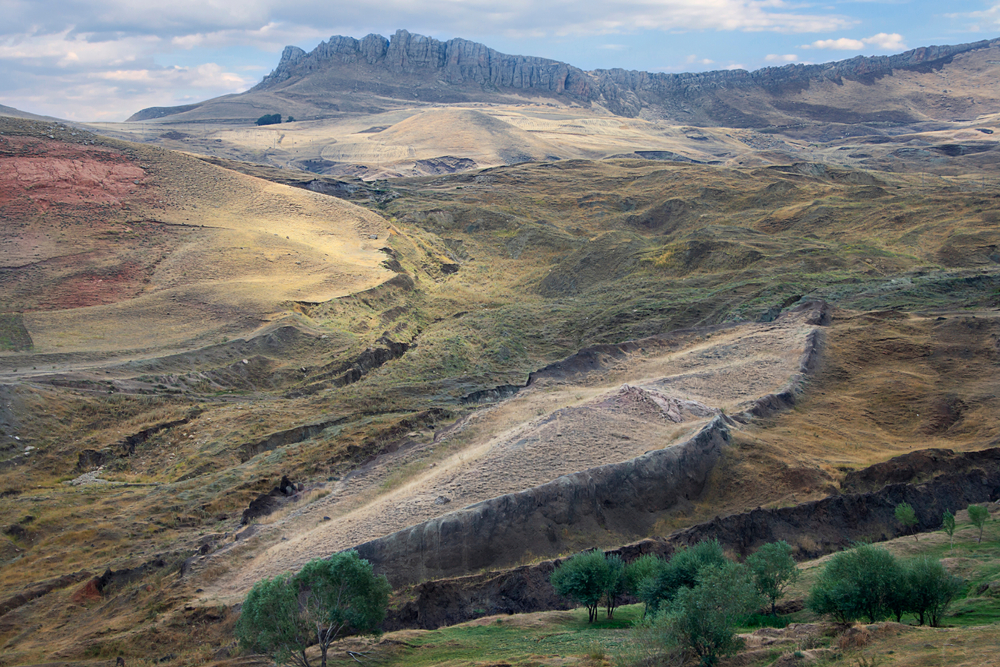
The search for Noah’s Ark has produced plenty of intriguing claims over the years, but a new discovery in eastern Turkey has given researchers another reason to return to a site that has fascinated explorers for decades. A team investigating a mysterious boat-shaped formation says it has recovered pieces of charred wood buried approximately nine metres underground, with radiocarbon results suggesting they could be around 4,300 years old.
The dates have attracted particular attention because they overlap with traditional chronologies associated with the biblical flood. The researchers believe the material deserves further investigation, although they have stopped short of claiming that it definitively came from the Ark. That distinction is important, especially as the discovery is already attracting attention well before the scientific questions surrounding it have been answered.
Researchers Say They Found Ancient Wood Underground
The discovery was reported by Noah’s Ark Scans, a US-based Christian research group investigating the Durupınar Formation in eastern Turkey. The organization is working with Turkish archaeologist Dr Cenker Atila of Sivas Cumhuriyet University, who reportedly uncovered several pieces of charred wood during fieldwork in the summer of 2026.
According to the team, the fragments were recovered approximately nine metres (30 feet) below the surface. Their appearance reportedly included darkened surfaces, cracks, visible grain patterns and growth rings. Atila said he was excited when he first pulled the material from the ground, explaining that its considerable depth made him think it was unlikely to be something from modern times.
The archaeologist also believes some features could indicate that the wood was deliberately shaped. He has pointed to marks on the surface and details he considers unnatural, suggesting that the fragments may have been worked by human hands for a particular purpose. However, that interpretation remains his assessment of the material, rather than an independently established archaeological conclusion.
The team arranged radiocarbon testing to investigate the samples’ age, and the reported results quickly became the central focus of its announcement. For people who believe the Ark may be hidden somewhere in the region, the combination of ancient wood and an unusual geological formation is an intriguing development. Scientists will need considerably more information, though, before the discovery can be connected to a particular vessel or historical event.
The Dates Appear To Overlap With Biblical Chronologies

According to Wood Central, two samples produced radiocarbon date ranges of 2410 to 2269 BCE and 2349 to 2193 BCE. Those estimates fall within a period that some traditional biblical chronologies associate with Noah’s flood, which explains why the results have generated so much excitement among the researchers.
Andrew Jones, founder of Noah’s Ark Scans, presented the dates as encouraging. Speaking to Fox News, he said: “So this lines up with some of the traditional dates for the flood of Noah, so we’re in the right time period.” His comments reflect the group’s interpretation of the findings, rather than a scientific confirmation that the wood belonged to the Ark.
There have also been different date ranges published in coverage of the announcement. The Christian Post reported ranges of 2456 to 2203 BCE and 2446 to 2143 BCE, while Wood Central cited the two ranges mentioned above. The differences make access to the original laboratory report, including its measurements and calibration information, particularly important.
The group has said that further testing is planned, with samples reportedly sent to laboratories in Switzerland and Turkey. Results from Turkey’s scientific research agency, TÜBİTAK, were still awaited in the reporting available about the discovery. Until those findings and the full testing details are made public, the reported dates should be treated as preliminary information supplied by the project.
Even if the dates are independently reproduced, they would establish the approximate age of the tested material, not its identity or purpose. Ancient wood can come from many sources, including trees, buildings, fires and discarded timber. Establishing a connection to Noah’s Ark would require evidence capable of showing that the fragments came from a vessel and that the vessel was the one described in the biblical account.
Who Is Behind The Search For Noah’s Ark?
Noah’s Ark Scans is a crowdfunded American Christian organization whose members believe the biblical account is true and that the Ark may remain buried in eastern Turkey. Andrew Jones leads the project, while Atila serves as its archaeological lead and president of the research project. The group has brought together people with different roles, including researchers, technical specialists and individuals responsible for fundraising and promotion.
Atila’s involvement is particularly significant because he was reportedly present when the wood was recovered. His background is in classical archaeology, and he is a professor at Sivas Cumhuriyet University. His comments about possible shaping marks have helped explain why the team considers the fragments worth investigating, although a specialist examination would be needed to establish whether those features are genuinely evidence of human workmanship.
Jones has acknowledged that the discovery leaves major questions unanswered. He told Newsweek that the team does not know how the wood came to be underground, and he has suggested that it could have come from the Ark or from something as ordinary as a shepherd’s campfire. That uncertainty is central to the investigation because the material’s location and age do not, by themselves, explain how it arrived there.
The project has also attracted attention for its fundraising and public messaging. Lauren Witzke, who handles marketing and fundraising, told Newsweek that the project was intended to challenge evolution and that the team would continue until school curriculums were rewritten. Newsweek reported that the organization’s GiveSendGo campaign had raised approximately $104,000 towards a $600,000 target.
Radar specialist Khosrow Bakhtar has also contributed to surveys of the formation. The team has interpreted some radar patterns as possible evidence of a hull or internal structures, including corridors and chambers. Bakhtar offered a striking description of the uncertainty to Newsweek, saying: “It could be a ship. It could be a spaceship.” Such comments underline how speculative some interpretations remain while the investigation continues.
Why The Durupınar Formation Has Fascinated Researchers

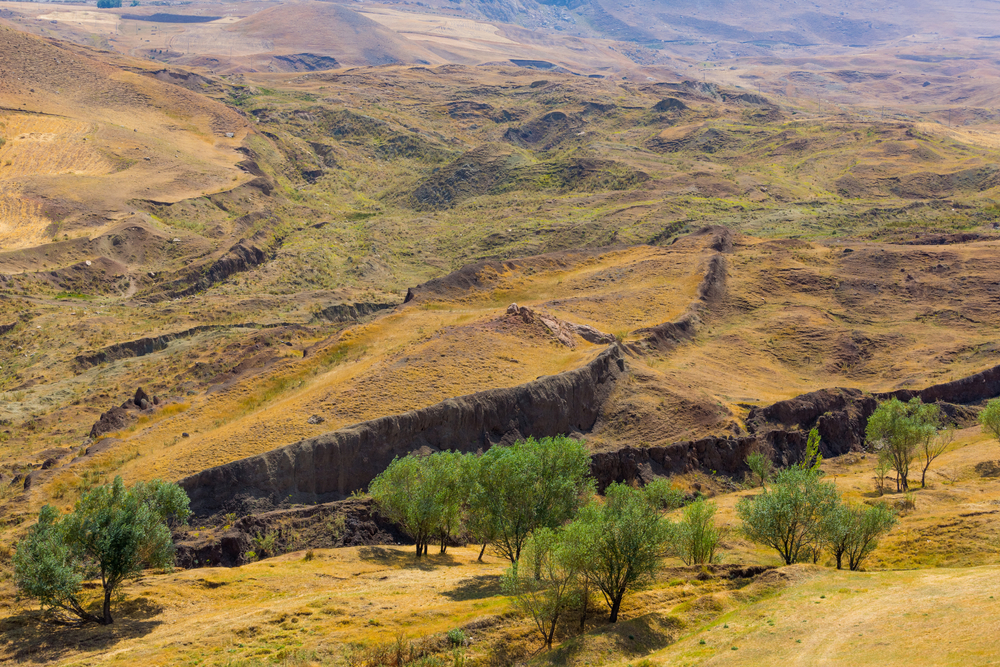
The location at the centre of the latest announcement has been attracting attention since 1959, when a Turkish army captain noticed its unusual outline in aerial photographs. Known as the Durupınar Formation, the feature has a distinctive boat-like shape and measures approximately 157 metres (515 feet) long. Its appearance has encouraged generations of Ark enthusiasts to investigate whether it could be connected to the biblical vessel.
The formation is located around 29 kilometres (18 miles) south of Greater Mount Ararat. That proximity has helped make it a popular destination for people searching for the Ark, particularly because the Book of Genesis describes the vessel coming to rest on the “mountains of Ararat” after the floodwaters receded. Genesis 8:4 contains that reference, although the geographical meaning of the phrase is not as straightforward as some popular accounts suggest.
Scholars have noted that there were no mountains specifically called Ararat in the biblical period. The wording may refer to a broader ancient region rather than the particular mountain now known internationally as Mount Ararat. That distinction matters when interpreting claims about where the Ark might have landed, because a modern place name cannot automatically be treated as an exact match for an ancient geographical reference.
The formation’s shape is another reason for caution. A structure that resembles a boat from above is not necessarily a boat, and natural geological processes can produce striking outlines. The fact that the site attracted attention in aerial photographs explains its appeal, but the appearance alone cannot establish that people constructed it or that it contains the remains of a vessel.
The Old Wood Effect Could Change How The Results Are Read
One of the most important scientific issues concerns the limits of radiocarbon dating. The technique can estimate when organic material formed, but dating a piece of wood does not necessarily reveal when the tree was cut down or when the timber was used. This creates a problem commonly known as the “old wood effect”, which could be particularly relevant to the latest discovery.
Trees develop growth rings over the course of their lives, with the inner rings forming long before the outer ones. If timber from an old tree is eventually used to make an object, a radiocarbon test on its inner wood can produce a date that predates the object’s construction. Depending on the age and species of the tree, the difference could be decades or centuries, and in exceptional circumstances potentially much longer.
That means a date of approximately 4,300 years does not automatically establish that the wood was used during the period associated with Noah’s flood. It indicates when the carbon in the tested portion of the tree was formed, subject to the laboratory’s measurements and calibration. Researchers would still need to determine when the tree was felled and whether the wood was shaped or used by people.
The precise type of wood recovered from the Durupınar Formation has not yet been publicly established in the reports describing the discovery. Identifying the species could help researchers assess how much the old wood effect might influence the interpretation. A relatively short-lived species such as birch could present different dating considerations from a long-lived tree such as oak.
The condition of the fragments also needs careful examination. Their charred appearance may be consistent with exposure to fire, but that does not identify the source of the fire or explain why the material was buried. Without a clearer understanding of the wood, its surrounding soil and the circumstances in which it was deposited, the radiocarbon results cannot settle the larger question.
Earlier Geological Research Reached A Different Conclusion
The Ark theory surrounding the Durupınar Formation is not new, and previous investigations have already challenged the idea that the feature is a buried ship. One of the best-known examinations was published in 1996 by geologist Lorence Collins and David Fasold, a former promoter of the Ark theory. Their paper was titled “Bogus ‘Noah’s Ark’ from Turkey Exposed as a Common Geologic Structure.”
Collins and Fasold argued that the formation was a natural geological feature rather than a man-made vessel. Their research examined features that had previously been presented as possible evidence of the Ark, including alleged metal brackets, walls and unusual rock formations. They concluded that these features could be explained by natural mineral concentrations and geological processes.
The paper also challenged claims involving supposed fossilized wood and other details that Ark enthusiasts had interpreted as signs of a constructed ship. Its conclusion was direct: the formation was natural and could not be Noah’s Ark or even a man-made model. That assessment remains an important part of the scientific debate surrounding the location.
Noah’s Ark Scans has argued that newer technology allows its researchers to investigate the site in ways that were unavailable to earlier teams. The group has pointed to radar surveys and its recent recovery of wood as reasons to continue. However, technology does not remove the need for independent verification, and new interpretations must be supported by evidence that other specialists can examine and reproduce.
Scepticism has also come from religious and creationist circles. Answers in Genesis, an organization that supports a creationist interpretation of the Bible, has expressed doubts about the formation being the Ark. Geologist Andrew Snelling has argued that the site is a natural structure, showing that disagreement about the claim is not limited to scientists who reject the biblical account.
What Still Needs To Be Established
The wood discovery has created several lines of investigation, but none has yet answered the central question of what the fragments represent. Researchers need to establish the material’s species, examine whether the alleged shaping marks are genuinely artificial and publish the full laboratory data. Those details would allow independent specialists to assess both the dating and the team’s interpretation.
The circumstances of the discovery are equally important. The fragments were reportedly recovered around nine metres underground, but the team has not explained how they became buried at that depth. Jones has openly acknowledged that uncertainty, and the possibility of an ordinary source, such as a campfire or shepherd’s activity, has not been ruled out.
There are also questions about the wider geological evidence. The team has interpreted radar imagery as showing possible structures beneath the formation, but the preliminary findings have not been peer-reviewed. Independent experts would need access to the survey data, methods and interpretations before those patterns could be accepted as evidence of a buried vessel.
Further drilling and laboratory analysis could help clarify some of these issues. Turkish authorities reportedly approved core drilling in July, and samples were said to have been sent to several universities, including Bar-Ilan University. A final report was expected around April or May 2027, according to the Jerusalem Post, although the findings had not been reported in the material available for this article.
Has The Search Finally Found Something?
For people who have followed the search for Noah’s Ark, the reported discovery of ancient wood beneath the Durupınar Formation is an intriguing development. If independent laboratories confirm the dates and specialists establish that the fragments were deliberately worked, the findings could provide valuable new information about the site. They would still need to be connected to a vessel before they could support the claim that the Ark had been found.
For now, the discovery raises a genuine research question rather than providing a final answer to an ancient mystery. The most important next step is the release of complete test results and independent examination of the samples. Until that evidence is available, the wood may be 4,300 years old, but its connection to Noah’s Ark remains unproven.