
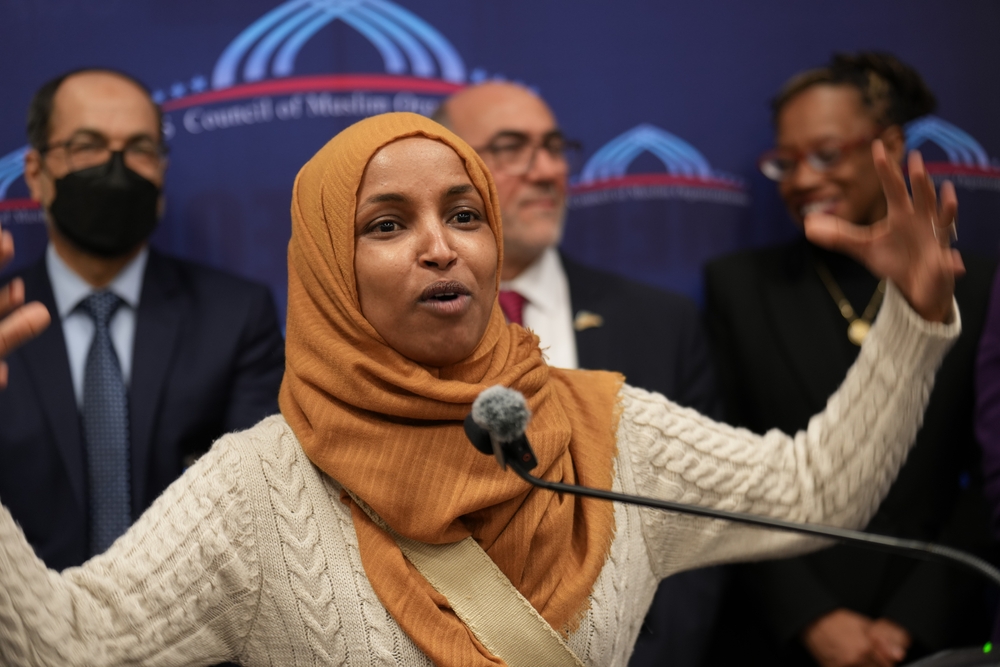
A federal investigation involving Democratic Rep. Ilhan Omar has drawn renewed attention after newly unsealed court records revealed three different versions of her name in documents connected to a search of her Washington, D.C., home. At the same time, prosecutors are reportedly presenting evidence to a federal grand jury in Minnesota as investigators examine allegations involving her immigration history and finances.
The records offer a closer look at the scope of the investigation, but they also leave significant questions unanswered. Large portions of the 169-page document release remain redacted, and the publicly available material does not establish that Omar committed a crime. She has consistently denied wrongdoing and described the investigation as politically motivated. No criminal charges have been announced against her.
Three Versions of Omar’s Name Appear in Federal Records
One of the details attracting attention in the newly unsealed documents is the use of three different versions of Omar’s name. A Justice Department filing dated October 7 identifies the congresswoman as “Ilhan Nur Said Elmi,” while also listing “Ilhan Abdullahi Omar” as another name associated with her. A separate warrant return filed by federal agents uses a third version, “Ilhan Nur Said Elmi Mohamed.”
The documents do not explain why investigators used these different versions or suggest that the variations themselves prove any wrongdoing. Names can appear differently across official records for a number of reasons, particularly when documents involve immigration histories, family records or changes in legal identity. However, the detail has become significant because the wider investigation reportedly includes questions about Omar’s identity and the information contained in historical immigration paperwork.
Fox News reported that investigators are examining whether a different name or birthdate was used in connection with obtaining U.S. citizenship. The newly released documents provide some insight into the paperwork being examined, but they do not publicly establish that Omar deliberately supplied false information. The distinction matters because the appearance of multiple names in official documents is not, by itself, evidence of immigration fraud.
The investigation reportedly reaches back decades, covering a period before Omar became a prominent political figure. That timeframe has placed renewed focus on her arrival in the United States, her family’s immigration history and the records used when she became a citizen. For now, the precise evidence behind the government’s concerns remains difficult to assess because much of the relevant material is still unavailable to the public.
Federal Grand Jury Reportedly Reviews Evidence in Minnesota
Prosecutors are reportedly pursuing what court filings describe as a “pre-indictment investigation.” Sources cited by Fox News said a federal grand jury in Minnesota is hearing evidence connected to the inquiry. The reported proceedings form part of a wider investigation into possible immigration fraud, although the publicly released records do not provide a complete account of what evidence has been presented to the panel.
Reports indicate that investigators are examining at least two separate areas. One concerns allegations involving immigration records and possible fraud, while another relates to Omar’s finances. The two lines of inquiry reportedly began at different times, with sources telling Fox News that the immigration investigation originated during the Obama administration and the financial investigation began during the Biden administration.
The distinction between an investigation and a criminal charge is important. A grand jury hears evidence and considers whether prosecutors have sufficient grounds to pursue an indictment. Its involvement does not mean that an individual has been found guilty, or even that charges will necessarily follow. The available documents do not reveal whether prosecutors have asked the grand jury to consider specific charges against Omar.
The investigation has nevertheless attracted considerable political attention because Omar is a sitting member of Congress and a vocal critic of President Donald Trump. The allegations also involve events that reportedly took place long before her election to the House of Representatives. That makes the underlying records, rather than the political arguments surrounding the case, central to understanding what investigators are actually examining.
Birthdate Discrepancy Becomes Part of the Immigration Questions
Another issue that has repeatedly surfaced in reporting about Omar concerns her date of birth. Her official congressional biography lists October 4, 1982, as her birthday. She was born in Mogadishu, Somalia, and arrived in the United States during the 1990s. However, a number of earlier publications and reference sources listed her birth year as 1981, creating a discrepancy that has since become part of the wider scrutiny surrounding her immigration history.
Those earlier references reportedly included the Minnesota Legislative Reference Library and media profiles. In May 2019, after Omar had entered Congress, her staff contacted the library and other outlets to request a correction. Her office described the earlier birth year as an error and maintained that 1982 was the correct date.
The difference between 1981 and 1982 has attracted attention because it could affect how Omar’s age is calculated against the timeline of her father’s naturalization. Omar has said her father became a naturalized U.S. citizen in 2000. Under the dates described in reports, she would have been 18 if she was born in October 1981, but 17 if her birth year was 1982.
That distinction is relevant to questions about whether she was eligible for derivative citizenship through her father while still a minor. Investigators are reportedly examining the historical records and circumstances surrounding her immigration status. However, the publicly released documents do not establish that Omar knowingly gave authorities an incorrect birthdate or that the discrepancy resulted from deliberate deception.
The difference between an administrative error and intentional misrepresentation is substantial. Establishing fraud would require evidence about what information was supplied, who supplied it, whether it was knowingly false and whether it affected an immigration decision. The unsealed records have not answered those questions, and the allegations should not be treated as proven simply because earlier publications carried a different birth year.
Former Marriage Allegations Remain Disputed
Omar’s 2009 marriage to Ahmed Nur Said Elmi has also remained a subject of public controversy. Elmi was a British national, and critics have alleged for years that he was Omar’s brother and that the marriage was arranged to help him obtain immigration benefits. Omar has denied knowingly marrying her brother, while the allegation has continued to feature in political debate and reporting about her personal history.
During an October 21 interview with Chris Hayes on MS NOW’s “All In,” Omar was asked about the claim that Elmi was her brother. She responded, “Not to my knowledge.” The answer reflected her denial of the allegation, although it did not put an end to questions raised by critics about the marriage and the timeline of her relationships.
Omar and Elmi remained legally married until 2017. Reports have also raised questions about tax filings involving Omar and her first husband, Ahmed Hirsi, during a period when she was legally married to Elmi. Investigators are reportedly reviewing records connected to the marriage and examining immigration paperwork involving some of Omar’s relatives.
The Wall Street Journal previously reported that authorities had issued more than a dozen subpoenas, including to family members, seeking testimony before a Minnesota grand jury. That reporting has added to interest in whether investigators are examining the marriage as part of the broader immigration inquiry. However, the existence of subpoenas does not establish that the allegations are true, and the publicly released court material does not provide a definitive finding about Elmi’s relationship to Omar.
There has been no publicly announced criminal charge establishing that the marriage was fraudulent or that Omar knowingly entered into it to help someone obtain immigration status. Her denial remains part of the public record, and the allegations remain disputed. Any conclusion about the marriage would depend on evidence that has not been fully disclosed.
What the 169-Page Court Release Actually Shows
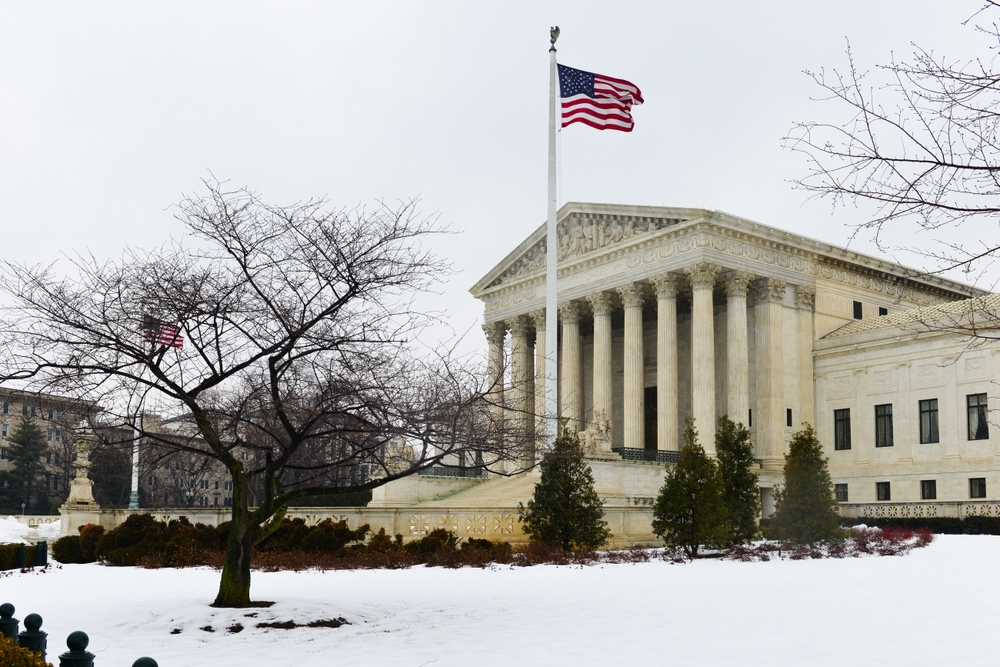
The latest release followed a legal effort by more than a dozen news organizations and a conservative activist group seeking access to records connected to the federal search of Omar’s home. Chief Judge James E. Boasberg of the U.S. District Court for the District of Columbia ordered the partial release of the documents on November 23. The 169-page collection offers a clearer picture of the government’s legal process, but extensive redactions prevent the public from seeing much of the underlying evidence.
One Justice Department filing states that the government believes Omar committed “[redacted] crimes over decades beginning long before she was ever in Congress.” The filing also refers to alleged violations stretching from 1980 to the present. Yet the specific offences are obscured, leaving readers unable to determine precisely which statutes prosecutors believe may have been violated or how the allegations relate to the evidence collected.
The redactions are particularly important because the public has not seen the full affidavit used to support the search warrant. The 67-page affidavit remains sealed, meaning the detailed explanation investigators provided to obtain permission for the search is not available for independent examination. Without that material, it is difficult to assess the strength of the government’s claims or understand how the different reported lines of inquiry fit together.
The documents therefore provide information about the existence and scope of the investigation, but not a complete account of the evidence. They show that federal authorities sought judicial approval for a search and that prosecutors are examining alleged conduct over an extended period. They do not establish that the allegations are true, nor do they reveal what final decision prosecutors may make.
Federal Search of Omar’s Washington Home Raises Legal Questions
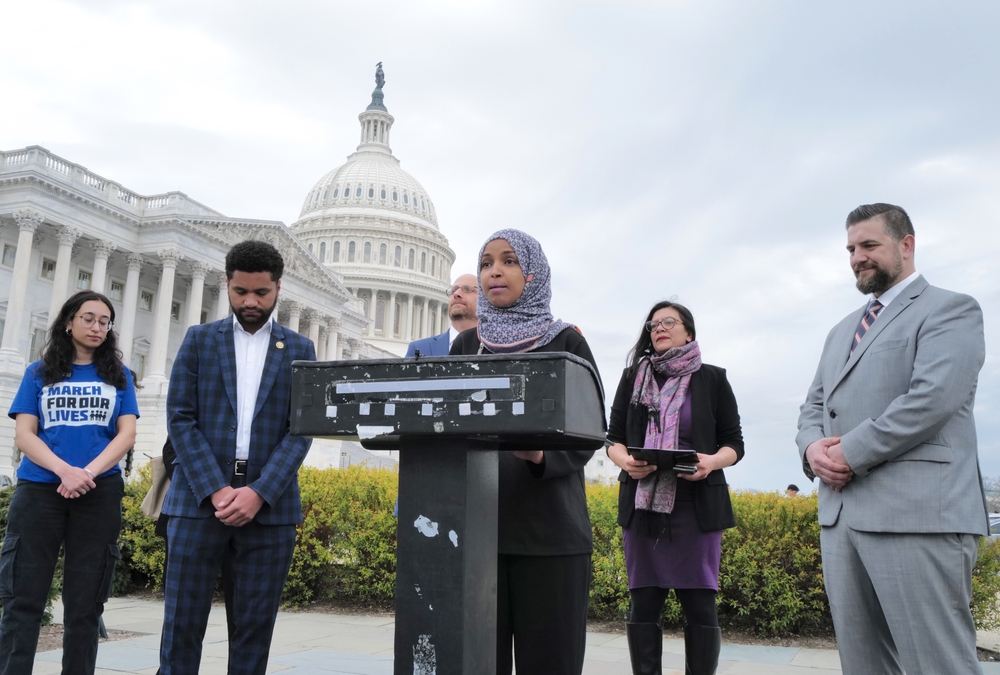
The federal search of Omar’s Washington, D.C., residence took place on October 12, 2026, after authorities obtained a warrant. The reported timeline indicates that the warrant application was submitted on October 2 and approved on October 9, before agents carried out the search three days later. The operation became a major development in the investigation because it involved the home of a sitting member of Congress.
According to reporting about the search, agents seized 17 items, including electronic devices, notebooks and Omar’s passport. The materials could potentially contain personal information, communications or records relevant to the investigation. However, the full evidentiary significance of the seized items has not been made public, and their collection does not establish that they contain proof of criminal conduct.
The search also raised questions about the constitutional protections available to lawmakers. The Speech or Debate Clause protects members of Congress from certain forms of interference involving their legislative activities. The provision is intended to safeguard the independence of the legislative branch, although it does not create blanket immunity from criminal investigations into unrelated conduct.
Magistrate Judge Matthew Sharbaugh required prosecutors to modify their proposed procedures so Omar would have an opportunity to identify materials that might be protected by legislative privilege before investigators examined them. The government argued that the relevant protections applied only to congressional offices and certain electronic devices. Sharbaugh rejected that position, writing, “That logic does not hold.”
The Justice Department ultimately agreed to a protocol allowing Omar to assert legislative privilege over relevant materials. The arrangement reflects the legal sensitivity involved when investigators search property belonging to a sitting lawmaker. It does not prevent authorities from pursuing a legitimate criminal investigation, but it places safeguards around the handling of material that could fall within constitutional protections.
Omar Accuses Trump Administration of Political Targeting
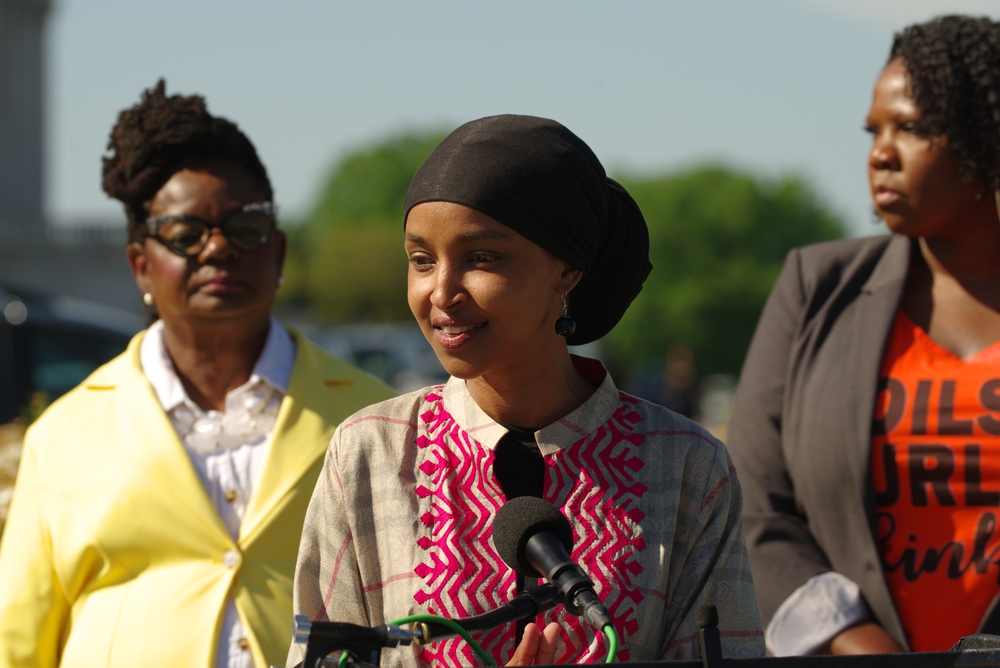
Omar has rejected the allegations and questioned the motives behind the investigation. Following the search of her home, she described the operation as “an attempt to target political enemies and weaponize federal law enforcement.” She has also characterised the broader inquiry as politically motivated, arguing that the scrutiny directed at her is part of a wider effort to attack a prominent critic of the president.
Her position has gained attention because she has repeatedly clashed with Trump and other Republicans. The president has publicly attacked Omar, at one point calling her “a disaster.” Those political disputes have helped turn the investigation into a national story, with supporters and critics interpreting developments through sharply different perspectives.
The timing of the search has also prompted questions. Federal agents searched Omar’s home 22 days before the November 3 midterm elections, a period when law enforcement activity involving political candidates can attract particular scrutiny. The Justice Department has historically maintained restrictions intended to prevent enforcement actions from creating the appearance that federal authorities are trying to influence an election.
The timing alone does not establish that the search was politically motivated or that investigators acted improperly. Authorities had reportedly applied for the warrant on October 2, and a judge approved it on October 9. Those dates are part of the documented sequence, but the public has not been given enough information to independently assess every decision behind the operation.
Omar’s accusations and the administration’s actions therefore remain competing elements of the controversy. Her criticism does not resolve the allegations under investigation, just as the existence of a federal inquiry does not establish that she committed a crime. The evidence and any eventual decisions by prosecutors will carry more weight than political statements from either side.
The Key Questions Still Facing Investigators

The unsealed documents have brought several details into public view, but they have not resolved the central questions surrounding the investigation. Much of the evidence remains sealed, and prosecutors have not announced criminal charges. The most important outstanding issues include the following matters, each of which could shape how the inquiry develops.
- The grand jury proceedings: It remains unclear what evidence prosecutors have presented in Minnesota or whether the panel will ultimately recommend an indictment. The reported proceedings show that investigators are continuing their work, but they do not predict the outcome.
- The redacted allegations: The court records refer to alleged crimes over several decades, yet the specific offences remain hidden. The sealed material may provide further context, but the public release does not identify the full scope of the alleged violations.
- The birthdate discrepancy: Investigators are reportedly examining historical immigration records, although the available documents do not establish that Omar deliberately falsified her date of birth. Her office has previously described the earlier birth year as an error.
- The former marriage: Questions about Ahmed Nur Said Elmi remain disputed, and no publicly announced criminal charge has established that he was Omar’s brother or that their marriage was fraudulent.
- The seized materials: The reported search resulted in the collection of documents and electronic items, but the public does not know what investigators found in them or whether any material will become part of a future prosecution.
These unanswered questions explain why the latest release has generated interest without providing a definitive conclusion. The records confirm that federal authorities have been investigating allegations involving Omar, but they do not provide a complete account of the evidence or establish that the congresswoman broke the law.
The Investigation Remains Open, but the Allegations Are Unproven
The newly unsealed records have added another layer to a controversy that has followed Omar for years. The use of three different names in federal paperwork, the reported grand jury proceedings and the examination of historical immigration records all point to an investigation with a potentially wide scope. Yet the documents also reveal how much remains unknown, particularly because key sections of the court material and the search warrant affidavit are still unavailable.
Omar remains in Congress and has not been charged with a crime. She continues to deny wrongdoing and argues that the investigation is politically motivated. The next significant development will not be another political accusation or a fresh interpretation of the redacted paperwork. It will be evidence made public through court proceedings, a formal decision by prosecutors or an indictment that identifies specific allegations and allows them to be tested in court.