
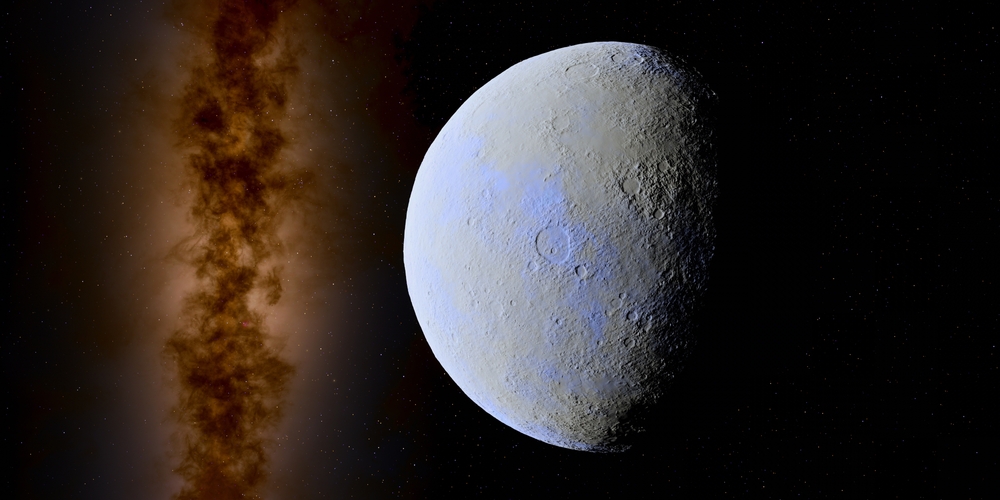
For decades, astronomers have wondered whether something significant is hiding in the vast darkness beyond Neptune. Strange movements among distant icy objects have suggested that the outer Solar System may contain more than the eight planets we currently know. Now, a new investigation has given scientists another possible explanation to consider: a small, distant world whose gravity could be shaping the paths of objects billions of kilometres from the Sun.
The hypothetical planet has been nicknamed Planet X2, or PX2. Researchers suggest it could have roughly one to two times the mass of Earth and travel around the Sun at an extraordinary distance. It has not been directly observed, and its existence remains unconfirmed. However, computer simulations indicate that a planet with these characteristics could help explain several unusual features found among objects beyond Neptune.
Strange Objects Beyond Neptune Have Left Astronomers Searching For Answers
The Solar System does not simply end at Neptune. Far beyond the familiar planets lies a vast region containing frozen bodies left over from the system’s formation. These distant objects are collectively known as trans-Neptunian objects, and they include some of the most unusual members of our planetary neighbourhood.
Many follow predictable paths around the Sun, but others have orbits that are difficult to explain using the gravitational influence of the known planets alone. Some travel along extremely elongated trajectories, while others move at steep angles compared with the relatively flat plane in which most planets orbit. A number also appear detached from Neptune’s direct gravitational influence, spending much of their time in remote regions of space.
Sedna is one of the best-known examples. Its highly elongated orbit carries it far from the Sun, placing it among the distant objects that have encouraged astronomers to investigate what might be happening in the outer Solar System. Objects like Sedna are especially interesting because their paths may preserve clues about events that occurred during the Solar System’s earliest history.
The challenge is working out what caused those unusual trajectories. The known planets influence smaller bodies through gravity, but their effects do not appear to explain every feature astronomers have identified. Researchers have therefore considered whether an undiscovered planet could be exerting an additional gravitational influence from much farther away.
Planetary scientist Jonti Horner has compared the situation to finding footprints in the snow. The tracks suggest that something has passed through an area, even when the person or animal responsible is nowhere to be seen. As Horner put it, “It’s a bit like the footprints in the snow.” For astronomers, unusual orbital patterns could provide similar indirect evidence of an object they have not yet managed to detect.
The Proposed Planet Could Be Bigger Than Earth
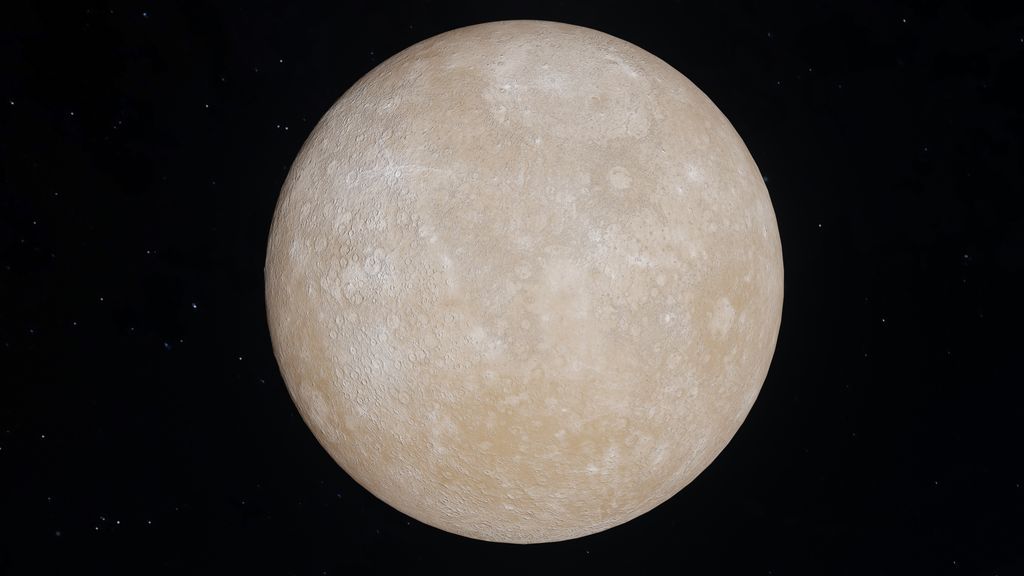
The latest investigation focuses on a possible world called Planet X2. Researchers, including Patryk Sofia Lykawka, explored whether a planet beyond Neptune could reproduce some of the orbital patterns seen among distant icy objects. Their proposed world is estimated to have around 1.5 to two times the mass of Earth, although the wider range considered in discussions of the hypothesis is approximately one to two Earth masses.
That would make it a relatively low-mass planet compared with the giant worlds in our Solar System. Its exact physical size would depend on its composition and density, neither of which has been established. The research concerns a possible gravitational influence, rather than a confirmed image or measurement of a planet.
The simulations suggest that Planet X2 could have a semi-major axis of approximately 350 to 500 astronomical units. An astronomical unit is the average distance between Earth and the Sun, so the proposed planet would orbit hundreds of times farther from the Sun than Earth does. Its closest approach could be around 200 astronomical units, still placing it deep in the distant outer Solar System.
Such a remote orbit would make direct observation difficult. A planet at that distance would receive only a small fraction of the sunlight that reaches Earth. Any light reflected from its surface would have to travel an enormous distance back towards our telescopes, making the object extremely faint. Its slow movement across the sky could also make it difficult to distinguish from the background of distant stars.
These challenges help explain why astronomers have not simply spotted it already. A planet can be large enough to influence other objects through gravity while remaining difficult to identify with conventional observations. For now, the proposed mass and orbit are features of a model that researchers can test against further discoveries.
Billions Of Years Of Simulations Offer A Possible Explanation
To investigate the idea, the research team used computer simulations covering approximately 4.5 billion years of Solar System history. This allowed them to explore how an additional planet might have affected distant objects over the immense period since the planets formed. Rather than looking at a single moment, the researchers examined how orbital arrangements could evolve over time under different gravitational conditions.
The team compared scenarios involving the known planets with models that included an additional distant world. They wanted to see whether the extra planet could help produce the unusual orbital characteristics observed among trans-Neptunian objects. The simulations suggested that a planet with the proposed mass and orbit could influence the paths of smaller bodies over long periods.
One important possibility involves the inclination of distant objects. Inclination describes how much an object’s orbit is tilted relative to a chosen reference plane. The known planets orbit close to a shared plane, but some distant objects travel on paths that are much more steeply tilted. The simulations indicate that the gravity of Planet X2 could gradually push some objects into these unusual orientations.
The proposed planet could also help explain why certain objects appear detached from Neptune. Through repeated gravitational influence, it could alter the paths of smaller bodies and leave some following orbits that take them far from the region where Neptune has its strongest direct influence. This could help account for some of the unusual populations found in the distant Solar System.
The results are interesting because they offer a possible connection between several orbital features. A single additional planet could potentially influence objects with different orbital shapes and inclinations over billions of years. However, a successful simulation is not the same as proof that the planet exists. The model shows that this explanation is possible under certain conditions, while further observations are needed to establish whether those conditions describe our actual Solar System.
Planet X2 Is Not The Same As The Proposed Planet Nine
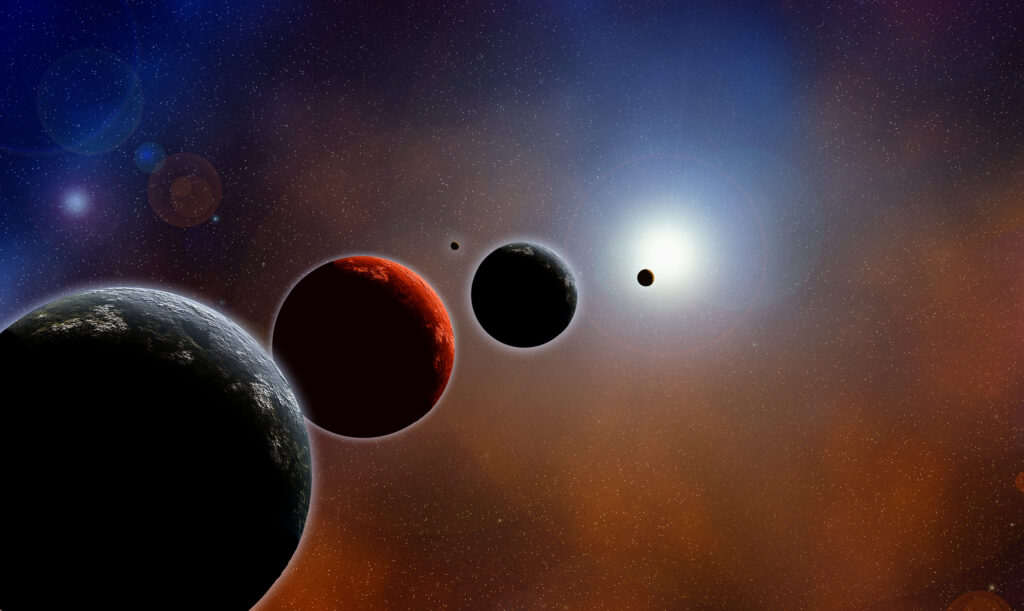
The suggestion of another planet beyond Neptune may sound familiar because astronomers have also investigated the Planet Nine hypothesis. Planet Nine is a separate proposed world that has been discussed as a possible explanation for unusual patterns among distant Solar System objects. Although both ideas involve an undiscovered planet, they are not interchangeable explanations.
Planet X2 is proposed as a comparatively low-mass world, with an estimated mass around one to two times that of Earth. Planet Nine, by contrast, is generally discussed as a substantially more massive hypothetical planet. The two hypotheses also focus on different aspects of the orbital behaviour observed among distant objects.
The distinction matters because the outer Solar System contains several different kinds of orbital irregularities. A model that explains one pattern does not automatically explain all the others. Planet X2 could help account for unusually tilted or detached objects, while Planet Nine has been proposed to explain other features, including patterns involving the orientation of distant orbits.
The researchers have considered the possibility that both planets could exist, with each having a different gravitational influence. That would make the outer Solar System more complicated than the familiar arrangement of eight planets. However, it is also possible that only one of the hypotheses is correct, or that neither proposed planet exists.
Astronomers will need to compare the predictions of these models with a much larger collection of observations. As more distant objects are discovered, researchers can check whether their orbits fit the patterns expected from Planet X2, Planet Nine, another explanation, or a combination of factors. The competing ideas remain scientific hypotheses, and none should be treated as a confirmed discovery.
How Could A Planet Have Reached Such A Distant Orbit?
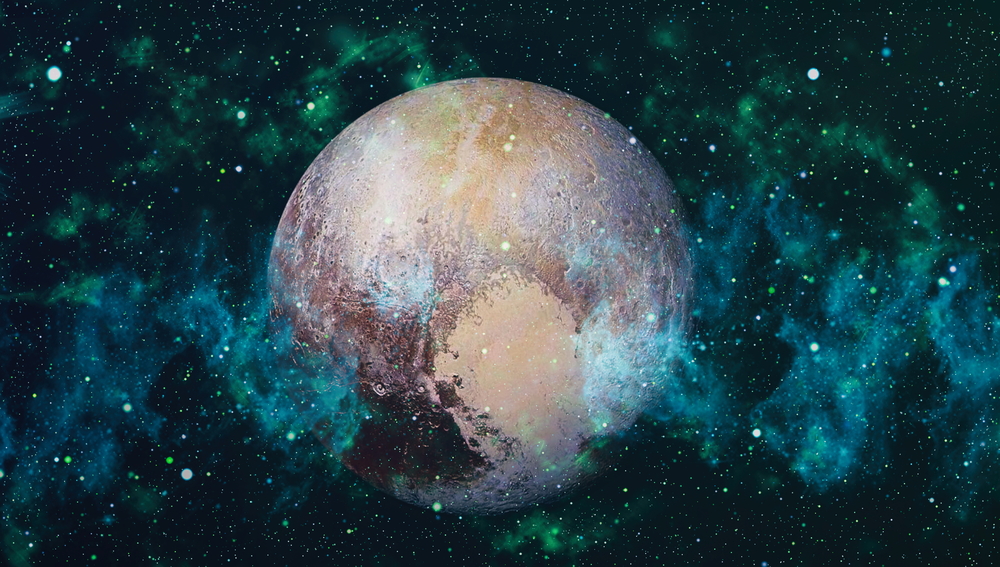
If Planet X2 exists, another major question concerns how it came to occupy such a remote path around the Sun. The Solar System formed from a cloud of gas and dust, and its early history involved considerable gravitational interaction. The giant planets did not necessarily remain in the exact positions they occupy today. Their movements and interactions with smaller bodies helped shape the system that eventually emerged.
One possible explanation is that Planet X2 formed closer to the Sun and was later pushed outward. During the Solar System’s early development, gravitational encounters between planets could have changed the orbit of a smaller world. A close interaction with a larger planet might have sent it into a much more distant trajectory, where it could have remained for billions of years.
Another possibility is that the planet formed in a distant part of the Solar System. The available research does not establish which formation pathway would have produced Planet X2, and its origin remains an open question. Understanding that history would require researchers to investigate how the proposed planet could have survived in its orbit while influencing smaller objects around it.
Planetary migration is already an important part of modern explanations for how planetary systems develop. Astronomers studying other stars have found systems with planets arranged in ways that differ considerably from our own. Those discoveries show that planetary systems can have varied histories and orbital structures, although they do not provide direct evidence that Planet X2 exists.
The simulations are therefore useful as a way to explore what might have happened, rather than as a record of a confirmed event. They give researchers a framework for testing possible histories against the orbital evidence. If future observations support the predicted patterns, scientists will have stronger reasons to investigate how an additional planet could have formed or migrated into the distant Solar System.
The Vera C. Rubin Observatory Could Help Test The Theory
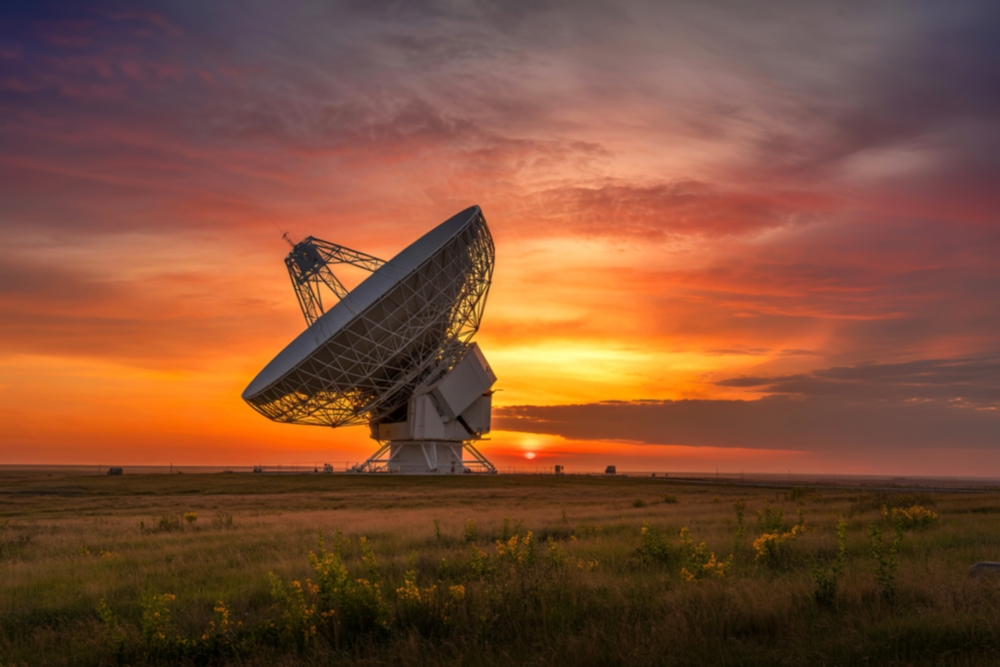
One of the most promising ways to investigate Planet X2 is to improve the search for distant objects. The Vera C. Rubin Observatory in Chile is designed to survey large areas of the sky repeatedly, giving astronomers an opportunity to identify faint objects that might otherwise go unnoticed. Its Legacy Survey of Space and Time is expected to provide a much larger picture of the changing night sky.
That matters because researchers need more observations of trans-Neptunian objects to test the Planet X2 model. Each newly identified object can add information about the population’s orbital distribution. If the proposed planet has been influencing these bodies for billions of years, its effects may be reflected in the patterns found across a sufficiently large sample.
The observatory could also help astronomers search for the planet itself. However, detecting a faint world hundreds of astronomical units from the Sun is a demanding task. Its distance, low brightness and slow apparent movement could make it difficult to distinguish from other sources of light. Researchers may therefore learn about its possible influence before they manage to identify the planet directly.
Future observations could strengthen the hypothesis, weaken it or reveal that another explanation fits the evidence more convincingly. That is an important part of the scientific process. A useful theory must make predictions that can be compared with new evidence, rather than simply offering an appealing explanation for something that remains mysterious.
The Evidence Is Intriguing, But The Planet Has Not Been Found
Despite the attention surrounding the proposal, Planet X2 remains hypothetical. Researchers have shown that a distant planet with certain characteristics could help reproduce several unusual features of the outer Solar System. They have not directly observed such a planet, measured its mass or confirmed its orbit.
There are also limitations in how closely the simulations reproduce the observed distribution of distant objects. The model does not explain every detail perfectly, and researchers acknowledge that further work is necessary. Other gravitational effects, the history of the Solar System and the limitations of current observations may all be relevant when interpreting the unusual orbits.
The next stage is to gather more evidence and determine whether the patterns predicted by the simulations appear in the real population of distant objects. The Vera C. Rubin Observatory could make an important contribution by finding more of these bodies and improving the data available to researchers. Those observations will help scientists assess whether an additional planet is the most convincing explanation.
For now, Planet X2 is a compelling possibility rather than a newly discovered member of our planetary family. If future observations support the predictions, astronomers may have to rethink how the outer Solar System developed and how its most distant objects reached their present paths. The search is far from over, and the darkness beyond Neptune may still hold important clues about the history of our cosmic neighbourhood.