
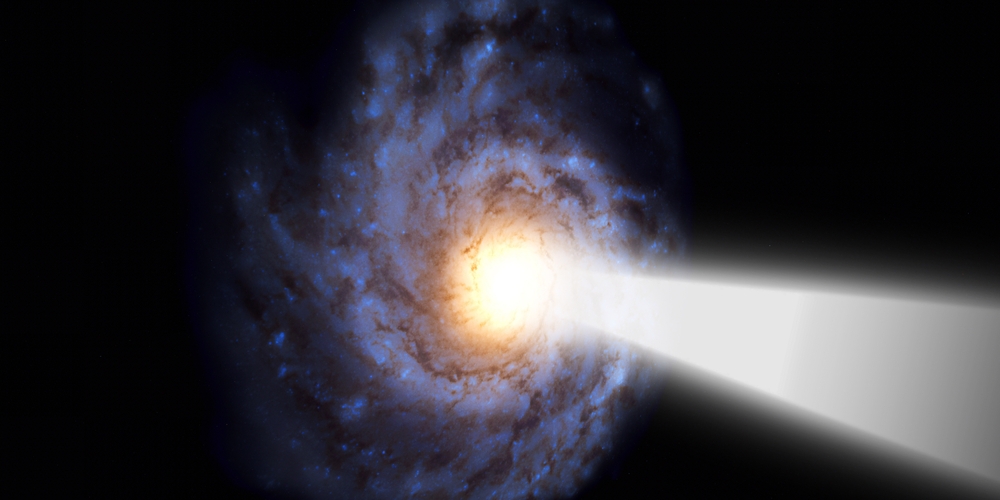
Astronomers have spotted an object so distant that its light began travelling towards Earth when the universe was barely 630 million years old. The discovery has broken an existing cosmic record, but the real surprise lies inside the object. A supermassive black hole weighing approximately 360 million times the mass of the Sun was already powering it when the universe was still in its infancy.
The object, nicknamed Dún Aonghasa, was identified using observations from the European Space Agency’s Euclid telescope, with follow-up observations involving the James Webb Space Telescope and other major observatories. Its discovery is raising fresh questions about how black holes became so enormous so early in cosmic history, especially when scientists are still trying to understand how these mysterious objects formed in the first place.
A Quasar From The Universe’s Earliest Days Has Set A New Record
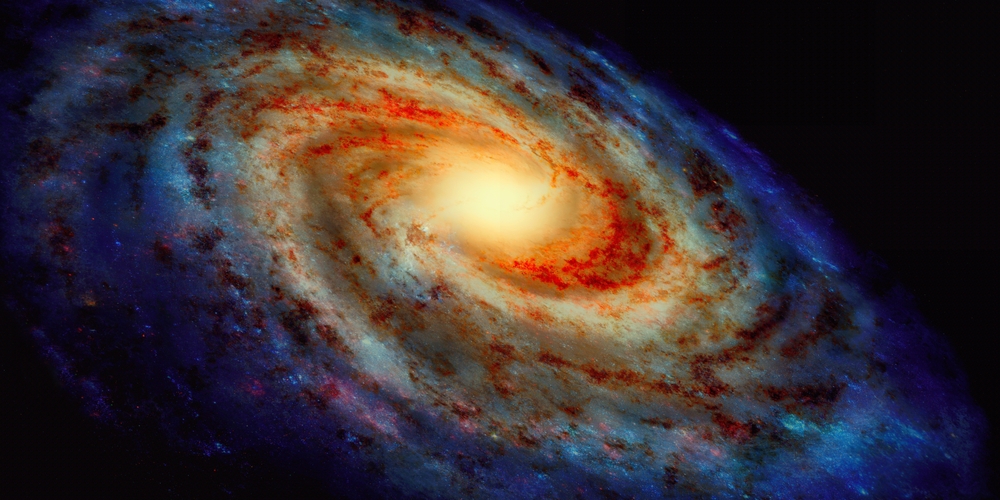
The newly identified quasar, officially designated J1504+6252, existed during an exceptionally early period in cosmic history. Its light has travelled for billions of years before reaching the telescopes observing it today. According to the European Space Agency (ESA), the object dates back to approximately 630 million years after the Big Bang. Considering that scientists estimate the universe is around 13.8 billion years old, this discovery offers an extraordinary glimpse into its earliest stages.
Dún Aonghasa has also pushed an existing astronomical record further into the past. In July 2026, researchers identified 31 distant quasars using data collected by Euclid, with two of those objects holding the previous distance record. Those quasars dated to approximately 670 million years after the Big Bang. The newly discovered object takes astronomers another 40 million years further back, allowing them to study an even earlier period in the universe’s development.
Although 40 million years might sound relatively small against the universe’s enormous age, it represents a significant difference when studying its earliest stages. Scientists are particularly interested in this period because supermassive black holes were already developing when the cosmos was comparatively young. Finding another massive black hole from this era gives researchers additional evidence to investigate how quickly these objects could have formed and grown.
Meet Dún Aonghasa, The Quasar Hiding Among Millions Of Objects
Finding an object like Dún Aonghasa required considerably more than pointing a telescope towards an interesting patch of sky. The research team, led by Julien Wolf, who was a postdoctoral researcher at the Max Planck Institute for Astronomy when the study was conducted, examined observations collected by Euclid over approximately 18 months. Within those observations were millions of astronomical objects, making the identification of one exceptionally distant quasar a difficult task.
The object was eventually identified as a promising candidate and given the nickname Dún Aonghasa by the mission team. Its formal astronomical designation is J1504+6252. The discovery demonstrates the value of examining enormous collections of astronomical data because some of the most interesting objects are extremely difficult to distinguish from other distant sources of light.
Euclid’s ability to survey large areas of the sky while detecting faint infrared sources made it particularly useful for this search. However, identifying a possible ancient quasar was only the beginning. Researchers needed additional observations to establish its distance and investigate its characteristics before confirming that it belonged among the earliest known quasars.
James Webb Helped Reveal The Black Hole’s Enormous Mass
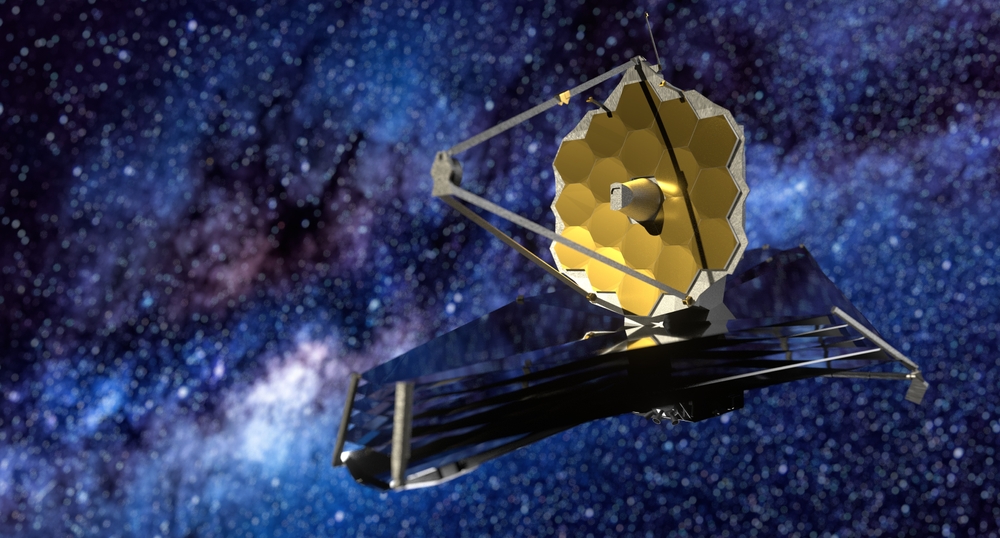
The distance of Dún Aonghasa is only part of what makes this discovery so interesting. Follow-up observations also helped researchers estimate the mass of the black hole powering the quasar. According to the research findings, observations from the James Webb Space Telescope indicated that the black hole has a mass approximately 360 million times greater than the Sun. That is an enormous amount of mass for an object that existed so early in the universe’s history.
Supermassive black holes are found at the centres of many galaxies and can contain millions or even billions of solar masses. They grow by accumulating surrounding material, including gas and dust, which moves towards their centres. As this material becomes extremely hot while spiralling around the black hole, it releases enormous amounts of energy, producing the brilliant light associated with quasars.
How Astronomers Estimate A Black Hole’s Mass
Scientists cannot simply travel to a distant quasar and weigh its central black hole. Instead, they study the light coming from the object and analyse the characteristics of its emission. Different wavelengths and features within that light can provide information about the environment surrounding the black hole, allowing researchers to estimate its properties.
The James Webb Space Telescope is particularly valuable because of its ability to observe faint infrared signals from the distant universe. Its observations helped researchers investigate Dún Aonghasa and estimate the mass of its central black hole. The resulting measurement gives astronomers another important piece of evidence when investigating how the earliest supermassive black holes developed.
The Redshift Measurement Places It 13.1 Billion Years In The Past
One of the most important measurements behind the discovery is the quasar’s redshift. Researchers established a redshift value of z = 8.13, placing Dún Aonghasa among the most distant quasars ever identified. This measurement indicates that the object existed when the universe was approximately 630 million years old, making it the first identified quasar in the supplied research to show a redshift greater than eight.
The discovery was verified through follow-up observations involving several major astronomical facilities. These included W.M. Keck Observatory, the Large Binocular Telescope Observatory, the Hubble Space Telescope and the James Webb Space Telescope. Each facility contributed observations that helped researchers investigate the distant object and establish its extraordinary position in cosmic history.
What Does Redshift Actually Mean?
Redshift describes how light becomes stretched towards longer wavelengths as the universe expands. When light travels across enormous cosmic distances, the expansion of space stretches its wavelength. Light that originally occupied shorter wavelengths can therefore reach Earth appearing redder or shifted into the infrared portion of the electromagnetic spectrum.
Astronomers use this measurement to investigate how far back in time they are observing. A higher redshift generally corresponds to an earlier period in cosmic history. For Dún Aonghasa, the measured redshift of 8.13 indicates that its light began travelling towards Earth when the universe was approximately 630 million years old, around 13.1 billion years ago.
Scientists Are Still Trying To Explain Such Early Black Holes
Supermassive black holes are already difficult objects to understand. Discovering them at such early cosmic ages makes the puzzle even more complicated because researchers must explain how they accumulated so much mass within a relatively short period. Dún Aonghasa existed when the universe was only 630 million years old, yet its central black hole had already reached approximately 360 million solar masses.
One possibility is that some early black holes formed when enormous clouds of gas collapsed under their own gravity. This process could have created unusually massive black holes that already had a substantial starting mass. They could then have continued growing by collecting additional material from their surroundings, eventually developing into the enormous objects astronomers observe today.
Another possibility involves exceptionally rapid growth. If black holes accumulated surrounding matter at a sufficiently high rate, they could potentially reach enormous masses within a relatively short period. Astronomers are investigating how these different processes might have contributed to the formation of early supermassive black holes, and Dún Aonghasa provides another valuable object against which their explanations can be tested.
Did Some Black Holes Begin Life Already Enormous?
The idea that some black holes formed from unusually large initial objects is particularly interesting. If a giant gas cloud collapsed directly into a massive black hole, it could help explain why certain objects appear so enormous during the universe’s earliest stages. This possibility challenges scientists to reconsider how the first generations of supermassive black holes developed.
The alternative involves black holes beginning at smaller masses and growing at extraordinary speeds. Both possibilities could have contributed to the population of ancient quasars. Researchers still need more observations to establish which formation processes were most important, and discoveries at increasingly high redshifts could help narrow down the possibilities.
Euclid Is Finding Ancient Quasars Faster Than Expected
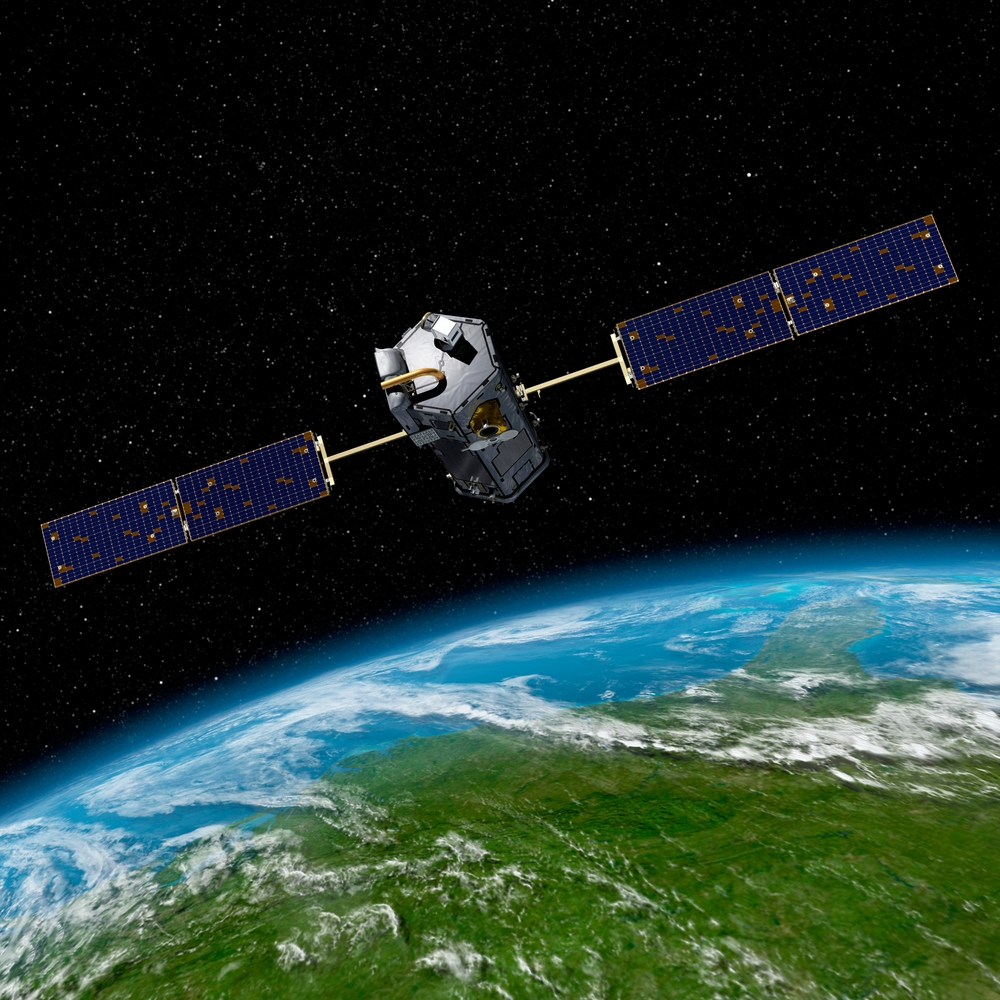
The discovery also demonstrates how much the Euclid mission has already contributed to the study of the early universe. The telescope was designed to investigate the dark universe, including dark matter and dark energy. Its observations are also helping astronomers identify extremely distant objects that can provide information about the universe’s earliest stages.
According to the supplied research report, Euclid identified 31 ancient quasars within approximately 18 months of observations. Twelve of those newly identified quasars have redshifts greater than seven. The report also notes that reaching a similar benchmark through earlier observations took approximately 15 years, highlighting how much the search has benefited from Euclid’s wide-area observing capabilities.
Some of the earliest quasars are rare and difficult to identify. Astronomers need to examine enormous numbers of galaxies and other distant objects to find promising candidates. Euclid’s ability to cover large areas while detecting faint infrared sources makes that search considerably more efficient, giving researchers a growing collection of ancient objects to investigate.
Why Wide-Area Observations Matter
Rather than concentrating on a relatively small region of the sky, Euclid can systematically examine huge areas and identify objects worthy of closer investigation. This approach increases the number of potential candidates available to astronomers and allows other observatories to conduct more detailed follow-up studies.
The discovery of Dún Aonghasa demonstrates how effective this strategy can be. A faint object buried among millions of astronomical sources eventually became one of the most distant quasars identified by researchers. As Euclid continues collecting observations, astronomers will have more opportunities to find objects from similarly early periods in cosmic history.
What Ancient Quasars Could Reveal About The First Galaxies
Quasars are closely connected to the galaxies surrounding their central black holes. They represent extremely energetic regions where matter falling towards a supermassive black hole releases enormous amounts of energy. Studying these objects can therefore reveal information about the development of galaxies during the universe’s earliest periods, when the first generations of stars and galaxies were beginning to take shape.
Astronomers want to understand how black holes fitted into this process. Did massive black holes develop alongside their host galaxies? How quickly could they grow during the earliest stages of cosmic evolution? And how did their activity affect the gas surrounding them? These questions are closely connected because the growth of a supermassive black hole can influence its surrounding environment.
As material falls towards a black hole, the resulting energy can affect the gas available for star formation and alter conditions within its host galaxy. Ancient quasars allow researchers to investigate these processes during periods that cannot be observed through nearby, modern galaxies alone. Dún Aonghasa offers another opportunity to examine that relationship at an exceptionally early point in cosmic history.
Julien Wolf Explains Why Finding More Distant Quasars Matters
The researchers involved in the discovery believe that identifying increasingly distant quasars can help answer fundamental questions about black hole formation. Julien Wolf explained the significance of the search in a statement released by the Euclid Consortium, highlighting the relationship between the age of a quasar and the growth of its central black hole.
“Finding quasars at ever-increasing distances, at the edge of the observable universe, teaches us something about how the black holes in their centers grew. The closer to the Big Bang we find them, the faster their black holes must have grown or the more massive they must have been at birth — or both.”
His explanation captures the central scientific challenge behind the discovery. Astronomers are trying to determine whether the earliest supermassive black holes began with unusually large masses or experienced exceptionally rapid growth. Both possibilities could help explain why objects such as Dún Aonghasa already contained enormous black holes during the universe’s earliest chapters.
The research, led by Wolf, has been published in the journal Astronomy and Astrophysics. Further discoveries from Euclid could help scientists determine how common these early quasars were and whether existing theories adequately explain their formation. Each additional observation gives researchers another opportunity to test their explanations against evidence from the distant universe.
The Universe’s Earliest Black Holes Still Hold Major Secrets
Dún Aonghasa gives astronomers another remarkable view into a period that would otherwise remain extremely difficult to investigate. Its light began travelling towards Earth when the universe was approximately 630 million years old. Today, that ancient signal is helping scientists examine a black hole with an estimated mass 360 million times greater than the Sun.
The discovery also demonstrates how quickly modern telescopes are expanding the search for ancient cosmic objects. Euclid has already identified dozens of distant quasars, while observations from James Webb and other major facilities are helping researchers investigate their properties. Yet the central mystery remains: how did something so massive grow so quickly when the universe itself was still so young?