
Your cart is currently empty!
A Nurse Went in for Tumor Surgery and Left with a Baby Boy No One Knew Existed

Suze Lopez walked into Cedars-Sinai Medical Center expecting to finally end years of discomfort. A massive growth had been expanding inside her body, and she was ready to have it removed. At 41, the emergency room nurse from Bakersfield, California, had accepted certain realities about her life. She had a teenage daughter. She had a loving husband. And she had long abandoned hope of ever having another child.
Contents
show
What happened next would challenge everything she thought she knew about her own body and leave a team of 30 medical professionals stunned by what they found hiding inside her.
A Test Result Nobody Expected
Before any surgery, hospitals run standard tests. Bloodwork. Imaging. Pregnancy screens. For Lopez, these felt like formalities. She had spent 17 years trying for a second child with no success. Her body had shown no signs of pregnancy. If anything, the growing mass in her abdomen suggested the opposite of new life.
When her pregnancy test came back positive, Lopez felt confusion rather than joy. Given her age and the large ovarian cyst that had been growing for years, a positive result could mean several things. A false reading. Hormonal irregularities. Perhaps even ovarian cancer. Her medical team prepared for difficult news.
Lopez shared the results with her husband, Andrew, three days later during a date night at a Dodgers baseball game in Los Angeles. Between innings, she revealed what the test had shown. Whatever it meant, they would face it together. Andrew snapped a photo of them holding a Dodgers-branded onesie, a hopeful gesture amid uncertainty.
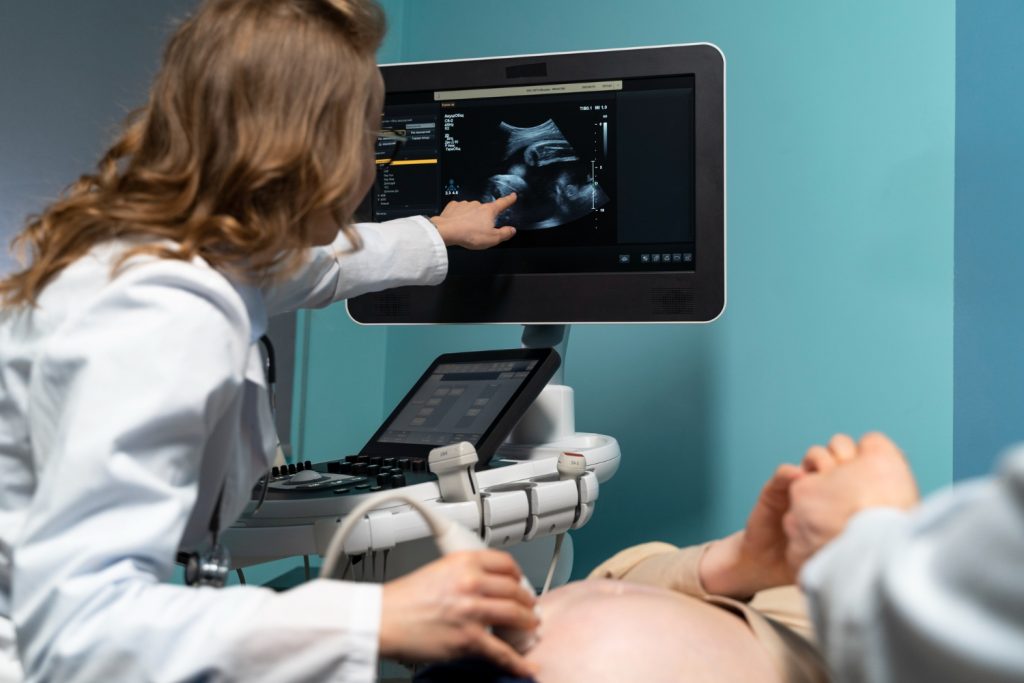
But the celebration turned to crisis when Lopez began experiencing severe abdominal pain at the stadium. Andrew rushed her to Cedars-Sinai, where she arrived with dangerously high blood pressure. Medical staff worked quickly to stabilize her while ordering an MRI, bloodwork, and an ultrasound. What those scans revealed would leave even veteran physicians speechless.
An “Almost Unheard Of” Discovery
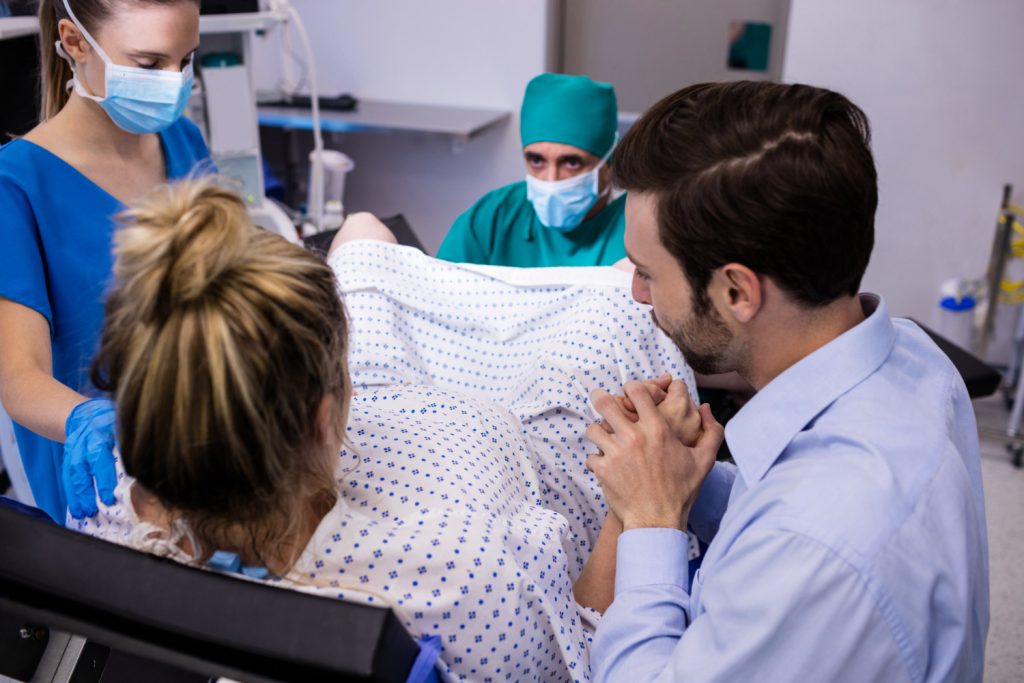
Dr. John Ozimek, medical director of Labor and Delivery at Cedars-Sinai, had seen complicated pregnancies before. He had managed high-risk deliveries and navigated medical emergencies. Nothing prepared him for what appeared on Lopez’s imaging results.
“Suze was pregnant, but her uterus was empty, and a giant benign ovarian cyst weighing over 20 pounds was taking up so much space,” Ozimek explained. “We then discovered a nearly full-term baby boy in a small space in the abdomen, near the liver, with his butt resting on the uterus. A pregnancy this far outside the uterus that continues to develop is almost unheard of.”
Lopez was carrying a baby, but not in any way medicine would consider normal. Her son had developed entirely outside her uterus, nestled against her liver and other organs, hidden behind a 22-pound dermoid cyst. As he grew, his tiny body pushed the massive tumor forward, making it appear as though the cyst itself was simply getting larger.
For months, Lopez had attributed her expanding abdomen to the tumor she already knew about. Irregular periods were nothing new for her. Abdominal discomfort had become routine. Every sign of pregnancy had been masked by a condition she was already living with.
Understanding Abdominal Ectopic Pregnancy
Ectopic pregnancies occur when a fertilized egg implants outside the uterus. Roughly 2% of all pregnancies are ectopic, and about 95% of those develop in the fallopian tubes. Only about 1% of ectopic cases are abdominal, where the embryo attaches to organs, blood vessels, or other structures in the abdominal cavity.
Such pregnancies are considered life-threatening emergencies. A placenta cannot safely grow outside the uterus, creating extreme risks of catastrophic bleeding and organ damage. Medical guidance calls for ending these pregnancies immediately, either through medication or surgery, because the danger to the mother is severe and fetal survival is extraordinarily rare.
Babies who somehow survive abdominal ectopic pregnancies often face serious medical problems. Most do not make it past the first trimester. For one to reach full term, with the mother unaware she was even pregnant, defied nearly everything physicians understood about reproductive medicine.
Dr. Michael Manuel, a gynecological oncologist at Providence Cedars-Sinai Tarzana Medical Center, was called in to remove Lopez’s massive cyst. What he encountered shook him.
“It was profound to see this full-term baby sitting behind a very large ovarian tumor, not in the uterus. In my entire career, I’ve never even heard of one making it this far into the pregnancy,” Manuel said.
Thirty Experts for One Delivery
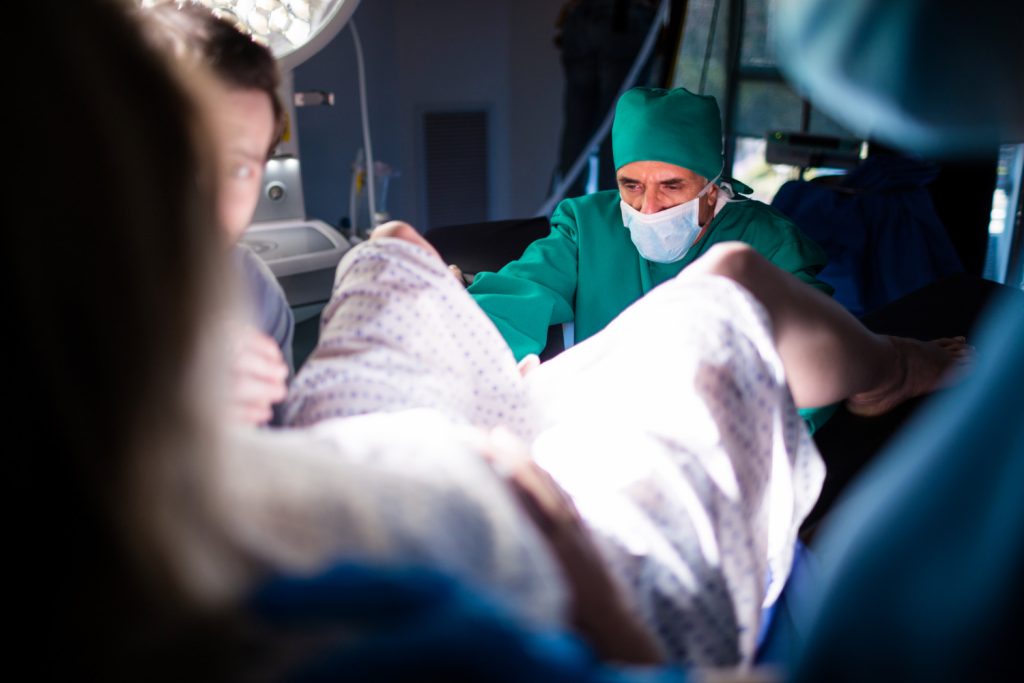
Cedars-Sinai assembled a team of approximately 30 specialists to handle what would become one of their most complex procedures. Maternal-fetal medicine experts, gynecological oncologists, anesthesiologists, nurses, and surgical technicians filled the operating room to near capacity on August 18.
Carmen Chavez, assistant manager of the Maternal-Fetal Care Unit, stayed close to Lopez throughout the ordeal. She sat in on consultations with doctors to help Lopez and her family understand what they were facing. She even helped the couple explain the pregnancy to their teenage daughter, Kaila. Lopez would later call Chavez her guardian angel.
Planning the surgery required solving multiple problems at once. Medical staff needed to deliver a baby whose placenta and blood vessels had attached in the abdomen rather than the uterus. They had to remove a 22-pound ovarian mass. And they had to keep both mother and child alive through a procedure that carried enormous risks of hemorrhage.
Cedars-Sinai holds a Level IV Maternal Care designation, the only hospital in California with that distinction. Such facilities provide comprehensive care for the most complex pregnancies, with specially trained teams ready to handle emergencies that would overwhelm other hospitals. For Lopez, that infrastructure would prove essential.
Dr. Michael Sanchez, an anesthesiologist on the team, prepared for the worst. He powered up specialized equipment capable of delivering blood products rapidly, knowing that every second would matter if something went wrong.
Baby Ryu Defies Every Expectation
Manuel lifted the massive dermoid cyst while Ozimek worked to deliver the baby. After months of hiding behind the tumor, the little boy emerged weighing 8 pounds with a full head of hair. Medical staff immediately transferred him to the Neonatal Intensive Care Unit.
One serious concern was lung development. Babies who develop outside the uterus often face respiratory problems because their lungs do not mature properly. Dr. Sara Dayanim, a neonatologist with Cedars-Sinai Guerin Children’s, had prepared her team to handle breathing difficulties.
Ryu surprised everyone. He came out of anesthesia quickly and showed immediate signs of strength. Dayanim described him as “feisty.” Within a day, staff removed his breathing tube. Over two weeks in the NICU, Ryu reached every benchmark doctors use to measure newborn health. He had defied every statistical probability stacked against him.
Fighting to Save Mom
With Ryu safely in the NICU, the surgical team turned their full attention back to Lopez. As soon as the baby had been delivered, she began hemorrhaging badly. Blood loss in abdominal ectopic deliveries can be catastrophic, and Lopez’s case was no exception.
Sanchez activated the rapid blood delivery system he had prepared earlier. His team administered 11 units of blood to stabilize her, a massive transfusion that underscored just how close Lopez came to losing her life. For reference, a typical blood donation is one unit, roughly one pint.
Dr. Sarah J. Kilpatrick, chair of Obstetrics and Gynecology at Cedars-Sinai, later reflected on how the hospital’s specialized resources made the difference between life and death. Having highly trained teams ready to coordinate across multiple specialties allowed them to respond to each complication as it arose.
Lopez recovered alongside her newborn son. She spent time in the NICU with Ryu, Andrew, and Kaila, bonding as a family of four for the first time.
A Name That Means “Gift from God”
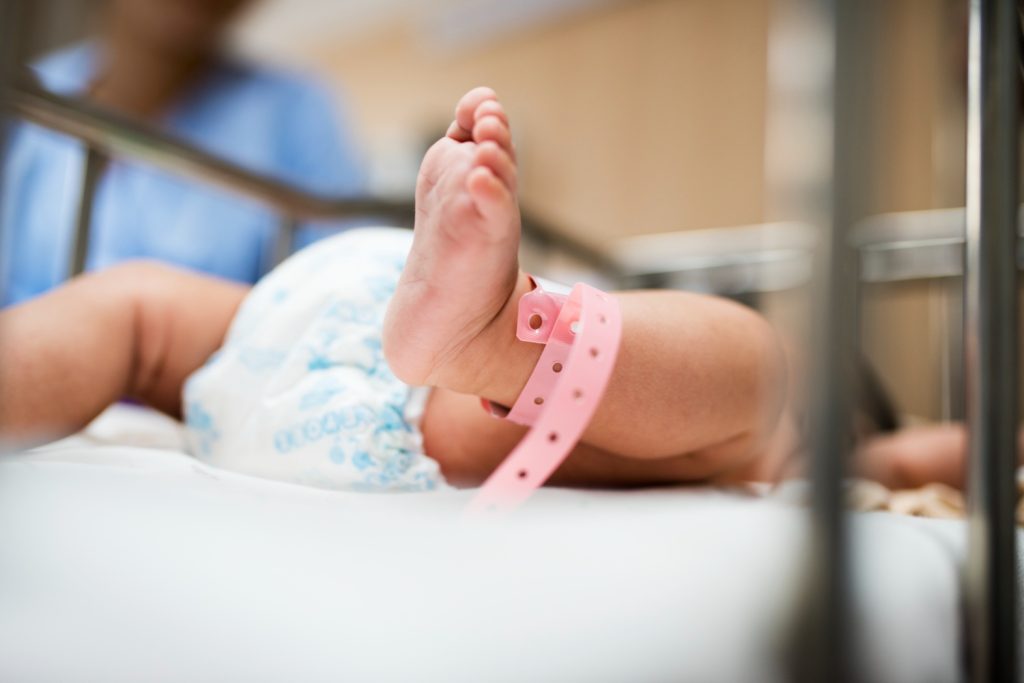
Andrew and Suze chose their son’s name carefully. Ryu Jesse Lopez carries a middle name with special meaning. “Jesse” translates to “gift from God,” and his parents believe that description fits perfectly.
Andrew was allowed in the operating room during the delivery. He watched his wife endure a surgery that pushed medical expertise to its limits. He saw his son emerge from a place no baby should survive. For a man who had spent 17 years praying for another child with his wife, the moment felt like an answered prayer.
Both Ryu and Suze have recovered fully. Mother and son left Cedars-Sinai healthy, their story spreading through medical circles and news outlets as an example of how unpredictable pregnancy can be.
Gratitude for Every Day
Lopez has had time to reflect on everything her family experienced. She thinks about the years of hoping for another baby. She remembers the fear of learning she might have cancer. She recalls the shock of discovering a full-term child hiding behind a tumor she had wanted removed for years. Her perspective on life has shifted in ways she struggles to articulate.
“I appreciate every little thing. Everything. Every day is a gift and I’m never going to waste it,” Lopez said. “God gave me this baby so that he could be an example to the world that God exists—that miracles, modern-day miracles, do happen.”
For the medical team at Cedars-Sinai, Ryu’s case will remain a career highlight. Physicians who have practiced for decades have never encountered an abdominal ectopic pregnancy that progressed so far. Many will never see another.
But for the Lopez family, statistics and medical records matter far less than the baby boy now sleeping in their Bakersfield home. Ryu arrived in a way nobody could have predicted, survived odds that should have been impossible, and brought hope to parents who had stopped believing another child would come.
Sometimes miracles do happen. And sometimes they hide behind 22-pound tumors, waiting to be discovered.