
Your cart is currently empty!
A Photographer Spent Years Filming Glaciers And The Results Are Alarming
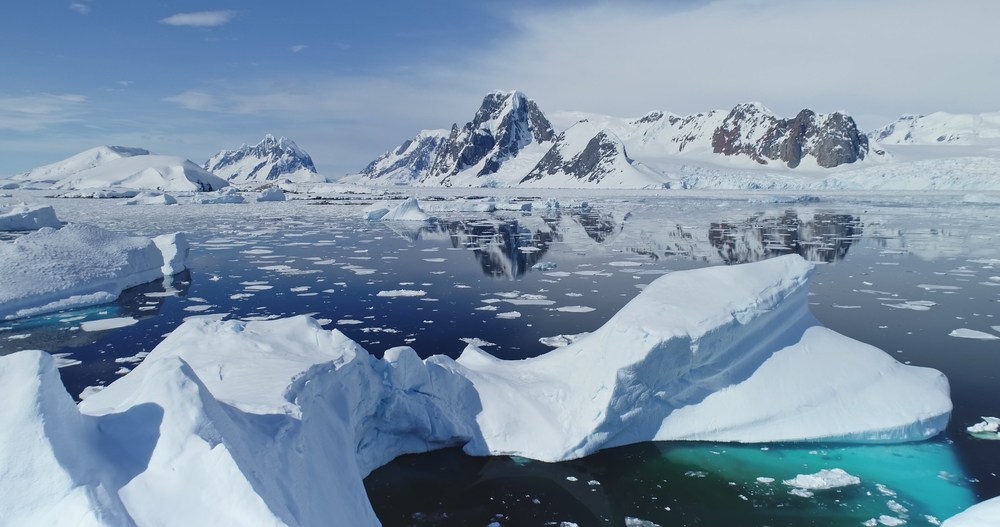
Climate change is often discussed through statistics, projections, and scientific models. Yet sometimes the most powerful evidence is visual. When people witness landscapes transform before their eyes, the abstract concept of global warming becomes immediate and deeply personal. Over the past few decades, photographers, scientists, and filmmakers have worked together to document these environmental changes in ways that are difficult to ignore.
Contents
show
One of the most striking examples comes from an extraordinary long term photography project led by environmental photographer James Balog. Through a network of time lapse cameras positioned near glaciers, the project captured dramatic scenes of ice sheets collapsing and glaciers retreating at an unprecedented rate. The images, later featured in the documentary “Chasing Ice,” offered the world a rare and haunting glimpse into the physical reality of a warming planet.
These visuals have since been described by many observers as some of the most powerful proof of our current climate catastrophe ever captured on camera. By documenting glaciers over years rather than moments, the project transformed slow moving environmental change into something people could clearly see and emotionally grasp.
Capturing Climate Change Through the Lens
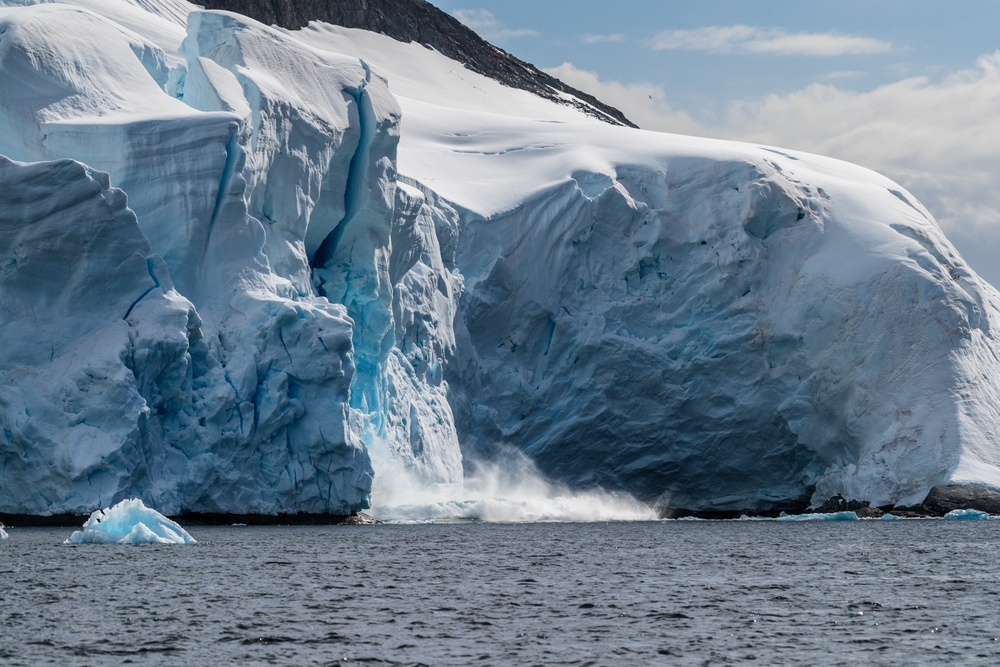
The project that produced this extraordinary footage began with a simple but ambitious goal. Photographer James Balog wanted to document how glaciers were responding to rising global temperatures. Rather than relying solely on traditional photographs, his team installed specialized time lapse cameras in remote Arctic locations. These cameras were designed to operate for years at a time, capturing thousands of images that could later be assembled into visual records of glacial change.
Setting up the cameras required extensive planning and extreme endurance. Researchers and photographers traveled across Greenland, Iceland, Alaska, and parts of the Canadian Arctic. In many cases, the equipment had to withstand harsh weather conditions, freezing temperatures, and remote terrain that was difficult to access even for experienced expedition teams.
Over time, the cameras began to capture something extraordinary. Massive glaciers that once appeared immovable began to visibly shrink and fracture. Sections of ice that had stood for centuries suddenly broke away, collapsing into the ocean in dramatic avalanches of frozen debris.
These visual records transformed the way climate change could be communicated to the public. Instead of graphs or complex scientific reports, viewers could watch glaciers retreat in minutes through time lapse sequences that represented years of environmental change.
The Historic Glacier Collapse That Shocked Scientists
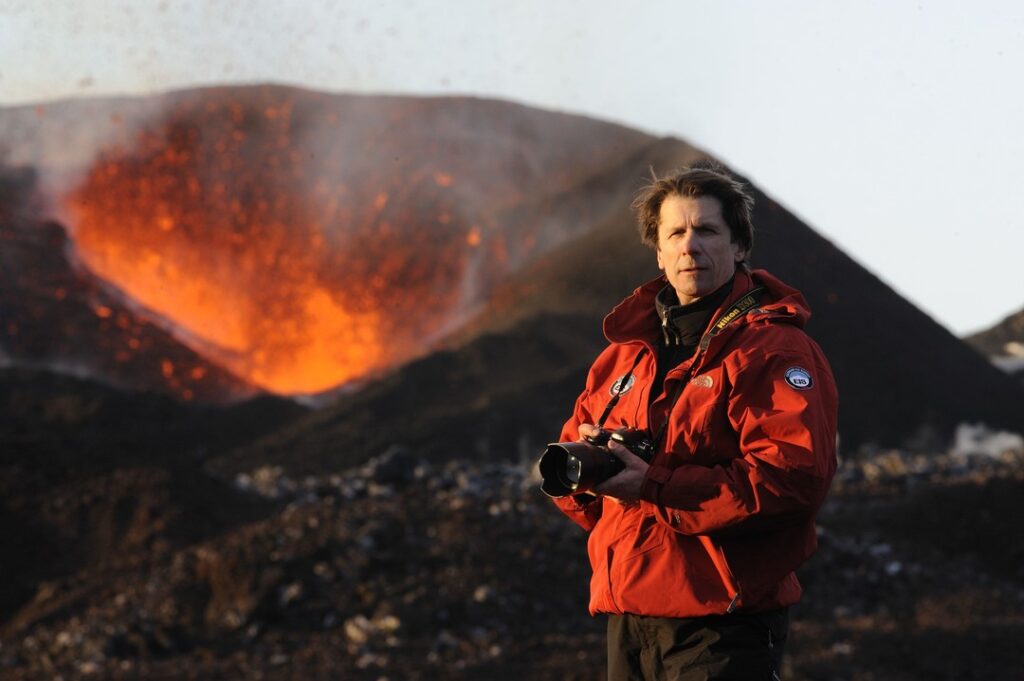
Among the many scenes recorded during the project, one event became legendary among scientists and filmmakers. The cameras captured a massive glacial calving event in Greenland lasting more than an hour. A section of ice nearly the size of Manhattan broke away and crashed into the sea, sending waves and fragments across the surrounding waters. The collapse demonstrated the immense power of glaciers and revealed how dramatic their disintegration can be under changing environmental conditions.
Glacial calving occurs when large chunks of ice detach from the edge of a glacier and fall into water. While natural, scientists have observed that the scale and frequency of these events have increased in many regions as global temperatures rise. Warmer air and ocean waters weaken ice sheets, making them more vulnerable to cracking. The footage revealed how destructive these collapses can be when glaciers become unstable and begin to fracture along internal crevasses.
Scientists analyzing the footage were stunned by its magnitude and clarity. Reports suggest the sequence may be one of the largest glacial calving events ever recorded on film. Researchers noted the collapse occurred in a cascading chain reaction, with slabs of ice breaking free one after another. The scale highlighted how rapidly some ice sheets are deteriorating and raised questions about how quickly similar glaciers could destabilize.
For viewers, the footage provided a sobering reminder of the pace of environmental change. What once seemed like slow geological processes appeared dynamic and fast in time lapse. Watching a glacier crumble in what seems like real time challenges assumptions about the stability of Earth’s frozen landscapes. The images transformed climate change from an abstract discussion into a tangible and unsettling reality.
Why Melting Glaciers Matter for the Planet
Glaciers are often described as Earth’s natural climate archives because they preserve valuable information about the planet’s environmental history. Layers of compressed ice contain trapped air bubbles and particles that record atmospheric conditions stretching back thousands of years. Scientists analyze these ice layers to understand historical temperature trends, volcanic eruptions, and changes in atmospheric gases. As these glaciers melt and disappear, researchers lose an irreplaceable source of data that helps explain how Earth’s climate has evolved over millennia.
The disappearance of glaciers also has direct consequences for global sea levels, which are already rising in many parts of the world. When land based ice melts and flows into the ocean, it adds additional water that contributes to rising seas. Over time, even small increases in sea level can have significant consequences for coastal communities. Cities located near coastlines face growing risks of flooding, shoreline erosion, and stronger storm surges during extreme weather events.
Glaciers also play a crucial role in freshwater supply for millions of people across different continents. In many mountainous regions, seasonal meltwater from glaciers feeds rivers that support agriculture, drinking water systems, and hydroelectric power generation. Communities in parts of Asia, South America, and Europe rely heavily on these natural water reservoirs. As glaciers shrink and lose mass, these water sources may become less reliable over time, potentially creating water shortages in regions that depend on predictable seasonal melt.
Beyond human impacts, glacial loss affects entire ecosystems that have evolved in cold and stable environments. Many plant and animal species depend on glacial habitats and the unique conditions they create. As glaciers retreat, landscapes change rapidly and ecosystems must adapt to new environmental realities. Wildlife may be forced to migrate to cooler regions, adjust their feeding patterns, or compete for new habitats as ice covered terrain gradually transforms into exposed rock and water.
The Power of Visual Evidence in Climate Communication
Scientific research on climate change has existed for decades, supported by thousands of studies from researchers around the world. Despite the strong scientific consensus, communicating these findings to the broader public has often been challenging. Climate science involves complex models, long term data sets, and technical terminology that can be difficult for non specialists to interpret. As a result, many people struggle to fully grasp the scale or urgency of the problem when it is presented only through reports or charts.
Visual storytelling changes that dynamic by translating complex scientific observations into experiences that people can immediately understand. When audiences see glaciers collapsing, coastlines eroding, or forests transforming over time, the reality of climate change becomes tangible. Images and videos allow viewers to witness environmental change directly rather than imagining it through statistics. This type of communication can create stronger emotional connections and encourage deeper engagement with climate issues.
The footage captured by Balog’s team became a central feature of the documentary “Chasing Ice,” which brought the project to international attention. The film followed the challenges of installing and maintaining the remote camera systems while also showcasing the powerful images they produced. Audiences around the world were able to see glaciers moving, cracking, and collapsing in ways that had rarely been documented before. The documentary helped spark conversations about climate science in classrooms, universities, and policy discussions.
Many educators and environmental advocates have since used these visuals as teaching tools to help explain climate change more clearly. When students and audiences see real world evidence of environmental transformation, they often become more curious about the science behind it. The images encourage viewers to ask deeper questions about the causes and consequences of global warming. In this way, visual documentation becomes not only a record of change but also a catalyst for learning and public awareness.
What These Images Mean for the Future
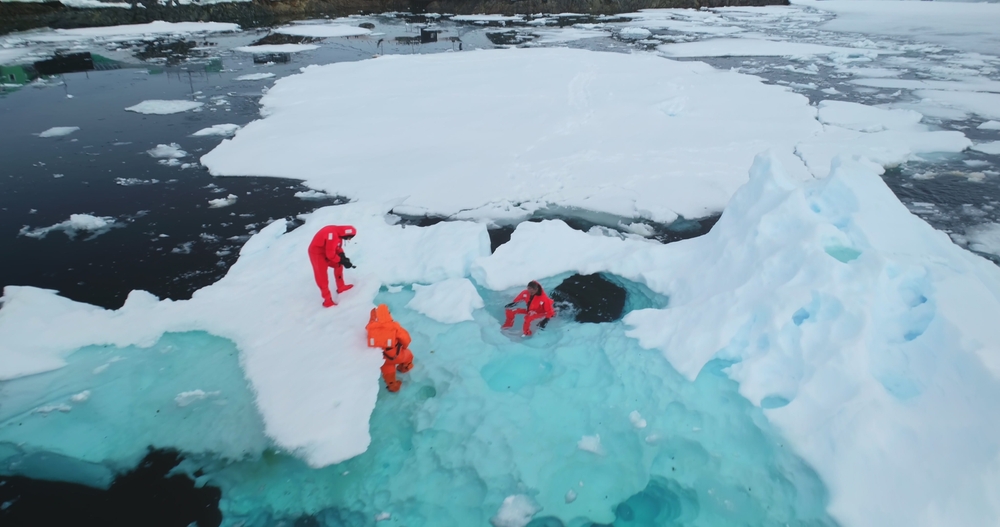
The glacier footage captured through long term time lapse photography represents far more than a scientific experiment. It is also a historical document that records a planet undergoing profound transformation. Future generations may look back at these images as evidence of the moment when humanity began to fully recognize the scale and visibility of climate change. The photographs and films created through the project may serve as enduring reminders of how rapidly some of Earth’s most ancient landscapes have been altered.
The images also highlight the urgency of climate action at a global scale. While glaciers naturally advance and retreat over centuries due to natural climate cycles, the current pace of melting is significantly faster than many historical patterns. Scientists attribute much of this acceleration to rising global temperatures driven largely by human activity, including the burning of fossil fuels and widespread industrial emissions. The visual evidence reinforces the scientific findings that have warned about these trends for decades.
Addressing this challenge will require coordinated global efforts that extend across governments, industries, and communities. Reducing greenhouse gas emissions, transitioning toward renewable energy sources, and improving environmental protections are among the strategies frequently discussed by experts. International agreements and local initiatives both play roles in shaping how societies respond to climate change. The choices made today will influence the stability of ecosystems and climate systems for generations to come.
At the same time, the images captured by projects like Balog’s serve as reminders of what is at stake if meaningful action is delayed. They show not only what the world is losing but also how quickly these losses can occur. By documenting the retreat of glaciers in such vivid detail, the project highlights the fragile balance that sustains Earth’s natural systems. Preserving that balance remains one of the defining environmental challenges of the modern era.
The Urgent Call of Climate Change
The extraordinary glacier footage captured through long term time lapse photography has become one of the most compelling visual records of climate change ever documented. By transforming years of environmental transformation into minutes of footage, the project allowed the world to witness changes that might otherwise have gone unnoticed. The images revealed glaciers moving, fracturing, and collapsing in ways that challenged traditional assumptions about the stability of frozen landscapes.
These images remind us that climate change is not a distant or theoretical threat but a present reality unfolding across some of the planet’s most vulnerable environments. Glaciers, once symbols of permanence and stability, are rapidly transforming before our eyes. The disappearance of these massive ice formations carries consequences that extend far beyond the polar regions where they are located.
The power of this visual evidence lies not only in its scientific value but also in its emotional impact on those who watch it. Seeing glaciers collapse and retreat forces viewers to confront the scale of change occurring across Earth’s ecosystems. For many people, the images provide a moment of realization that environmental shifts are happening far faster than previously imagined.
Ultimately, the footage stands as both a warning and a call to awareness for societies around the world. It challenges communities, leaders, and individuals to reflect on the environmental choices being made today. The images invite viewers to consider how present actions will shape the future of the planet and whether humanity will rise to meet one of the most significant environmental challenges in modern history.
References
- Global Climate Highlights 2025. (n.d.). Copernicus. https://climate.copernicus.eu/global-climate-highlights-2025
- Dussaillant, I., Hugonnet, R., Huss, M., Berthier, E., Bannwart, J., Paul, F., & Zemp, M. (2025). Annual mass change of the world’s glaciers from 1976 to 2024 by temporal downscaling of satellite data with in situ observations. Earth System Science Data, 17(5), 1977–2006. https://doi.org/10.5194/essd-17-1977-2025
- NCEI.Monitoring.Info@noaa.gov. (n.d.). Monthly Climate Reports | National Centers for Environmental Information (NCEI). https://www.ncei.noaa.gov/access/monitoring/monthly-report/global/202601