
Your cart is currently empty!
A Rare Cosmic Particle Reached Earth and Its Source Has Left Scientists Searching
In 2021, a quiet signal appeared in scientific data that did not fit neatly into any existing explanation. It was not accompanied by light, sound, or visible change in the sky, yet it carried a level of energy that immediately caught researchers’ attention. Instruments designed to monitor rare atmospheric events recorded something unusual, leaving scientists to ask a simple but unsettling question. If this data were correct, what had just reached Earth?
Contents
show
The unease came from what could not be identified. There was no clear source, no obvious path, and no immediate answer to explain how such an event was possible. For a field built on patterns and probabilities, this single detection stood apart. It was eventually given a name, Amaterasu, not because its origin was understood, but because it marked a moment when evidence arrived before explanation. As researchers continue to study the data, one question remains open and unresolved. What does it mean when something real reaches us from the universe, and we cannot yet explain why it is here?
When Data Refuses to Stay Quiet
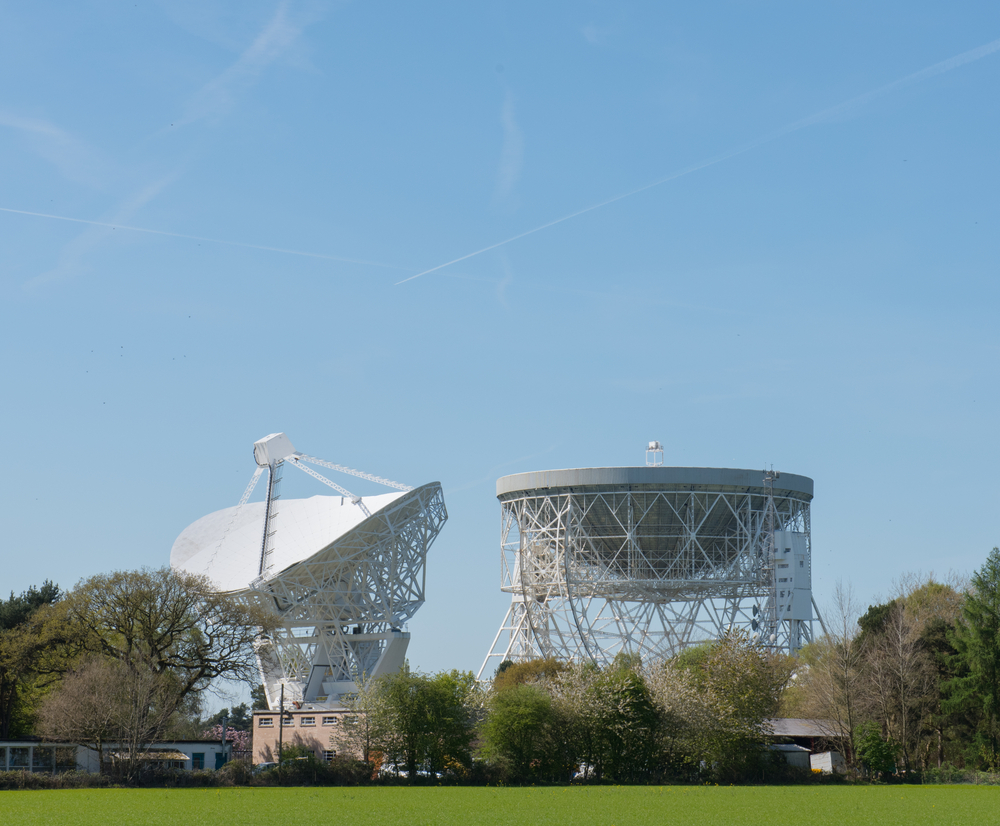
The story of this discovery begins far from headlines and telescopes pointed at the sky. It starts on the ground, in a stretch of Utah desert where scientific instruments work continuously, collecting information most people never notice. The Telescope Array is designed to watch for subtle disruptions in Earth’s atmosphere, the kind that suggest something from space has interacted with it. Scientists do not see the incoming particle itself. Instead, they study the aftermath, the brief and complex cascade of secondary particles created when an unseen visitor collides with air high above the planet.
When this particular event was reconstructed, it immediately stood apart from routine detections. Calculations showed that the particle carried about 240 exa electron volts of energy, or 2.4 × 10²⁰ electron volts, placing it among the most energetic cosmic rays ever measured. Researchers approached the result cautiously, rechecking the data using established analysis methods to rule out technical faults or atmospheric interference. Each review led back to the same conclusion. The signal was genuine, and its intensity could not be dismissed as error or coincidence.
The way the particle interacted with the atmosphere offered further insight. The resulting shower matched the expected signature of a single proton rather than a heavier atomic nucleus, which would have produced a more diffuse pattern. Even with this clarity, acceptance did not come easily. Toshihiro Fujii of Osaka Metropolitan University, who led the analysis, later described his initial reaction with candor, saying, “When I first discovered this ultra-high-energy cosmic ray, I thought there must have been a mistake, as it showed an energy level unprecedented in the last 3 decades.” His response reflected a broader scientific instinct. When evidence challenges long-held assumptions, skepticism is not resistance. It is the first step toward understanding something genuinely new.
The Spaceborne Forces Passing Through Our Lives
Most people never think about the steady stream of material arriving at Earth from beyond our planet, yet it is happening constantly. Cosmic rays are charged particles that originate far outside the solar system and move through space at extraordinary speeds. Many are simple protons, while others are heavier atomic nuclei that have been stripped of their electrons. Because they carry an electric charge, their paths are shaped by magnetic fields spread throughout the universe, which means their journeys are often winding and difficult to trace back to a single point of origin.
For more than a century, scientists have worked to understand these particles by studying what happens when they collide with Earth’s atmosphere. Those impacts produce showers of secondary particles that can be measured and analyzed, allowing researchers to estimate the original particle’s energy and composition. Most of the cosmic rays detected near Earth fall within ranges that fit well with known cosmic processes, such as stellar activity and remnants of past explosions. These particles behave in ways scientists have learned to anticipate and explain.
A much smaller group behaves differently. These rare cosmic rays arrive carrying extreme amounts of energy that strain existing theories and raise deeper questions about how nature accelerates particles to such limits. Explaining them requires environments far more powerful than those typically associated with familiar cosmic events. Physicist John Matthews of the University of Utah summarized this challenge clearly when he said, “Things that people think of as energetic, like supernovae, are nowhere near energetic enough for this. You need huge amounts of energy, really high magnetic fields to confine the particle while it gets accelerated.” His observation highlights why discoveries like this one continue to reshape scientific understanding of the forces at work beyond Earth.
Searching for a Source That Should Exist
When scientists try to explain an event like this, they begin by asking what kind of environment could realistically produce it. Pushing a charged particle to such extreme energy requires more than a sudden burst of force. The particle must be accelerated over time while being held in place, otherwise it would escape before reaching the observed level. That combination points to rare regions of space where powerful magnetic fields and sustained energy work together, conditions that are difficult to achieve and even harder to observe directly.
Naturally, researchers first examine the most energetic objects already known. Supernova remnants are capable particle accelerators, but current models suggest they cannot reach the required energy. Active galactic nuclei and black hole mergers offer far stronger conditions, yet none have been identified close enough to convincingly explain this event. Pulsars and other compact stellar remnants also generate intense electromagnetic environments, but once again, no nearby candidate aligns clearly with the properties of the detected particle. Each familiar explanation seems to fall just short.
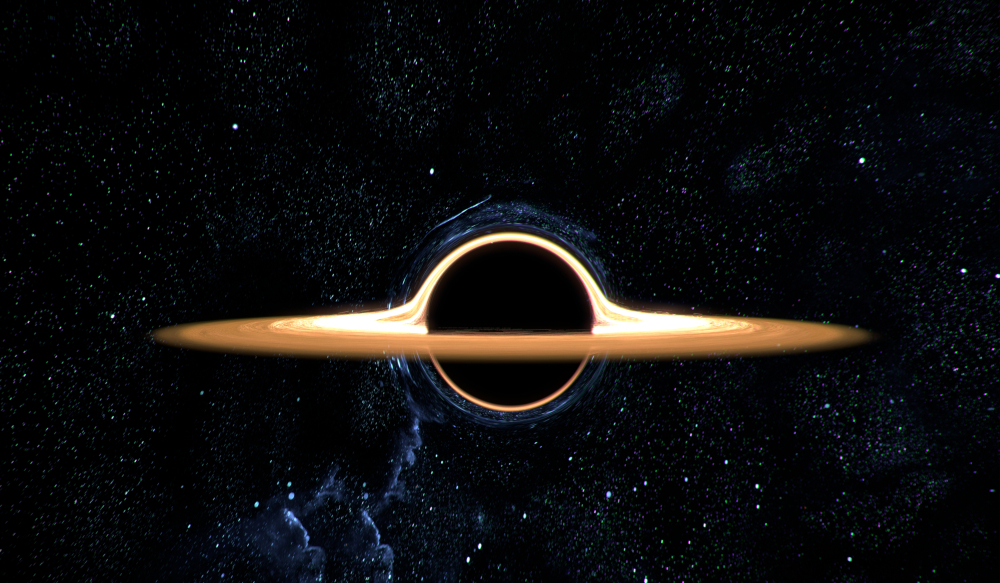
That is where the uncertainty becomes unavoidable. Toshihiro Fujii acknowledged this gap openly when he said the particle could come from “unknown astronomical phenomena and novel physical origins beyond the Standard Model [of physics].” Other scientists have echoed that openness, not by proposing firm answers, but by acknowledging how incomplete current explanations may be. John Belz of the University of Utah expressed that uncertainty candidly when he said, “It could be defects in the structure of spacetime, colliding cosmic strings. I mean, I’m just spitballing crazy ideas that people are coming up with because there’s not a conventional explanation. It’s a real mystery.” Rather than signaling failure, moments like this highlight how scientific understanding grows by recognizing when existing frameworks are no longer enough and new questions need room to form.
How to Read a Mystery Like This Without Getting Misled
When a discovery like Amaterasu makes headlines, the most common mistake is thinking that scientists either know everything about it or know nothing at all. Reality sits in the middle. Researchers can be highly confident about what their instruments measured while still being uncertain about what caused it. That distinction matters because it protects readers from two extremes: panic-driven interpretations and dismissive skepticism. A responsible way to read stories like this is to separate measurement from explanation. The energy estimate, the timing, and the particle shower signature are evidence. The origin story is still a working question.
It also helps to pay attention to how scientists talk when they are being careful. When you see language like likely, suggests, points to, or cannot yet explain, that is not weakness. It is a sign that the field is staying honest about what data can support. For readers, this is practical because it builds better decision making far beyond space science. Whether you are evaluating a health claim, a relationship trend, or a viral headline, the same skill applies. Ask what is known, how it was measured, what remains uncertain, and what new evidence would change the conclusion. Amaterasu is a strong example of why this approach matters. It shows how real discoveries can be both reliable and unresolved at the same time, and why good thinking begins with that difference.
Why Rare Events Carry Outsized Meaning
Discoveries like this are often underestimated because of how unlikely they are to occur. Rarity can be mistaken for irrelevance, when in fact it is often the opposite. Most cosmic rays behave in ways scientists already understand, which is precisely why they blend into the background of research. An event like this stands out because it does not follow those expectations. It exposes the edges of existing models and shows where current explanations stop working. Even if it never happens again in the same way, it still reshapes how scientists think about what is possible.
The same principle applies more broadly. Moments that fall outside familiar patterns tend to get overlooked or explained away, even though they often carry the most useful information. An unexpected outcome forces a reassessment of assumptions and opens space for better questions. This discovery is a reminder that progress is not driven only by repetition and predictability. Sometimes it begins when something rare interrupts the pattern and demands closer attention, not because it fits, but because it does not.
A Signal That Refuses to Be Explained Away
Amaterasu stands as a rare moment when science reaches the edge of what it can responsibly say. The particle was detected, measured, and verified, yet when researchers traced its path, they found no nearby object capable of producing such energy. The source articles make one point clear. This was not a glitch, a misreading, or a statistical fluke. It was a real cosmic event that arrived with power but without context, challenging assumptions about where extreme energy in the universe can come from.

What makes this discovery striking is not the mystery itself, but the discipline required to leave it unresolved. Scientists have resisted the urge to attach a convenient explanation and instead acknowledged the limits of current models. Future observatories may reveal patterns that place Amaterasu within a broader class of events, or they may confirm how exceptional it truly is. For now, the signal remains intact and unanswered, a reminder that the universe does not owe us clarity on demand and that progress often begins when evidence is allowed to stand without interpretation forcing it into familiar territory.