
Your cart is currently empty!
Artemis II Takes Flight, Launching Four Astronauts Around the Moon for the First Time in Over Five Decades

For half a century, the moon has remained a distant, untouched witness to humanity’s progress on Earth. Now, the quiet of deep space is breaking once again. As a colossal rocket pierces the night sky over Florida, a new generation of diverse explorers traces the historic path of Apollo, carrying the hopes and dreams of millions. This monumental voyage serves as much more than a nostalgic return to the closest celestial neighbor; it is a daring leap toward frontiers once thought impossible.
Contents
show
Humanity’s Long-Awaited Return Toward the Moon

On the evening of April 1, 2026, the night sky over Florida’s Kennedy Space Center lit up with the ignition of a highly anticipated deep space mission. At exactly 6:35 p.m. Eastern Time, the Space Launch System rocket roared to life, propelling the Orion spacecraft and its four passengers off Launch Complex 39B. This liftoff marks a defining moment in modern space exploration, as humanity officially journeys back toward the moon for the first time since the Apollo 17 mission in December 1972.
Breaking a 53-year absence from deep space, the launch was a spectacular display of engineering. The solid rocket boosters provided over 8 million pounds of thrust, tearing the spacecraft away from Earth’s gravity. Within eight and a half minutes, the core stage completed its critical burn, allowing the Orion capsule to safely enter a highly elliptical orbit. Here, the crew spent their first hours evaluating vital communication and life support systems while gazing down at their home planet.
“Fifty-three years ago, humanity left the Moon and did not return. Now we go back,” stated Amit Kshatriya, a NASA associate administrator, during a pre-launch briefing. This sentiment captures the collective ambition behind the Artemis program. The mission is not simply about repeating past achievements but about pushing the boundaries of human potential. By successfully clearing the atmosphere and entering orbit, the Artemis II crew has taken an essential step in a much larger vision.
A Diverse Crew of Trailblazers Making History
The four individuals aboard the Orion capsule represent a beautiful reflection of modern humanity, shattering decades-old records. The crew is commanded by Reid Wiseman, a decorated United States Navy Captain who previously spent 165 days on the International Space Station. Despite his extensive experience, Wiseman remains humbled by the opportunity, once stating that becoming an astronaut felt like “an unobtainable dream.”
Sitting beside him is Pilot Victor Glover, who is making history as the first Black person to journey beyond low Earth orbit. A Navy veteran with over 3,000 flight hours, Glover brings critical technical expertise to the mission. Mission Specialist Christina Koch adds another monumental milestone as the first woman to travel to the lunar vicinity. An accomplished engineer who already holds the record for the longest continuous spaceflight by a woman, Koch navigates her career by the personal philosophy to “Do what scares you.” Rounding out the team is Mission Specialist Jeremy Hansen, representing the Canadian Space Agency. As a former fighter pilot embarking on his first spaceflight, Hansen holds the distinct honor of being the first non-American citizen to travel to the moon’s neighborhood.
Together, this international crew is set to achieve remarkable spaceflight firsts. During their ten-day journey, they will fly a free-return trajectory that loops around the moon. When they reach the far side of the lunar surface, the astronauts will travel roughly 5,000 miles beyond it. This will place them further from Earth than any humans in history, surpassing the distance record set by the Apollo 13 crew in 1970.
The Ultimate Test Drive in Deep Space
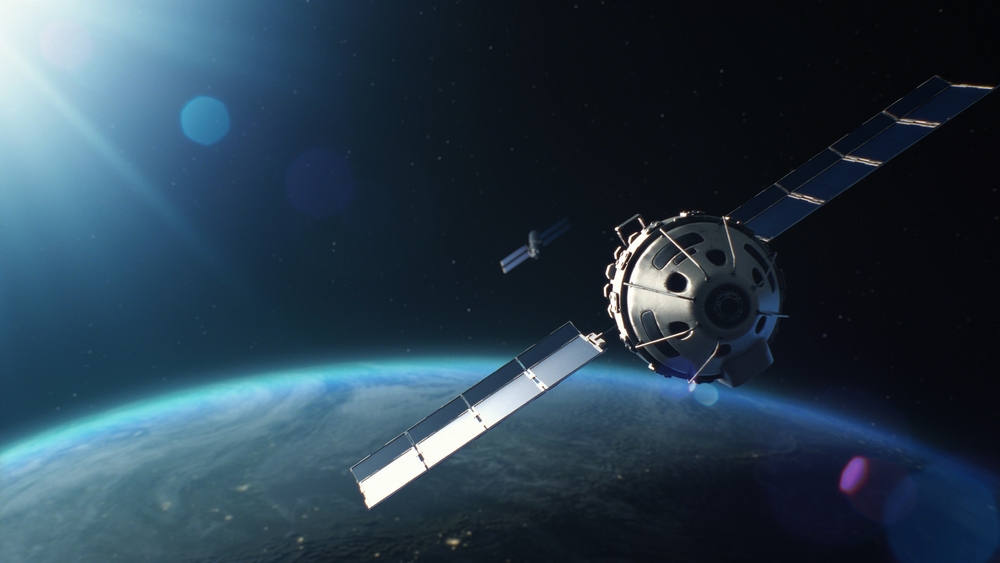
The 10-day voyage relies entirely on the Orion spacecraft, a highly advanced capsule designed specifically for deep space endurance. Before leaving Earth orbit, the astronauts spent their initial hours conducting a vital manual flying demonstration. The crew executed proximity operations, carefully steering Orion near the rocket’s detached upper stage. This exercise confirms the spacecraft responds correctly to human input, a critical requirement for future flights that will involve complex docking procedures.
Inside the cabin, the mission serves as an intense proving ground. The crew is actively validating essential life support systems that regulate oxygen, clear carbon dioxide, and manage water. Living in an enclosed space roughly the size of a small camper van, the astronauts also provide valuable medical data. Scientists are closely monitoring their sleep patterns and overall health to understand how the human body adapts to the physical demands of deep space exploration.
After verifying these onboard systems, Orion is propelled into a free return trajectory. This precise flight path is a marvel of orbital mechanics. It utilizes the moon’s gravitational pull to naturally slingshot the capsule back toward Earth. This route provides a built in safety net; if the main engine were to fail, lunar gravity would still guide the crew safely home. By successfully executing these maneuvers, the space agency is building a reliable and thoroughly tested blueprint for long-term lunar habitation.
A Stepping Stone to the Lunar South Pole and Mars
While the Artemis II crew will not leave their capsule to walk on the moon, their journey is far from a standalone achievement. This voyage is a calculated practice run, serving as the critical bridge to humanity’s long-term presence in the cosmos. As Commander Reid Wiseman noted prior to launch, the core objective is to “prepare this spacecraft for Artemis III and for our NASA astronauts to go land on the Moon.”
Following this flight, the Artemis program will progressively shift focus toward returning boots to the lunar dust. Rather than revisiting the equatorial sites explored during the Apollo era, upcoming missions will target the moon’s treacherous and uncharted South Pole. This region is of immense scientific interest due to its permanently shadowed craters, which are believed to harbor frozen water. Accessing this ice is vital, as it can potentially be converted into drinking water, breathable oxygen, and even rocket fuel for deeper space travel.
Tthe moon serves as a proving ground for a much larger destination. The expansive vision of the Artemis program involves building a sustainable lunar base where astronauts can live and work for extended periods. The lessons learned from surviving in the harsh lunar environment will directly inform the technologies and psychological preparations needed for an even grander voyage. By mastering the challenges of deep space near our closest celestial neighbor, researchers are actively building the roadmap for the first crewed journey to Mars.
The Artemis Generation Takes Flight
The significance of this mission extends far beyond the four astronauts aboard the Orion capsule. Stowed safely inside the spacecraft is a small, zero-gravity indicator plush toy named “Rise,” designed by a second-grade student. Tucked within this mascot is a digital flash drive containing exactly 5,647,889 names submitted by people from across the globe. Commander Reid Wiseman captured the profound nature of this inclusion before launch, describing it as a “very emotional moment” to know the crew is bringing millions of names with them on this journey around the moon.
This staggering level of public participation highlights a major shift in how society approaches space exploration. Unlike the competitive space races of the past, the current era focuses heavily on international cooperation and shared achievement. Known as the Artemis Generation, today’s society is witnessing a deeply inclusive approach to science and discovery. The presence of millions of digital boarding passes on a deep space flight serves as a testament that reaching the stars is a collective human endeavor, not just an exclusive government project.
As the spacecraft continues its voyage, the mission offers a powerful perspective for those watching from the ground. It stands as a reminder to look upward and recognize the boundless possibilities that emerge when diverse minds unite toward a common goal. Embracing this spirit of collaboration in daily life can foster incredible innovation and unity within local communities. Let the launch of this historic flight inspire a renewed commitment to curiosity, proving that no frontier is too distant when humanity works together.