
Your cart is currently empty!
What the Artemis II Crew Witnessed That Apollo Astronauts Never Did on a Lunar Flyby
For over half a century, the lunar far side has existed in the human imagination as a rugged, silent frontier, glimpsed only through grainy film and distant robotic sensors.
Contents
show
Today, as the Artemis II mission carries a new generation of explorers further from Earth than ever before, that “hidden” landscape is finally being revealed in startlingly clear detail. This journey represents a bridge between the pioneering spirit of the 1960s and a future where the moon is no longer just a destination, but a tangible extension of our world.
A Record-Breaking Reach into the Deepest Silence
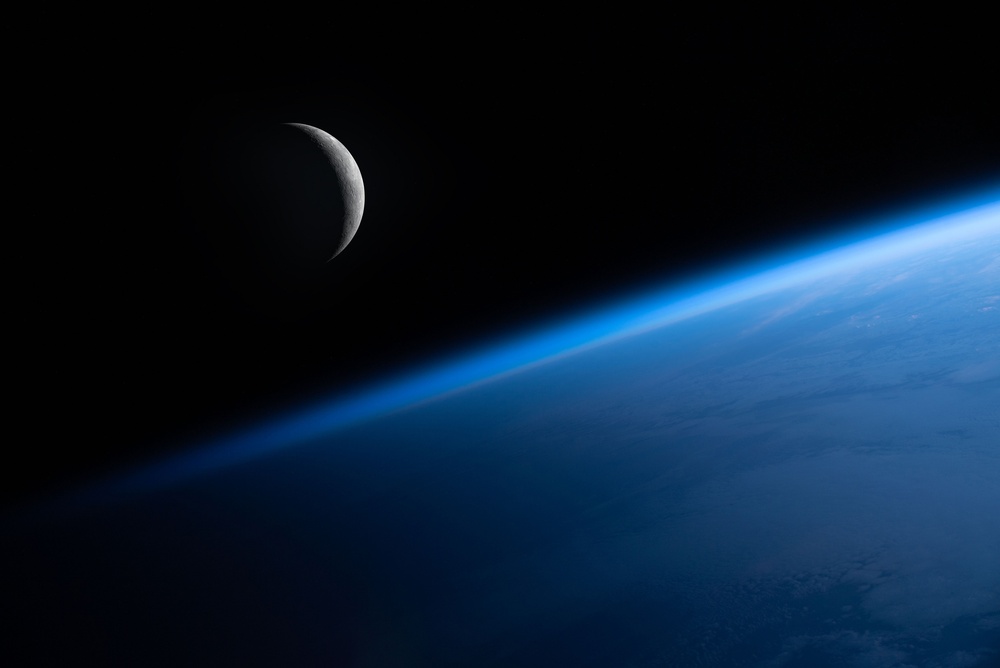
On April 6, 2026, the four-member crew of the Artemis II mission achieved a milestone that redefined the boundaries of human presence in space. As the Orion spacecraft swung around the lunar far side, it reached a distance of approximately 400,000 kilometers from Earth. This trajectory surpassed the record set by the Apollo 13 crew in 1970, placing Commander Reid Wiseman, Victor Glover, Christina Koch, and Jeremy Hansen further into the celestial void than any humans in history.
While the Apollo astronauts were the first to behold the rugged, crater-scarred expanse of the moon’s “hidden” side, their experience was limited by the technology of the era and the specific constraints of their orbits. For the Artemis crew, the transition into the lunar far side represents more than just a navigational turn; it is a profound entry into a region of total radio shadow. During this phase, the moon’s massive bulk acts as a natural shield, blocking all communication with Earth.
Unlike the relatively smooth maria that define the familiar “Man in the Moon” face seen from Earth, the far side is an ancient, battered landscape. This region lacks the large basaltic plains found on the near side, offering instead a dense collection of impact craters that tell the story of billions of years of solar system history. The Artemis II mission provides the first opportunity for humans to witness this terrain not through the grainy film of the 1960s, but with the clarity of ultra-high-definition optics and the stability of modern life-support systems designed for the long-duration missions of the future.
A Different View of the Lunar Disk
One of the most striking differences between the Artemis II flyby and the Apollo missions lies in the timing of the lunar phase. During the Apollo era, missions were primarily designed to ensure maximum visibility for landing sites on the near side. Consequently, the far side was often shrouded in darkness or only partially lit during their orbital passes. Artemis II, however, was timed to encounter the lunar far side during a period of near-full illumination. This allowed the crew to see regions that had remained hidden in shadow for previous human visitors.
NASA astronaut Christina Koch noted the surreal nature of this vantage point, remarking that “the darker parts just aren’t quite in the right place” compared to the moon humans observe from Earth. Because the Orion spacecraft followed a trajectory much higher than the low-altitude orbits of the 1960s—approximately 6,500 kilometers above the surface—the crew could see the lunar disk in its entirety. This perspective is a historical first; Apollo astronauts flew so close to the surface that they could only see a portion of the horizon at once, much like looking at a wall while standing inches away.
This wide-angle view, coupled with modern high-definition sensors, has revealed the Orientale Basin in unprecedented detail. As the largest and best-preserved multi-ring impact crater on the moon, Orientale serves as a geological benchmark for scientists. Seeing the entire basin simultaneously allows for a better understanding of its structure and the massive forces that shaped it. By combining human observation with 4K video capabilities, the crew is documenting a “new” moon—one that is rugged, brightly lit, and more comprehensive than any seen by human eyes before.
Streaming the Far Side in 4K
While robotic probes have mapped the lunar surface for decades, the presence of trained human observers on Artemis II provides a unique advantage. The human eye is significantly more sensitive to subtle color variations and textures than current robotic sensors, allowing the crew to identify nuances in the regolith that might indicate different mineral compositions or ages. During the flyby, the crew utilized a suite of 28 cameras, including flagship Nikon Z9 mirrorless systems and modified GoPros mounted to the spacecraft’s exterior, to capture 4K footage and high-resolution stills of 30 specific scientific targets.
A critical technological leap for this mission is the Orion Artemis II Optical Communications (O2O) system. Unlike the S-band radio waves of the Apollo era, which could only transmit basic telemetry and low-quality images, O2O uses laser beams to transmit data at speeds up to 260 Mbps. This allows for the near-instantaneous relay of ultra-high-definition video back to Earth. For the first time, humanity is not waiting for film to be physically returned and processed; instead, the world is witnessing the lunar far side alongside the astronauts in real-time clarity.
Canadian Space Agency astronaut Jeremy Hansen emphasized the importance of this firsthand perspective, stating that the ability to see the moon with the naked eye is “unbelievable” and provides context that data alone cannot convey. The crew’s observations of the 400-mile-wide Hertzsprung Basin and other far-side features are being used to refine cartographic models and select future landing sites. By bridging the gap between human intuition and digital precision, the Artemis II mission is transforming the moon from a distant object into a detailed, tangible landscape ready for exploration.
As Orion drifted behind the lunar limb, the crew entered a 40-minute “period of loss,” a predictable but poignant communication blackout where the Moon’s mass severed all contact with Mission Control. In an era defined by constant connectivity, this temporary isolation remains one of the most psychologically significant aspects of deep-space travel. While the Apollo astronauts experienced similar silences, the Artemis II crew faces this void within a spacecraft designed for a higher degree of autonomy, allowing them to manage complex systems without Earth’s immediate oversight.
This blackout is a fundamental constraint of physics; neither radio nor laser signals can penetrate the Moon’s rocky core. Pilot Victor Glover described the preparation for this phase as a testament to the crew’s training, noting that they must be ready to act as a “self-contained unit.” For 40 minutes, the four astronauts were truly alone, separated from the rest of humanity by both a planetary body and a vast expanse of space. This period allows for a rare moment of reflection, echoing the experience of Apollo 11’s Michael Collins, who once described the silence of the far side as a peaceful respite from the demands of the mission.
Operationally, this phase serves as a rigorous test for Orion’s automated guidance and life-support systems. During the blackout, the spacecraft must maintain its trajectory and internal environment without real-time telemetry being monitored on Earth. This “silence” is not merely a gap in the timeline but a critical validation of the technologies required for future missions to Mars. By successfully navigating this period of total independence, the Artemis II crew has demonstrated that humans can operate reliably in the most isolated environments known to science, paving the way for a permanent presence in deep space.
The Artemis II flyby is more than a technical achievement; it changes how people perceive their place in the universe. By capturing the lunar far side in such vivid detail, the crew has brought a part of the solar system that once felt like a mystery into the public consciousness. This mission signals a move from simply visiting space to truly understanding and participating in the lunar environment. It reminds the world that the moon is a real, tangible frontier that offers a chance for scientific progress and, eventually, a place where humans might live and work.
The success of this journey is built on the hard work of people from all over the world. For everyone watching from home, the clear videos and reliable connections prove that even the most difficult goals are achievable when people work together. As the focus shifts toward the Artemis III landing, this flyby is a reminder of what collective effort can accomplish. The data being collected right now will help ensure that the next group of explorers, those who will finally step onto the lunar south pole, can do so safely and successfully.
Perhaps the most meaningful part of this journey is the sight of Earth from the distance of the moon. Seeing the planet as a single, fragile home in the vastness of space encourages a sense of responsibility for where we live now and the new worlds we hope to inhabit. Taking part in these milestones helps everyone appreciate the resilience it takes to keep pushing forward. By following along, people are not just spectators; they are joining a journey that defines the future of human identity and exploration.