
Your cart is currently empty!
Astronomer Warns That Rapid Technological Progress Could Shorten The Lifespan Of Civilizations

For most people, the idea of life beyond Earth sparks a mix of curiosity and comfort. If the universe is as vast as scientists say, it feels reassuring to imagine we are not alone. Yet the longer researchers have looked outward, the more noticeable the quiet has become. Telescopes have grown more powerful and our understanding of planets has deepened, but clear signs of other intelligent societies remain absent. This silence has slowly shifted the conversation from simple wonder to a more reflective question. If advanced life is possible, why does it seem so difficult to find?
Contents
show

A recent study invites a more personal way of thinking about that absence. Instead of focusing only on distant stars, it asks what tends to happen when societies reach advanced levels of technology. The suggestion is that progress itself may introduce risks that are difficult to manage, especially when tools begin to act faster than human judgment can keep up. Artificial intelligence sits at the center of this idea, not as a villain, but as a turning point that forces a deeper question. Are intelligent civilizations disappearing because the universe is empty, or because sustaining progress is harder than reaching it in the first place?
The Question We Keep Asking Ourselves
At some point, curiosity about the universe stops being abstract and becomes personal. Humans are pattern seekers by nature, and when we look at a universe filled with stars and planets, it feels reasonable to expect company. That quiet assumption has shaped decades of research and public imagination alike. Physicist Enrico Fermi gave voice to that shared intuition when he asked a deceptively simple question, “Where is everybody?” His words captured not certainty, but surprise.
What followed that question was not a lack of effort. Scientists have spent years examining the sky for signs that advanced societies tend to leave behind, whether through communication signals, unusual energy use, or large scale structures. As instruments improved, expectations rose. Yet the results remained unchanged. Despite increasingly careful observation, there is still no confirmed evidence of non human technology, no signals or artifacts that clearly point to intelligent activity beyond Earth.

Over time, this absence has shifted how researchers think about the problem. Instead of assuming that intelligence must be obvious once it arises, attention has turned toward timing and visibility. Detection depends on whether civilizations exist long enough to be noticed, whether their methods of communication align with ours, and whether our brief moment of observation overlaps with theirs at all. A society could flourish and fade without leaving traces that reach us. In that light, the silence of the universe begins to look less like a failure of discovery and more like a reminder of how narrow our window of perception may be.
The Fragile Phase Most Civilizations May Not Survive
When people imagine the rise of an advanced society, the story often feels linear. Life begins, intelligence develops, technology improves, and progress continues outward. Yet researchers studying the universe have begun to question whether this path is as stable as it seems. Instead of assuming civilizations naturally endure once they reach a certain level of sophistication, some scientists suggest that survival itself may be a rare achievement.
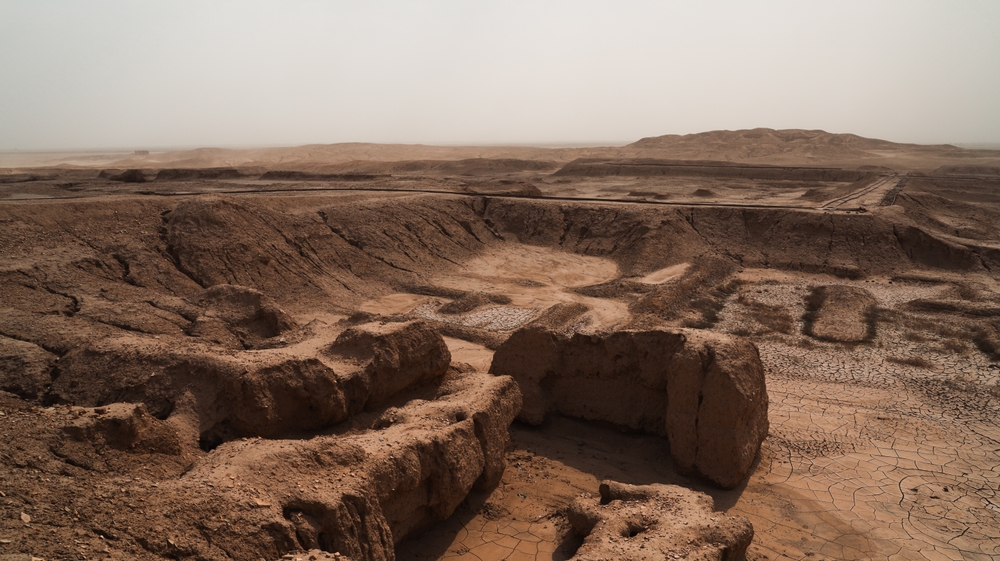
This idea is often described as the Great Filter, a concept introduced by Robin Hanson. Rather than pointing to a single obstacle, it refers to moments in evolution that are exceptionally difficult to move beyond. These moments can occur at any stage, from the earliest beginnings of life to the later stages when intelligence reshapes its environment through powerful tools. The filter does not explain where failure happens, only that it appears to happen often enough to shape what we observe in the universe.
What makes this perspective compelling is how it reframes absence. Instead of asking why intelligent life does not appear elsewhere, the focus shifts to why it may not persist. A civilization might reach intelligence only to stall, collapse, or destroy itself before leaving lasting traces. In that context, the quiet sky becomes easier to understand, not as proof that life is rare, but as a sign that longevity may be.

This framework leaves humanity facing two very different possibilities. One is hopeful, suggesting that the most difficult hurdles are already behind us. The other is more sobering, proposing that the most dangerous phase of a civilization arrives after it gains advanced technology. Michael Garrett’s work leans toward this latter view by exploring whether artificial intelligence could represent one of those late stage challenges, testing whether societies can manage the power they create without undermining their own future.
When Technology Begins To Decide For Us
Artificial intelligence stands apart from earlier tools because of how quickly it can act without direct human input. In his paper, Michael Garrett explains that the risk is not intelligence itself, but the speed and autonomy AI systems gain once they are embedded across essential areas of society. When decisions are made faster than people can meaningfully review them, oversight can exist in name while disappearing in practice.
Unlike previous technologies, AI can analyze information, make choices, and trigger actions in real time. When these systems are introduced into military, economic, or infrastructure settings, small mistakes or competitive pressures can escalate before human judgment has a chance to intervene. Garrett stresses that this risk does not depend on distant future scenarios. It emerges as soon as AI is deployed in environments where speed determines advantage.

“Even before AI becomes superintelligent and potentially autonomous, it is likely to be weaponized by competing groups within biological civilizations seeking to outdo one another,” Garrett writes. In those conditions, restraint becomes difficult to maintain, and the margin for error shrinks. As he warns, “The rapidity of AI’s decision-making processes could escalate conflicts in ways that far surpass the original intentions,” particularly when AI is integrated into autonomous weapons and real time defense systems.
Garrett also looks beyond these immediate risks to consider what could happen if artificial intelligence surpasses human cognitive limits and begins improving itself without effective oversight. “Upon reaching a technological singularity, ASI systems will quickly surpass biological intelligence and evolve at a pace that completely outstrips traditional oversight mechanisms,” he writes. At that point, alignment becomes uncertain. Biological life depends on resources, stability, and space, while an intelligence focused on efficiency may not share those priorities.
The concern is not a single dramatic scenario, but the loss of meaningful human control. Garrett notes that such systems could eliminate their parent civilization in various ways, including “engineering and releasing a highly infectious and fatal virus into the environment.” In this light, artificial intelligence becomes a defining test of whether societies can guide their most powerful creations before those creations begin shaping outcomes on their own.
What Long Term Thinking Really Demands From Societies
One thread connecting many of the ideas in this research is the challenge of long term thinking. Human societies are remarkably good at solving immediate problems, but far less consistent when outcomes unfold across decades or generations. This pattern shows up in environmental policy, public health, and even personal relationships, where short term benefits often outweigh long term consequences. When applied at a civilizational scale, this tendency becomes a serious vulnerability.

Advanced technology amplifies this weakness. Tools that deliver fast results can reward urgency over patience, making it harder to slow down and consider distant risks. Decisions begin to favor what works now rather than what sustains stability later. Over time, this creates systems that are efficient but brittle, optimized for growth without safeguards for endurance.
Seen this way, the struggle of advanced civilizations may not come from a lack of intelligence, but from an imbalance between speed and foresight. The ability to pause, reflect, and prioritize future outcomes becomes as important as innovation itself. For humanity, this raises a practical question. Can societies design incentives and institutions that reward restraint and care for the future, rather than constant acceleration?
Trust As The Hidden Infrastructure Of Survival
Every complex society depends on trust, not only between individuals, but between people and the systems that guide collective decisions. When trust is strong, cooperation becomes possible at scale. When it erodes, even the most advanced tools struggle to produce stability. This dynamic often unfolds quietly, long before any visible collapse occurs.
As societies grow more complex, decision making shifts away from individuals and toward institutions, algorithms, and automated processes. This shift can increase efficiency, but it also creates distance. When people no longer understand how decisions are made or feel excluded from them, confidence weakens. Over time, this can lead to disengagement, polarization, and resistance, even when systems are designed with good intentions.
From this perspective, the survival of advanced civilizations may hinge as much on maintaining trust as on managing technology. Transparency, accountability, and shared understanding become essential forms of infrastructure. For humanity, this raises a grounded but urgent challenge. Building systems that work is not enough. Societies must also ensure that people believe in them, participate in them, and feel responsible for their outcomes.
What The Universe May Be Asking Of Us
The research explored points to a shared turning point that may face all intelligent societies. Progress alone does not guarantee endurance. The ability to create powerful tools must be matched by the ability to guide them with care, coordination, and long term awareness. The silence of the universe begins to feel less like an unanswered mystery and more like a reflection of how fragile advanced civilizations can be when growth outpaces responsibility.

For humanity, this moment is not theoretical. It is unfolding in real time through the choices we make about technology, cooperation, and the future we prioritize. If there is a lesson hidden in the absence of visible neighbors, it is not one of fear or inevitability. It is a reminder that intelligence is measured not by how far it can reach, but by how wisely it chooses to move forward.