
Your cart is currently empty!
The Surprising Way Autistic Children Interpret Optical Illusions
The human brain is often described as a prediction machine. Every moment, it receives streams of sensory information and rapidly constructs a coherent picture of reality. But what we perceive is not always a direct reflection of what is actually there. Instead, it is the brain’s best interpretation of incomplete data.
Contents
show
Optical illusions reveal this process in a striking way. They show us how the brain fills in missing information, interprets context, and forms conclusions about the world around us. A simple arrangement of shapes can suddenly appear as a vase or two faces. A pattern of incomplete circles can form a square that does not technically exist. These visual tricks expose the hidden shortcuts our minds rely on to make sense of reality.
Yet recent neuroscience research suggests that these shortcuts do not function in exactly the same way for everyone. Studies examining children on the autism spectrum indicate that they may perceive certain illusions differently from neurotypical individuals. In particular, their brains appear to process visual illusions more slowly or less automatically.
This discovery is not merely about visual puzzles. It opens a window into how the autistic brain processes sensory information and how different neurological wiring can shape the way a person experiences the world.
The Hidden Mechanics Behind Optical Illusions
To understand why autistic children may perceive illusions differently, it helps to first understand how optical illusions work.
The brain rarely processes raw sensory input in isolation. Instead, it constantly blends incoming information with prior knowledge, memory, and contextual cues. This predictive process allows us to navigate complex environments quickly and efficiently.
When you look at an object, your brain does more than simply record the light entering your eyes. It anticipates what the object might be based on your past experiences. It also fills in gaps where information is incomplete.
This process is known as visual feedback processing. In simple terms, the brain sends signals back and forth between regions responsible for sensory input and those responsible for interpretation. Lower-level areas of the brain detect shapes, colors, and motion, while higher-level regions analyze patterns and meaning.
The result is a continuous loop. Sensory information travels upward from the eyes to the brain’s visual centers. Then predictions and interpretations travel back down, helping refine what we perceive.
Optical illusions exploit this loop. They intentionally create situations where the brain’s predictions clash with the actual visual data. Because our brains are so accustomed to relying on shortcuts, they often interpret illusions in surprising ways.
For example, the famous vase illusion can appear as either a white vase or two black faces looking at one another. The image itself never changes, yet our perception shifts depending on how the brain organizes the visual information.
This flexibility reveals something profound. Perception is not simply seeing. It is a dynamic interpretation.
The Kanizsa Illusion and the Illusion of Shapes That Are Not There
One of the most famous illusions used in scientific research is the Kanizsa illusion, named after Italian psychologist Gaetano Kanizsa.
The illusion uses shapes that resemble small circles with wedge-shaped sections removed. When arranged in a particular pattern, these shapes create the impression of a square or triangle floating in empty space. The edges of this shape do not actually exist, yet most people clearly see them.
The brain automatically connects the gaps between the shapes and constructs a complete figure.
In neuroscience laboratories, this illusion provides a powerful tool for studying perception. Because the illusory shape exists only in the brain’s interpretation, researchers can observe how different brains construct that perception.
If the brain’s predictive systems function efficiently, the illusory shape appears almost instantly. But if those predictive signals are delayed or altered, the illusion may be perceived differently or more slowly.
This is precisely what researchers set out to investigate when studying children on the autism spectrum.
A Closer Look at How Autistic Children Process Visual Information
A team of neuroscientists conducted an experiment involving 60 children between the ages of seven and seventeen. Among them were 29 children diagnosed with autism spectrum disorder.
To observe how their brains responded to visual illusions, researchers used electroencephalography, commonly known as EEG. This non-invasive technique records the electrical activity produced by neurons in the brain. Sensors placed on the scalp detect tiny fluctuations in brainwaves as participants view visual stimuli.
During the experiment, the children were asked to focus on a small dot in the center of a screen. The dot occasionally changed color, and participants pressed a button when they noticed the change.
Meanwhile, Kanizsa illusions appeared in the background.
This design ensured that the children were not actively trying to solve the illusion. Instead, the researchers were observing their brains’ automatic responses.
By analyzing the EEG signals, scientists could see how quickly the brain recognized the illusory shapes.
The results revealed a clear difference between the two groups.
Children without autism tended to process the illusory shapes automatically and quickly. Their brains rapidly filled in the missing contours and recognized the implied shape.
Children with autism, however, showed a noticeable delay in this automatic processing.
Importantly, this did not mean they were unable to see the illusion. Rather, their brains appeared to take longer to generate the predictive signals that create the illusion.
In other words, the feedback loop between sensory input and higher-level interpretation seemed to operate differently.
When the Brain Focuses on Details Instead of Predictions
One possible explanation for this difference lies in how autistic individuals process sensory information.
Many studies suggest that people on the autism spectrum tend to focus more strongly on fine details rather than broad contextual patterns. Instead of immediately integrating scattered pieces of visual information into a larger picture, the brain may prioritize the individual elements.
In the case of the Kanizsa illusion, the brain of a neurotypical observer quickly connects the shapes and predicts the presence of a hidden square. But a brain that prioritizes detail may first process each individual shape before constructing the larger pattern.
This detail-oriented processing style can delay the brain’s ability to automatically fill in missing information.
From one perspective, the neurotypical brain relies on shortcuts that speed up perception. The autistic brain may rely less on those shortcuts, instead analyzing the sensory data more directly.
That difference may explain why certain illusions appear less immediate to autistic viewers.
It also highlights something deeper about perception. The brain is not simply receiving reality. It is constantly interpreting it.
The Role of Visual Feedback Loops in the Brain
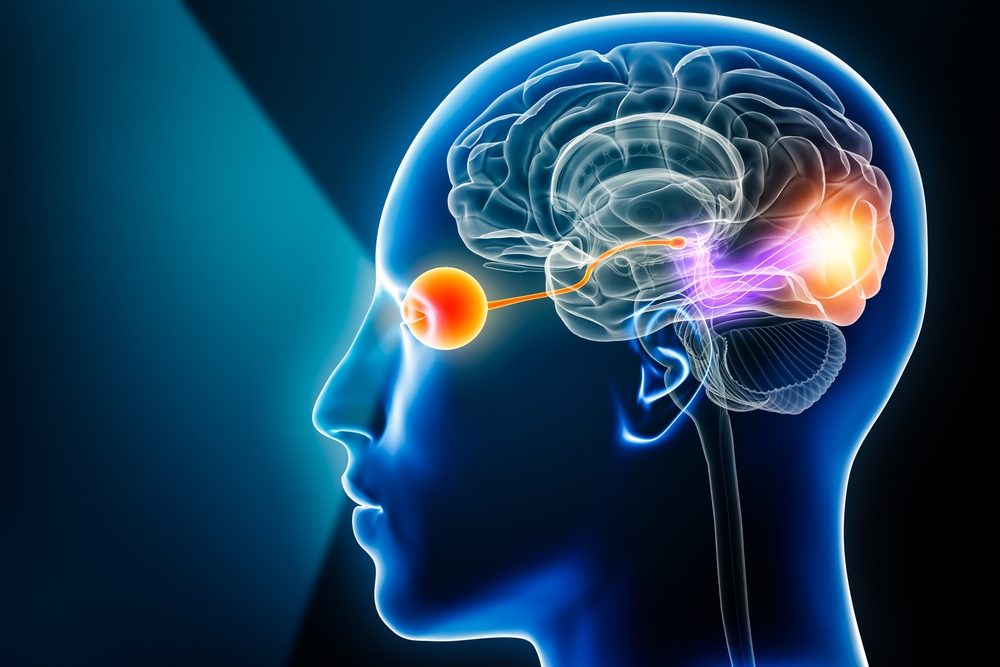
The concept of visual feedback loops is central to this research.
In the visual system, information does not travel in only one direction. Signals move from the eyes to the visual cortex, but they also travel backward from higher-level brain regions.
These feedback signals provide context. They help the brain predict what it is likely to see and adjust perception accordingly.
For example, if you see part of a familiar object, your brain can quickly infer the rest. If you see the top half of a coffee mug behind a book, you still recognize it as a mug.
This ability depends on rapid communication between multiple brain regions.
Research suggests that in individuals with autism, this feedback communication may occur more slowly or less efficiently. The pathways connecting sensory processing areas and higher cognitive regions may not synchronize as quickly.
As a result, the brain may rely more heavily on the raw sensory input rather than predictive shortcuts.
While this difference can make certain illusions less automatic, it may also lead to heightened sensitivity to details that others overlook.
Perception, Attention, and Social Signals

Differences in sensory processing can extend beyond optical illusions.
Previous studies involving children with autism have examined how they interpret body language and movement. In one experiment, participants watched animated displays made of moving dots that represented human motion.
When neurotypical participants saw the moving dots, their brains automatically recognized them as a walking person.
However, when children with autism were asked to focus on another feature, such as the color of the dots, their brains did not automatically register the human movement.
They needed to consciously direct their attention to the movement before recognizing it.
This suggests that certain forms of social perception may require more focused attention for individuals on the autism spectrum.
The brain may not automatically integrate contextual cues in the same way.
Understanding this difference is important because many aspects of social interaction depend on subtle visual signals such as facial expressions, gestures, and body language.
If these signals are processed differently, it can influence how individuals interpret social situations.
However, recognizing these differences also helps researchers develop better tools and support systems tailored to neurodiverse ways of perceiving the world.
The Diversity of the Autism Spectrum
Autism spectrum disorder is called a spectrum for a reason. The characteristics and experiences associated with autism vary widely from person to person.
Some individuals may have heightened sensitivity to sounds, lights, or textures. Others may possess exceptional abilities in pattern recognition, mathematics, art, or memory.
The differences in visual processing observed in illusion studies do not define autism as a whole. Instead, they offer a glimpse into how neural pathways may function differently.
These variations remind us that the brain is not a single standardized machine. It is a complex network capable of operating in many distinct ways.
Neurodiversity reflects the idea that these variations are natural expressions of human neurological development.
Rather than viewing them solely as deficits, many scientists and advocates emphasize the importance of recognizing different cognitive styles and strengths.
Understanding how autistic individuals perceive the world can help educators, clinicians, and families develop strategies that support communication and learning.
What Optical Illusions Teach Us About Reality
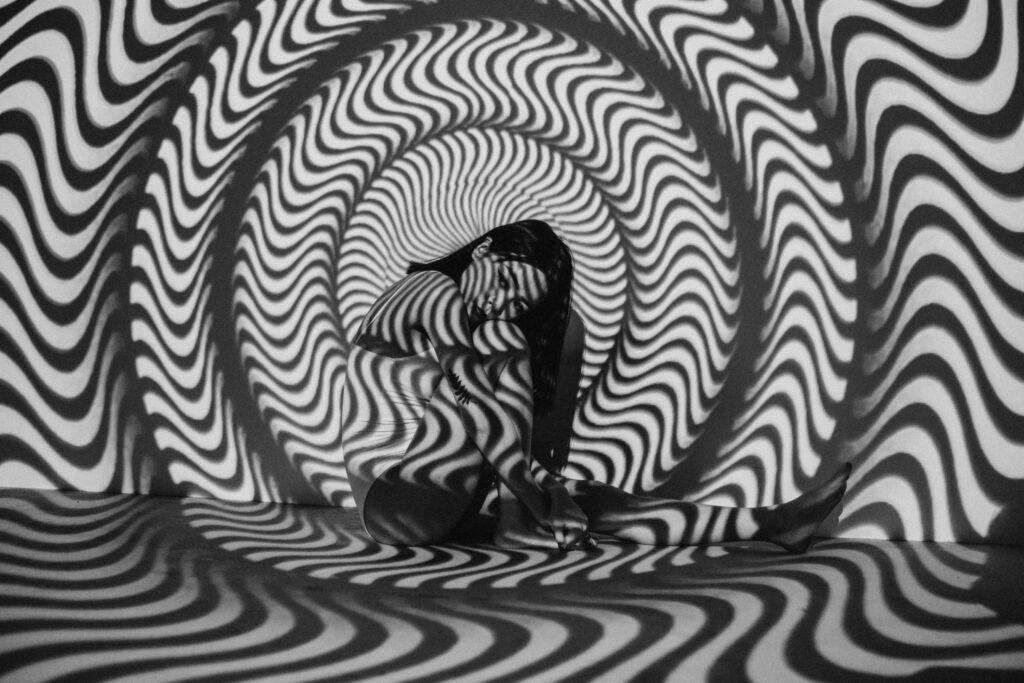
Optical illusions are often treated as simple visual curiosities. But from a scientific perspective, they reveal something profound about the nature of perception.
They remind us that the world we experience is partly constructed by the brain.
Every sight, sound, and sensation passes through layers of interpretation before it becomes conscious awareness. Our brains continuously predict, adjust, and reinterpret sensory information.
Different neurological pathways can therefore produce different perceptual experiences.
In the case of autism, research suggests that the brain may rely less on predictive shortcuts and more on direct sensory input.
This difference may slow the automatic recognition of certain illusions, but it may also offer a more detail-focused way of perceiving the world.
Understanding these variations expands our appreciation of how diverse human perception can be.
A Window Into the Future of Neuroscience
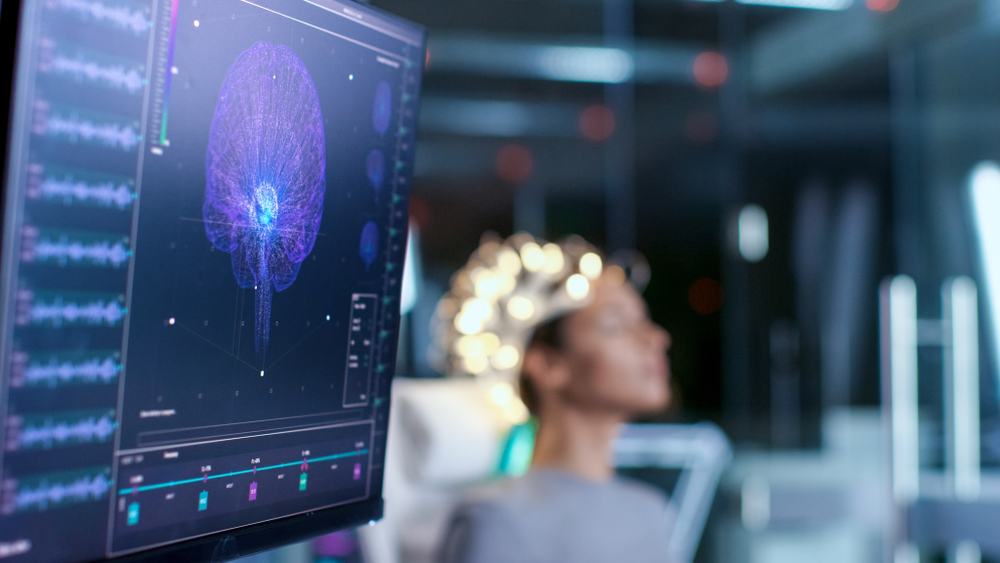
Studies of optical illusions and autism represent only the beginning of a broader scientific exploration.
Researchers are continuing to investigate how timing differences in brain communication influence perception, attention, and behavior. Advances in brain imaging technologies such as EEG allow scientists to observe neural activity with increasing precision.
Future studies may examine larger groups of participants and explore how visual processing differences relate to other sensory experiences.
Scientists are also interested in how these findings might inform educational approaches, therapeutic strategies, and support systems for individuals on the autism spectrum.
The ultimate goal is not to change how autistic brains work. Instead, it is to better understand them.
By understanding the mechanisms behind perception, researchers can help create environments that accommodate different ways of processing the world.
Seeing the World Through Different Minds

The discovery that autistic children may perceive optical illusions differently offers more than a scientific curiosity. It highlights the remarkable diversity of human perception.
What appears obvious to one brain may emerge more gradually in another. What seems like a missing piece of information to one mind may be a carefully examined detail to another.
In this sense, optical illusions reveal as much about the observer as they do about the image itself.
They remind us that reality is filtered through neural pathways shaped by biology, development, and experience.
For children on the autism spectrum, the world may unfold through a slightly different perceptual lens. Understanding that lens allows scientists, educators, and families to better support the individuals who experience it.
And perhaps most importantly, it encourages a broader recognition that there are many ways to see the same world.