
Your cart is currently empty!
Bride’s 79-Year-Old Landlord Asks to Walk Her Down the Aisle at Her Wedding in Heartwarming Moment

She didn’t expect the ache to surface—not after years of telling herself she was fine without a father. The dress was ready, the venue booked, the love of her life waiting at the altar. But as the music began and guests rose from their seats, Shacole Fox felt something missing.
It wasn’t the absence of attention or celebration. It was the silence beside her—the space where someone was supposed to be.
Tradition often reserves that place for a father. But for Fox, whose father had never been part of her life, the question of who would walk her down the aisle had remained unanswered. That is, until someone entirely unexpected stepped forward. Someone who wasn’t bound by blood, but by kindness.
The Story of Shacole and Gil: A Ceremony Rooted in Compassion
Shacole Fox had always assumed she’d be fine walking alone. She never knew her father and figured that when the time came, his absence wouldn’t weigh on her. But as her wedding day approached, that certainty began to unravel. “When I thought about who would walk me down the aisle, trying to figure out what that looks like, the thought of it was surprisingly painful,” she told CBS News.
Fox works as a makeup artist in Cincinnati, Ohio, where she rents studio space from 79-year-old landlord Gil Pulliam. Over time, their relationship deepened beyond business. Pulliam, who had come to understand her family circumstances, felt compelled to step in—not for show, but out of genuine care. “So I went back up to ask Shacole if I could escort her down the aisle,” Pulliam recalled to CBS News. “And she said, ‘Yes, yes, yes!’ And on and on and on.”
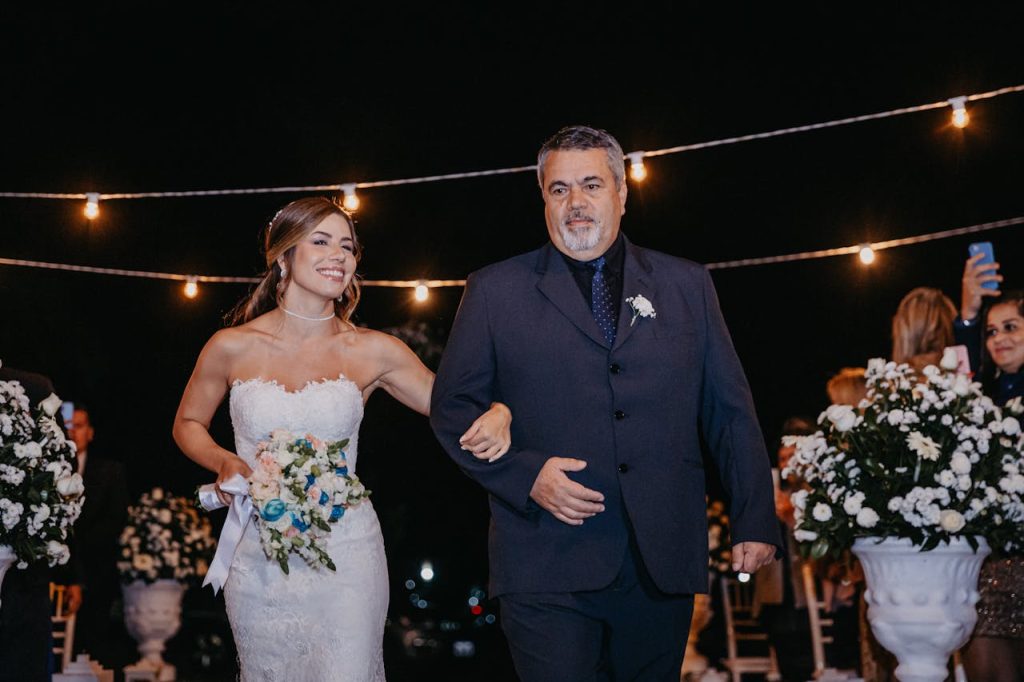
Fox was taken aback—in the best way. She “wouldn’t have thought in a million years” that her landlord would be the one to do the honor. What happened next was more than a walk. It was a quiet act of healing. “The music is playing — and I’m getting ready to walk down the aisle — and he grabbed my hand so tight,” she remembered. “And it was a really good feeling… Yeah, it still is. Like a wound had been healed in my heart.”
What might have felt like a missing piece in her story was suddenly, and unexpectedly, filled. Not by a long-lost father, but by someone who showed up—with presence, respect, and love. And sometimes, that’s all it takes to transform a moment into something unforgettable.
Chosen Families: A Growing Reality in Modern Society
Stories like Shacole Fox’s reveal something many people are beginning to acknowledge more openly: that family, in its most meaningful sense, isn’t always defined by biology. Increasingly, people are forming what sociologists call “chosen families”—bonds rooted in trust, emotional presence, and mutual care. These relationships, while informal, often fill the same emotional roles that traditional family members once occupied.
This cultural shift is reflected in broader demographic trends. According to a 2023 report by the Pew Research Center, only 37% of adults ages 25 to 49 in the United States now live with a spouse and at least one child—a sharp drop from 67% in 1970. The same analysis highlights how family configurations have grown more diverse, with more people living alone, cohabiting, raising children outside of marriage, or depending on friends and extended networks for support. The idea of a “nuclear family” may no longer be the dominant structure for many, and that reality has prompted a wider acceptance of relationships that fall outside conventional labels.

Psychological research supports this evolution. The American Psychological Association identifies emotional connection as one of the key building blocks of resilience—the ability to adapt well in the face of hardship. In its guide to building resilience, the APA underscores the importance of supportive relationships, regardless of origin, in helping people recover from adversity. When someone provides consistent presence, understanding, or comfort during moments of vulnerability, the effect can be profound—even healing. That kind of support isn’t exclusive to parents or siblings. It can come from teachers, mentors, neighbors, or, in Shacole’s case, a landlord who simply chose to show up.
While every story is personal, the growing presence of chosen family in today’s society is more than an anecdotal trend. It reflects a deeper shift in how people define love and belonging. In a world where not everyone has access to the family they were born into, many are learning that the families they build can be just as sacred.
Why This Story Resonates: Rewriting the Father‑Daughter Moment
Shacole Fox’s moment with Gil Pulliam hits something deep—that ceremonial space where tradition, expectation, and personal longing meet. Walking down the aisle has long been more than a ritual; it’s a symbol charged with duty, legacy, and emotional weight. Historically, the tradition of a father escorting his daughter originated in part from arranged marriages, where the act of “giving away” was tied not only to familial honor and social contracts but also to notions of property exchange.
Over time, that symbolism has gradually shifted. For many couples today, the gesture is less about “ownership” transferred from one male figure to another, and more about acknowledgment—of support, protection, and shared history. As Brides magazine put it, the father walking the bride is now “a gesture of love, support, and the join of two families,” rather than simply the relic of a patriarchal past.
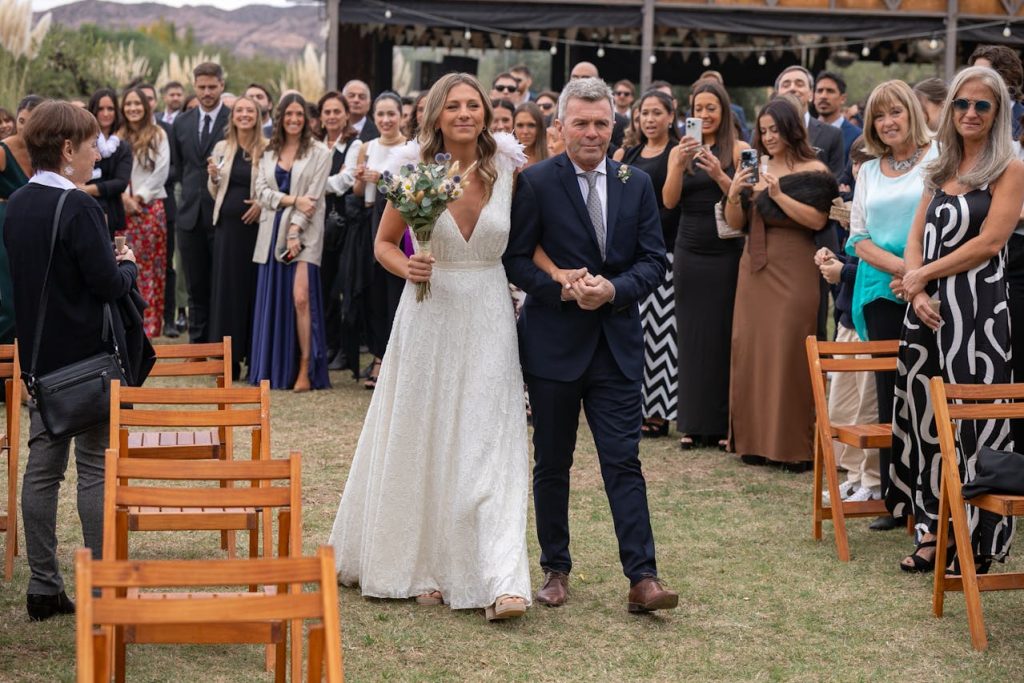
In societies where family structures are increasingly diverse, the emotional resonance of who walks a bride down the aisle has become more personal and varied. Some brides choose both parents, others walk alone or with friends; some feel nothing in the tradition, others feel it deeply. It’s in this space between obligation and authenticity that Fox’s story becomes especially powerful. Her landlord stepping into that traditional role turns what could be a painful absence into something affirming.
Moreover, in places like Sweden, where there has been recent debate in church leadership about whether the father “handover” is appropriate, the discussion is not just about tradition but about identity and equality. Critics argue the practice enshrines patriarchal values, while supporters see it as a way to honor family bonds.
In short, what resonates in Fox’s story is how it rewrites tradition without rejecting it—how it retrieves the emotional essence of that father‑walking moment (being seen, valued, supported) and places it in a new form. It’s not the label that matters so much as the presence—and sometimes, the ones who show up can become more family than those who were merely expected.
From Landlord to Father Figure: What This Says About Intergenerational Bonds
What made Gil Pulliam’s gesture so resonant wasn’t just that he stepped in—it’s that he bridged a generational divide at a time when those connections are increasingly rare. In modern society, interactions between age groups often feel siloed, especially as younger adults live farther from extended family and older adults report higher rates of loneliness. Yet research suggests that when those barriers are crossed, something meaningful happens on both sides.
The Harvard Study of Adult Development, one of the longest-running psychological studies in the world, has consistently found that warm relationships are the strongest predictors of long-term health and happiness, more than IQ, genetics, or socioeconomic status. As the study’s current director Robert Waldinger notes, “Loneliness kills. It’s as powerful as smoking or alcoholism.”
These findings extend beyond traditional family ties. A 2022 report from AARP highlighted that many adults maintain close friendships with people from different generations. These relationships can challenge age-related stereotypes, reduce feelings of loneliness, and offer meaningful perspective for both younger and older individuals. Rather than being defined by roles like parent or child, these bonds grow out of mutual respect, consistency, and shared emotional investment.
In choosing to step into a space traditionally held by a father, Pulliam offered something deeper than ceremony—he offered presence. And in receiving that presence, Fox was able to experience the kind of steady, supportive bond that sometimes doesn’t come from the family we’re born into, but from those who decide to show up when it counts.
How to Cultivate Deep, Unexpected Bonds in Your Own Life
Lasting connections often form in quiet, unlikely places—not through dramatic moments, but through consistency and care. Being emotionally available in everyday interactions, especially with people outside your immediate circle, creates space for trust to grow.
Letting others witness your uncertainty—not just your strengths—can deepen mutual respect. Vulnerability encourages connection, especially when met with patience rather than judgment. These moments don’t need to be intense; they just need to be real.
Paying attention matters. Remembering someone’s habits, checking in, or offering help unprompted signals emotional investment. Over time, this creates the kind of stability that deep bonds are built on.
Intergenerational relationships thrive when approached without hierarchy. Listening as much as sharing allows both people to feel valued. Whether it’s a neighbor, colleague, or landlord, bonds form not because of roles—but because of presence.
Ultimately, connection begins by noticing. Who shows up when you need support? Who do you instinctively care for? Lean into those moments. They may just be the start of something lasting.
It Was Never Just a Walk — It Was a Healing Step Forward
What happened between Shacole Fox and Gil Pulliam was more than a gesture. It rewrote a moment often defined by absence and turned it into one of presence. No speeches, no spotlight—just a hand held tight, and a quiet willingness to stand in.
In a world where family doesn’t always arrive in expected forms, this story reminds us that healing doesn’t need ceremony. Sometimes, it only needs someone who chooses to show up—and means it.