
Your cart is currently empty!
Cern Discovers the Tiny “Glitch” in Physics That Explains Why the Universe Exists
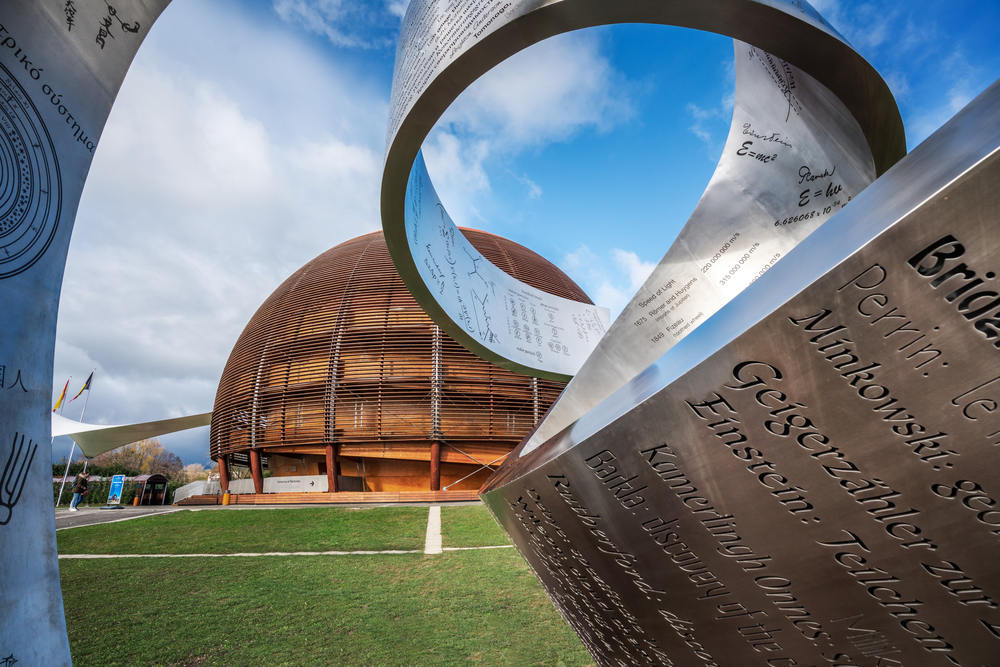
What if the simple fact that you are alive today is the result of a microscopic cosmic error? According to the foundational laws of physics, the entire universe should be an empty void of pure energy. Every star, planet, and person is technically an anomaly that somehow escaped total destruction at the dawn of time. Now, a groundbreaking discovery deep underground at the Large Hadron Collider is offering a remarkable new clue as to why a physical reality exists instead of absolutely nothing.
Contents
show
Matter versus Antimatter
Look around at the stars, planets, and the natural world. According to the basic rules of physics, none of it should be here. When the universe began, the Big Bang should have created equal amounts of matter and antimatter. These two are exactly alike, except they carry opposite electric charges. A positively charged proton has a negatively charged antiproton, and a negatively charged electron has a positively charged positron.
There is a major catch: when matter and antimatter touch, they instantly destroy each other in a flash of pure energy. If the early universe had perfect symmetry, every piece of matter would have met an antimatter twin right after creation. The entire cosmos would just be a sea of leftover energy, with no physical building blocks left to make galaxies, planets, or human beings.
But somehow, the scales tipped. A tiny amount of regular matter survived this massive demolition derby. Scientists estimate that for every billion matter and antimatter pairs that wiped each other out, just one single particle of matter was left standing. That tiny leftover fraction is what built everything visible today.
Figuring out why matter won out over antimatter is a huge mystery. Researchers know there must be a slight difference in how the two behave. Solving this puzzle is not just about crunching numbers; it is about understanding why anything exists at all.
A Microscopic Glitch at CERN
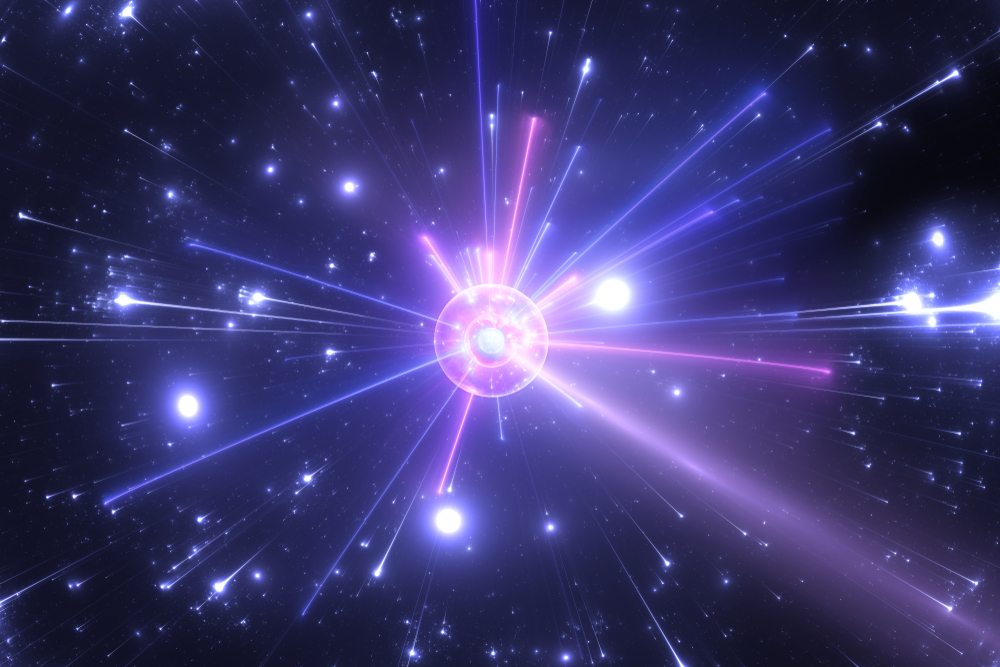
To find answers to this cosmic mystery, scientists turn to the Large Hadron Collider. Located on the border of France and Switzerland, this massive machine smashes protons together at nearly the speed of light. From the intense energy of these crashes, new particles are born.
Here, a team of researchers running an experiment known as LHCb made a groundbreaking observation. They discovered a small but crucial difference in how a specific group of particles, called baryons, break down over time.
Baryons are incredibly important because they make up almost all the everyday matter we interact with, including the protons and neutrons inside atoms. Before this, scientists had seen matter and antimatter behave differently in other, rarer particles. However, spotting this behavioral difference in the very building blocks of our everyday world is a major milestone.
The team looked closely at over 80,000 specific particles known as lambda b baryons. These are made of even smaller pieces called quarks. The researchers compared how these matter particles decayed, or transformed into lighter particles, against their exact antimatter twins.
The results revealed a distinct glitch in the system. The matter baryons decayed into a specific set of subatomic pieces about five percent more often than the antimatter versions. While a five percent difference might sound small, it is highly significant in the precise world of particle physics. It proves that the fundamental matter of our visible universe does not play by the exact same rules as its antimatter counterpart.
A Missing Piece in the Physics Rulebook
While the five percent difference in baryon decay is a monumental discovery, it does not completely solve the cosmic puzzle. The findings perfectly match the predictions of the Standard Model of particle physics, which is the current scientific rulebook for how the subatomic realm works. However, the rulebook has a glaring omission. The slight imbalances it predicts are nowhere near large enough to explain why an entire universe of matter survived the Big Bang.
As theoretical physicist Jessica Turner from Durham University notes, the observed difference is in line with previous measurements, but it is “not enough to produce the observed baryon asymmetry.” The math simply does not add up to account for the vast galaxies visible today.
To visualize this gap in knowledge, imagine a massive table full of spinning coins. If left alone, they have an equal chance of landing on heads or tails, representing equal amounts of matter and antimatter. But if an unseen marble rolls across the table and bumps the coins, it disrupts the system, causing more of them to land on heads.
In the early universe, a similar cosmic disruption must have occurred. Physicists suspect there is an entirely undiscovered class of fundamental particles or an unknown force that heavily favored the creation of regular matter. The recent findings at the Large Hadron Collider are vital because they prove this asymmetry exists in the building blocks of the physical world, but they also point to a much larger, unseen mechanism hiding just out of sight.
Photographing the Invisible
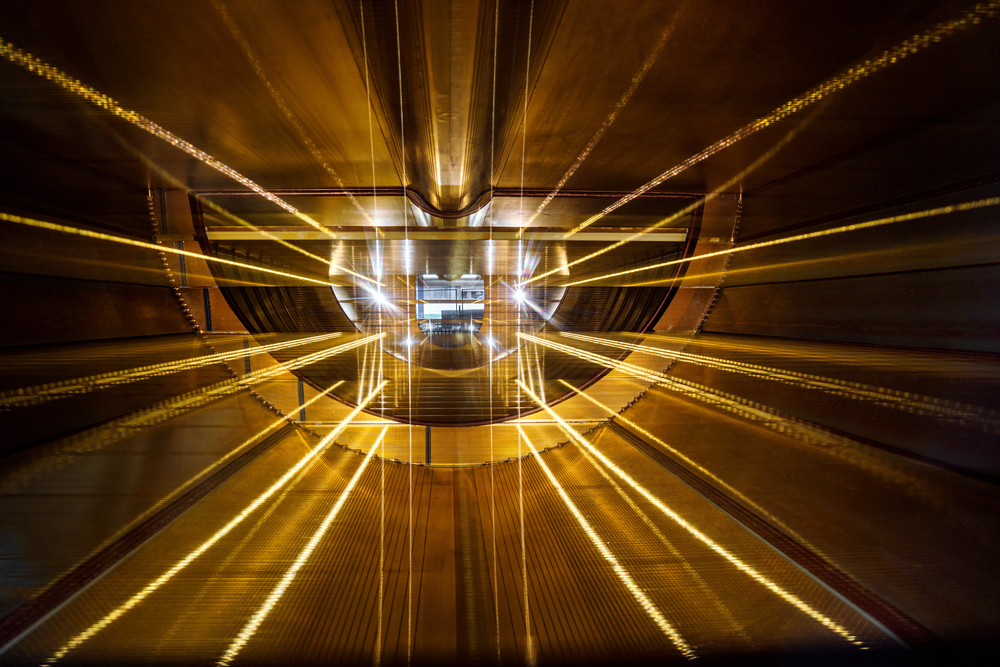
Capturing these fleeting subatomic glitches requires extraordinary technology. The LHCb experiment relies on a massive detector that weighs 6,000 tons and stretches 69 feet in length. This enormous machine operates by accelerating protons to nearly the speed of light and smashing them together roughly 200 million times every second. From the immense energy of these collisions, exotic new particles spring into existence for mere fractions of a second before decaying.
Vincenzo Vagnoni, a spokesperson for the LHCb experiment, describes the detector as a gigantic four-dimensional camera. It records the exact passage of every particle, allowing scientists to reconstruct the initial collision and track exactly how the resulting particles break down.
Finding discrepancies in baryon behavior within this chaotic environment is an incredibly delicate process. Theoretical physicist Edward Witten notes that baryons containing beauty quarks are relatively hard to produce, making this specific type of matter and antimatter violation very delicate and hard to study.
Despite the difficulty, tracking these specific particles is crucial. Xueting Yang, a researcher at Peking University who analyzed the data, calls the recent findings a milestone. Because baryons serve as the fundamental building blocks of the physical world, observing these differences opens a new window to search for hints of undiscovered physics.
To definitively crack the mystery of the early universe, researchers must find even larger discrepancies. The current plan is to keep the Large Hadron Collider running until the team collects roughly 30 times more data. This massive influx of information will allow physicists to hunt for even rarer particle decays, potentially exposing the unseen forces that allowed matter to survive the dawn of time.
The Unfinished Story of Creation
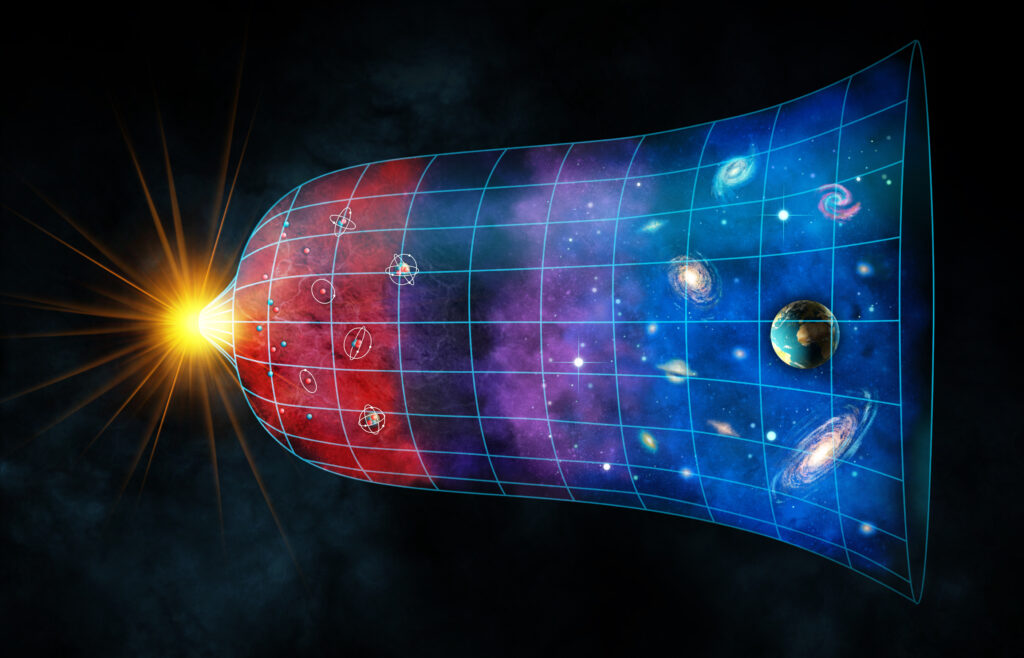
At its core, the search for antimatter imbalances is a quest to understand the origins of existence. Every star, planet, and living creature is the direct result of the tiny fraction of matter that survived the birth of the universe. While the recent findings at the European Organization for Nuclear Research provide a crucial clue, the full story of creation remains unfinished.
As physicists prepare to analyze future particle collisions, they are not just looking for subatomic anomalies. They are searching for the fundamental reason why a physical reality exists instead of an empty void of pure energy. The answers hidden within these microscopic glitches hold the potential to completely rewrite humanity’s understanding of the cosmos.
The mystery of why anything exists at all continues to drive some of the most advanced scientific endeavors in human history. Until those unseen forces are finally brought to light, the fact that a tangible universe exists to be studied remains the greatest scientific marvel of all.