
Your cart is currently empty!
Conspiracy Theorists Believe CERN Has Already Moved Us Into Another Reality
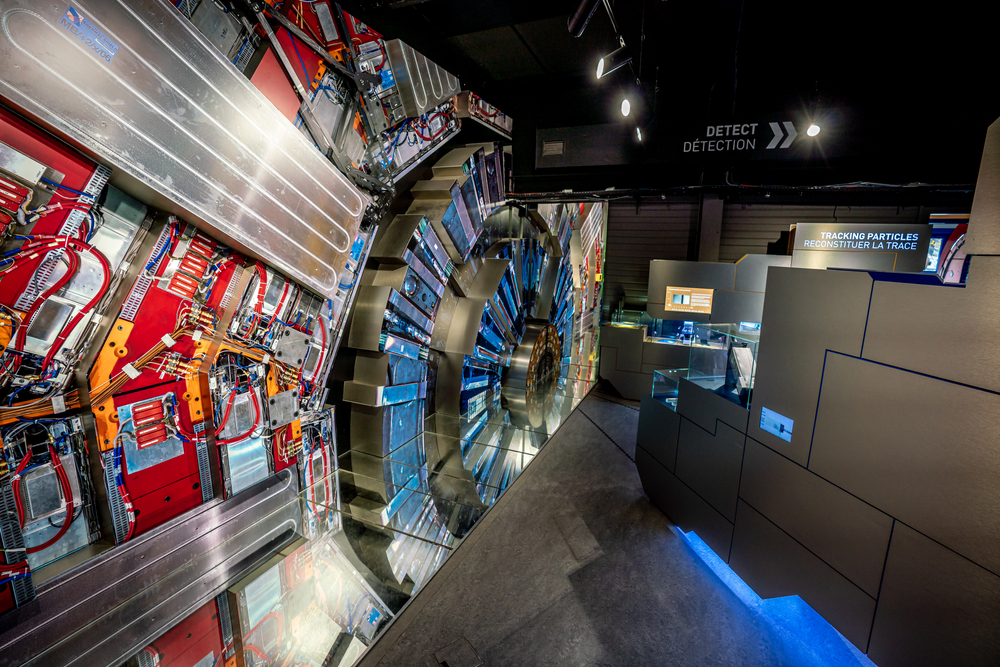
For most people, the restart of a massive scientific machine buried beneath the border of France and Switzerland would barely register beyond a passing headline. But for a growing number of internet users, it has become something far more unsettling and strangely personal. When CERN powered up the Large Hadron Collider again after years of upgrades, speculation did not just follow, it exploded across social media platforms where theories quickly spiraled into something much bigger than science. Instead of focusing on particle collisions and research milestones, many began asking a far more dramatic question: what if something changed, not visibly, but fundamentally, in the fabric of reality itself?
Contents
show
What makes this situation particularly intriguing is how easily complex scientific developments can blend with emotion, belief systems, and online culture to create entirely new narratives. While scientists were carefully analyzing data and celebrating technical achievements, a parallel conversation was unfolding online where people claimed they could feel a shift, as if something about the world no longer felt quite the same. These claims were not based on measurements or experiments, but on intuition, shared experiences, and viral posts that fed into a collective sense of curiosity and unease. It is in this space, between scientific progress and human perception, that the idea of a “timeline shift” began to take hold.
🚨: Scientists at CERN uncovered a parallel universe within a quantum simulation which strangely seems aware that its being watched. pic.twitter.com/EwuiGDwAkm
— Night Sky Today (@NightSkyToday) January 11, 2026
A Scientific Breakthrough That Sparked Global Curiosity
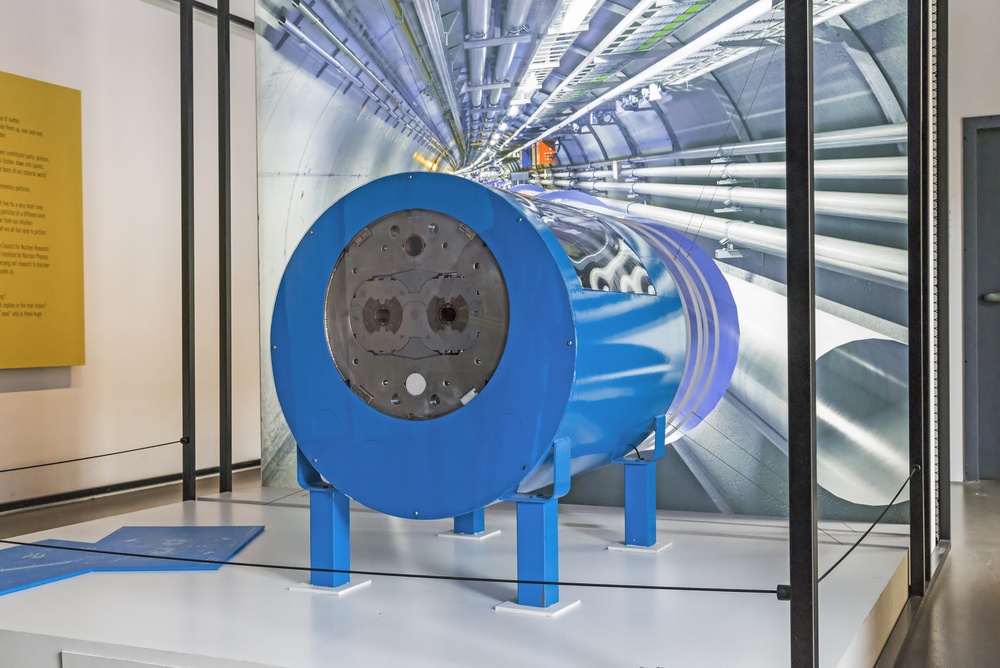
The Large Hadron Collider stands as one of humanity’s most ambitious scientific tools, built with the purpose of understanding the smallest known components of the universe by recreating conditions similar to those just moments after the Big Bang. By accelerating protons to near the speed of light and smashing them together, scientists are able to observe rare particles that cannot be seen under normal conditions. After undergoing a three year shutdown for maintenance and upgrades, the collider returned stronger than before, operating at energy levels of 13 teraelectronvolts and immediately producing results that excited the global scientific community.
These experiments are not random or uncontrolled, but part of a long-term effort to answer some of the most fundamental questions about existence. Researchers are investigating the Higgs boson, a particle that helps explain why matter has mass, and continuing their search for dark matter, which is believed to make up a large portion of the universe but remains invisible and poorly understood. They are also studying the fundamental forces that govern how particles interact, which has implications not only for theoretical physics but for our broader understanding of how the universe formed and continues to evolve over time.
Despite the careful and methodical nature of this work, the scale and ambition of the experiments naturally capture public imagination. The idea of recreating early-universe conditions and probing unseen dimensions can sound extraordinary, especially when explained outside of a scientific context. For many people, this creates a sense of wonder, but for others, it opens the door to misinterpretation, where complex research is reimagined as something far more dramatic and potentially dangerous.
Viral Claims About Timeline Shifts and Hidden Portals
As soon as news of the collider’s restart began circulating, social media platforms were flooded with posts suggesting that something far more significant was happening behind the scenes. Instead of focusing on scientific discoveries, many users began sharing theories about reality itself being altered, with some claiming that CERN’s experiments would trigger a shift into a parallel timeline. One widely shared post captured this feeling perfectly, asking, “Who has felt like a big shift is coming for awhile now??” before continuing, “Now on july 5th we are quite literally gonna be switching timelines, when cern is gonna turn on their machine thingy it’s opening a portal to go through also the unknown is coming in. Keep your positive vibes and energy up.”
Another post built on this narrative by connecting it to the Mandela Effect, a phenomenon where groups of people remember events differently from recorded history. The user wrote, “I’ve looked into this, look for 10x more mandela effects.. because back in 2012 they did a record voltage level that caused these mandela effects, whatever portal they’re opening, they shouldn’t.” This idea suggested that reality had already been altered in the past and that new experiments could intensify these changes, creating a sense that history itself might be unstable or shifting.
Even after the collider was successfully turned on and no visible changes occurred, the theories did not disappear. Instead, they evolved in a way that allowed them to persist. One user argued, “A lot of people are discounting how serious the CERN Hadron Collider agenda truly is. It’s not like beings emerge from a portal and instantly kill everyone,” and added, “That’s not how Satanic rituals work. The ramifications of what happened yesterday will unfold in the coming months.” This shift in explanation reflects a broader pattern where predictions are adjusted rather than abandoned, allowing the theory to continue even when evidence does not support it.
The Scientific View on Extra Dimensions
While these claims may sound extreme, they are loosely connected to real scientific discussions about the possibility of extra dimensions. Physicists have long explored theories suggesting that additional dimensions could exist beyond the ones we experience in everyday life. According to CERN, one way to test for these dimensions would be to detect particles that only exist if extra dimensions are real, such as heavier versions of known particles often referred to as Kaluza Klein states. These particles would not appear dramatically or suddenly, but would instead be identified through careful analysis of collision data collected over time.
The process of detecting such particles is highly controlled and requires sophisticated instruments capable of measuring extremely small and short-lived phenomena. Any potential discovery would be subject to extensive verification and peer review before being accepted by the scientific community. Importantly, even if evidence of extra dimensions were found, it would not result in visible portals, shifts in reality, or any immediate impact on human experience. The effects would remain confined to the microscopic scale and within the realm of experimental physics.
Another concept that often fuels concern is the idea that the collider could create black holes capable of destroying the planet. In reality, any black holes produced would be incredibly small and would exist for only a fraction of a second. Scientists explain that these microscopic black holes would evaporate almost instantly, lasting around 10^-27 seconds, making them completely harmless. The energy involved in these collisions is extremely small on a cosmic scale, comparable to that of a flying mosquito, which highlights how far removed these experiments are from the catastrophic scenarios often imagined online.
How Fiction and Humor Blur Into Belief
A major factor contributing to these theories is the influence of popular culture, which has increasingly explored ideas such as multiverses, alternate timelines, and hidden dimensions. Films, television shows, and online content have made these concepts more familiar, which can make them feel more plausible when people encounter similar language in real scientific discussions. When terms like energy, dimensions, and particle collisions are mentioned, it becomes easy to connect them with fictional narratives that people have already internalized.
In some cases, satire and humor can also contribute to confusion, especially when content is shared without its original context. Playful references to fictional ideas, such as the claim that “The Force is what gives a particle physicist his powers” and the description that “It’s an energy field created by all living things. It surrounds us; and penetrates us; it binds the galaxy together,” are clearly inspired by science fiction. However, when these quotes circulate online without explanation, they can be misinterpreted as genuine statements, particularly by those who are already skeptical or uncertain about the science.
Even seemingly harmless or humorous lines like “We’re very pleased with this new addition to CERN’s accelerator complex” or dismissive remarks such as “Asteroids do not concern me” can take on unintended meaning when removed from their original context. This blending of fiction, humor, and real science creates an environment where narratives can quickly shift, making it more difficult for people to distinguish between what is real and what is imagined.
Why People Hold On To These Ideas
The persistence of these theories is not simply about misinformation, but also about how people process complex and unfamiliar information. Particle physics is an incredibly technical field that can be difficult to understand without a strong background in science. When people encounter concepts that are hard to grasp, they may turn to explanations that feel more intuitive or emotionally satisfying, even if those explanations are not supported by evidence. This creates space for speculation to grow and spread.
There is also a deeper psychological element at play, where people seek patterns or meaning in events that feel significant or unusual. The idea that a powerful machine could alter reality taps into a sense of mystery and possibility that can be both exciting and unsettling. For some, believing in hidden changes or unseen forces provides a way to make sense of uncertainty, especially in a world where information is constantly evolving and often overwhelming.
Social media amplifies these tendencies by allowing ideas to spread quickly and reach large audiences with minimal verification. Posts that evoke strong emotions or dramatic scenarios are more likely to be shared, which can give the impression that these theories are more widely accepted than they actually are. As a result, even unsupported claims can gain traction and continue to evolve over time.
Finding Balance Between Curiosity and Evidence
The conversation surrounding the Large Hadron Collider highlights the importance of balancing curiosity with critical thinking. It is completely natural to be fascinated by ideas such as parallel universes and hidden dimensions, especially when science itself explores these possibilities in theoretical ways. However, it is equally important to approach these topics with a focus on evidence and reliable information, rather than relying solely on speculation or viral content.
Scientific institutions like CERN provide detailed explanations of their work, offering insight into what is actually happening within these experiments. By taking the time to explore these sources, it becomes easier to understand the difference between theoretical possibilities and exaggerated claims. This does not remove the sense of wonder that comes with scientific discovery, but it grounds that wonder in reality.
Ultimately, engaging with science in a thoughtful and informed way allows for a deeper appreciation of both its complexity and its significance. Rather than viewing these experiments as something to fear, they can be seen as an opportunity to expand our understanding of the universe and our place within it.
A Story About Science and Perception
The idea that humanity has quietly slipped into another timeline is a compelling narrative, but it reflects perception more than reality. The Large Hadron Collider continues to operate as a tool for discovery, helping scientists explore the fundamental nature of existence through careful experimentation and analysis. At the same time, the reactions it inspires reveal how easily scientific progress can be transformed into stories that capture imagination but drift away from evidence.
In the end, this is not just a story about a machine or a theory, but about how people interpret the unknown. It highlights the tension between curiosity and certainty, between imagination and fact. By choosing to engage with science critically and thoughtfully, it becomes possible to appreciate both the excitement of discovery and the importance of truth, without losing sight of the reality we all continue to share.
Black Holes, CERN, CERN collider, CERN experiment, conspiracy theories, dark matter, extra dimensions, Higgs boson, internet conspiracy, Large Hadron Collider, Mandela Effect, multiverse, parallel universe theory, Particle Physics, physics explained, reality shift, Science news, Scientific Research, timeline shift, viral theories