
Your cart is currently empty!
Donald Trump’s Niece Raises Serious Concerns Claiming He’s ‘Declining Rapidly’ and ‘Rambling’

When family divides spill into the public arena, the story rarely ends at the dinner table. They become questions that echo across politics, health, and trust in leadership. Mary Trump’s latest remarks about her uncle have done exactly that, raising doubts that collide head-on with official medical assurances. What is rumor, what is fact, and what does it mean when perception begins to shape reality?
Mary Trump Raises Concerns
Mary Trump, the daughter of Donald Trump’s late brother Fred Trump Jr. and a trained clinical psychologist, has renewed public debate about her uncle’s mental state. In a YouTube video titled “Trump DECLINES RAPIDLY as Behavior RAISES CONCERNS,” she claimed that the president is displaying “clear signs of mental decline” and warned that there is mounting evidence he is “losing it every day”
She pointed to several recent episodes that, in her view, highlight an alarming trajectory. One of the most unusual occurrences occurred when Donald Trump appeared on the roof of the White House during an unannounced press encounter. Reporters questioned why he was there, and he replied that he was “taking a little walk.” When pressed further, he referenced “missiles” and “nuclear missiles,” even mimicking the gesture of a rocket launch. Mary said of the incident: “There he was on the roof of the White House in the middle of a Tuesday afternoon doing what exactly? Nobody knows. I don’t believe he knows.”
In the same video, she also criticized comments related to space policy, including talk of building a nuclear reactor on the Moon. She argued that the remarks reflected “zero impulse control” and underscored what she sees as a deteriorating ability to communicate responsibly.
Mary emphasized that her assessment was based on observation rather than medical access, yet she did not mince words: “We’ve all become used to the fact that every time Donald stumbles, rambles, forgets people’s names, wanders off the stage, or just pulls made-up facts out of thin air, in other words, lies, people on the right pass it off as if these are just fun little quirks of their dear leader and not the fact that every single day Donald Trump appears to be losing it.”
_(2).jpg)
While Mary Trump has a history of criticizing her uncle—she sued him in an inheritance case in 2020, which was later dismissed—her observations remain influential, especially as they come from both a family member and a psychologist. Still, her longstanding opposition to the former president shapes how her claims are received, raising questions about bias and intent.
Mary Trump: Family Insider and Vocal Critic
Mary Trump is no stranger to the spotlight. The daughter of Donald Trump’s late brother Fred Trump Jr., she holds a doctorate in clinical psychology and has often drawn upon her professional background in offering assessments of her uncle. She rose to prominence in 2020 with the publication of her book Too Much and Never Enough: How My Family Created the World’s Most Dangerous Man, which became a bestseller and positioned her as one of the most visible Trump critics within the family.
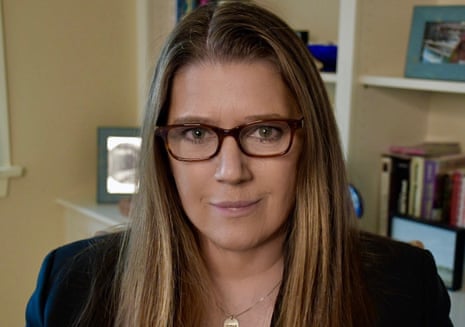

Her public criticism of Donald Trump is longstanding and intertwined with family litigation. In September 2020 she sued Donald Trump, Maryanne Trump Barry, and the estate of Robert Trump, alleging she was defrauded of tens of millions of dollars in an inheritance dispute, a filing covered by the Associated Press and Reuters at the time. The case was later dismissed by a New York judge in November 2022, with AP noting her subsequent appeal effort.
Separately, Donald Trump sued Mary Trump and the New York Times over the paper’s 2018 investigation into his finances. The Washington Post reported on the filing in 2021, and in May 2024 Reuters reported that a New York appeals court allowed Trump’s suit against Mary Trump to proceed while upholding the dismissal of claims against the Times and its reporters.
These verified details establish Mary Trump as both a family insider and a public critic with professional training in psychology, context that helps readers weigh her recent statements about her uncle’s mental fitness.
Official Health Reports vs. Family Allegations
While Mary Trump has voiced concerns about her uncle’s mental fitness, official medical evaluations present a markedly different narrative. On April 13, 2025, the White House released a memo from the president’s physician, Captain Sean Barbabella, stating that Trump was in “excellent cognitive and physical health” and “fully fit to execute the duties of the Commander-in-Chief and Head of State.” The statement emphasized his active lifestyle, including frequent golf outings, and confirmed that neurological and psychological testing showed “no abnormalities in his mental status.”
Further corroboration came from the Washington Post, which reported that Trump scored perfectly on the Montreal Cognitive Assessment (MoCA) and displayed “no abnormalities in his mental status, gait or other functions.” The exam also noted weight loss, stable vaccination status, and minor findings such as diverticulosis and scar tissue from an earlier incident.
These results align with earlier assessments. In 2018, then–White House physician Dr. Ronny Jackson confirmed that Trump had scored a perfect 30 out of 30 on the MoCA, describing him as “cognitively intact.” Coverage from ABC News explained that the test is widely used to screen for early signs of cognitive impairment, making his perfect score a point of emphasis for supporters at the time.
The contrast between Mary Trump’s observations and these official medical findings continues to fuel public debate, highlighting how discussions of a leader’s health often extend beyond science into perception, politics, and trust.
What the Science and Ethics Actually Say
Before weighing Mary Trump’s claims against the official medical reports, it helps to step back and consider what experts say about cognitive health, why psychiatric associations caution against remote diagnoses, and how past presidents have handled similar scrutiny. This broader context shows where science, ethics, and public expectations converge and where they diverge.
The Goldwater Rule and why experts avoid diagnosis from afar
Professional ethics draw a clear line. The American Psychiatric Association instructs its members that it is unethical to offer a professional opinion about a public figure without a personal examination and consent. This standard, known as the Goldwater Rule, has been repeatedly reaffirmed by the APA, which argues that remote diagnosis risks stigma, misinterpretation, and politicization of clinical language.

What cognitive screens can and cannot tell you
The Montreal Cognitive Assessment is a rapid screening tool for mild cognitive impairment that probes domains such as memory, attention, executive function, language, and visuospatial skills. It is useful as an initial screen, not a standalone diagnosis, and normal performance does not rule out all forms of neurodegeneration. The U.S. Department of Veterans Affairs overview describes the domains tested and how clinicians use the results within a broader evaluation.
Dementia types mentioned in public debate, in plain terms
Public conversations often reference frontotemporal dementia, which typically affects behavior, language, and executive function and often appears earlier in life than Alzheimer’s disease. Authoritative primers from NIH’s National Institute on Aging and MedlinePlus outline common features and caution against overinterpreting isolated lapses that can occur with normal aging or stress.
Historical precedent that shaped expectations
Health questions about leaders are not new. In 1994, former President Ronald Reagan publicly disclosed an Alzheimer diagnosis in a handwritten letter that helped set expectations for transparency about serious illness. The letter is preserved by the Reagan Presidential Library and has been reproduced in educational media such as PBS American Experience.
What polling shows about public expectations today
Voters increasingly want objective guardrails rather than partisan reassurance. An Axios Ipsos survey in June 2025 found strong support for legally required and publicly released cognitive tests for presidents, and broad skepticism about the completeness of official disclosures. Independent reporting has also urged caution against reading too much into verbal stumbles, noting that name mix ups and hesitations can be common in healthy older adults.
A live ethical debate inside the profession
While the APA’s rule is clear, some scholars and practitioners argue that the modern information environment provides unprecedented observational data and that strict silence can leave a vacuum. A peer reviewed critique in Psychiatry Research’s open archive describes evolving arguments over when, if ever, public risk justifies limited commentary without a personal exam. The ethical bottom line remains that responsible reporting should separate observable behavior from diagnosis.
The Uneasy Balance Between Perception and Proof
Mary Trump’s warnings have struck a nerve, not only because they come from within the family but also because they speak to a universal concern about leadership and aging. Yet the official medical record continues to affirm a president who is fit, alert, and capable of fulfilling his duties. Between these two narratives lies the space where politics, psychology, and public trust collide.

What makes this moment significant is not only the question of Donald Trump’s health but also what it reveals about how societies measure the strength of their leaders. History shows that age and cognitive ability will always invite scrutiny, and experts remind us that lapses or quirks alone are not definitive evidence of decline. Still, perceptions can be as powerful as medical reports in shaping confidence.
In the end, the debate underscores a truth larger than one family feud or one physical exam. Leadership is judged not only by charts and test scores but also by how a leader’s words and actions resonate with the public. The contrast between Mary Trump’s stark warnings and the physician’s reassurances is a reminder that in politics, health is never just a private matter. It is also a mirror of national trust, resilience, and expectation.
Featured Image from Gage Skidmore from Peoria, AZ, United States of America, CC BY-SA 2.0, via Wikimedia Commons