
Your cart is currently empty!
Dutch Startup Develops Artificial Womb to Save Babies Born Too Early to Survive

Beth Schafer clutched her belly in a hospital bed at 23 weeks pregnant, knowing with pit-of-the-stomach intuition that her baby was not ready to be born. When her son arrived, small enough to cradle in a single palm, he could not cry. A swarm of blue scrubs closed in to begin resuscitation, but despite fervent attempts to coax air into his tiny lungs, doctors could not supply what he needed most. More time in the womb.
Contents
show
Scientists worldwide now race to provide exactly that through technology once confined to science fiction. At a laboratory in Aachen, Germany, a glass tank about the size of a household aquarium sits under fluorescent lights. Tubes coil from its sides into filters that cycle synthetic amniotic fluid in rhythmic pulses. Inside, extremely premature babies could float, drink, urinate, and grow without ever touching air.
Welcome to the artificial womb, a device that could rewrite the boundaries between life and death for infants born too soon to survive.
Parents Who Buried Premature Babies See Hope in Glass Tank
More than 10,000 infants are born each year in the United States between 22 and 24 weeks of gestation, less than two-thirds of the way to full term. Premature birth remains the nation’s second leading cause of infant death. Even survivors often face crippling complications ranging from chronic lung disease to permanent neurological damage.
Beth’s son teetered on the cliff edge of viability, that fragile threshold where modern medicine offers any promise of keeping babies alive. He did not make it. Two years later, Beth joins a biweekly support group in a Boston church basement where parents who have experienced pregnancy loss gather to discuss unopened baby gifts and how to deflect questions from relatives. Many are parents of children who might have been prime candidates for an artificial womb.
“All I wanted was to save him,” said Joanne, who lost her 22-week-old son three years ago and still attends the meetings. “If my body couldn’t do that, then maybe this womb thing could.”
AquaWomb Builds Life Support System That Mimics Pregnancy
AquaWomb, a Dutch startup, develops what it carefully describes as a “womb-like life support system” rather than an artificial womb. Myrthe van der Ven, a technical physician who co-founded and serves as CEO of the company, shows how their prototype mimics the constant shelter of pregnancy. Synthetic amniotic fluid holds at 99.7°F, just above a mother’s core temperature. A double-layered bag hangs in the tank’s center, with an inner sac that flexes as the baby grows from pomegranate-sized at 23 weeks to the heft of an eggplant by 28 weeks.
An outer silicone layer provides just enough resistance to push back against the baby’s kicks, encouraging muscles to stretch and strengthen. Van der Ven emphasizes her team’s philosophy. “We don’t need to be the first. We want to be the best,” she says, arguing that other researchers have overlooked the importance of designing systems where parents can interact with their gestating babies.
Some AquaWomb prototypes include access ports that let parents touch their infants. Another feature is a “uterus phone” that pipes voices, music, or heartbeats into the fluid at the same muffled pitch a fetus would hear in the womb. Such parent-child interactions could improve health outcomes for premature infants, but the stakes go beyond survival statistics.
Lungs Become Liability When Born Too Soon

Van der Ven explains that the tank represents the simple part of the technology. Lungs pose the true liability.
During a typical birth, a newborn’s first gulp of air triggers the breathing reflex, often announced with a wail that signals lungs at work. For extremely premature infants, that moment comes far too early. Runty lungs cannot sustain even a whisper, much less nourish the developing brain and body. In neonatal intensive care units today, doctors can only step in after the fact, using ventilators and incubators to force fragile organs to function. Mechanical intervention brings its own risks of lasting injury. Once exposed to air, lungs irreversibly activate. You cannot throw the fish back into the water. Artificial wombs aim to bypass this crisis altogether.
Artificial Placenta Must Work in Two Minutes or Brain Dies

In AquaWomb’s design, doctors deliver the baby via caesarean section into a fluid-filled pouch for transfer from mother to machine. Once inside the transfer chamber, clinicians reattach the umbilical cord to a human-made placenta, a fist-sized device lined with catheters delicate enough to pull carbon dioxide from the blood and cannulas robust enough to push oxygen and nutrients in.
If it works, the placenta buys time that the baby’s lungs cannot yet provide. If it fails, the clock runs out in two minutes, the limit before oxygen deprivation risks permanent brain damage. Babies must remain immersed in fluid throughout the entire sequence, never realizing they are being born.
“It’s like juggling 10 balls,” says Frans van de Vosse, a professor in cardiovascular biomechanics at Eindhoven University of Technology who advises the project. “Only the balls are on fire and dropping one is not an option.”
FDA Reviewed First Human Trials in 2023

In September 2023, the United States Food and Drug Administration convened an advisory committee to consider whether to greenlight the first clinical trials. If approved, initial candidates will be babies born between 22 and 24 weeks of gestation. FDA representatives declined to comment on whether or when trials might begin.
If perfected, an artificial womb could rewrite the limits of viability. Perhaps that explains why the handful of labs working on these machines hesitate even to name them. Terms like “artificial womb” carry political and science fiction associations that complicate public understanding of the technology’s actual purpose.
Technology Creates New Stage of Human Development Never Regulated Before
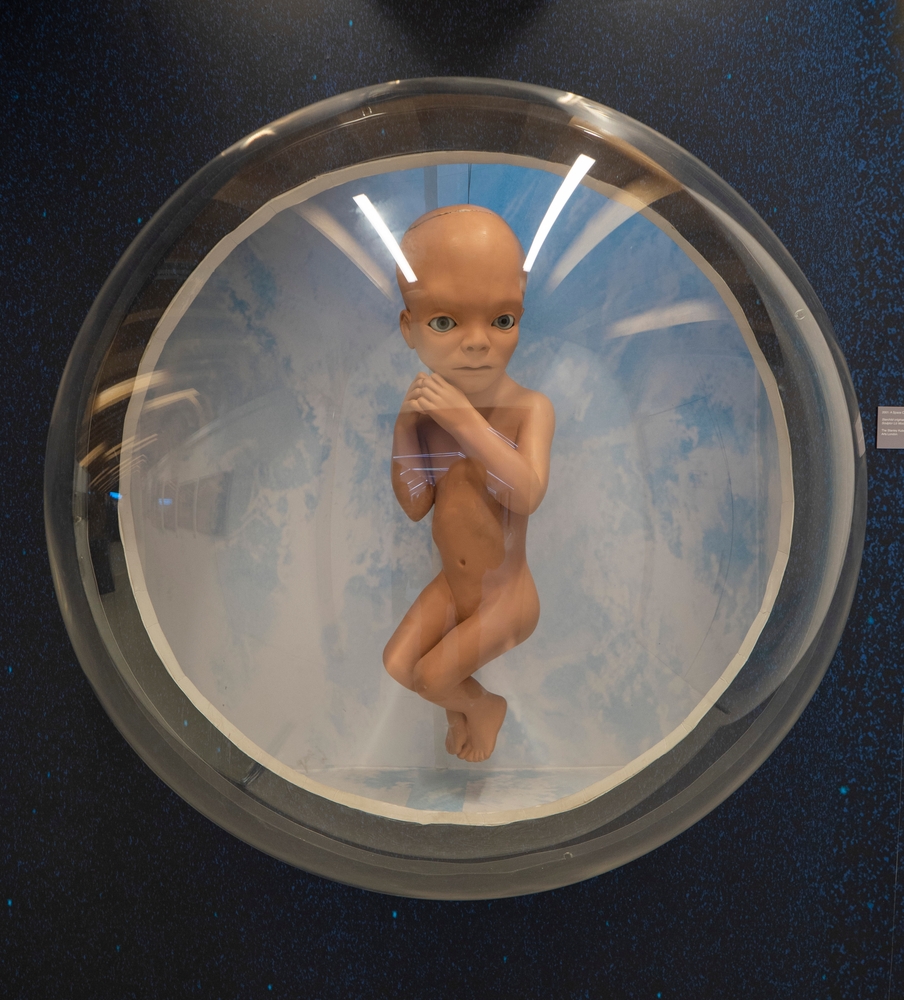
“This kind of device would create a new stage of human development, something we’ve never had to describe or regulate before,” says Elizabeth Chloe Romanis, a medical law scholar at Durham University.
Artificial wombs tug at questions that scientists, bioethicists, and legal experts scramble to cross before human trials begin. How will this technology affect the ways we intervene in preserving life, or how we define life itself? When pregnancy departs from the normal course, parents, especially mothers, may struggle to feel like proper caregivers. Extremely premature births can invoke similar feelings, in part because prematurity usually results from medical complications with the mother rather than the child.
Seeing your baby suspended in a tank or sealed in a bag could alter how you connect with them and how you see yourself as a parent. Research on families’ experiences with in-vitro fertilization and surrogacy suggests that any ethical alternative to natural pregnancy must address parents’ emotional needs alongside infants’ physical ones.
Grief Support Group Reveals Parents Would Sign Anything

When Beth invites a reporter to join her support group, 17 people trickle into the church basement, where Wendy, a therapist, arranges folding chairs in a circle. Only one man attends. Across from the reporter sits a girl who looks too young to order a drink at a bar, let alone to have already had and buried a baby. Membership spreads through word of mouth. No one knows how long the group has existed.
Parents crave details about the artificial womb technology to feed their hypotheticals. Could my baby have survived at 21 weeks? How much would it cost? Would I be able to see my daughter? Hold her? Two women grimace when shown photographs of the prototypes, but others lean forward and ask for more images. Parents picture their children in an artificial womb, submerged in the soothing embrace of synthetic dreams.
Each parent clings to the idea that more intervention, more technology, might have saved their babies.
Some Parents Fear Coercion to Use Experimental Device

Wendy hesitates when asked if more intervention always proves better. She recounts delivering her daughter via C-section at 24 weeks and begging doctors to administer aggressive care. Despite the precarious birth, doctors saved her baby in the operating room, compressing her chest to churn blood to her brain. For four months in the NICU, her daughter lived tethered to lines and flushed with drugs. After 131 days, her daughter died from a collapsed lung.
Although she supports the development of artificial wombs, Wendy wonders how doctors will obtain informed consent from parents desperate to save their babies. Maybe a future world exists where every parent can access this technology, she suggests. But how will they know whether it represents the right decision for the baby or for themselves?
At a later meeting, competing anxieties surface. Joanne repeats that she would have signed anything for a few more weeks with her son. But a younger woman shakes her head. “People already treat you like you’re selfish if you don’t do every single intervention. This would be one more thing they’d hold over you.” She won’t say who they are, but the suspicion hangs heavy.
Matrix Comparisons Haunt Scientists Who Want Focus on Saving Lives
Beth admits she cannot stop looking at photos of the lambs in the bags, probably should stop doing it right before lunch. Footage of CHOP’s animal trials unsettled her, not only the sight of slick pink bodies drifting in fluid, but its eerie resemblance to scenes from films where human infants are farmed in industrial pods.
When CHOP published its research on biobags, it birthed a stream of sensational speculation around “complete ectogenesis,” where fertilization to birth occurs entirely outside a woman’s uterus. One scientist working on artificial wombs, speaking on condition of anonymity to avoid upsetting his public relations representative, grows frustrated with such associations.
No one writes dystopian novels about IV drips or ventilators. With artificial wombs, the fantasy and the fear are built in.
Beth Paints Over Nursery While Wondering About Wrong Choices
During a final meeting, Beth wears denim overalls speckled with paint. Strips of tape adorn the trim of an otherwise empty room. She grips a soaked brush, and the nursery walls around her remain wet enough to smell.
For months after her son died, Beth refused to enter the nursery she had built for him. On her first attempt after joining the support group, her knees buckled just five steps beyond the doorway. She tried again a week later, this time taking two stuffed animals when she left. Item by item, Beth took apart the nursery. She numbed herself to the objects she removed. She hired someone else to disassemble the crib.
If Beth’s son had been born 20 years later, he might have had a different brush with life. In one version of that alternate future, he grows in an artificial womb that saves his life. Beth fills her scrapbook with photos of her baby, his toes snuggled into knitted bootees. In another version, Beth’s son is placed into an artificial womb because doctors know he faces long odds and are willing to give him a fighting chance. Beth watches her baby grow in the tank and prays for a miracle. But the odds don’t tilt in his favor. Would Beth feel better, believing she had done everything she could? Or would she forever wonder whether her choices prolonged her son’s life, and his possible pain, for the same outcome?
Scientists say it may take years before the first artificial womb appears in hospitals. When that day comes, the decision of whether to use it will test humanity’s understanding of life, parenthood, and choice. For parents like Beth and Joanne who have buried infants born too soon, a device like AquaWomb represents a miracle in waiting and an impossible choice wrapped into one glass tank.