
Your cart is currently empty!
Free Caviar and McNuggets: McDonald’s Wildest Valentine’s Day Stunt Yet
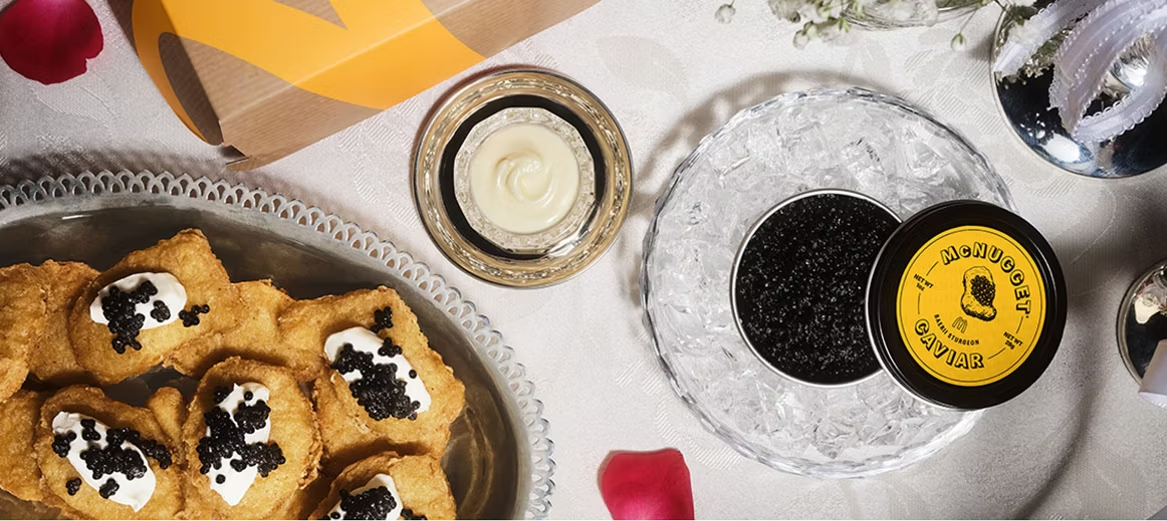
Golden Arches meets black pearls. Fast food collides with fine dining. If you thought 2026 couldn’t get any stranger, McDonald’s just announced it’s handing out free caviar kits next week. Yes, you read that right. Free. Caviar. From McDonald’s.
Contents
show
On Feb. 10 at 11 a.m. ET, the fast food giant will drop limited-edition McNugget Caviar kits exclusively at McNuggetCaviar.com. Each kit comes loaded with a 1oz tin of Baerii Sturgeon caviar, a $25 Arch Card for Chicken McNuggets, crème fraîche, and a Mother-of-Pearl caviar spoon. All of it arrives courtesy of a partnership with Paramount Caviar, and all of it costs exactly nothing.
McDonald’s frames the stunt as a Valentine’s Day gesture, but something bigger is happening here. Fast food’s most recognizable brand just placed itself at the center of a cultural phenomenon that’s been brewing for months across TikTok feeds, restaurant menus, and dinner party tables worldwide.
Caviar, once reserved for Russian tsars and yacht parties, has become the internet’s favorite status symbol. And McDonald’s wants in.
Rihanna Started Something
Blame Rihanna. Or thank her, depending on your stance on fish eggs atop fried chicken.
When RiRi posted herself eating caviar on chicken nuggets topped with crème fraîche and chives, she didn’t just share a snack preference. She launched what food writers now call the “high-low” movement. Suddenly, pairing a $200 tin of sturgeon roe with a $5 box of nuggets became not just acceptable but aspirational.
Others followed. At the US Open this summer, vendors sold $100 chicken nuggets topped with caviar. Former Real Housewife Bethenny Frankel built TikTok content around shoving caviar onto bagels and crackers. Dinner parties started featuring caviar on Pringles, served without a trace of irony.
McDonald’s didn’t create this trend. But by offering free caviar kits built around its signature McNuggets, the company is attempting something bolder than trend-hopping. It’s trying to cement itself as the mass-market anchor for a luxury food movement that’s barely six months old.
What Makes Gen Z’s Caviar Obsession Different
Social media metrics tell part of the story. Videos tagged #Caviar have racked up 4.7 billion views on TikTok. Danielle Zaslavsky, whose family owns the American caviar company Marky’s, built a following by teaching caviar basics to millions. “Welcome to the caviar class you guys didn’t know you needed!” she tells viewers while spooning glossy sturgeon eggs onto tortilla chips and ice cream.
Sales figures confirm what the view counts suggest. Caviar Russe, an American retailer, reports that sales volume has quadrupled since 2019. Business Research Company predicts the global caviar market will grow from $3.1 billion currently to $4.6 billion by 2029.
But numbers alone don’t explain why Gen Z latched onto a food product associated with oligarchs and Bond villains. According to industry insiders, younger consumers are redirecting spending away from alcohol toward food experiences. A 30g jar of caviar, priced around $140, becomes the new dinner party hostess gift, replacing the obligatory bottle of champagne.
Darina Helbrecht, founder of Runan Caviar, points out that an entire generation has stopped drinking or significantly cut back. Instead, they invest in memorable culinary moments. Katya Bataeva, founder of Volzhenka Caviar, agrees. She loves the idea of bringing a small jar to a gathering rather than wine. Even a modest tin sparks conversation.
Of course, caviar remains expensive. Volzhenka jars start at £140. Caviar Russe’s 50g tins range from $115 for entry-level options to $1,000 for rare Almas Osetra. Gen Z’s caviar enthusiasm hasn’t made the delicacy cheaper. It’s just made it cooler.
Industry Leaders Push Democratization
Bataeva, who hails from Astrakhan by the Caspian Sea, wants to drag caviar into the 21st century. Her company collaborates with young chefs and hosts tasting menus for fashion houses like Chanel. She tells journalists that caviar doesn’t require elaborate preparation. Use it as a topping, she suggests, even on mousse au chocolat or ice cream. Pairing works beautifully if the quality holds up.
Katya Bataeva says the caviar industry is “still very dusty, very old-school, very traditional – heavy luxury. It’s what we’re trying to get away from.”
Chef Nil Mutluer at Sessions Arts Club in London shares that philosophy. If the caviar quality is genuinely high, minimal intervention works best. But she can’t resist experimentation. Sometimes caviar sneaks into creamy pasta or ice cream. She appreciates the contrast between luxury and playfulness.
What both women describe amounts to a quiet revolution. Caviar has crawled out from dimly lit corners where it once lived and now pops up everywhere. Bataeva notes that caviar used to be consumed primarily at home, a direct-to-customer product. Now it appears across restaurant menus, social media kitchens, and apparently, McDonald’s marketing campaigns.
Mutluer offers perhaps the clearest articulation of what’s changed. “Luxury doesn’t have to be intimidating. It can be casual, cheeky, part of your normal routine. People are daring to enjoy luxurious ingredients in everyday moments – maybe the new generation values themselves differently.”
Restaurants Cash In
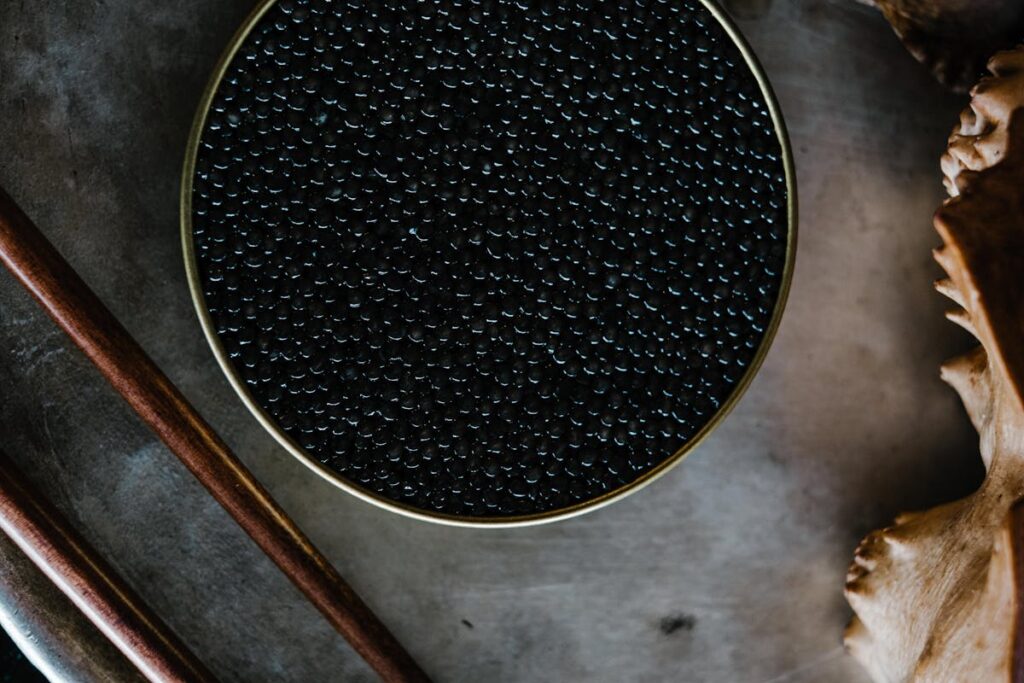
Caviar Kaspia understood this shift before most. Opened in Paris in the 1950s, the restaurant became famous for its baked potato piled high with caviar. During fashion week, it functions as an unofficial canteen for boldface names. Anyone seeking industry credibility posts that potato.
Recently, Caviar Kaspia expanded to London, where the signature dish accounts for 70% of orders. Other restaurants followed suit, adding caviar bumps to menus. Upscale establishments now serve it with fried chicken and crème fraîche, nodding to the Rihanna effect.
Social media fuels much of this restaurant activity. Caviar photographs well. Add a mother-of-pearl spoon and a fresh manicure, and you’ve got algorithmic gold. Beyond aesthetics, though, caviar offers genuine culinary appeal. Bataeva points out it qualifies as a superfood, packed with omega-3 fatty acids and protein. Whether those health benefits survive the journey to a McNugget remains debatable.
How McDonald’s Kit Works
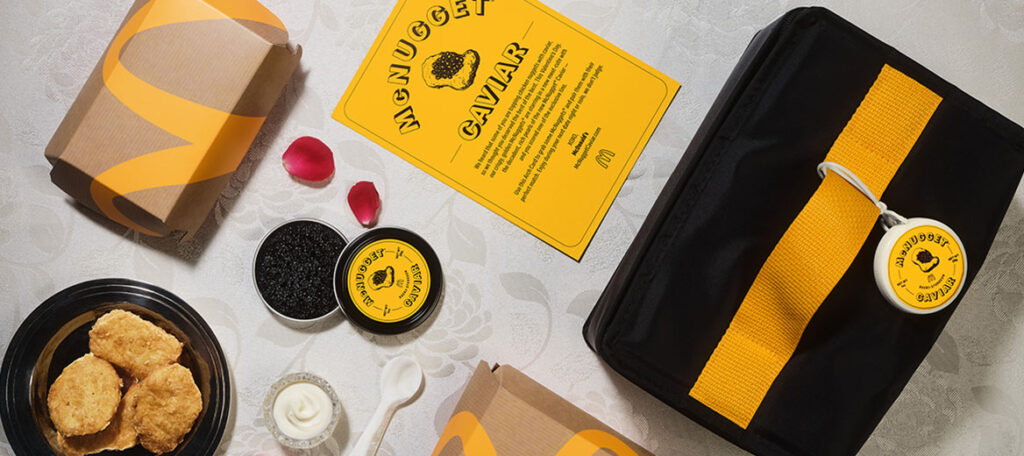
McDonald’s positions its caviar kit as equal parts gift and experience. Each package contains everything needed for what the company calls an “upscale yet effortless celebration.” Baerii Sturgeon caviar comes in a 1oz tin. Crème fraîche and the Mother of Pearl spoon complete the traditional serving setup. Meanwhile, the $25 Arch Card ensures buyers can stock up on the McNuggets themselves.
Supplies are limited. McDonald’s hasn’t disclosed exact numbers, but the company warns fans to act fast. Kits drop exclusively online, not in restaurants. Social media accounts across Instagram, TikTok, X, and Facebook will offer additional promotional opportunities.
McDonald’s frames the pairing as a “match made in heaven.” Crispy, golden McNuggets meet salty, savory black pearls of caviar. For Valentine’s Day, the kit serves couples, friend groups, or solo diners treating themselves.
What makes the promotion remarkable isn’t the novelty. Plenty of brands have attempted luxury-meets-accessibility stunts. What sets McDonald’s apart is timing. Right now, caviar sits at a precise cultural inflection point. It’s transitioning from exclusive luxury to accessible indulgence. By offering free kits, McDonald’s removes the primary barrier preventing mass-market consumers from trying the trend.
From Caspian Fishermen to Global Phenomenon
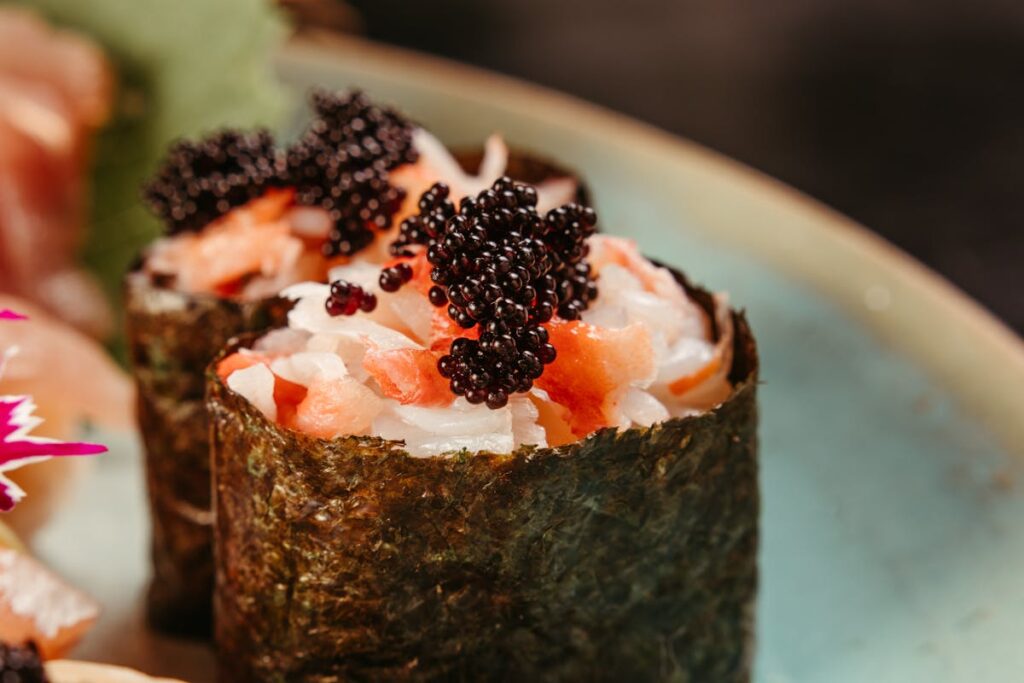
Caviar’s luxury status is relatively recent. Original caviar eaters weren’t billionaires. They were fishermen spreading their day’s catch on crusty bread. Russian families ate it as a staple, not a splurge. Helbrecht laughs when told about contemporary caviar pairings, recalling that her family simply ate it on bread growing up.
Over time, demand increased, and supply decreased. Overfishing led to multiple bans and restrictions on wild caviar. Today, almost all caviar comes from farms. Production has shifted geographically as well. Russia and Iran once dominated exports. Now China leads global distribution, with Ya’an city alone producing around 15% of the worldwide supply.
Prices remain high because sturgeon maturation takes years. Beluga sturgeon, for instance, requires more than two decades before producing roe. Even with farming, caviar production demands patience and investment.
Lab-grown alternatives may eventually change the equation. Caviar Biotec, a British company, extracts stem cells from sturgeon roe, grows them in laboratories, and then induces differentiation into eggs. Similar methods are being explored across the cultured meat industry. If successful at scale, lab-grown caviar could drastically reduce both production time and costs.
Whether cheaper caviar retains its appeal remains an open question. Much of caviar’s current social media cachet derives from its expense. TikTokers flaunt it precisely because it signals disposable income and taste. Democratize the price point too much, and the content value might evaporate.
Why McDonald’s Bet Makes Sense
McDonald’s rarely makes moves without calculation. Offering free caviar kits might seem like a pure publicity stunt, but it aligns with several smart strategic considerations.
First, it positions McDonald’s within a legitimate cultural conversation. Caviar’s resurgence isn’t manufactured hype. Sales have genuinely quadrupled. TikTok engagement is real. By jumping in now, McDonald’s associates itself with a movement that has momentum.
Second, Valentine’s Day provides perfect timing. Caviar kits function as gifts, date night provisions, or self-care indulgences. All three use cases fit Valentine’s marketing without forcing romantic exclusivity.
Third, the free price point eliminates risk for consumers. Anyone curious about the caviar trend but hesitant to spend $140 on Volzhenka or $115 on Caviar Russe can try McDonald’s version at no cost. If the experience disappoints, nobody lost money. If it delights, McDonald’s just created caviar converts with positive brand associations.
Fourth, McDonald’s already owns the chicken nugget category. Rather than fighting competitors in established territory, this promotion expands what McNuggets can mean. Today, they pair with BBQ sauce. Tomorrow, perhaps caviar will become another option, at least for special occasions.
Finally, social media coverage is guaranteed. Whether food critics embrace or mock the kits, they’ll generate content. Every article, post, and video extends McDonald’s reach without additional ad spend.
Mark Your Calendar for 11 a.m. ET
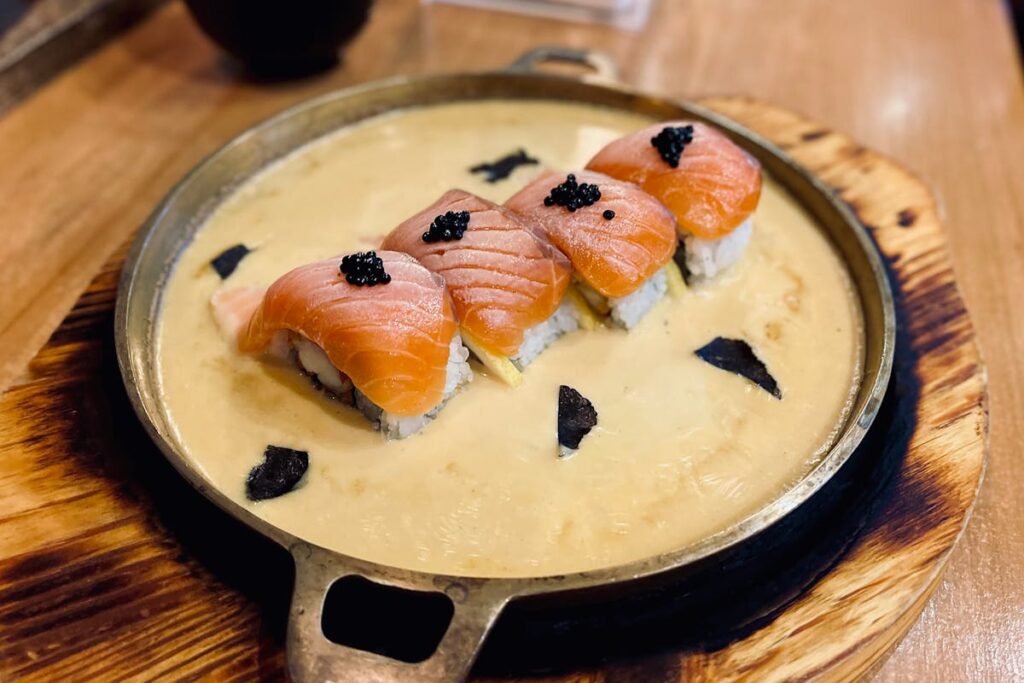
McDonald’s McNugget Caviar kits drop Feb. 10 at McNuggetCaviar.com. Limited supplies mean a sellout seems likely within hours, possibly minutes. Anyone interested should set calendar reminders for 11 a.m. ET sharp.
Beyond the immediate promotion, McDonald’s has created a test case. If consumer response exceeds expectations, future collaborations might follow. Other fast food chains will watch closely. If McDonald’s successfully bridges luxury and accessibility, competitors will attempt their own versions.
For caviar producers, McDonald’s involvement represents validation. Mass-market awareness drives future sales, even if most customers never order through McDonald’s again. Bataeva, Helbrecht, and other industry modernizers have spent years trying to make caviar approachable. McDonald’s just handed them the largest platform imaginable.
Whether nuggets and caviar become a permanent pairing or fade as a brief 2026 curiosity, something has already shifted. Luxury food no longer requires formal settings or hushed reverence. It can be casual, fun, even a little absurd. And sometimes, it comes free from McDonald’s.
Image Source: McDonald’s