
Your cart is currently empty!
Teen Invents Water Filter That Removes Nearly All Microplastics From Drinking Water
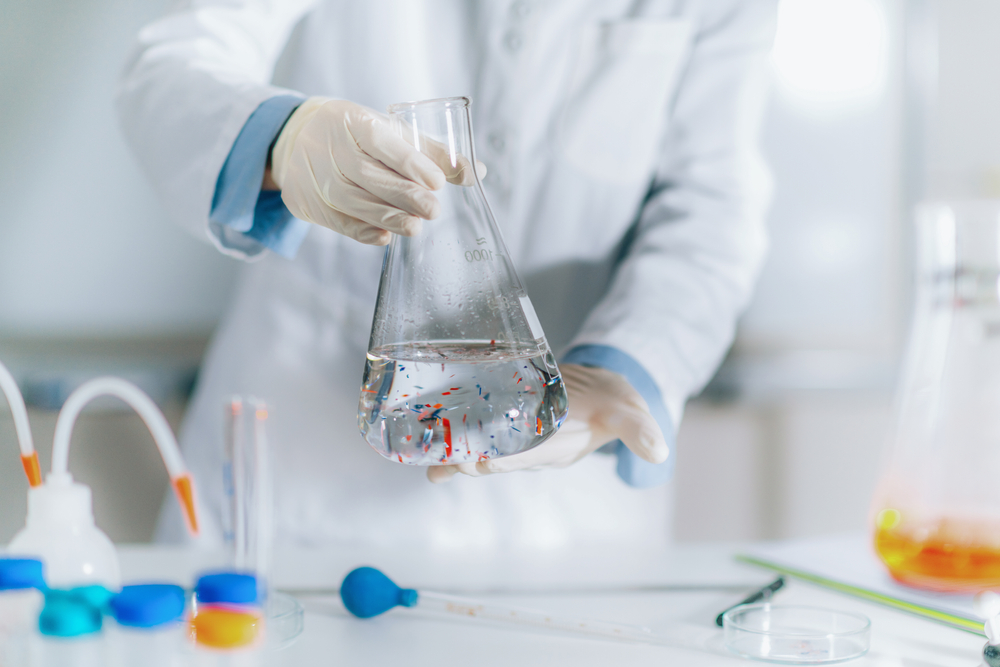
For years, microplastics have been one of those modern problems that feel both invisible and impossible. They are too small to see in a glass of water, too widespread to avoid completely, and too poorly understood to dismiss as harmless. Scientists have found them in oceans, food, blood, lungs, and even human tissue, yet for most people, the solutions available at home remain expensive, inconvenient, or frustrating to maintain.
Contents
show
That is what makes one teenager’s invention feel so compelling. Instead of waiting for governments, major corporations, or research labs to solve the problem, 18-year-old Mia Heller decided to try building her own answer. What began as frustration over a clunky filtration system in her family home has now turned into a science fair-recognized prototype capable of removing around 95.5 percent of microplastics from water.
And perhaps the most striking part of the story is not just that she did it while still in high school. It is that her invention speaks to a bigger reality many families already know too well: when public systems fall short, ordinary people often feel forced to solve extraordinary problems themselves.
The Moment That Turned Concern Into Action
Mia Heller’s idea did not begin in a research laboratory or with a flashy startup pitch. It began much closer to home.
According to reports from Smithsonian Magazine and other outlets covering her work, Heller first became interested in water contamination after reading about water quality concerns in her local Virginia community. The issue was not abstract. Residents in her area were dealing with reports of PFAS and microplastic contamination, and there was no publicly funded fix coming to make the problem disappear.
That detail matters because it shaped the emotional core of the project. This was not simply a student trying to win an award or build something impressive for a résumé.
It was a teenager looking at a real-world problem affecting families around her and realizing that people were largely being told to deal with it themselves.
That realization hit even harder once her own family installed a home filtration system.
Instead of feeling reassured, Heller saw the downsides up close. The system worked, but it demanded regular upkeep, especially when it came to replacing membrane filters. Watching her mother repeatedly maintain the unit pushed Heller toward a question that many inventors are driven by: why does this have to be so difficult?
That question would eventually become the foundation of her project.
Why Existing Water Filters Are Not Always Enough
At first glance, the idea of filtering drinking water sounds simple. Buy a filter, install it, and move on. But in reality, many households know the process can be expensive, messy, and far from low-maintenance.
Traditional filtration systems often rely on membranes or chemical treatment processes. While effective in many cases, these approaches come with trade-offs.
Some of the most common issues include:
- Frequent maintenance: Membranes can clog or degrade over time and often need replacing.
- Ongoing costs: Replacement parts and upkeep can become expensive for families.
- Waste generation: Some systems produce waste materials or require disposable components.
- Accessibility barriers: High-performing systems are not always affordable or practical for every household.
Microplastics make the challenge even harder.
These particles, generally defined as pieces of plastic ranging from around 1 nanometer to 5 millimeters, are incredibly small and often difficult to remove completely. Some are manufactured intentionally for products like cosmetics or industrial uses, while others are formed when larger plastic items break down into smaller and smaller fragments.
Because they vary so much in size, shape, and composition, there is no single perfect solution for filtering them out.
That is what makes Heller’s approach stand out. Rather than trying to improve the same membrane-heavy systems already on the market, she asked whether there might be a different way to separate plastic particles from water altogether.
How Her Invention Actually Works
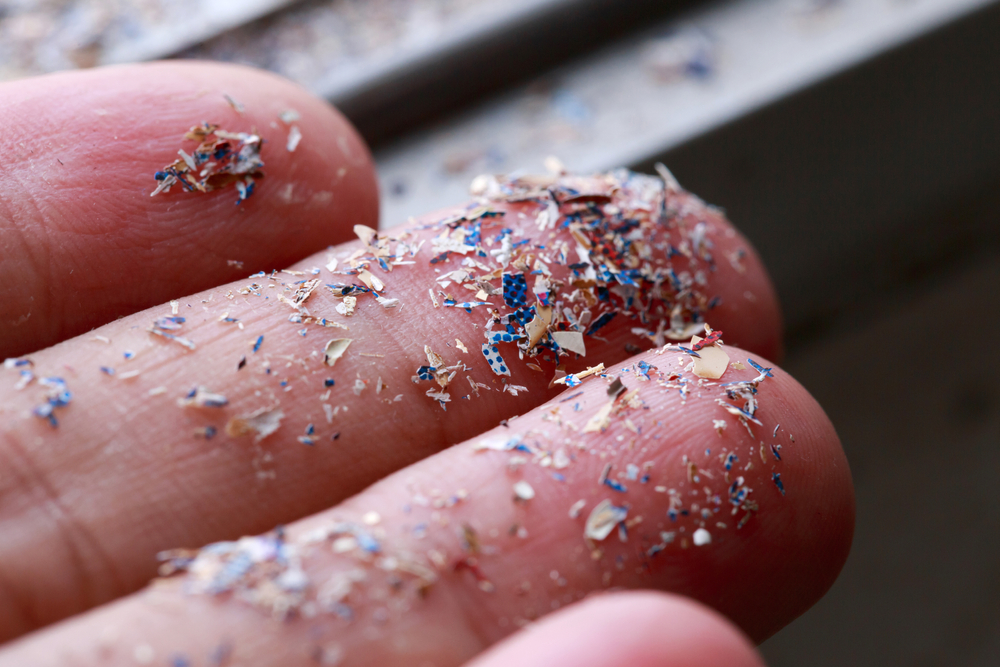
The science behind Heller’s prototype sounds complicated at first, but the basic concept is surprisingly easy to understand.
Instead of relying on a physical membrane to trap microplastics, her system uses a magnetic liquid called ferrofluid.
Ferrofluid is essentially a liquid that contains magnetic particles. In Heller’s design, the ferrofluid binds to microplastic particles in the water. Once that happens, a magnet can be used to pull the ferrofluid and attached microplastics out of the water, leaving cleaner water behind.
In simple terms, the process works like this:
- Contaminated water enters the system and is exposed to ferrofluid.
- The ferrofluid attaches to microplastic particles suspended in the water.
- A magnetic field pulls the bonded material away, separating the contaminants from the water.
- Much of the ferrofluid is recovered and reused, reducing waste and improving efficiency.
That last point is one of the smartest parts of the design.
A filtration system that uses an expensive or single-use material would struggle to be practical in the real world. Heller’s prototype was designed with reuse in mind, which helps explain why her project has been described as low-waste as well as low-maintenance.
Her current model reportedly consists of three modules and can filter roughly one liter of water at a time. Depending on which report you read, it is described as being about the size of a standard bag of flour or a small home appliance, which suggests it could eventually be adapted for household use rather than requiring industrial-scale infrastructure.
That is a crucial distinction. Many promising environmental inventions fail because they are too expensive or too complicated for ordinary people to use. Heller’s concept appears to have started with domestic practicality from day one.
The Result That Got People’s Attention
A clever idea is one thing. Performance is another.
And this is where Heller’s prototype stopped sounding like a nice science fair concept and started attracting serious attention.
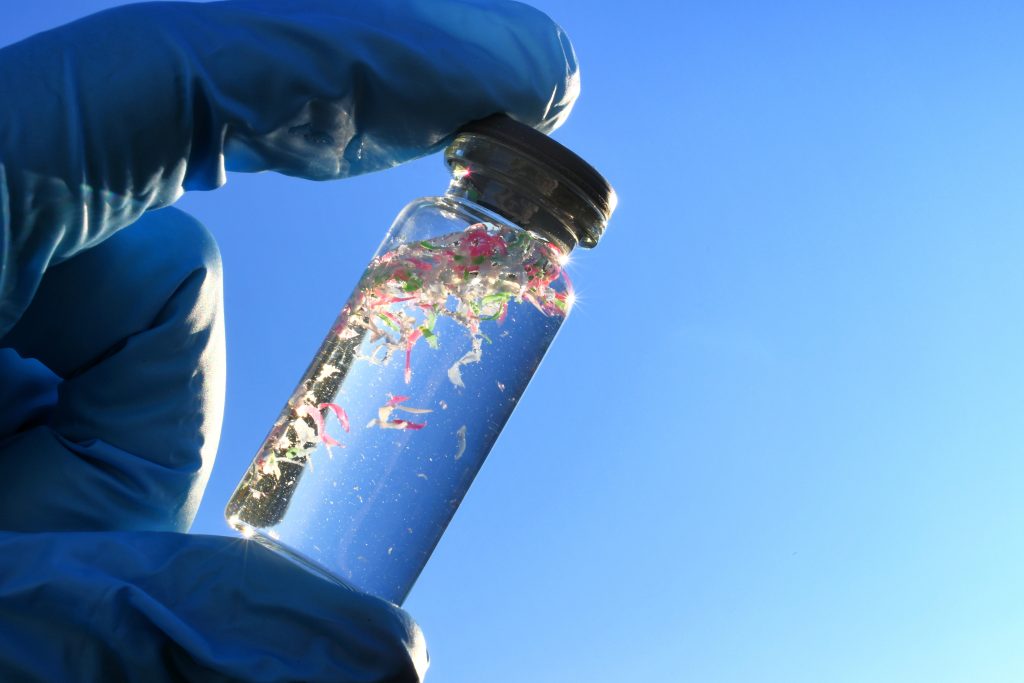
According to her testing, the system removed 95.52 percent of microplastics from water. It also reportedly recycled 87.15 percent of the ferrofluid used during the filtration process.
Those are eye-catching numbers, especially for a student-built prototype developed through repeated trial and error.
To measure how effective the filter actually was, Heller did not simply rely on guesswork or visual inspection. She also developed a turbidity sensor to help monitor the concentration of particles in the water and evaluate the system’s performance more precisely.
That detail says a lot about the project.
It is one thing to build a device that appears to work. It is another to build a method for testing whether it really does.
And while experts are right to point out that home testing is only the beginning, the reported performance places the invention in a very interesting position. Traditional drinking water treatment systems are often reported to remove anywhere from around 70 percent to over 90 percent of microplastic particles depending on the method and conditions. Heller’s prototype appears to sit at the competitive end of that range.
That does not mean the problem is solved overnight. But it does mean this is far more than a symbolic school project.
Why Microplastics Have Become Such a Big Health Concern
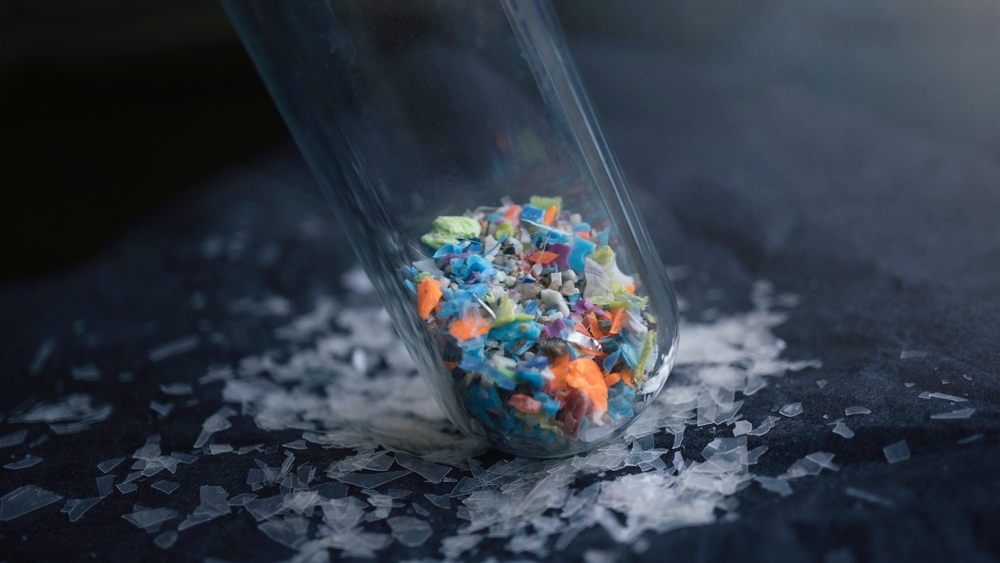
One reason stories like this resonate so strongly is that microplastics are no longer just an environmental issue. They have become a public health conversation too.
For a long time, plastic pollution was discussed mainly in terms of littered beaches, ocean wildlife, and landfill waste. Those concerns are still very real. But the newer fear is much more intimate: what happens when the plastic does not stay outside our bodies?
Researchers have now identified microplastics in a growing number of places within the human body, including:
- Blood
- Lungs
- Placenta
- Testes and semen
- Bones
- Brain tissue
That list alone is enough to make many people uneasy, even before you get into the unanswered scientific questions.
The truth is that researchers are still working to understand what all of this means for long-term human health. Experts have warned that while the strongest conclusions are still being developed, there are growing concerns about links between microplastic exposure and cardiovascular disease, respiratory issues, hormone disruption, neurological conditions, and other chronic health problems.
In other words, science has not fully answered the danger question yet. But it has already made one thing clear: these particles are getting into us, and they are getting there in large numbers.
That uncertainty is exactly what makes the issue so unsettling.
When people hear that something may be in their water, food, or body, they naturally want to know how to reduce exposure now, not ten years from now when all the long-term studies are complete. That creates an urgent need for practical, affordable tools that people can actually use in daily life.
And that is precisely the gap Heller’s invention is trying to fill.
The Part of the Story People Will Probably Connect With Most

There is a technical side to this story, and there is a human side.
The technical side is impressive enough on its own. But the human side may be what makes it stick.
At its core, this is a story about a teenager seeing a household burden and refusing to accept it as normal.
That matters because so many environmental problems are framed as either too big for individuals to tackle or too small to justify systemic change. People are often told to recycle more, buy less plastic, install expensive systems, and somehow manage risks they did not create.
Heller’s project sits in the middle of that tension.
She did not solve the global plastics crisis. No one teenager could. But she did identify a very specific pressure point in ordinary life and try to make it better.
That is often how meaningful innovation begins.
Not with grand speeches, but with annoyance, curiosity, and persistence.
There is also something refreshing about the way her invention was developed. It was not presented as a sleek Silicon Valley fantasy about “disrupting” water forever. It came out of a garage, repeated prototyping, and a very direct practical question: how can this be made cheaper, easier, and less wasteful?
That grounded quality is part of why the story feels bigger than a typical science fair headline.
The Experts Are Impressed, but They Are Asking the Right Questions Too

One of the most encouraging things about the reaction to Heller’s prototype is that experts appear to be taking it seriously while also being honest about what still needs to happen next.
Matthew J. Campen, a toxicologist at the University of New Mexico, reportedly described the concept as “a really great idea” and praised the broader significance of someone tackling this kind of problem.
That is meaningful praise, especially given how many student inventions are celebrated more for enthusiasm than practical potential.
But the caution is just as important.
Experts have pointed to a few major questions that would need to be answered before a system like this could become a widely trusted consumer product.
The Biggest Concerns Still on the Table

1. What happens to the captured microplastics?
If the system removes microplastics from water, that is only part of the job. Those particles still need to be safely discarded or destroyed in a way that prevents them from re-entering the environment.
2. Does the process leave behind anything else?
Because ferrofluid is central to the filtration process, researchers would want to confirm that no harmful residue remains in the treated water.
3. Can the system scale beyond a prototype?
A device that works in controlled tests or for small household batches is promising, but scaling it for broader real-world use is a different challenge entirely.
These are not signs that the invention is flawed. They are exactly the kinds of questions any serious technology should face.
In fact, the willingness to ask them is part of what makes the story more credible, not less. It shows that the conversation has already moved beyond “wow, a teenager built this” and into “could this actually become useful?”
That is a much more exciting place for an invention to be.
Could This Actually Become Something People Use at Home?
At this stage, Heller herself seems to be thinking realistically rather than making oversized promises.
She has reportedly suggested that the system may be best suited for individual household use, particularly as an under-the-sink filtration option. That makes sense for both technical and economic reasons.
Ferrofluid is still expensive to produce at scale, which could make municipal deployment unrealistic for now. But that does not automatically limit the invention’s importance.
In many ways, home use might be the strongest lane for it anyway.
If future testing confirms the safety and effectiveness of the design, an under-the-sink unit could potentially appeal to households that want stronger filtration without the heavy maintenance burden of some traditional systems.
A successful consumer version would likely need to offer:
- Reliable real-world performance across different water conditions
- Safe containment and recovery of the ferrofluid
- Simple maintenance for non-technical users
- Reasonable upfront and long-term costs
- Independent validation from professional testing environments
That is still a long road.
But the fact that the invention can even be discussed in those terms is remarkable for a project built by a high school student.
And if nothing else, it may encourage more investment and attention toward a category of innovation that has clearly been underdeveloped.
Why This Story Feels Bigger Than One Student or One Science Fair
It would be easy to reduce this story to a feel-good headline about a brilliant teen doing something impressive. And to be fair, it is that.
But it is also a story about the kind of innovation people are hungry for right now.
The environmental crisis often feels overwhelming because so many of its biggest problems are tied to systems that seem far beyond individual control: plastic production, industrial waste, weak regulation, poor infrastructure, and slow-moving policy.
Against that backdrop, people tend to latch onto stories that feel tangible. They want to see someone identify a real problem and move toward a concrete fix.
That is exactly what this story offers.
It also highlights a truth that is sometimes uncomfortable: some of the most useful ideas do not always come from the biggest institutions first. Sometimes they come from the people closest to the inconvenience.
A teenager watching a household water filter become a constant chore might notice flaws that larger systems have simply normalized.
And perhaps that is part of the deeper lesson here.
Innovation is not always about inventing something from nothing. Sometimes it is about refusing to accept that a bad solution is “good enough.”
What Readers Can Take Away From This
Even if Heller’s filter never becomes a mass-market product exactly as it exists today, the project already matters.
It matters because it proves that younger people are not just inheriting environmental problems. Many of them are actively trying to solve them.
It matters because it shines a light on how widespread and under-addressed microplastic contamination has become.
And it matters because it reminds people that practical problem-solving still has power, especially when it starts with everyday life.
Not just that a high school student built a water filter capable of removing 95.5 percent of microplastics, but that she did it in response to something many adults have quietly accepted as unavoidable.
And in a world increasingly defined by problems that feel too complex to touch, there is something powerful about seeing one person, in one garage, decide to try anyway.