
Your cart is currently empty!
Indonesia Ends Elephant Rides Nationwide in Major Win for Animal Welfare

Indonesia has officially brought an end to elephant riding, closing the door on one of the most debated and controversial wildlife tourism practices in Southeast Asia. In what campaigners have described as a “major victory for elephants,” the government has issued a binding national directive that requires conservation and tourism facilities across the country to stop offering elephant rides and transition toward ethical, observation based experiences instead. For years, elephant rides were marketed as unforgettable bucket list moments, promising travelers close encounters with one of the most intelligent and emotionally complex animals on Earth. Many tourists believed they were supporting conservation simply by purchasing a ticket, unaware of the deeper welfare concerns that had been building behind the scenes.
Contents
show
Animal welfare organisations, however, have long argued that the reality of elephant riding is far removed from the glossy brochures and curated social media posts. Investigations and advocacy campaigns repeatedly highlighted the physical strain, psychological stress, and restrictive environments that often accompany entertainment driven wildlife tourism. The new directive represents more than just a policy update; it reflects a broader shift in how Indonesia wants to position itself in a world where ethical travel is becoming the expectation rather than the exception. For supporters, this moment marks not only the end of a controversial attraction but the beginning of a new chapter in wildlife protection and responsible tourism.

A Binding Government Directive Changes the Industry
At the end of 2025, Indonesia’s Ministry of Forestry, through its Directorate General of Natural Resources and Ecosystem Conservation, issued Circular Letter No. 6 of 2025, formally ending elephant riding activities at all conservation and tourism facilities across the country. This was not a suggestion or a voluntary guideline for operators to consider at their convenience. It was a nationwide directive that requires immediate compliance and makes clear that elephant rides no longer align with Indonesia’s conservation priorities. By placing the order within an official circular letter, the government embedded the ban into the regulatory framework that oversees wildlife and tourism facilities.
According to the Bali Natural Resources Conservation Agency, facilities that fail to comply risk having their operating permits revoked, a consequence that underscores the seriousness of the directive. Enforcement has been actively monitored, particularly in Bali, where elephant attractions have historically drawn significant tourist traffic. The regulatory backing ensures that this shift cannot be ignored or quietly bypassed, sending a strong signal to operators that the era of ride based elephant entertainment has officially ended.
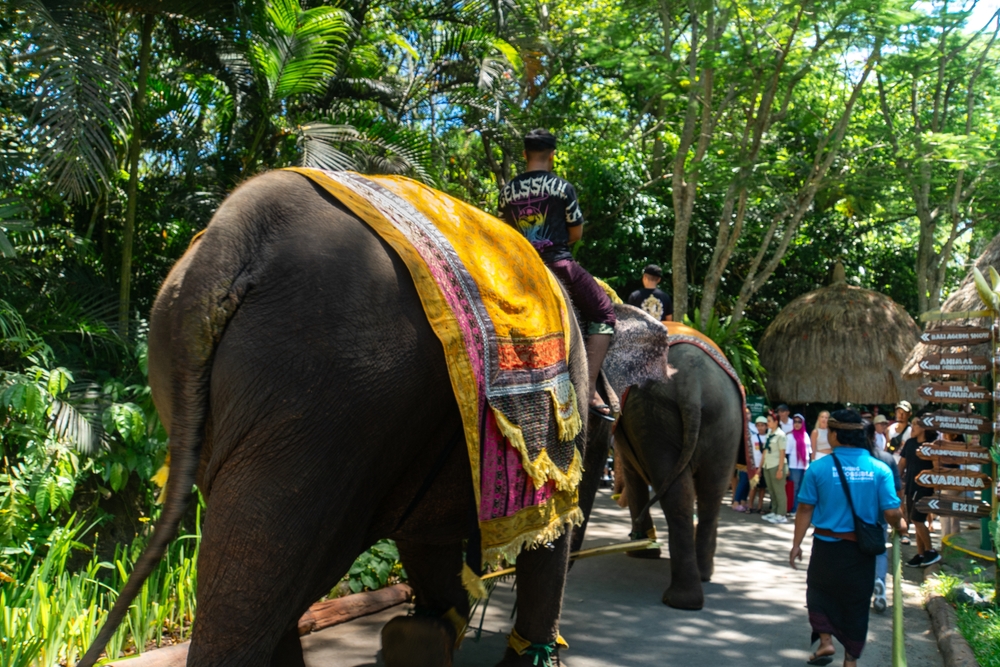
One of the most high profile responses came from Mason Elephant Park in Bali, which had been among the last venues still offering elephant rides. After receiving official warnings, the park halted elephant riding on 25 January 2026 and began transitioning toward more ethical tourism activities. The rapid compliance illustrates how quickly longstanding practices can change when government policy makes expectations clear and enforceable, and it highlights the broader transformation underway within Indonesia’s wildlife tourism sector.

Why Elephant Riding Has Been Widely Criticized
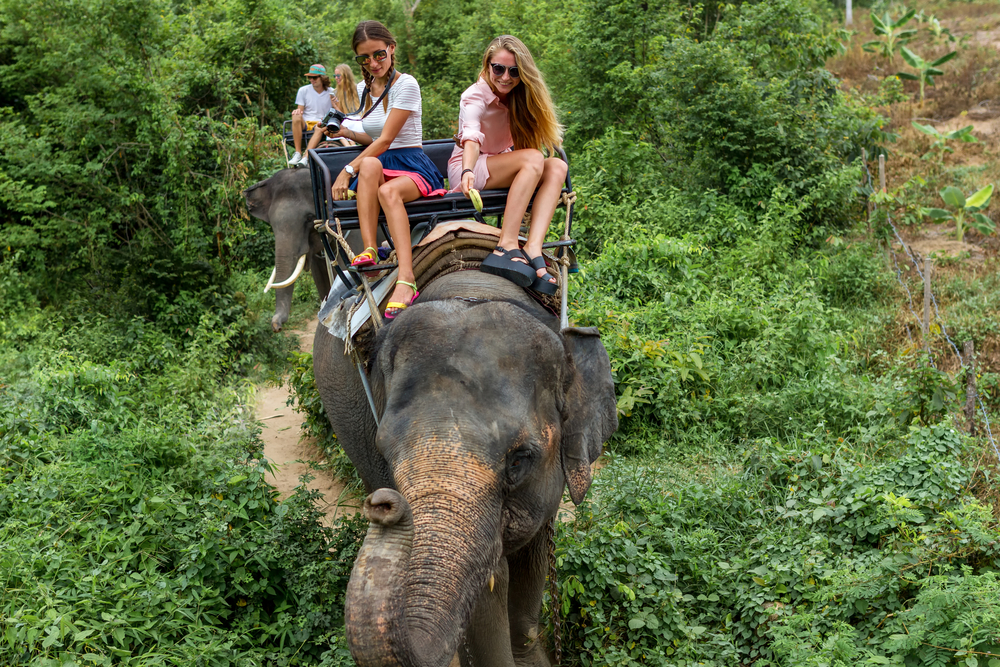
Elephant riding is widely recognised by animal welfare scientists and experts as harmful, despite its long standing popularity among tourists. Although elephants are large and powerful animals, their anatomy is not naturally suited to carrying heavy loads for prolonged periods, especially when saddles and multiple riders are involved. Over time, repeated weight bearing can contribute to spinal stress, joint strain, and foot problems, particularly when elephants are required to stand or walk on hard, artificial surfaces that differ significantly from their natural habitats.
Beyond the visible physical effects, the training process required to make elephants compliant around crowds and constant human interaction has drawn sustained criticism. Before elephants can safely carry tourists, they must be conditioned to tolerate noise, unpredictable behavior, and handler commands in environments that are often far removed from the wild. Campaigners have long exposed the harm caused by elephant rides and called for global action to end cruel wildlife attractions, pointing to methods that suppress natural instincts and prioritize obedience over wellbeing.
Psychologically, elephants are highly social, intelligent animals that form deep family bonds and communicate across long distances in the wild. Captivity and performance based tourism can restrict these natural behaviors, limiting opportunities for social interaction, grazing, roaming, and bathing. Ending elephant rides removes the commercial demand for constant human entertainment and creates the possibility for captive elephants to spend more time engaging in behaviors that align with their biological and social needs, an outcome that advocates argue is central to genuine welfare improvement.

Years of Campaigning Led to This Moment
This policy shift follows years of campaigning from several animal welfare organisations that worked to expose the hidden costs of wildlife entertainment. Investigations into tourism venues in Bali and across Southeast Asia documented the gap between marketing language and lived reality, revealing that attractions promoted as educational or conservation focused often failed to deliver meaningful benefits for the animals themselves. Reports such as Checking Out of Cruelty and Holidays That Harm highlighted how elephant rides and similar activities exploited wild animals while offering limited conservation outcomes.
Public pressure played a critical role in amplifying these findings. More than 10,000 Indonesians, Australians and New Zealanders signed petitions calling on Mason Elephant Park to end elephant riding, demonstrating that concern extended beyond advocacy circles and into the broader traveling public. As awareness grew, so did the expectation that governments and tourism operators should respond with tangible reforms rather than incremental adjustments.
Suzanne Milthorpe, Head of Campaigns for World Animal Protection ANZ, described Indonesia’s action as a “world-leading step” toward safeguarding the dignity of wild animals. Supporters have also referred to the decision as a “wonderful win for elephants,” emphasizing that sustained advocacy, public engagement, and regulatory pressure can collectively reshape national policy. The outcome reflects years of persistent effort aimed at aligning tourism practices with modern ethical standards.
A Shift Toward Ethical Wildlife Tourism
Indonesia’s directive aligns with a broader global shift toward responsible and humane tourism practices. Around the world, travelers are increasingly questioning whether their holiday activities genuinely support conservation or simply package wildlife for entertainment. Facilities are responding by promoting observation based experiences that focus on education, habitat enrichment, and respectful distance rather than direct physical interaction.
Ethical wildlife tourism prioritizes allowing animals to exhibit natural behaviors without being required to perform or accommodate constant human contact. Visitors may observe elephants roaming in larger, more naturalistic environments, learn about rescue and rehabilitation efforts, or witness feeding and bathing behaviors without interference. This approach seeks to balance meaningful visitor experiences with the fundamental principle that wildlife should not be compelled to entertain.
Importantly, the transition does not necessarily undermine local economies. Responsible tourism can still generate revenue, employment, and community benefits while aligning with higher welfare standards. By positioning itself as a destination committed to ethical reform, Indonesia may attract travelers who are increasingly motivated by sustainability and compassion, strengthening its reputation in an evolving global market.
What This Means for Travelers and the Region
For travelers, the decision helps make ethical choices clearer, reinforcing that holidays should never come at the expense of an elephant’s welfare, in Indonesia or any destination. The removal of elephant rides from conservation facilities eliminates ambiguity and sends a strong message that such activities are incompatible with national policy. Tourists can feel greater confidence that the experiences offered within regulated facilities are moving toward welfare centered models.
Visitors are encouraged to research venues carefully, avoid attractions that promote direct contact or forced performances, and support operators with transparent animal welfare policies. Choosing observation only experiences and companies that contribute to conservation and sustainable livelihoods allows travelers to align their spending with their values. Informed decision making plays a crucial role in reinforcing reforms and encouraging continued progress within the industry.
Advocates hope that Indonesia’s move will inspire similar action across Southeast Asia and beyond. While this ban represents a significant milestone, campaigners stress that it should be part of a broader global effort to end cruelty in wildlife tourism, including circus style shows and close up interactions that prioritize spectacle over welfare. The momentum generated by this decision may influence neighboring countries and encourage further regulatory change across the region.
A Turning Point for Wildlife Tourism
Indonesia’s ban marks a defining moment in the evolving conversation about how humans interact with wild animals. For decades, elephant rides were normalized as harmless entertainment, often framed as cultural experiences or conservation initiatives. The new directive challenges that narrative and reframes wildlife tourism around respect, dignity, and long term sustainability.
The decision demonstrates that industries shaped by tradition and profit can change when public awareness, advocacy, and political will converge. It also highlights the power of collective action, from grassroots petitions to formal engagement with policymakers. What was once considered a routine tourist activity has now been officially deemed inconsistent with modern conservation values.
As global travel continues to evolve, Indonesia’s action may influence expectations for years to come. By prioritizing ethical standards over short term commercial gain, the country has taken a clear stance on the future of wildlife tourism. For many observers, this is more than a policy adjustment; it is a cultural shift toward a more thoughtful and respectful relationship with the natural world.