
Your cart is currently empty!
James Webb Telescope Strengthens Evidence Of A Major Problem In Cosmology
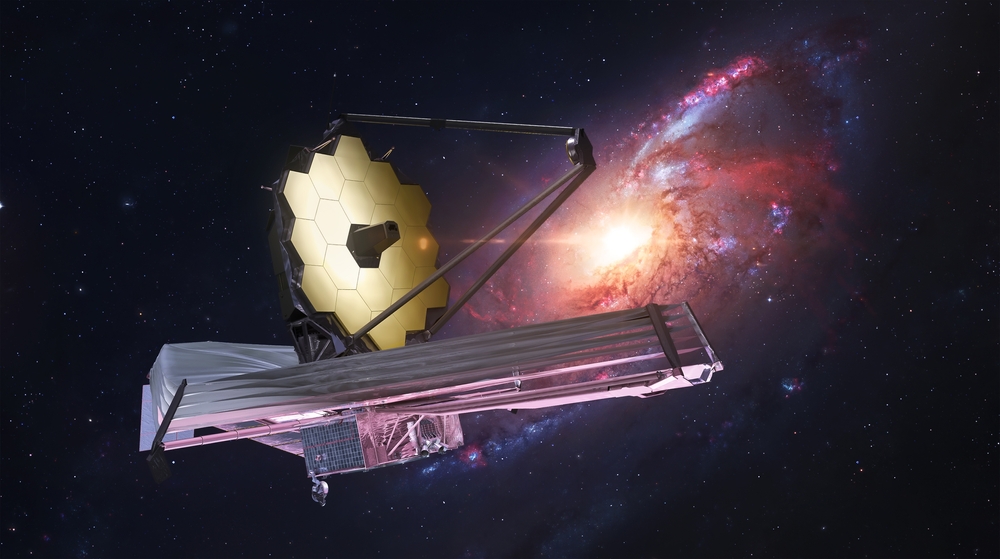
The universe has always been full of mysteries, but every once in a while scientists encounter a discovery that shakes the foundations of everything they thought they knew. Recently, observations from the James Webb Space Telescope have strengthened one of the most puzzling problems in modern cosmology. Evidence now suggests that the universe is expanding faster than current physics can properly explain, and the newest measurements are making that puzzle even harder to ignore.
Contents
show
For decades, astronomers have relied on carefully tested models to understand how the universe grows and evolves. These models combine observations of distant galaxies, the afterglow of the Big Bang, and the behavior of gravity across unimaginable distances. Yet new measurements from Webb are adding weight to a strange and persistent problem known as the Hubble tension, which has slowly been gaining attention in the scientific community.
In simple terms, different ways of measuring the universe’s expansion rate keep producing different answers. Instead of resolving the disagreement, the newest and most precise observations appear to confirm that the gap is real and possibly significant. If the data continues to hold up under scrutiny, it may mean that some piece of fundamental physics is still missing from the picture.
Scientists are not panicking about the situation. In fact, many researchers say they are thrilled by the implications. Moments like this are when science moves forward and new ideas emerge. The James Webb Space Telescope is offering humanity a clearer view of the cosmos than ever before, and that view may be revealing that our understanding of the universe is still incomplete.
The Mystery Known As The Hubble Tension
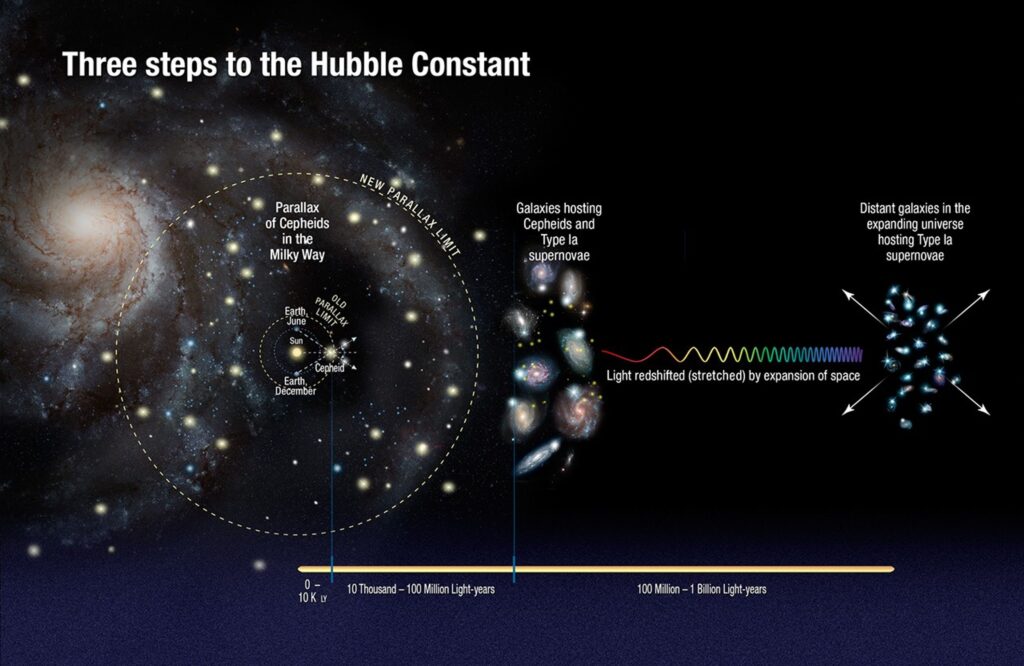
The story begins with a measurement called the Hubble constant, which describes how quickly the universe is expanding. Astronomers calculate this value by observing galaxies moving away from us and measuring how fast that motion occurs relative to their distance. The larger the number, the faster the universe is stretching apart, which helps scientists understand the overall history and future of cosmic expansion.
For many years scientists assumed that improved measurements would eventually bring all results into agreement. Instead, two different methods have continued to produce conflicting answers despite increasingly advanced technology. One method studies the early universe using radiation left behind by the Big Bang, while the other method measures the expansion rate in the nearby universe using stars and galaxies.
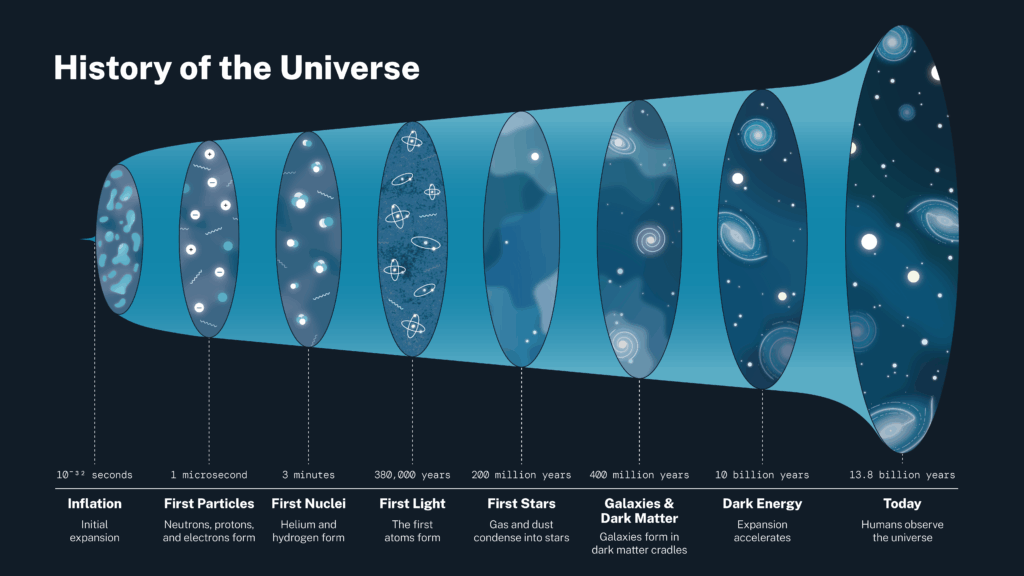
The early universe measurements suggest a slower expansion rate based on data from the cosmic microwave background. Meanwhile, observations of nearby galaxies consistently point to a faster rate of expansion in the present day universe. The gap between these numbers is not small enough to ignore. It is large enough that many researchers believe it cannot simply be explained by measurement errors.
This disagreement is what scientists call the Hubble tension. Rather than fading with improved technology, the tension has grown stronger over time as more data becomes available. Each new telescope and improved dataset seems to reinforce the same uncomfortable conclusion that something about our understanding of the cosmos might be incomplete or missing entirely.
How The James Webb Telescope Entered The Investigation
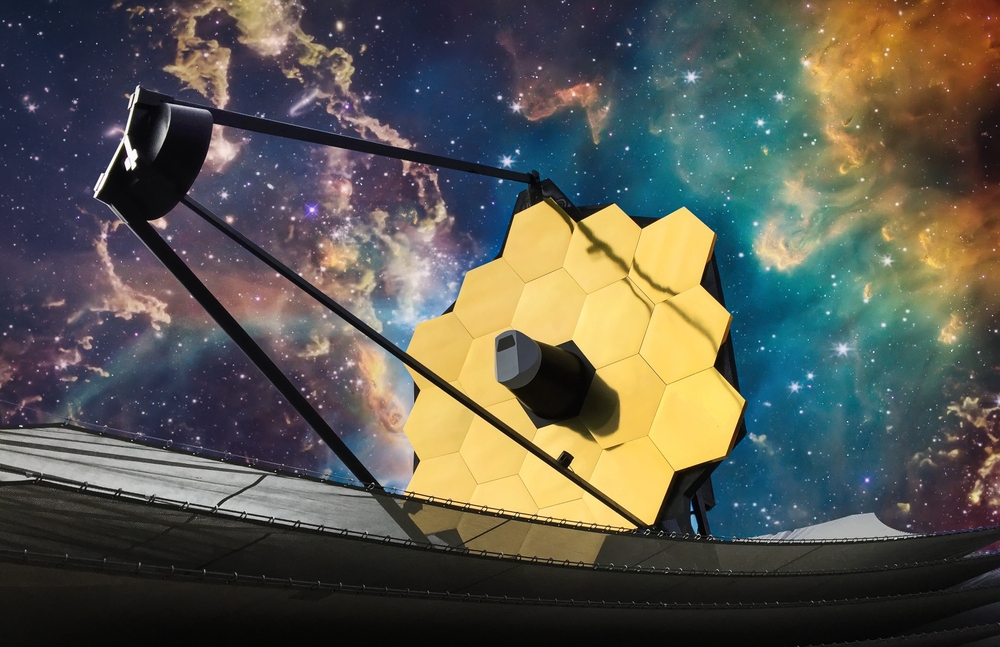
The James Webb Space Telescope was designed to see deeper into space and further back in time than any telescope before it. By capturing faint infrared light from distant stars and galaxies, it allows astronomers to study objects that were previously difficult or impossible to measure precisely. This capability makes Webb an ideal instrument for investigating the expansion of the universe.
One key target for Webb has been special stars called Cepheid variables. These stars brighten and dim in predictable cycles, which allows astronomers to determine their true brightness with remarkable accuracy. Once scientists know how bright a star truly is, they can calculate how far away it must be based on how bright it appears from Earth.
These measurements form an important rung on what scientists call the cosmic distance ladder. Each rung of this ladder builds on another to measure larger and larger distances across the universe. If one rung is incorrect or distorted, it could affect the final calculation of the expansion rate and lead to misleading conclusions.
Webb’s extremely sharp instruments were expected to test whether previous measurements were flawed. If the telescope found hidden errors in earlier observations, the Hubble tension might disappear entirely. Instead, the opposite appears to have happened, leaving astronomers with even stronger evidence that the problem is real.
Webb’s Observations Confirm The Problem
When scientists used the James Webb Space Telescope to reexamine key Cepheid stars in distant galaxies, they discovered that earlier measurements made with the Hubble Space Telescope were largely accurate. Webb’s higher resolution allowed astronomers to see those stars more clearly and separate them from surrounding light sources that might otherwise interfere with measurements.
The results showed that crowding from nearby stars had not significantly distorted earlier observations as some scientists suspected. In other words, the measurements that produced the faster expansion rate appear to be correct after all. Rather than resolving the tension, Webb confirmed that the discrepancy between the two measurements is genuine.
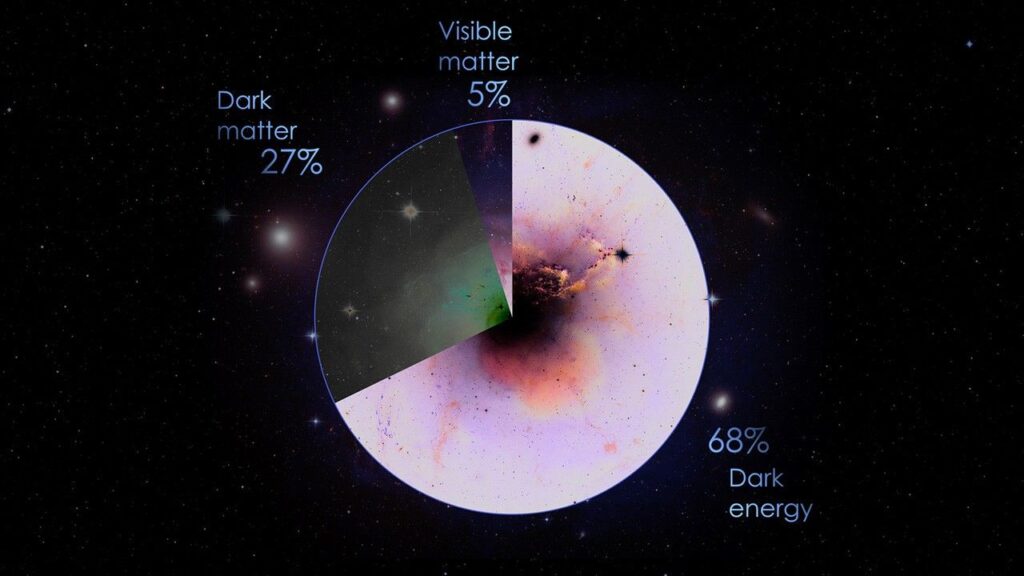
This finding is both exciting and unsettling for cosmologists around the world. The current model of the universe, often called the standard cosmological model, has successfully explained many cosmic phenomena for decades. It describes a universe shaped by dark matter, dark energy, and the aftermath of the Big Bang.
Yet if the expansion rate measured in the nearby universe truly differs from predictions based on the early universe, then some element of that model may be missing or incomplete. Scientists now face the possibility that entirely new physics may be needed to explain the data emerging from modern observations.
Possible Explanations Scientists Are Exploring
Researchers have proposed several potential explanations for the Hubble tension, although none have yet been proven conclusively. One possibility involves dark energy, the mysterious force believed to be driving the accelerated expansion of the universe. If dark energy behaves differently than current theories predict, it could gradually change the expansion rate over time.
Another idea suggests that unknown particles or exotic forms of energy may have influenced the early universe. Even small changes in the conditions shortly after the Big Bang could ripple forward across billions of years and affect how expansion is measured today. This type of explanation would reshape our understanding of fundamental physics.
Some scientists are also examining whether gravity itself might behave differently on extremely large cosmic scales. Einstein’s theory of general relativity has passed every test so far within our solar system and nearby galaxies. However, the universe spans distances far beyond anything we can recreate in laboratories.
There is also the possibility that multiple factors are working together rather than a single explanation. Cosmology often involves extremely complex systems where small effects combine to produce large results. Solving the Hubble tension may ultimately require a combination of new observations, theoretical breakthroughs, and improved computational models.
Why This Discovery Is So Important For Science
Moments like this are rare in scientific history. When observations refuse to fit established theories, it signals that researchers may be standing at the edge of a deeper discovery waiting to be made. Many major breakthroughs in physics began with puzzling measurements that did not match existing explanations.
For example, the discovery of dark energy itself came from unexpected observations in the late twentieth century. Astronomers studying distant supernova explosions realized that the universe was not just expanding. It was accelerating in ways that no one had predicted beforehand.
That surprising result reshaped cosmology and eventually earned the scientists involved a Nobel Prize in Physics. It also forced researchers to introduce entirely new ideas about the structure and fate of the universe. Discoveries like this remind scientists that the cosmos still holds many secrets.
The Hubble tension could represent a similar turning point for modern physics. If new physics is eventually discovered to explain the discrepancy, it may reveal hidden aspects of the universe that have remained invisible until now. Such a discovery would influence fields ranging from particle physics to astronomy.
A Universe That Still Holds Surprises
The James Webb Space Telescope has already transformed astronomy in just a short period of time. From revealing breathtaking images of distant galaxies to probing the atmospheres of alien worlds, the observatory is helping humanity see the cosmos with a level of clarity that was once unimaginable.
Its latest contribution may be even more profound than the images it captures. By confirming the Hubble tension rather than resolving it, Webb has strengthened the case that our understanding of the universe is still incomplete. Far from being a failure, this represents the very heart of scientific progress.
Every unanswered question opens the door to new discoveries and deeper understanding. If the universe is expanding faster than physics currently explains, then somewhere within that mystery lies a deeper truth waiting to be uncovered by future generations of scientists.
For researchers and curious observers alike, that realization is thrilling. The universe may be stranger and more complex than we imagined, and thanks to powerful tools like the James Webb Space Telescope, we are finally beginning to see just how much more there is left to learn.
Sources
- Riess, A. G., Scolnic, D., Anand, G. S., Breuval, L., Casertano, S., Macri, L. M., Li, S., Yuan, W., Huang, C. D., Jha, S., Murakami, Y. S., Beaton, R., Brout, D., Wu, T., Addison, G. E., Bennett, C., Anderson, R. I., Filippenko, A. V., & Carr, A. (2024). JWST validates HST distance measurements: Selection of Supernova subsample explains differences in JWST estimates of local H 0. The Astrophysical Journal, 977(1), 120. https://doi.org/10.3847/1538-4357/ad8c21