
Your cart is currently empty!
Japan Introduces a Toilet That Tracks Your Health Through Poop

For decades, Japanese toilets have been treated as a cultural marvel. Travelers return home telling stories about heated seats, gentle bidet sprays, and buttons that play calming sounds to preserve bathroom dignity. These features once felt futuristic. Now they are almost expected. But this summer, Japan may have taken its biggest leap yet, transforming the toilet from a comfort appliance into a personal health monitoring device.
Contents
show
In August, Japanese toilet manufacturer Toto began releasing a new generation of its high-end Neorest toilets equipped with something that would have sounded absurd not long ago: a built-in stool scanner. The system analyzes what happens in the bowl, records it digitally, and sends health insights straight to a smartphone app. The idea is simple but unsettling to some. Your toilet is now paying close attention to your poop.
The announcement quickly sparked fascination, jokes, praise, and unease across the internet. Some people hailed it as a breakthrough for preventive health care. Others recoiled at the thought of their bathroom habits being scanned, categorized, and logged forever. Somewhere between curiosity and discomfort lies a serious question: is this the future of everyday health monitoring, or a step too far into our most private moments?
From Luxury Washlets to Health Technology
Toto is not a newcomer to toilet innovation. The company released its first Washlet bidet seat in 1980, long before similar products became popular elsewhere. Over the years, Toto steadily refined its toilets with features focused on cleanliness, comfort, and water efficiency. Heated seats, adjustable sprays, automatic lids, and deodorizing systems became standard on its premium models.
In recent years, however, Toto began shifting its attention toward wellness. According to company surveys, most people already look at their stool after using the bathroom, but very few track that information in any structured way. Stool characteristics such as shape, color, and consistency are known indicators of digestive health. Doctors often ask patients about these details, yet many people forget or feel uncomfortable describing them.
By turning the toilet into a passive tracking device, Toto hopes to remove that friction. Users do not need to remember anything or manually log data. The toilet does the observing, the measuring, and the recording automatically. Toto executives have described the bathroom as one of the few places where people are alone, unguarded, and able to reflect on their own health without outside pressure.
How the Stool-Scanning Toilet Works

Image Credits : Website @Toto
At the center of the Neorest system is a small sensor module installed near the warm-water cleaning nozzle inside the toilet bowl. The technology works in a way similar to a barcode scanner. When a user sits down, the scanner activates. As stool falls into the bowl, the sensor shines light onto it and analyzes its properties in real time.
The system measures several variables at once. These include shape, hardness, surface texture, color, and quantity. Once the scan is complete, the data is automatically transmitted to a dedicated smartphone app. Within moments, users can view a summary of their bowel movement without having touched their phone during the process.
The app categorizes stool into seven types based on form and consistency, ranging from clumped or granular stools to liquid ones. Color is classified into three categories, typically variations of brown and ochre. Quantity is labeled as low, medium, or high. Over time, the app builds a calendar view showing trends, frequency, and changes.
Rather than diagnosing disease, the app focuses on lifestyle guidance. If stools trend toward harder or looser forms, the app may suggest increasing fiber intake, drinking more water, or adjusting meal timing. The advice is intentionally broad, designed to encourage healthier habits rather than replace medical care.
Why Stool Data Matters More Than People Realize

Talking about poop still carries social stigma, but medically speaking, stool offers a wealth of information. Gastroenterologists often rely on patient descriptions to help identify issues such as constipation, inflammation, infections, or malabsorption. The Bristol Stool Form Scale, commonly used in clinics, categorizes stool into seven types that closely resemble the classifications used by Toto’s system.
Digestive health also reflects broader lifestyle factors. Diet, hydration, exercise, stress levels, sleep, and medication all influence bowel movements. Sudden changes can signal problems ranging from food intolerance to more serious conditions. In some cases, blood in stool or persistent abnormalities may point to early stages of colorectal disease.
Doctors have noted that many patients delay seeking help for digestive issues due to embarrassment or uncertainty about what is normal. By tracking stool data over weeks or months, patterns become clearer. Subtle changes that might be dismissed day to day can stand out when visualized on a calendar.
Supporters of smart toilets argue that this kind of passive monitoring could lead to earlier intervention. Instead of waiting until symptoms become disruptive, users might recognize trends and consult a doctor sooner, armed with concrete data rather than vague memories.
Public Reactions Range From Excitement to Unease

When news of Toto’s stool-scanning toilet spread online, reactions poured in quickly. Some people were openly enthusiastic. They described the technology as amazing, overdue, or an obvious next step in health tracking. A few joked that they already track steps, sleep, and heart rate, so tracking bowel movements felt like completing the set.
Others were far more hesitant. The idea of being scanned while using the bathroom triggered discomfort, even if the data stayed private. Several people worried about false alarms, imagining a future where the app constantly warns of serious illness over minor variations. Others expressed concern about data security, joking nervously about hackers discovering the color and consistency of their stools.
There was also practical skepticism. Some questioned how useful the data would be if users did not use the same toilet everywhere. Traveling, dining out, or staying with friends would interrupt the data stream. A few commenters joked about awkwardly asking restaurants whether their restrooms were equipped with stool scanners.
Yet even among skeptics, curiosity was evident. Many acknowledged that toilets have evolved dramatically within a single generation. What once seemed unthinkable can become normal faster than expected.
The Price of a Health-Tracking Throne
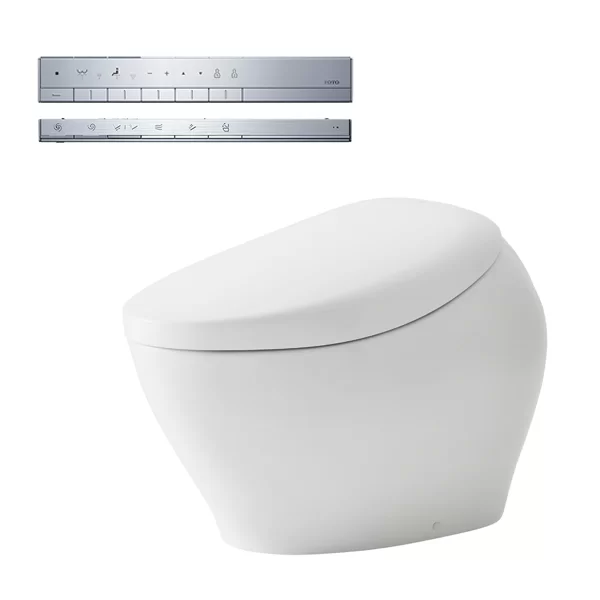
Image Credits : Website @Toto
The Neorest models equipped with stool-scanning technology are firmly positioned at the luxury end of the market. The LS-W model is priced at around 542,300 yen, while the AS-W comes in at approximately 493,900 yen. Converted to dollars, that places them well above $3,000.
For many households, that price will be prohibitive. Toto is not targeting casual buyers or renters. Instead, the company is aiming at health-conscious consumers, aging households, and early adopters who already invest heavily in wellness technology.
Supporters argue that the cost should be viewed in context. People routinely spend thousands on smartphones, fitness equipment, and wearable devices. If a smart toilet helps identify health issues earlier or encourages better habits, some believe it could offset medical costs over time.
Toto has stated that each unit can support multiple users, allowing families to share a single device. The company hopes to sell more than 7,000 units annually within a few years of launch, suggesting cautious optimism rather than expectations of mass adoption.
Smart Toilets Are Part of a Larger Trend

Toto is not alone in exploring bathroom-based health monitoring. Around the world, companies and researchers are developing smart toilets that analyze urine and stool for various biomarkers. American manufacturer Kohler recently introduced a sensor that attaches to existing toilet bowls, offering a lower upfront cost but requiring a subscription fee.
Startups and research labs are also experimenting with optical sensors and spectroscopy to detect blood, hydration levels, and even hormone changes. Some systems are being designed for hospitals and assisted-living facilities, where monitoring bathroom activity can help identify health issues among elderly or vulnerable patients.
Experts note that the technology itself is not entirely new. Optical analysis of waste has existed for decades, but cost, privacy concerns, and cultural taboos slowed adoption. What has changed is the broader acceptance of health tracking. Wearable devices normalized constant monitoring of bodily functions. Smart toilets may simply be the next frontier.
Privacy Concerns Lurking Beneath the Surface
Despite the health potential, privacy remains one of the biggest barriers to acceptance. Bathroom data is deeply personal. Unlike step counts or heart rate, stool data touches on bodily functions that many people consider intensely private.
Questions quickly arise about data storage, security, and access. Who owns the data generated by a smart toilet? How securely is it stored? Could it be shared with third parties, insurers, or employers? What happens if the data is hacked or subpoenaed?
These concerns are not hypothetical. In some countries, people have already deleted health tracking apps out of fear that personal data could be misused. Adding bathroom biometrics to the mix heightens those anxieties.
Toto has emphasized that its system is designed for consumer wellness, not medical diagnosis, and that data protection is a priority. Still, trust will be earned over time, not assumed. For many potential users, privacy concerns may outweigh the perceived benefits.

Medical Experts Urge Balance and Perspective
Gastroenterologists have responded to smart toilet technology with cautious optimism. Many agree that tracking bowel habits over time can be valuable, especially for people with chronic digestive conditions. For these users, objective data can improve conversations with doctors and reduce delays in care.
However, experts also warn against over-monitoring. Day-to-day variations in stool are normal. Excessive focus on daily readings could increase anxiety or lead people to overinterpret harmless changes. Some doctors compare smart toilets to fitness trackers that cause users to obsess over minor fluctuations.
Most agree that the greatest value lies in trend analysis rather than daily scrutiny. Looking at patterns over weeks or months, especially when paired with diet and lifestyle changes, provides the most meaningful insights.

Cultural Context Makes Japan a Testing Ground
Japan’s long-standing openness to toilet innovation makes it an ideal testing ground for this technology. Public restrooms already feature advanced automation, and consumers are accustomed to paying a premium for bathroom comfort.
There is also a cultural emphasis on preventive health and routine self-care. Regular health checkups are common, and there is less stigma around discussing bodily functions in medical contexts. These factors create a receptive environment for a toilet that doubles as a wellness tool.
Still, even in Japan, the idea pushes boundaries. Toto executives have acknowledged that adoption will be gradual. The company views the current release as the beginning of a longer shift rather than an instant revolution.
The Awkward Transition Period Ahead
If smart toilets do gain traction, the transition period may be awkward. Health data is most useful when collected consistently, yet people do not always use the same bathroom. Travel, work, and social life interrupt the data stream.
This raises humorous but real questions. Will people begin choosing restaurants, hotels, or even homes based on bathroom technology? Will smart toilets eventually become common enough that this concern fades away?
For now, early adopters will likely accept gaps in their data. Over time, broader adoption could smooth these inconsistencies, especially if similar technologies become standardized.

What This Says About the Future of Health
The launch of a stool-scanning toilet may feel like a novelty, but it reflects a deeper shift in how health is understood. Increasingly, wellness is framed as something monitored continuously rather than addressed only when symptoms become severe.
By embedding sensors into everyday objects, companies are turning routine activities into sources of health insight. The bathroom, once purely functional, is being reimagined as a space for self-awareness and prevention.
Whether or not smart toilets become mainstream, their existence signals that no part of daily life is off-limits to data collection. The challenge will be deciding where the benefits outweigh the costs, both financial and psychological.
A Future That Starts in the Bathroom
Japan’s stool-scanning toilet sits at the intersection of innovation, discomfort, and possibility. It makes people laugh, cringe, and think, often all at once. For some, it represents an empowering tool that demystifies gut health. For others, it crosses a line that should remain private.
As with many technologies, acceptance may come not through grand promises but through quiet normalization. What feels strange today can become routine tomorrow. Heated seats once seemed excessive. Smartphone health apps once felt intrusive.
The toilet that scans your poop and sends health reports to your phone may never be universal. But it forces an uncomfortable and necessary conversation about how much we want to know about our bodies, and how much we are willing to share in exchange for better health.