
Your cart is currently empty!
Lost Mozart Composition From His Teenage Years Discovered In German Library

A remarkable musical discovery has recently captured the attention of historians, archivists, and classical music enthusiasts around the world. Researchers working in a historic library in Germany uncovered a previously unknown musical composition believed to have been written by Wolfgang Amadeus Mozart during his teenage years. The discovery is significant because Mozart is one of the most studied composers in history, and yet new material connected to him continues to emerge centuries after his death. For scholars of music history, this rare find offers an exciting opportunity to revisit Mozart’s early creative development.
Contents
show
The manuscript was located within a large archive of historical documents that had been preserved for generations. For decades the piece remained unnoticed among thousands of handwritten scores, letters, and musical copies stored within the collection. When scholars recently began conducting a detailed review of the archive, one particular score began to stand out because of its distinctive musical characteristics. These features suggested that the piece might be connected to Mozart’s early compositional style.

Further investigation revealed that the composition likely dates back to Mozart’s teenage years, a period when he was already demonstrating extraordinary musical talent. During this time Mozart traveled widely across Europe with his family, performing for royal courts and influential patrons. These journeys exposed him to a wide variety of musical traditions and artistic influences. Discovering a previously unknown piece from this period offers valuable insight into how the young composer was refining his musical voice.
Music historians emphasize that discoveries of this nature are extremely rare. Many compositions from the eighteenth century have been lost over time due to poor preservation, misattribution, or simple historical oversight. As a result, uncovering an unknown work connected to Mozart represents an extraordinary moment for scholars who study classical music. Each newly discovered piece has the potential to reshape our understanding of how one of history’s greatest composers developed his remarkable talent.
How The Manuscript Was Identified
Identifying the manuscript as a work connected to Mozart required careful scholarly investigation. At first glance the score appeared to be another anonymous musical manuscript among many stored in the library’s collection. However, trained musicologists quickly noticed melodic patterns and compositional structures that resembled elements commonly found in Mozart’s early works. These stylistic clues encouraged researchers to take a closer look at the document.
Experts began comparing the newly discovered score with authenticated compositions written by Mozart during his teenage years. They analyzed the structure of the melodies, the harmonic progressions, and the rhythmic patterns present in the music. These features revealed striking similarities with other works known to have been composed by Mozart during the same period of his life. Such musical similarities serve as important indicators when scholars attempt to identify the creator of historical compositions.
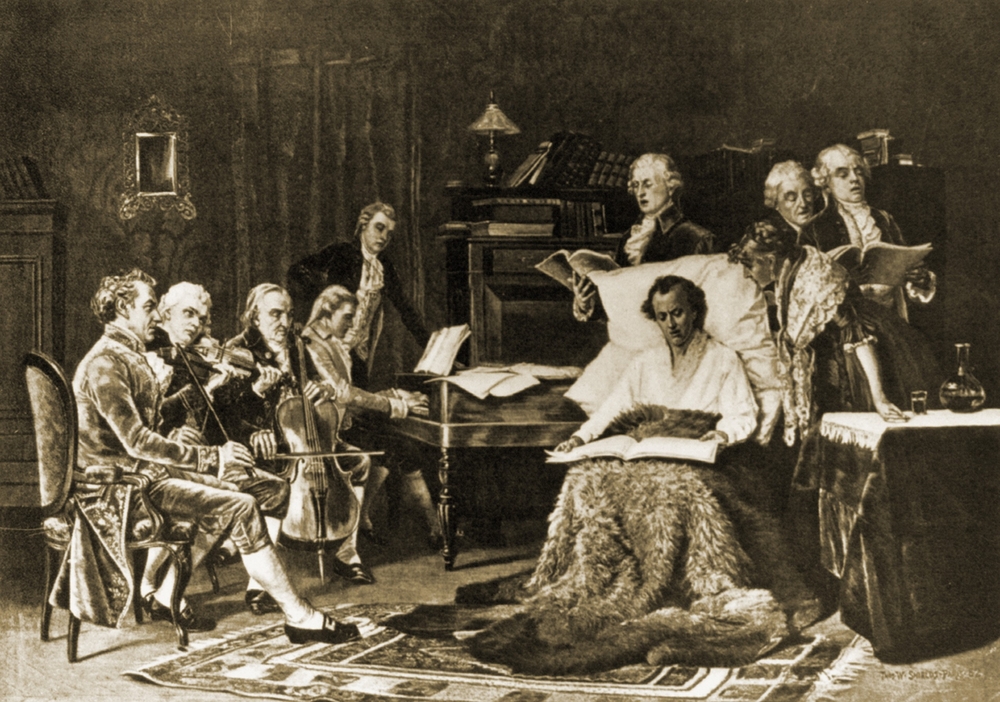
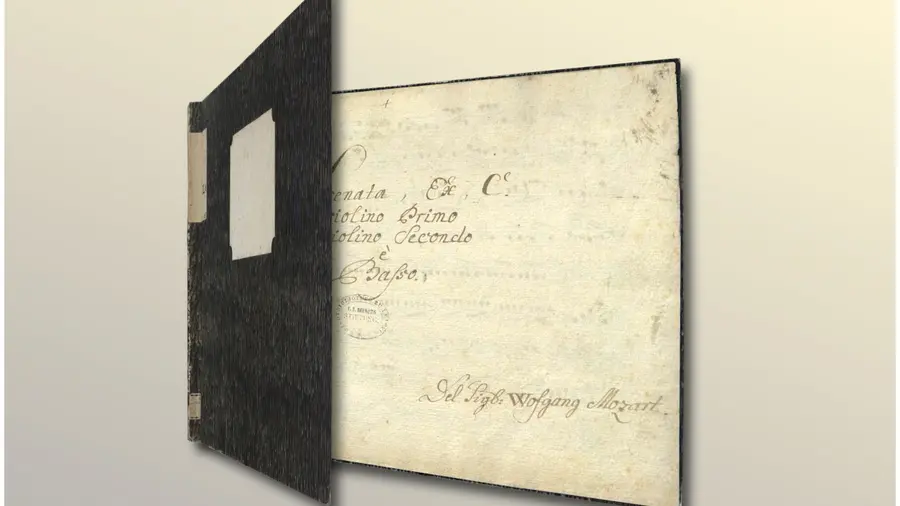
In addition to stylistic analysis, handwriting examination also played an important role in the identification process. While the manuscript may not have been written directly in Mozart’s own hand, many musical works during the eighteenth century were copied by scribes or assistants. Researchers compared the notation style, ink patterns, and formatting of the manuscript with other documented copies of Mozart’s music. The similarities in presentation helped strengthen the argument that the piece originated from Mozart’s creative circle.
After extensive review and scholarly discussion, researchers concluded that the composition was highly likely to have been written by Mozart during his youth. Although some historical mysteries remain, the musical and historical evidence strongly supports this conclusion. The discovery has sparked renewed excitement among historians, performers, and music lovers who are eager to learn more about this newly identified work.
What The Newly Found Piece Reveals
The rediscovered composition provides valuable insight into Mozart’s development as a young musician. Even during his teenage years, Mozart displayed an exceptional ability to craft elegant melodies and balanced musical structures. The piece reflects the clarity and sophistication that later became hallmarks of his mature compositions. Listening to the music allows scholars to hear the early stages of a creative voice that would eventually transform the world of classical music.
Researchers note that the composition demonstrates a confident understanding of melody, harmony, and musical form. These elements reveal that Mozart had already developed strong compositional skills at a remarkably young age. The music follows stylistic conventions typical of eighteenth century European classical traditions while still displaying subtle originality. This combination of tradition and creativity became a defining characteristic of Mozart’s later masterpieces.
For historians, the newly discovered piece helps fill an important gap in the timeline of Mozart’s early career. Many of his youthful compositions were written during extensive travels across Europe, where he was constantly exposed to new musical environments. Because some of these works were not formally cataloged or widely published, they occasionally disappeared into archives or private collections. Recovering a forgotten composition therefore helps scholars better understand Mozart’s artistic growth.
The discovery also highlights the possibility that additional historical treasures may still remain hidden within archives around the world. Libraries and cultural institutions preserve vast collections of manuscripts that have not yet been thoroughly examined. Even with centuries of research devoted to Mozart, scholars continue to uncover new information about his life and work. This ongoing process demonstrates how historical research can continually reshape our understanding of the past.
Why Discoveries Like This Matter
Uncovering a previously unknown work by Mozart represents far more than an exciting cultural discovery. Such findings contribute to the scholarly study of music history and artistic development. Each newly identified composition helps researchers trace how Mozart’s musical style evolved during different stages of his life. By studying these works, historians can better understand how his genius developed over time.
The discovery also highlights the important role of libraries, archives, and preservation institutions in protecting cultural heritage. Many historical documents remain stored in collections that researchers have not yet fully explored. Without proper preservation and scholarly attention, valuable pieces of artistic history could remain hidden. This discovery shows the importance of continued support for archival research and conservation.
For performers and audiences, the rediscovered composition offers a rare chance to hear music that has been silent for centuries. When musicians perform newly rediscovered works, listeners experience something both historical and newly revealed. These performances create a meaningful connection between modern audiences and the artistic world of the past.
Ultimately, the discovery reinforces the lasting influence of Mozart’s musical legacy. More than two centuries after his lifetime, his work continues to inspire research, performance, and admiration worldwide. A newly discovered composition reminds us that even the most famous historical figures can still surprise us. In this way, Mozart’s artistic impact continues to resonate across generations.
Sources
- Krebs, M. L. (n.d.). The Compositional Influence of Wolfgang Amadeus Mozart on Ludwig van Beethoven’s Early Period Works. PDXScholar. https://pdxscholar.library.pdx.edu/younghistorians/2018/oralpres/7/
- „Ganz kleine Nachtmusik“: Unbekanntes Mozart-Stück in Leipzig entdeckt. (2024, September 19). Leipziger Städtische Bibliotheken. https://stadtbibliothek.leipzig.de/detailansicht-news/news/ganz-kleine-nachtmusik-unbekanntes-mozart-stueck-in-leipzig-entdeckt