
Your cart is currently empty!
Man Who ‘Died for a Couple Minutes’ Reveals Exactly What He Saw After Being Revived
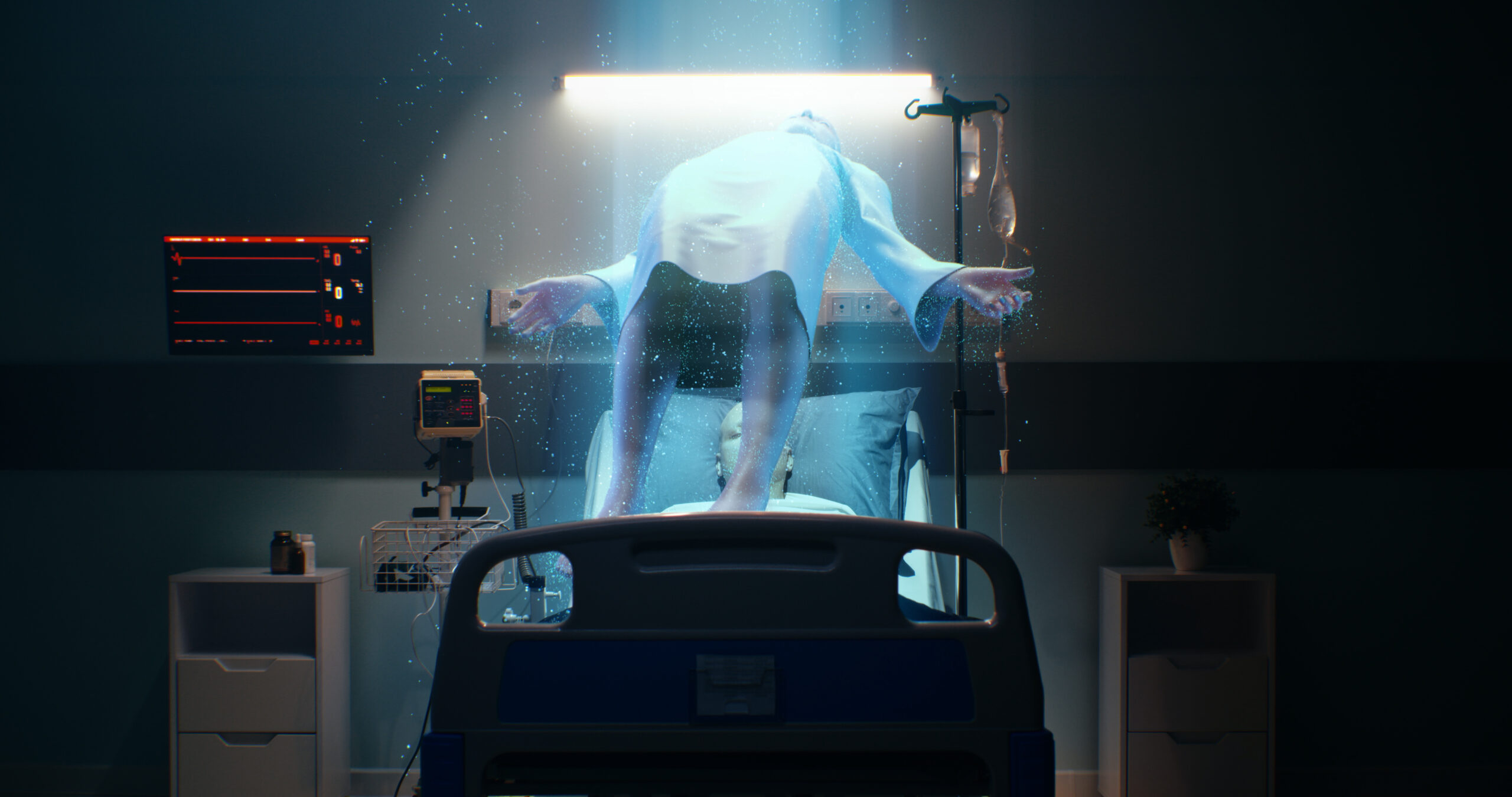
The question of what happens after we take our final breath is one that humanity has asked for centuries. While doctors can explain the biological mechanics of death, the actual experience remains a mystery to the living.
Contents
show
Recently, a healthcare professional who was pronounced dead for several minutes before being revived shared a vivid account of exactly what he felt, heard, and saw while his heart was stopped. His story, coming from someone trained to rely on science and data, offers a rare and surprisingly peaceful look into the unknown, challenging the fear that usually surrounds our final moments.
A Mind Awake in a Shut-Down Body
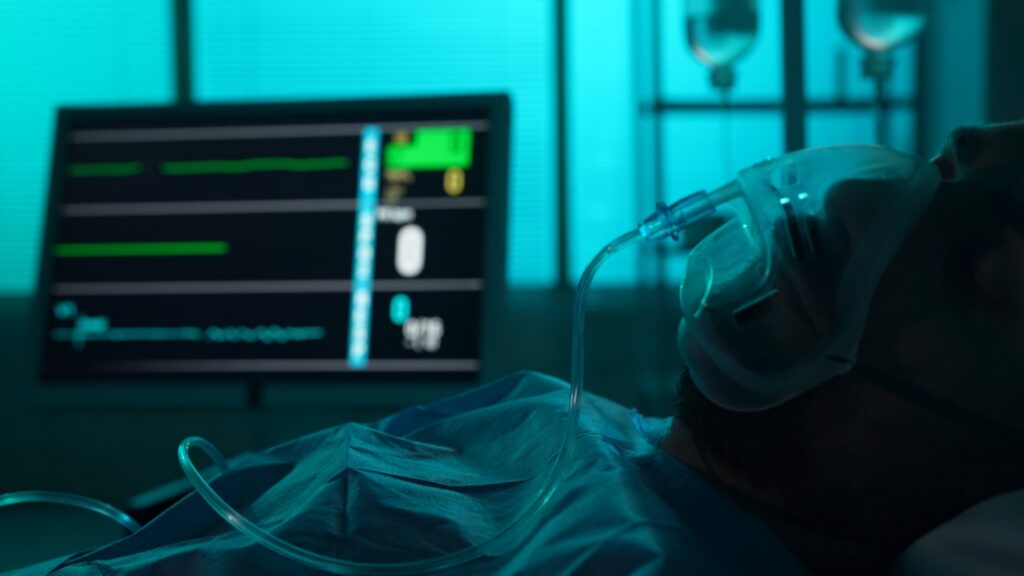
When a healthcare worker found himself on a hospital bed instead of treating patients, his perspective on death shifted entirely. After an incident left him clinically dead for several minutes, he required a mechanical ventilator in the ICU to survive. He later shared his story on a public forum to answer questions about the ordeal. He described the event as deeply humbling. What stood out most was not pain or fear, but a strange sense of comfort.
His body was in the middle of a severe physical battle. He vividly recalled vomiting and aspirating, a dangerous situation where fluid enters the lungs, yet he felt absolutely no pain. While his physical form fought against the trauma, his mind remained calm. This separation between body and mind is a specific detail that often appears in survivor stories. The patient noted that he was comfortable even while his body was fighting hard against the machines keeping him alive.
He also described a vivid out-of-body sensation where he remained fully aware of the room around him. He could clearly hear his family talking by his bedside. The strangest part was the inability to respond. He desperately wanted to join the conversation and interact with them, but he was locked inside his own consciousness. This account highlights a complex reality where the mind seems to function clearly even when the body has shut down.
Guidance from the Departed

Beyond the sounds of the hospital room, the man’s awareness shifted toward a visual encounter with a deceased loved one. As the medical team worked to remove the ventilator, he vividly saw his grandmother, who had passed away in 2004. Unlike the frustrating inability to speak to his living relatives nearby, this interaction involved direct communication.
The figure offered a specific message that seemed to guide him back to life. He recalled her telling him to turn around because his time here was just beginning. This statement served as a final boundary before his return. Immediately after this exchange, the comfortable detachment vanished. The physical reality rushed back in, marked by the sensation of tubes sliding out of his lungs and the urgent voices of nurses yelling his name as he was revived.
The Conflict Between Logic and Experience

A common question surrounding near-death accounts is whether these visions are genuine encounters or hallucinations caused by the brain under stress. Skeptics often point to the heavy sedatives used in intensive care or the effects of oxygen deprivation as the source of seeing deceased relatives. The survivor himself is not immune to these doubts. He admitted to frequently questioning his own memory, asking himself if the drugs or the trauma constructed the image of his grandmother. It is a rational question to ask after such a significant medical event.
Despite this internal skepticism, he ultimately rejects the hallucination theory. Whenever he reflects on the moment, he remains convinced that the presence was truly hers. This perspective carries extra weight coming from someone deeply grounded in science. Working in clinical research and development, he spends his days dealing with concrete facts and data. He specifically noted his recent studies involving quantum physics, suggesting that his professional understanding of the universe leaves room for possibilities that current medical textbooks might not yet fully explain. For him, the experience bridged the gap between his clinical training and the unexplained.
A Unique Perspective on a Varied Phenomenon
Comment
by u/HumbleBumble77 from discussion
in AMA
The Reddit user’s story adds to a growing collection of accounts that suggest the process of dying is far from uniform. As noted in the source discussion, experiences vary wildly from person to person. While some survivors describe floating peacefully above their bodies, others report terrifying visions or, like this man, reunions with passed loved ones. This wide range of reports supports the idea that the journey of death is entirely individual, making it difficult for science to pin down a single, universal definition of what happens when the heart stops.
What sets this account apart is the narrator’s position on both sides of the hospital bed. He emphasized that working in healthcare while also surviving such a critical incident gave him a rare, dual perspective. Medical professionals usually view trauma through data and procedures, but becoming a patient shifted his understanding. He described the ordeal as deeply humbling, noting that despite all medical advancements, we still understand very little about the actual subjective experience of death.
His story serves as a reminder that the biological mechanics of dying are only one part of a much larger, mysterious puzzle.
Finding Peace in the Unknown
Stories like this one offer a different way to look at our final moments. They do not give us concrete proof of an afterlife, but they do challenge the deep fear many people have about dying. One of the most comforting parts of this man’s account is the lack of pain. Even while his body was fighting to survive, his mind was peaceful. For anyone who has lost a loved one or worries about their own end, hearing that the experience can be calm rather than scary is a relief.
This perspective helps shift the conversation from fear to curiosity. It suggests that there is still so much we do not know about human consciousness. Whether you look at it through science or faith, these survival stories show that we might be more than just our physical bodies. The biggest takeaway is that while death remains a mystery, it does not always have to be a terrifying one. It reminds us to keep an open mind and acknowledge that even with modern medicine, there are parts of life that we are only just beginning to understand.