
Your cart is currently empty!
Watch – Man Takes Blind Friend to Open Field to Drive Without Fear

True friendship often reveals itself in the moments where we choose to break the rules for the people we love. A recent, heartwarming story captured this perfectly when a man took his blind friend to an open field, handed him the keys, and let him drive. It was a gesture that went far beyond a simple favor; it was a profound act of dismantling barriers to create a memory that society said was impossible. Acts like these challenge us to rethink how we support the people in our lives, moving past sympathy and towards the kind of intentional, creative connection that makes everyone feel fully alive.
Contents
show
Driving Blind: A Lesson in Freedom
Posts from the nextfuckinglevel
community on Reddit
A touching story recently captured the hearts of many, featuring a man who took his blind friend to a vast, empty field. In this safe space, he handed over the keys and let his friend drive. For that brief time, the blind man was not defined by what he could not see. He simply felt the rush of acceleration, the vibration of the engine, and the wind rushing past him. It was a rare taste of freedom that many take for granted, made possible because a friend cared enough to make it happen.
This gesture illustrates a profound truth about connection. True friendship often means refusing to accept the limitations the world places on our loved ones. Instead of focusing on why something is impossible, a devoted friend looks for creative ways to make it possible. The sighted man did not try to fix his friend’s blindness; instead, he altered the environment to ensure his friend could participate safely.
We often look at those with disabilities and see only the barriers they face. We assume certain experiences are permanently out of reach. However, this story reminds us that with enough imagination and empathy, we can dismantle those barriers. It challenges us to look at the people in our lives and ask not what they are unable to do, but what we can do to help them feel fully alive. When we shift our focus from pity to possibility, we create moments that remind us all what it means to be human.
Partnership, Not Paternalism
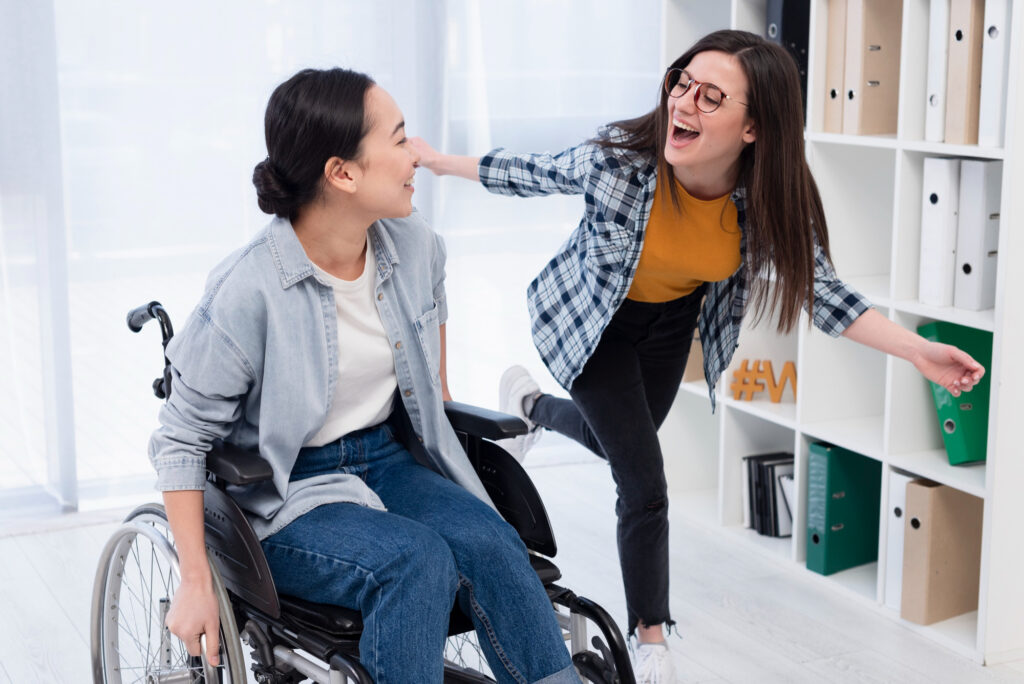
A common misconception in friendships with disabled individuals is the idea that they need a voice or a savior. While the intention to protect or advocate for a loved one is noble, it can easily cross the line into overstepping. True support implies standing beside a friend rather than speaking over them. It is crucial to remember that most people with disabilities are experienced at self-advocacy and need allies who follow their lead, not strategists who direct their lives.
Agency is the cornerstone of dignity. Friends should avoid making decisions on behalf of a disabled person, assuming they know what is best. As one perspective from the disability community suggests, the decision of how much one can handle should belong to the individual, not the observer. If assistance seems necessary, the respectful approach is to ask if help is wanted and, if so, how it should be given. This ensures that the interaction remains a partnership rather than a transaction of dependence.
Furthermore, authentic connection requires listening without judgment or the urge to reframe reality. When a friend shares frustrations regarding discrimination or inaccessibility, they are often looking for validation, not a “silver lining.” Attempting to explain away a negative experience or suggesting a more positive interpretation can feel dismissive. It is a powerful act of love to simply listen and acknowledge the difficulty of their reality without trying to fix it or sanitize it. Validation is often the most practical form of encouragement one can offer.
The Art of Showing Up
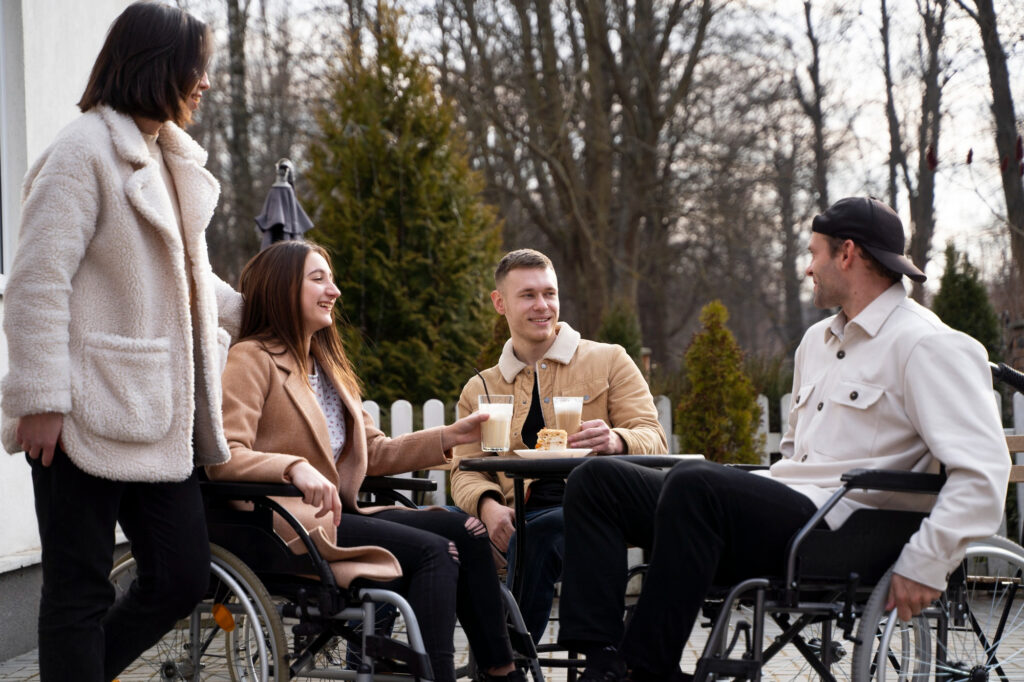
Planning a hangout should be exciting, not stressful. However, for friends with disabilities, a simple coffee date often requires a bit more homework. If a chosen venue has stairs and no ramp, it does not just make things difficult; it makes a friend feel forgotten. Being a great friend means doing the legwork early by checking the entrance width or bathroom accessibility. When you handle these details proactively, you ensure that when you arrive, the focus remains entirely on the fun and conversation rather than the obstacles.
Just as important as where you go is how you react when plans fall apart. Life is unpredictable, but for many with chronic conditions, health flare-ups can force last-minute cancellations. It is natural to feel disappointed, but it is vital to remember that nobody hates missing out more than the person who has to stay home.
Instead of taking a sudden rain check personally or viewing it as flakiness, a supportive friend rolls with the punches. It helps to keep things low-pressure. If a night out feels like too much, offering a quiet movie night in or simply rescheduling without guilt can make a world of difference. This kind of flexibility proves that you value the person more than the activity, keeping the friendship strong even when the schedule changes.
Seeing the Person Behind the Condition
One of the greatest gifts a friend can offer is the refusal to let a disability define the relationship. While physical differences are often the first thing people notice, they are rarely the most interesting thing about a person. True connection happens when we look past the wheelchair or the white cane and say, “Here is someone with interests, dreams, and a personality just like mine.”
This sense of normalcy extends to how we offer praise. It is easy to fall into the trap of telling a disabled friend they are “brave” or “inspiring” simply for navigating daily life. While usually well-intentioned, this can feel patronizing. It suggests that society expects so little of them that ordinary tasks are seen as miraculous feats.
Many disabled individuals would prefer practical help to reach their goals rather than applause for simply existing. They do not want to be put on a pedestal for smiling through adversity; they just want to be treated as equals.
This equality also applies to humor. Laughter is often the glue that holds friendships together, and many people use self-deprecating humor to cope with challenges. It is generally okay to follow their lead and laugh along, but a good friend remains mindful. Jokes about being a “klutz” or “slow” can sting if they become constant. The key is to ensure that the humor builds a bridge between you, rather than highlighting the differences that keep you apart.
Going Along for the Ride

Friendship is rarely a one-way street, and this holds true regardless of ability. These relationships are not about one person saving another. They are about two people adding value to each other’s lives. A friend with a disability offers just as much humor, wisdom, and support as anyone else. The magic happens when the dynamic shifts from caretaking to genuine companionship, where both people are simply enjoying the ride together.
Building this kind of bond does not require being an expert on disability. It simply requires a bit of awareness and a lot of heart. It involves looking for ways to include everyone without making a fuss. It means trading awkwardness for open questions and pity for genuine respect. When the focus shifts from the physical limitations to the person, the walls come down and real connection begins.
Think back to the two friends in that open field. That moment of pure joy was not created by a grand medical miracle but by a simple, creative choice. It serves as a powerful reminder that anyone has the power to clear the path. By making small adjustments and showing up with an open mind, friends can create a world where barriers fade away and only the shared adventure remains.