
Your cart is currently empty!
On March 3, the Moon Will Turn Blood Red for 58 Minutes and Billions Will Have the Chance to Witness It
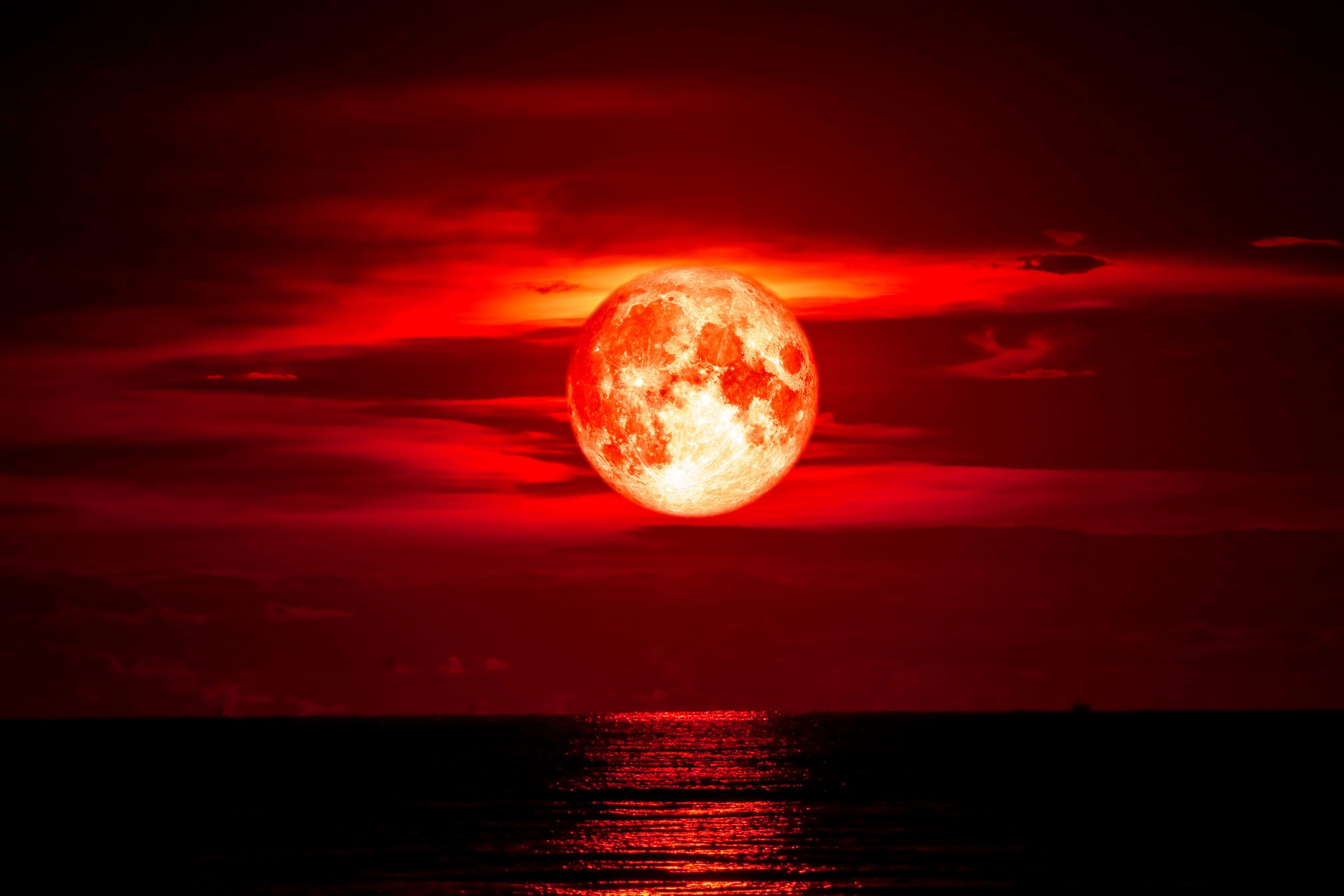
The universe is about to put on a show that will make the loudest city feel perfectly quiet. A rare celestial event is approaching, and it carries a profound, unspoken message waiting to be understood. Before scrolling past another astronomical headline, consider why this specific cosmic alignment might just be the exact moment of stillness required in a restless world.
Contents
show
A Red Moon Rising
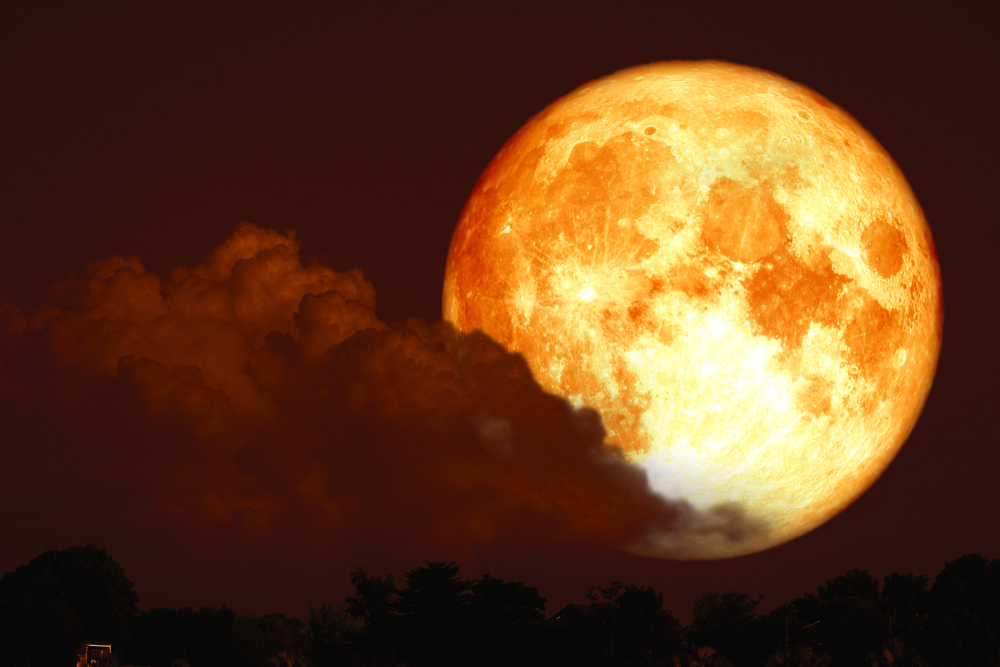
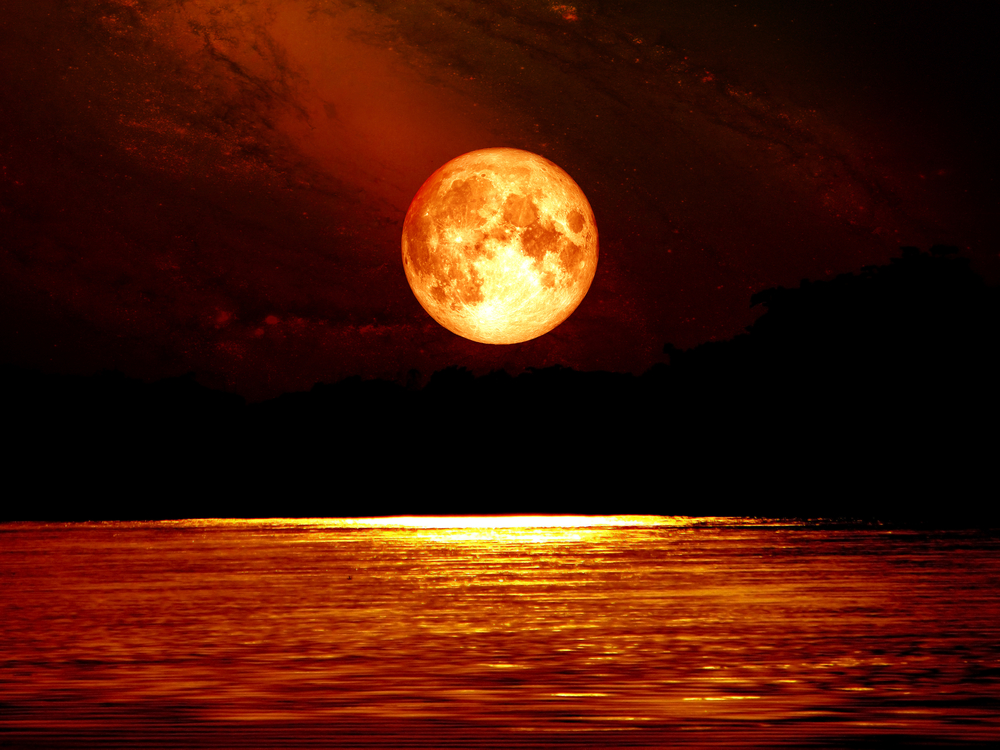
Look up at the sky on March 3, 2026. For exactly 58 minutes, the familiar white moon will undergo a striking transformation, turning a rich, coppery red. This is the only total lunar eclipse happening this year, an event widely known as a blood moon.
Social media posts are claiming that nearly six billion people will witness it. That is a massive exaggeration. However, the real numbers remain incredible. About 2.5 billion people, roughly 31 percent of the world, sit directly in the viewing path. If the location is North America, Australia, New Zealand, East Asia, or the Pacific, the vantage point will be perfect.
The science behind this glow is highly poetic. Earth steps right between the sun and the moon, completely blocking normal sunlight. The only light that manages to hit the lunar surface has to travel through Earth’s atmosphere first.
Think about that for a second. That red color is actually the light from every single sunrise and sunset happening on Earth at that exact moment, projected right into space. It is a stunning visual to take in, especially since the next total lunar eclipse will not arrive until New Year’s Eve in 2028.
A Free Ticket to the Cosmos
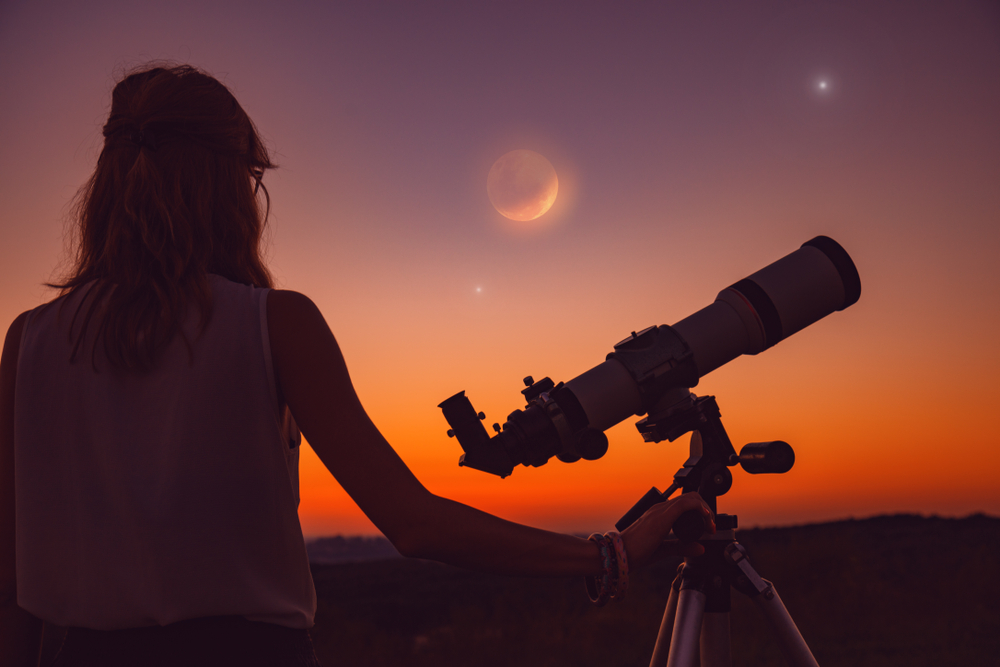
Modern life is incredibly loud. Screens demand constant attention, schedules are packed tight, and people rarely look above the city skyline. But this celestial event asks for nothing but a few quiet moments. There is no admission fee and no need for expensive optical equipment.
To watch this lunar eclipse, all that is required is a clear line of sight to the moon. Seeking out a dark environment away from blinding streetlights will make the red glow appear even more dramatic. While a basic pair of binoculars or a backyard telescope can bring the lunar craters into sharper focus, the naked eye is perfectly equipped to take in the full magic of the moment.
The true beauty of this event is how it unites different sides of the planet in a shared experience. Because the eclipse happens at one exact moment in space, the local viewing time depends entirely on geography. Observers in North and Central America will need to wake up early to catch the red moon in the quiet morning hours before sunrise. In the Pacific, the show takes place deep into the night. Meanwhile, skywatchers in eastern Asia and Australia will see the moon rise already painted in deep shadows as their evening begins.
It is a rare chance to step outside, breathe the night air, and realize that millions of other people across the globe are looking at the exact same moon. Take a break from the noise. Find a quiet spot, look up, and let the universe put things into perspective.
The Moon’s Gradual Descent Into Darkness
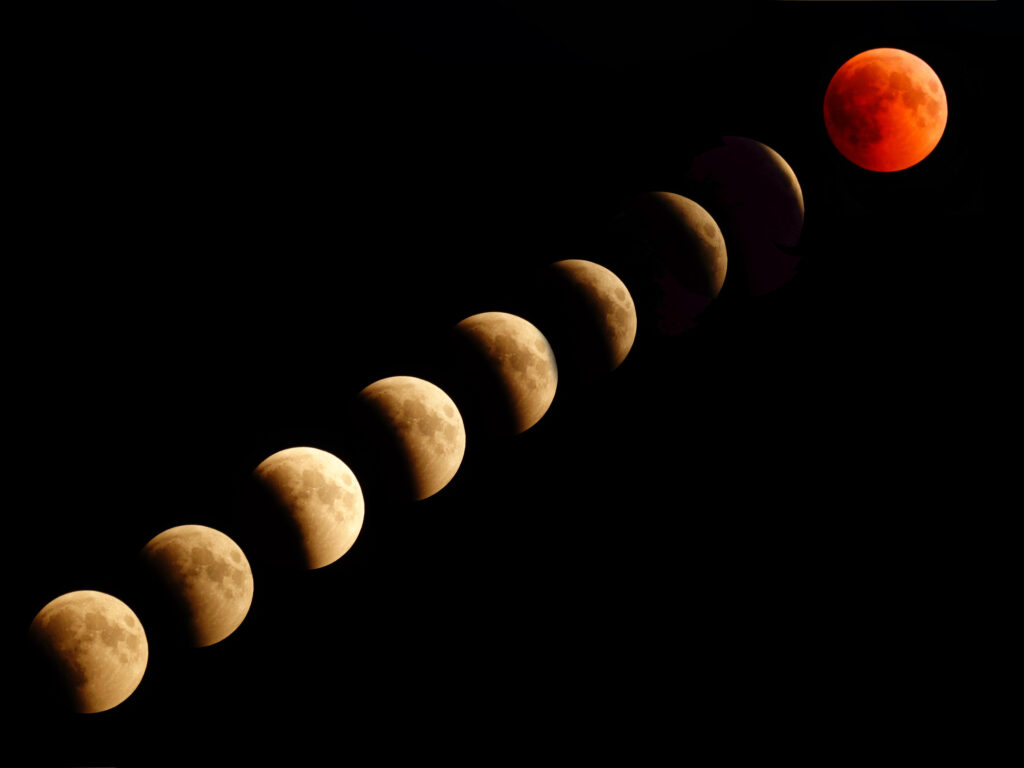
The transition into a blood moon begins with a subtle change. The moon first enters the outer part of Earth’s shadow, known as the penumbra. The dimming is so slight that an untrained eye might not even notice it at first. Soon after, the partial eclipse begins. As the lunar disk moves into the deep, inner shadow called the umbra, it looks exactly as if a giant bite has been taken out of the glowing circle. For roughly 75 minutes, this dark edge creeps steadily across the rocky surface.
Patience is deeply necessary here. In nature, true transformation happens by inches before it becomes obvious to the world. Finally, the moment of totality arrives. The entire moon is swallowed by the deep umbra, sparking that breathtaking coppery red glow for exactly 58 minutes.
When totality ends, the process simply reverses. The crimson color fades, the shadow slips away from the opposite side, and the bright white light slowly returns. It is a powerful visual lesson written in the stars. The shadow is always temporary, and the light always finds its way back.
Hidden Wonders in the Dark
When the moon turns red and its blinding white light fades, something else incredible happens. The temporary darkness pulls back the curtain on the rest of the cosmic stage. A full moon usually washes out the night sky, hiding the fainter stars. But during this eclipse, the dimmed lunar surface allows the surrounding constellations to finally shine through.
At the exact time of the eclipse, the red moon will sit quietly in the constellation Leo, resting right beneath the lion’s hind paws. It is a stunning visual. The darkness does not empty the sky; it simply reveals what was there all along, waiting to be seen. Sometimes, when a major source of light or distraction is removed from life, it becomes possible to notice the quiet, beautiful details that usually go ignored.
The celestial performance also does not end when the moon returns to normal. The universe is always in motion. Just five days later, on March 8, the planets Venus and Saturn will align in what astronomers call a conjunction. From the ground, these two massive worlds will appear to sit right next to each other in the dark, even though they are separated by millions of miles of empty space.
For those whose local weather brings heavy clouds during the blood moon, there is no need to worry. Technology bridges the gap, with live streams available to broadcast the exact same view from clearer skies. The cosmos is constantly offering reasons to look up and stay curious. The sky is never truly empty, and the show never really stops.
A Reason to Look Up
Daily routines can easily take over. Between packed schedules and endless notifications, looking at the sky is rarely a priority. But for those 58 minutes of totality, there is an opportunity to gain some steadying perspective. Standing under the same red moon as billions of other people is a gentle way to feel connected to something much larger than daily stress.
The mechanics of the eclipse also carry a practical kind of encouragement. A shadow temporarily blocks the light, changing how things look for a little while. Yet, that shadow keeps moving. The darkness is not a permanent state, just a phase passing through. Eventually, the familiar bright light returns.
Whether gathering with family in the backyard or standing alone in the quiet night, this event is worth the time. Let the red glow be a simple excuse to breathe deeply and slow down. The sky is offering a quiet moment of reflection, and it is a good time to pay attention.