
Your cart is currently empty!
Mariska Hargitay Fights to Make Domestic Violence Shelters Pet-Friendly Through Purple Leash Project
When a woman decides to leave an abusive partner, she faces countless obstacles. Fear of retaliation, financial uncertainty, and emotional trauma create barriers that can feel insurmountable. Yet one often-overlooked factor keeps nearly half of all domestic violence survivors trapped in dangerous homes, and it has four legs.
Contents
show
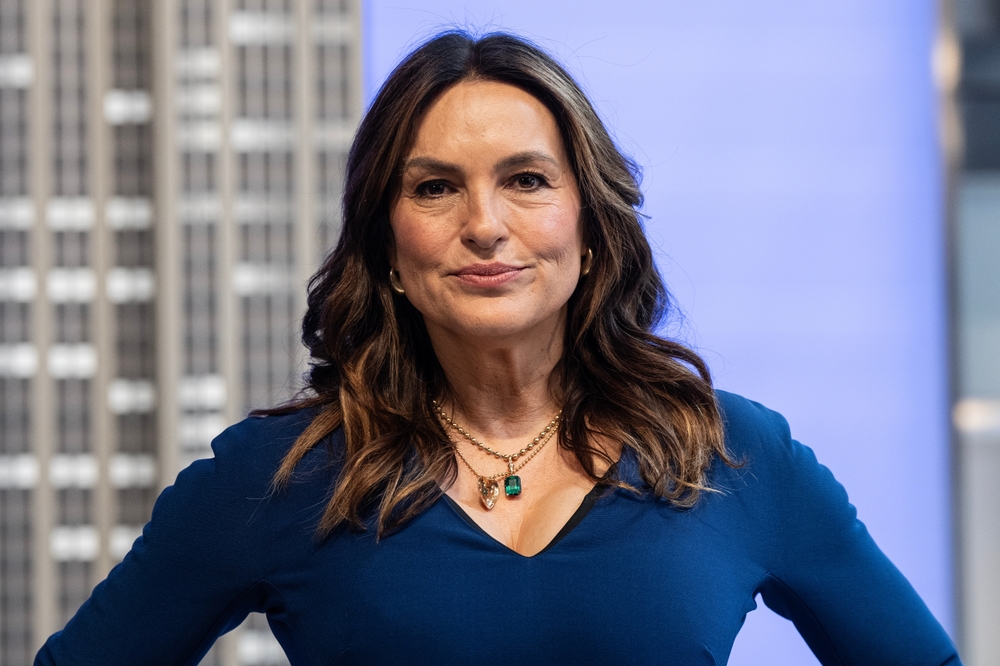
Mariska Hargitay discovered a statistic that stopped her in her tracks. For decades, the beloved actress has portrayed Detective Olivia Benson on “Law and Order: SVU,” a character who has become synonymous with justice for survivors of abuse. Off-screen, Hargitay has dedicated much of her life to similar causes through her nonprofit, Joyful Heart Foundation. But even she had not fully grasped how pets factor into the complex calculus of escape.
What she learned prompted her to take action in a new direction, one that would eventually lead her to Times Square, a bronze statue, and a partnership aimed at changing how domestic violence shelters operate across America.
An Impossible Choice
Nearly 50% of domestic abuse survivors delay leaving their abusers because they cannot bear to leave their pets behind. For Hargitay, who has spent years working with survivors and understands the psychology of abuse, that number represented a crisis hiding in plain sight.
“That fifty percent of survivors have to choose between their own safety and the safety of their pet is just untenable,” Hargitay told PEOPLE magazine.
Abusers understand the bond between their victims and their animals. Many use threats against pets as a tool of control, promising harm to a beloved dog or cat if a survivor attempts to leave. In some cases, abusers follow through on those threats, killing or injuring animals to demonstrate power. Survivors who have witnessed such violence or received such threats face an agonizing decision when they contemplate escape.
Domestic violence shelters exist to provide a safe harbor, but most cannot accommodate animals. Only 19% of shelters across the country accept pets, leaving survivors with limited options. Some attempt to place their animals with friends or family members, arrangements that may not always prove safe or reliable. Others surrender their pets to shelters, knowing they may never see them again. And many simply stay, enduring continued abuse rather than abandoning the one living creature that has offered them unconditional comfort.
The Purple Leash Project
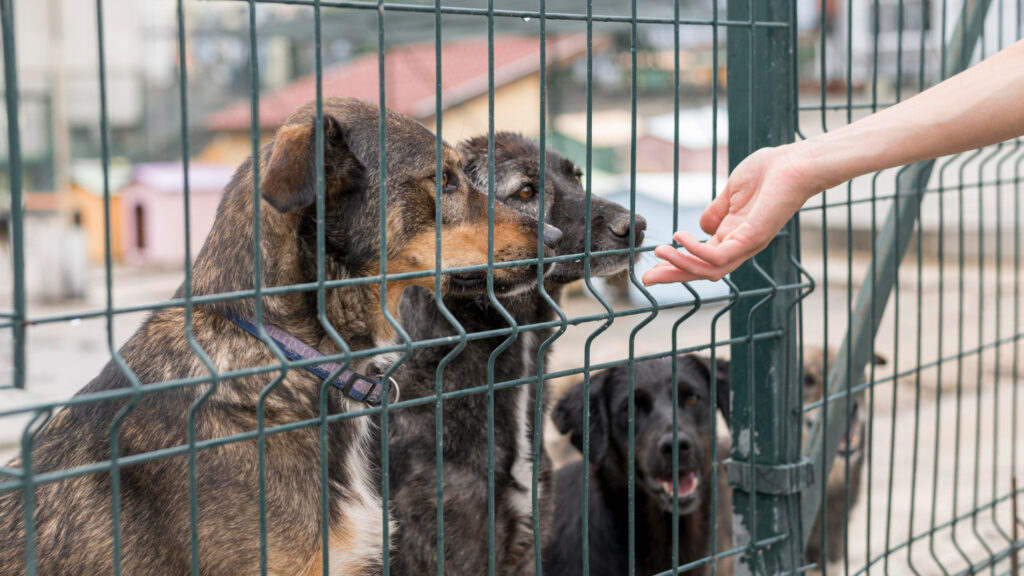
Purina and RedRover, an animal welfare organization, launched the Purple Leash Project to address this gap in services. By providing financial grants to domestic violence shelters, the program helps facilities create infrastructure to house both survivors and their pets. Grants fund the construction of kennels, renovation of pet-friendly rooms, creation of outdoor exercise areas, and other modifications that allow shelters to welcome animals.
Beyond physical infrastructure, the Purple Leash Project covers ongoing expenses that shelters might otherwise struggle to afford. Veterinary care, pet food, leashes, crates, and other supplies all fall under the program’s umbrella. For shelters operating on tight budgets, these resources remove practical barriers to becoming pet-friendly.
Hargitay saw in the Purple Leash Project an extension of the work she had already been doing through Joyful Heart Foundation. Her nonprofit focuses on transforming how society responds to sexual assault, domestic violence, and child abuse. She founded the organization in 2004, inspired by survivors who shared their stories with her because of her role on SVU. Over two decades, she has raised awareness, advocated for policy changes, and worked to end the backlog of untested rape kits in crime labs across the country.
Adding pet welfare to her advocacy made intuitive sense. As a pet owner herself, with a dog named Kaia and a cat named Karma, Hargitay understood the deep emotional bond between humans and animals. She had witnessed it in her own home, where Kaia seemed to sense when family members needed comfort.
A Statue Takes Shape
On May 6, 2024, Hargitay stood in Times Square to unveil a bronze statue commissioned as part of the Purple Leash Project. Titled “Courageous Together,” the sculpture depicts a woman and her dog connected by a purple leash, both taking a step forward in unison. Kristen Visbal, the artist behind the famous “Fearless Girl” statue that stood opposite Wall Street’s charging bull, created the piece.
Visbal’s work has become synonymous with female strength and resilience. “Fearless Girl” captured global attention when it appeared in 2017, depicting a young girl standing defiantly with her hands on her hips. “Courageous Together” carries a different but related message, one of mutual support and shared vulnerability between a woman and her companion animal.
Hargitay described feeling moved by the imagery, particularly the way the dog looks up at the woman as they move forward together. She saw in the sculpture a visual representation of what the Purple Leash Project aims to accomplish, keeping survivors and their pets united during one of the most difficult transitions of their lives.
After its Times Square debut, the statue began a tour of locations across the country. Scheduled stops included the 2024 Westminster Dog Show, where audiences already attuned to the human-animal bond would encounter the piece.
Why Pets Matter in Healing
Understanding why survivors risk their safety to protect their pets requires recognizing what animals provide during times of trauma. Pets offer consistency in chaotic environments. An abusive home may be unpredictable, with moods shifting without warning and violence erupting without provocation. A pet’s behavior remains steady, providing a touchstone of normalcy.
Animals also offer affection without judgment. Survivors of domestic violence often experience shame, self-doubt, and isolation. Abusers frequently engage in psychological manipulation, convincing their victims that no one else will love them or that they deserve mistreatment. A pet’s unconditional affection counters these messages, even if only in small ways.
“For survivors after being physically hurt, the number one affliction is isolation,” Hargitay explained. “And the idea of supporting a survivor’s healing with their animal, that they could heal together was just so beautiful to me.”
Isolation operates as both a tactic of abuse and a consequence of it. Abusers often cut their victims off from friends and family, monitoring communications and restricting movement outside the home. By the time a survivor is ready to leave, she may have few people left to turn to. A pet may be her primary, or only, source of emotional support.
Separating a survivor from her pet at the moment of escape can therefore feel like a second trauma. She has already lost so much. Her sense of safety, her self-esteem, her connections to others, and often her financial stability have all been damaged or destroyed. Asking her to also give up her animal companion adds another wound to an already devastating experience.
Shelters that accept pets allow survivors to maintain this one source of comfort. Research suggests that having a pet present can reduce anxiety and depression, lower blood pressure, and provide a sense of purpose. For someone rebuilding her life from scratch, these benefits matter.
A Personal Connection
Hargitay’s advocacy on this issue springs from both professional knowledge and personal experience. She has identified herself as a survivor, though she tends to keep the details of her own experiences private. What she shares instead is her understanding of what survivors need and how society often fails to provide it.
Her work with Joyful Heart Foundation has brought her into contact with countless survivors over the years. She has heard their stories, learned about the obstacles they face, and witnessed both their pain and their resilience. Each interaction has informed her advocacy and deepened her commitment to the cause.
At home, her own pets remind her daily of the bond between humans and animals. Hargitay has observed Kaia, her dog, responding to family members in distress with what seems like intuitive understanding. When her youngest son, Andrew, feels unwell, Kaia jumps onto his bed to keep him company. Hargitay finds herself continually struck by the animal’s apparent empathy and protective instincts.
“Sometimes, even if I’m sad or have had a hard day, I can feel Kaia’s watchful, empathetic, compassionate, protective gaze,” Hargitay shared.
Such moments reinforce her belief that separating survivors from their pets causes real harm and that keeping them together supports genuine healing.
Progress and Goals
When the Purple Leash Project launched, only a small fraction of domestic violence shelters could accommodate pets. Programs like this one aim to change that statistic through direct financial support and by raising awareness about the issue.
By 2025, the project set a goal of making at least 25% of U.S. domestic violence shelters pet-friendly, up from 19% at the program’s inception. Reaching that benchmark would mean thousands more survivors could escape with their animals, removing one significant barrier to safety.
Progress requires more than just money, however. It demands a shift in how shelters, policymakers, and communities think about domestic violence services. For decades, the focus has been on providing immediate safety and necessities for human survivors. Pets rarely entered the conversation.
Organizations like Purina and RedRover have worked to change that, positioning pet welfare as an essential component of survivor services rather than a luxury or afterthought. Hargitay’s involvement lends celebrity visibility to this effort, attracting media attention and public interest that might not otherwise materialize.
How to Help
For those moved by the Purple Leash Project’s mission, Hargitay offers straightforward guidance. Learning more about the initiative through Purina’s website provides a starting point. But she emphasizes that advocacy extends beyond donating money or clicking links.
Conversations about domestic violence remain difficult for many people. Friends and family members may suspect that someone they know is being abused, but feel uncertain about how to broach the subject. Community members may notice warning signs but hesitate to get involved. Breaking through that silence requires courage and willingness to listen without judgment.
Hargitay stresses the importance of being present for survivors, of bearing witness to their experiences in a way that supports rather than overwhelms them. Too often, well-meaning people respond to disclosures of abuse with advice, questions, or expressions of disbelief that inadvertently silence survivors. Simply listening, without trying to fix or direct, can prove more valuable than any other intervention.
For survivors considering whether to leave an abusive situation, knowing that pet-friendly options exist may provide the final push toward safety. Resources like the Purple Leash Project’s database of participating shelters help survivors identify facilities that will welcome both them and their animals. Local domestic violence hotlines can also provide information about pet-friendly options in specific areas.
A Symbol of Courage
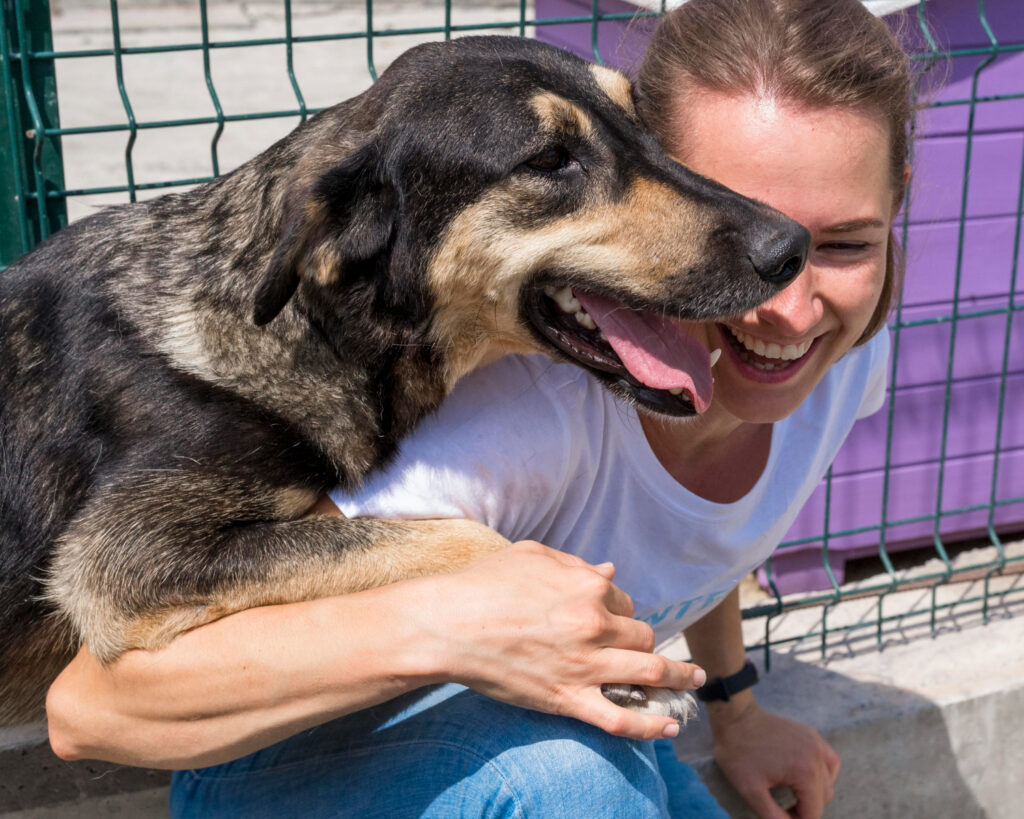
Bronze statues cannot solve systemic problems or heal individual trauma. But they can capture attention, spark conversations, and symbolize values that a society wishes to embrace. “Courageous Together” does all of these things, depicting a moment of forward motion that survivors understand intimately.
Leaving an abuser requires courage of a particular kind, the willingness to step into uncertainty because staying has become impossible. Doing so with a beloved pet at one’s side makes that step slightly less lonely, slightly less terrifying. Hargitay and the Purple Leash Project aim to ensure that more survivors have that option.
As the statue travels the country, appearing at dog shows and in public spaces, it generates social media engagement, carrying a message that extends beyond its bronze form. Survivors matter. Their pets matter. And keeping them together serves everyone’s healing.