
Your cart is currently empty!
Melania Trump brings ‘first American-made humanoid’ robot into White House and people can’t believe it
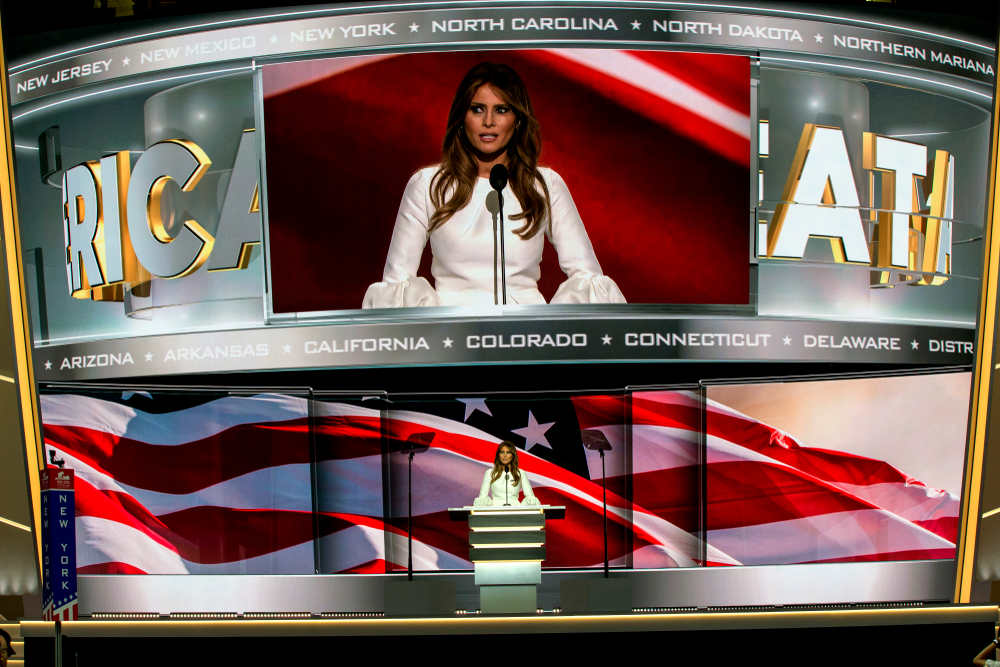
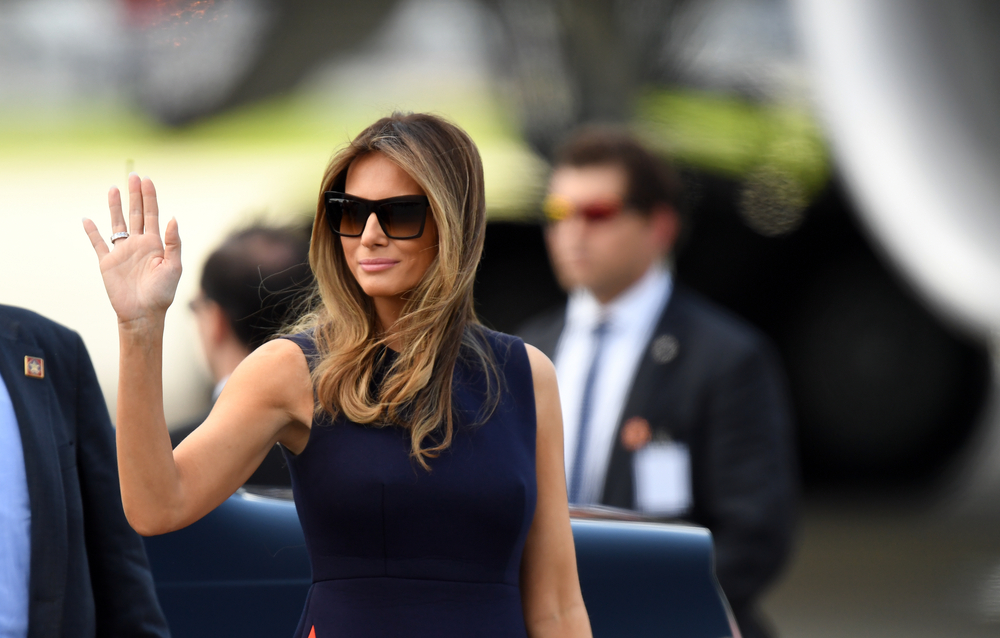
A humanoid robot walking through the White House sounds like something out of a futuristic movie, but that is exactly what unfolded as Melania Trump opened the second day of a technology summit in Washington. Guests watched as the human-shaped machine walked beside the first lady through a red-carpeted corridor before entering the East Room, where it greeted attendees in multiple languages and immediately became the defining image of the event. In a building usually associated with diplomacy, ceremony, and carefully managed symbolism, the arrival of a robot named Figure 03 created the kind of moment that instantly travels online. It was unusual, highly visual, and impossible to ignore, especially because it happened in a place where every appearance is designed to say something larger than the moment itself.
Contents
show
But while the visuals were strange enough to dominate headlines, the bigger story was not simply that a robot appeared at the White House. It was what that appearance represented. The summit itself focused on how artificial intelligence could shape children’s learning, classroom experiences, and online lives, and the robot’s arrival turned those discussions into something tangible. Instead of talking about a distant future, the event put that future in front of cameras and diplomats in real time. What emerged was not just a viral clip, but a much broader conversation about education, digital safety, political messaging, and the uneasy feeling many people have when technology starts stepping out of theory and into everyday public life.
First lady Melania Trump was joined by a special guest at the White House on Wednesday: a walking, talking humanoid robot. https://t.co/DkxDrNEAxN
— ABC News (@ABC) March 25, 2026
The robot instantly became the event’s main character
The summit was meant to center on policy, education, and international collaboration, but the second Figure 03 entered the picture, it was obvious that much of the attention would shift. According to Reuters, the humanoid robot walked down a White House hallway alongside Melania Trump before joining her in the East Room, where dozens of first spouses and international representatives had gathered for the technology-focused “Fostering the Future Together” summit. That entrance alone was enough to make the event feel less like a formal conference and more like a glimpse of a world that many people still think of as years away.
Once inside, the robot introduced itself as “Figure 03” and addressed attendees in 11 languages, turning what could have been a symbolic prop into something much more memorable. It was not simply standing in the background for photographs. It was integrated into the presentation itself, which made the visual even more striking. Melania Trump leaned into the moment by describing it as the first “American-made humanoid guest” at the White House, a phrase that carried both political and technological weight. It framed the appearance as a milestone rather than a novelty and helped position the event as something larger than a one-off demonstration.
That is a major reason the story spread so quickly. People were not just reacting to a machine. They were reacting to the collision of two very different worlds: one rooted in centuries of tradition and one driven by rapidly advancing technology. The White House has long been used as a stage for political messaging, but seeing a humanoid robot move through its halls made the message unusually literal. It suggested that AI is no longer being introduced slowly or quietly. It is arriving in the most visible spaces possible.
F.03 by Figure AI becomes the first humanoid robot at the White House
— Surajit (@surajit_ghosh2) March 25, 2026
So why isn’t Tesla Optimus there yet? pic.twitter.com/VYjrmhCtAk
Melania Trump used the moment to push a bigger message about education
Behind the visual spectacle was a much more deliberate argument about where artificial intelligence is heading and why leaders believe it will soon play a much larger role in education. During the summit, Melania Trump emphasized the promise of AI as a learning tool, saying, “Our world is transforming, and through the use of AI we can now access centuries’ worth of humanity’s knowledge base.” That line captured the central pitch of the event. AI was not being presented as a side tool or a niche innovation. It was being framed as something capable of reshaping how knowledge is delivered to the next generation.
She also tied that vision directly to national competitiveness and long-term outcomes for children, saying, “We are obligated to ensure that our children become the most technologically fluent and highly educated generation in the world.” In that sense, the summit was not only about education policy but also about future power, workforce readiness, and who gets to lead in an increasingly AI-driven world. Reuters reported that she also imagined a near future in which a humanoid teacher could access subjects such as classical studies and mathematics and adapt lessons based on a child’s pace and “emotional state.” That idea sounds bold, but it also reflects the direction many education technology companies are already trying to move.
The broader message was clear. AI is no longer being discussed as a distant classroom experiment. It is being positioned as a serious part of the conversation around how children will learn, what tools they will rely on, and how schools may evolve. Whether people find that exciting or concerning, the summit made one thing impossible to miss: powerful institutions are already trying to define AI as an educational necessity rather than a future possibility.
BREAKING: after Melania Trump unveiled the world’s first AI-powered robot at the inaugural Fostering the Future Summit this morning at the White House – neither the First Lady nor the robot have been seen since. pic.twitter.com/Z3JpV4DzNq
— PaulleyTicks (@PaulleyTicks) March 25, 2026
The summit was trying to answer a question parents and teachers are already asking
One reason this story landed so strongly is that it tapped into a concern many families already feel. Technology has entered classrooms at a rapid pace over the last decade, often faster than schools, parents, and policymakers can fully evaluate it. From tablets and remote learning platforms to algorithm-based tutoring tools, students are already growing up in an educational environment shaped by software. The summit reflected an attempt to get ahead of that reality by asking how AI can be used responsibly before it becomes impossible to separate from daily learning.
Representatives from 45 countries attended the event, showing that this is not a narrow American debate. Discussions reportedly focused on AI in education, digital literacy, online safety, and the use of educational technology tools. Those are not abstract talking points. They are practical questions with immediate consequences. How much should children rely on machine-generated explanations? How should schools teach students to distinguish between trustworthy and manipulated information? And what happens when educational tools become smarter, more persuasive, and more emotionally responsive than ever before?
These are the kinds of issues that can easily get lost when a flashy demonstration steals attention, but they are exactly why the summit mattered. The robot may have gone viral because it looked surreal, but the policy concerns behind it are grounded in very real decisions that schools and families are already facing. The appearance of Figure 03 simply made those decisions harder to ignore because it turned a conversation about the future into a scene people could actually watch unfold.
Not everyone at the summit was focused on AI’s promise
For all the excitement surrounding the robot and the broader push for AI-assisted education, the summit also highlighted the risks that come with this new wave of technology. Melania Trump did not present AI as entirely harmless, and other speakers were even more direct about the dangers. One of the strongest warnings came from Brigitte Macron, who reportedly raised concerns about deepfake technology and the growing ease with which AI tools can imitate real people in fabricated or misleading scenarios. That warning is especially relevant at a time when manipulated images, voices, and videos are becoming harder for ordinary users to spot.
The concern here is not theoretical. Deepfakes can be used for harassment, political misinformation, reputational damage, and non-consensual sexual content, all of which become even more alarming when children and teenagers are the ones navigating those spaces. Macron also highlighted the importance of limiting screen exposure for young children, particularly those under three, and pushed for tighter control over minors’ access to social media. Those concerns connected the summit back to one of the core realities often missing from futuristic AI discussions: children are not entering this world with full agency or mature judgment, yet they are often the earliest and most vulnerable users of new digital systems.
That is what made the event feel more serious than a simple technology showcase. The people in the room were not only talking about what AI could do, but also about what it could damage if introduced recklessly. In that sense, the robot’s polished appearance at the White House stood in contrast to the much messier reality policymakers are trying to confront. The future may look sleek in a hallway, but its consequences are far more complicated once it enters classrooms, phones, and family life.
The robot’s appearance also sent a political message
There was another layer to this event that made it more significant than a viral novelty. Figure 03 did not just appear at a school technology expo or private product launch. It appeared at the White House, in a setting tied to diplomacy, public policy, and national identity. That context matters because it transformed the robot into something more than a machine. It became a symbol of technological ambition and national positioning at a time when AI is increasingly being framed as a defining arena of global competition.
Reuters noted that President Donald Trump appointed Meta CEO Mark Zuckerberg, Oracle Executive Chairman Larry Ellison, and Nvidia CEO Jensen Huang to a council focused on AI policy and related issues on the same day. That detail places the summit within a much larger story about who will shape the next phase of AI development and who will benefit from it economically and strategically. The United States is not just trying to build useful tools. It is trying to remain visibly ahead in a race that also involves China and other countries investing heavily in robotics, computing power, and AI infrastructure.
Melania Trump herself linked AI adoption to economic and strategic outcomes, saying the embrace of AI-directed learning would contribute to U.S. “long-term economic superiority.” That line reveals how quickly AI conversations have expanded beyond convenience or innovation. They are now tied to education policy, labor markets, intellectual property, and national power. So while many people saw a robot at the White House and thought the moment was bizarre or theatrical, the people organizing the event were clearly aiming for something more serious. They wanted that image to symbolize a future in which AI is not just accepted, but central.
Why moments like this tend to stick with people
Humanoid robots provoke a reaction that other technologies often do not. People can watch a new software update or chatbot rollout with mild curiosity, but a machine that looks and moves in a recognizably human way tends to trigger something more emotional. There is fascination, but also discomfort. That is partly because humanoid robots force people to imagine a future that feels socially intimate rather than abstract. A chatbot stays on a screen. A humanoid robot walks beside political leaders, enters classrooms, and physically occupies spaces people associate with trust and authority.
That is why this particular White House moment resonated beyond politics or tech circles. It tapped into a much older and more universal question about how close people really want machines to get. A robot greeting officials in multiple languages can feel impressive one moment and unnerving the next. A humanoid teacher that adjusts to a child’s “emotional state” may sound efficient, but it also raises immediate concerns about surveillance, dependence, and whether some human roles are being redefined too casually. These are not fringe anxieties. They are the kinds of instinctive reactions that often emerge before society has developed the language to fully debate what is happening.
That is also why symbolic moments like this matter. They do not just show where technology is. They shape how the public begins to emotionally process where technology might be going. The more often people see robots in elite institutions, public ceremonies, and policy discussions, the more normal those images become. And once something starts to feel normal, resistance to it often weakens, even if the ethical questions remain unresolved.
The real story is not the robot itself but what it represents
It would be easy to reduce this entire event to a strange visual and move on, but that would miss what made it meaningful. The robot may have captured attention because it was unusual, but the real importance of the moment lies in how naturally it was folded into a serious discussion about children, education, and the future. That alone says a lot about where AI now sits in the public imagination. It is no longer being introduced as a niche tool for specialists. It is being placed directly into conversations about society’s most important systems and youngest generations.
And that is where the story becomes bigger than Melania Trump, the White House, or even Figure 03. It becomes a story about how quickly the future is being normalized before the public has fully decided what it wants from it. Every major technological shift comes with a period where excitement outruns reflection, and this summit felt very much like one of those moments. The language was hopeful, the staging was polished, and the symbolism was powerful. But the deeper questions remain unresolved.
If AI is really going to shape the next generation’s education and daily lives, then the conversation cannot stop at innovation or spectacle. It has to include trust, boundaries, childhood development, safety, and the human roles people may not want to hand over so easily. The robot may have walked through the White House as a guest, but the larger message was harder to miss. The future is no longer standing outside waiting for permission. It has already entered the room.
AI and children, AI in education, AI policy, AI summit, artificial intelligence, Brigitte Macron, Child Development, deepfake technology, digital literacy, Donald Trump, education technology, emerging technology, Figure 03, first American-made humanoid robot, future of education, futuristic technology, humanoid robot, humanoid robotics, Melania Trump, online safety, Political News, robot at White House, robotics, tech summit, Technology News, viral news, viral story, White House, White House AI summit, White House event