
Your cart is currently empty!
Melania Trump Warns Over Leaked Barron Photo
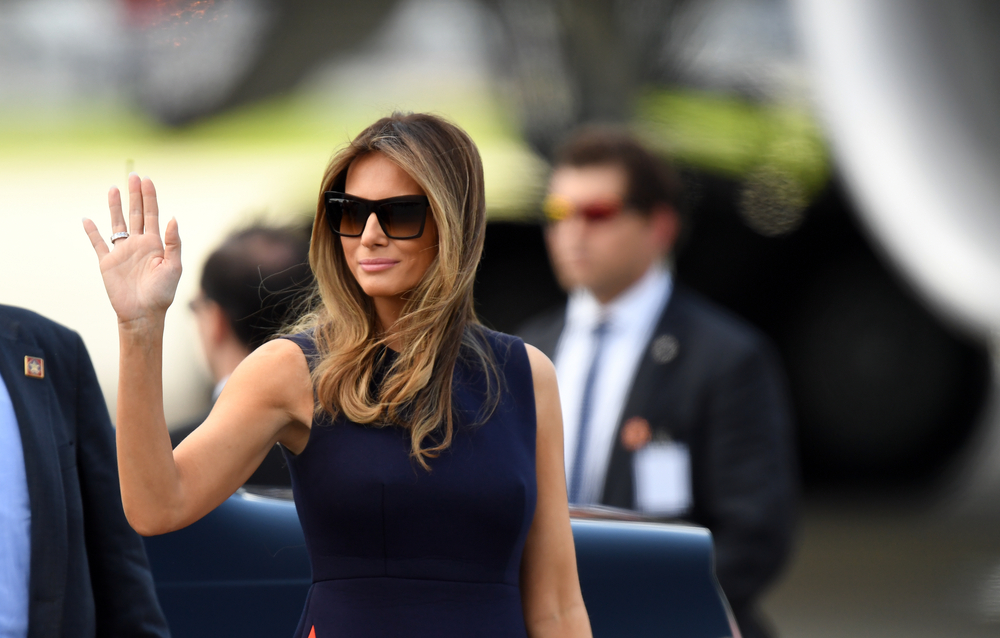
A leaked image of Barron Trump inside Mar-a-Lago has sparked a wave of online debate, but the reaction that has drawn the most attention may be Melania Trump’s. According to multiple reports, the First Lady was furious after an unauthorized photo of her 19-year-old son circulated online, prompting what sources described as a stern warning to anyone responsible for taking or sharing it.
Contents
show
The image itself might have seemed minor in another context. Barron was reportedly seen walking behind his father, Donald Trump, through a dining area at the family’s Florida resort during the holiday season. But because this involves one of the most watched families in American politics, the incident quickly turned into something much larger than a simple privacy dispute.
What has followed is a revealing public conversation about power, privacy, media boundaries, and whether the children of political figures are ever really allowed to live normal lives. The story also highlights a tension that has followed the Trump family for years: they are among the most visible people in the country, yet they continue to insist that some parts of their lives remain entirely off limits.
The Photo That Reportedly Crossed a Line
Reports from entertainment and gossip outlets say the image was taken by members or guests at Mar-a-Lago during a holiday gathering. Barron Trump was allegedly photographed without consent while moving through a dining room behind the president.
One source quoted in coverage described him as “quiet” and “very reserved,” wearing a blue suit and keeping to himself. Another said Melania’s position afterward was unmistakable: Barron’s privacy, even at a venue associated with one of the most public political families in the world, was not open for negotiation.
According to the reporting, she made it clear that anyone caught filming or photographing Barron could face immediate consequences, including the possibility of being banned from the club. The broader message was reportedly just as direct: no cameras, no leaks, and no turning private family moments into online spectacle.
That response has not come out of nowhere. If there is one issue Melania Trump has remained remarkably consistent on over the years, it is Barron. Since Donald Trump first entered the White House in 2017, Melania has repeatedly shown that she sees her role as Barron’s protector just as seriously as any formal political title attached to her.
Melania’s Protective Instinct Has Been One of Her Clearest Public Positions
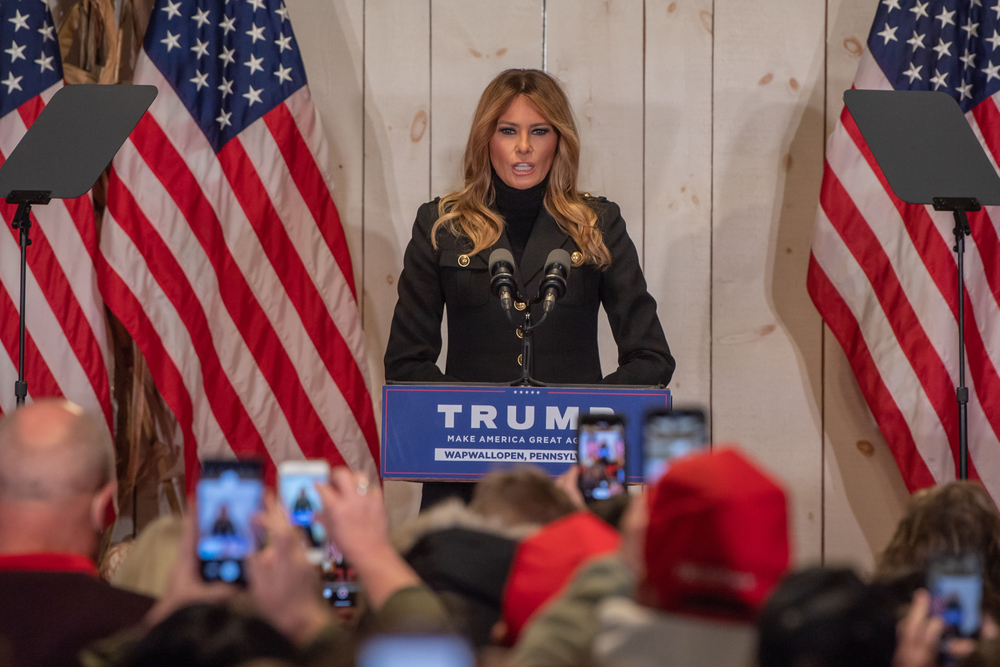
For all the contradictions and theatrics often associated with Trump-era politics, Melania Trump’s attitude toward Barron has been unusually steady. She has long resisted exposing him to the same level of public access that followed other members of the Trump family.
While Donald Trump’s older children became highly visible surrogates, campaign figures, business personalities, and media regulars, Barron remained largely out of sight. That was not accidental. It reflected a deliberate effort by Melania to keep him away from the daily machinery of public life for as long as possible.
That effort began when Barron was still a child and appears to have continued into adulthood. Coverage in recent years has repeatedly suggested that Melania remained deeply involved in decisions about his environment, schooling, routines, and exposure to media attention.
Even as Barron entered college, the idea that he should be treated like a normal celebrity-adjacent young adult never really took hold. Reports have suggested he began his sophomore year at New York University and later spent time closer to Washington, D.C., as Donald Trump returned to office. Through all of it, Melania’s instinct has seemed less focused on public adjustment and more focused on controlled distance.
To supporters, that reads as responsible parenting. To critics, it can look like overprotection. But whichever side people land on, this latest leak fits a much bigger pattern rather than standing as an isolated incident.
Why the Backlash Became Political Almost Immediately

On the surface, this should have been a straightforward privacy story. A mother was upset that someone took a picture of her son without permission and circulated it online. In most families, many people would understand that instinct immediately.
But in the Trump orbit, almost nothing stays personal for long.
Part of the reason is that Mar-a-Lago is not simply a family home. It is also a club, a political meeting point, a social stage, and an unofficial extension of Trump-world itself. It is a place where politics, celebrity, money, and performance often overlap. That makes the idea of a truly private moment inside it harder for many observers to accept.
The other reason is that the Trump family has spent years benefiting from publicity, strategic visibility, and a media environment that often turns even the smallest family image into a story. Critics therefore argue that selective privacy can look convenient. In their view, the family cannot embrace public fascination when it helps them and then reject it entirely when it becomes uncomfortable.
That is why reactions online quickly moved beyond the image itself and toward something more ideological. Some users defended Melania and said any parent would be justified in drawing a line. Others mocked the warning, framing it as an example of a political family trying to control public perception while living in a spotlight of its own making.
This is not really about a single photograph anymore. It has become a debate about entitlement, boundaries, and whether public office changes the rules for everyone around it.
Barron Trump Occupies an Unusual Place in American Political Culture
A big part of the public disagreement comes down to one uncomfortable fact: Barron Trump is no longer a child, but he is still often treated in public conversation as though he exists in a special protected category.
That creates confusion around what standards should apply to him.
He is not a campaign adviser, elected official, or media personality in the way that Donald Trump Jr., Ivanka Trump, Eric Trump, or even some of the extended Trump orbit have been. He has also not cultivated a highly public image of his own. By most accounts, he has kept an unusually low profile considering his family name.
At the same time, he is the son of a sitting president, appears at major political or family events from time to time, and has become an object of intense public curiosity simply because so little is known about him. In today’s media environment, scarcity creates fascination. The less people see, the more they want to.
That has made Barron into a strange kind of modern political figure: famous enough to trend, but distant enough to remain largely unknowable.
And because he has grown up in front of the public without ever fully entering public life, each appearance gets magnified. His height, his expressions, his clothes, his body language, and even his silence are all dissected online in ways that would feel absurd in an ordinary family.
That does not make every photo fair game. But it does explain why each one becomes fuel for a wider internet reaction.
The Internet’s Reaction Says as Much About Modern Politics as It Does About the Trumps
The online response to the Barron photo leak was predictably split, and in some corners, openly cruel.
Some social media users argued that Melania was right to be angry and that photographing a young adult family member in what was presented as a private setting crossed a basic line of decency. Others were less sympathetic, saying Barron is now an adult and part of a family that has willingly lived at the center of political celebrity culture.
There was also the usual layer of internet mockery, with jokes, personal comments, and dismissive reactions that reflected how little restraint online discourse often has when the Trump family is involved.
That kind of reaction may be ugly, but it is also revealing. Political families today do not just operate under media scrutiny. They exist inside a social media ecosystem that rewards intrusion, speed, and emotional reaction. A private image can become content within minutes. A family moment can be turned into a meme before anyone involved has even processed what happened.
That reality makes privacy much harder to enforce than it was for previous first families. It is not just about paparazzi anymore. It is about phones in every pocket, closed spaces that are not truly closed, and audiences that feel entitled to constant access.
In that sense, Melania’s reported crackdown may have been less about one image and more about sending a warning to the environment around her: if this can happen once, it can keep happening unless someone makes an example out of it.
The Timing Has Added Even More Attention to the Story
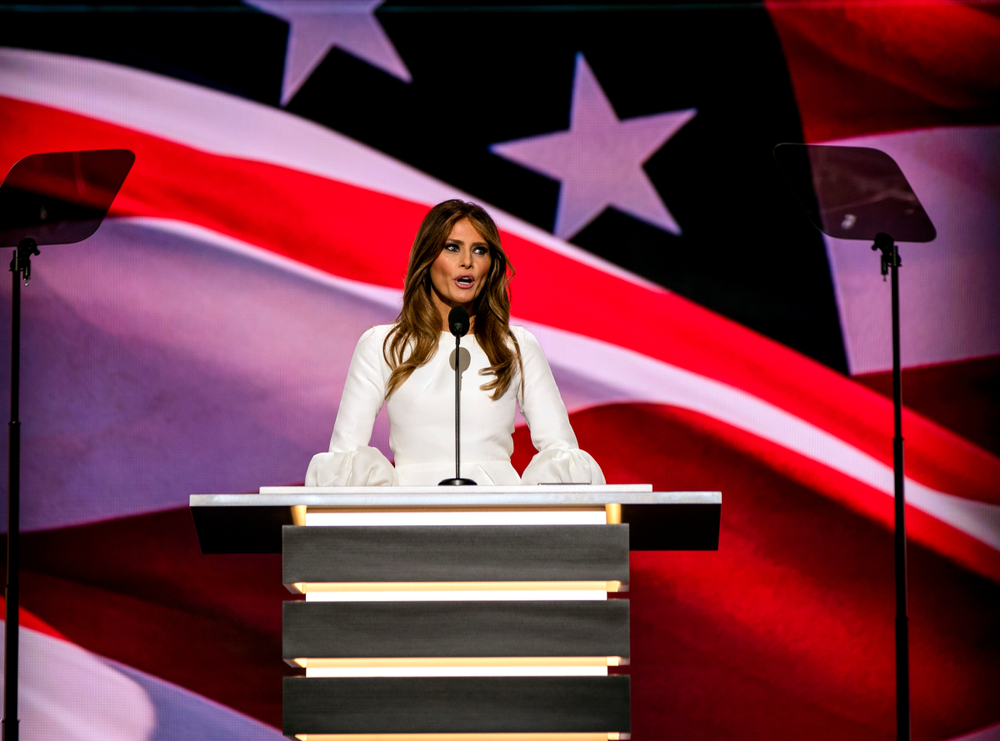
The renewed interest in Melania and Barron comes at a time when the Trump family is already back under an intense political microscope. Donald Trump’s return to the White House has pulled every family member back into public relevance, whether they want that role or not.
Melania, in particular, has found herself re-entering the spotlight in ways that go beyond traditional first lady coverage. Her recent Amazon documentary, which reportedly offered behind-the-scenes access as she prepared to return to public life, added another layer to how she is being perceived.
That documentary also became part of this broader conversation after Jimmy Kimmel appeared to mock it during the Oscars. In his remarks, he joked about documentaries that “tell the truth” and contrasted them with projects involving someone “walking around the White House trying on shoes,” which many interpreted as a clear swipe at Melania’s film.
The moment may have been played for laughs, but it mattered because it reinforced the image of Melania as both highly visible and strangely opaque. She remains one of the most famous women in American public life, yet much of what she says and does still gets filtered through distance, mystery, and selective appearances.
That contradiction is part of why this story has resonated. The same public that is told to respect her family’s privacy is also constantly being invited to consume carefully managed glimpses of that family through documentaries, campaign optics, and political imagery.
Privacy, Image Control, and Political Branding Often Overlap
One reason stories like this create such heated reactions is because privacy and image control are not always easy to separate in politics.
For ordinary families, privacy usually means wanting to be left alone. For political families, it can mean that, but it can also mean controlling when and how the public gets access. Those are not always the same thing.
That does not automatically make Melania’s concerns insincere. In fact, there is good reason to believe she genuinely wants Barron shielded from the more toxic sides of public life. But in a political environment where every image has meaning, every appearance sends a message, and every absence creates speculation, privacy can also become part of branding.
The Trump family has always understood the value of image discipline. Whether through campaign visuals, carefully staged entrances, rally optics, or social media framing, presentation has never been incidental. That is why a leaked image from inside Mar-a-Lago matters more than it might for another family. It is not only a personal breach. It is also a loss of control.
And in politics, losing control of the image often feels almost as serious as losing control of the message.
The Misinformation Problem Makes Stories Like This Even Messier

Another reason this story has gained traction is because Barron Trump’s name already circulates constantly in a digital environment where rumor often moves faster than fact.
One recent example involved a viral social media claim alleging that Barron had somehow bought millions of dollars’ worth of oil shortly before the U.S.-Iran conflict and then profited from it. The allegation spread quickly online despite a total lack of evidence, and fact-checkers later noted there was no credible sourcing behind it.
That matters here because it shows how Barron has increasingly become a target not only of curiosity, but of fiction. His low profile does not protect him from speculation. In some ways, it may make it worse. When little verified information exists, conspiracy, exaggeration, and absurd claims often rush in to fill the space.
For a family trying to keep him protected, that creates a difficult reality. It is no longer just about avoiding paparazzi-style exposure. It is about living in an online culture where a name can trend globally over something completely fabricated by the end of the day.
This is one reason Melania’s response may resonate even with people who are not politically sympathetic to the Trumps. Privacy breaches are no longer isolated incidents. They often become gateways into distortion, rumor, and character-building narratives that can spiral far beyond the original moment.
There is Also a Quieter Human Side to This Story
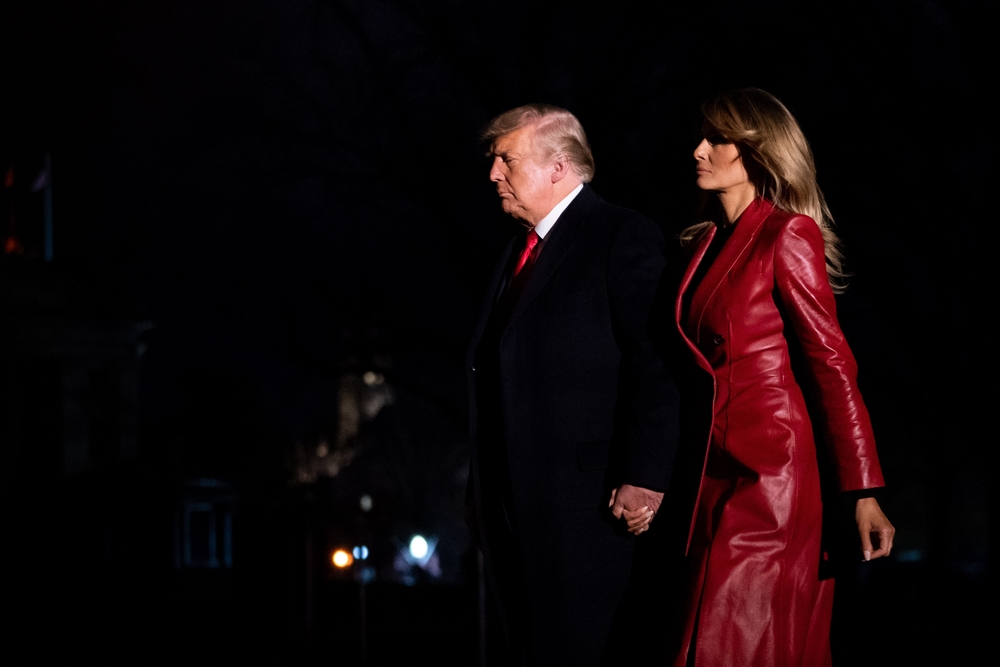
For all the politics and online noise surrounding the incident, there is a simpler point worth holding onto: growing up under permanent public scrutiny is likely strange, isolating, and often unfair.
Barron Trump did not run for office. He did not build a media career. He did not ask to become a recurring object of fascination on social media. Yet from childhood onward, he has lived in a position where even ordinary milestones can become national content.
Going to school, attending a family event, standing beside relatives for a photograph, or simply being seen in a hallway can all become public material. That is not a normal way to enter adulthood.
It is possible to criticize the Trump family’s politics, media strategies, and contradictions while still recognizing that not every family member deserves to be treated like open-source entertainment. In fact, one of the problems with modern political culture is how quickly basic human boundaries disappear once someone becomes attached to a powerful last name.
This does not mean the public loses all interest or that photographers stop existing. It simply means there should be at least some distinction between accountability and voyeurism.
The Bigger Takeaway From the Barron Leak
Melania Trump’s reported warning over Barron’s leaked photo has landed because it taps into several tensions at once. It is about a mother trying to draw a line. It is about a political family that has always lived in a spotlight. It is about a son who is both publicly famous and personally hidden. And it is about a culture that increasingly treats access as a right rather than a privilege.
Whether people see Melania’s reaction as justified or hypocritical may depend on how they view the Trump family more broadly. For supporters, this was an overdue reminder that even political families deserve private space. For critics, it was another example of a family wanting to manage visibility on its own terms.
But beneath the tribal reactions, the story points to something bigger and more uncomfortable about public life in 2026. The line between public interest and personal intrusion has become thinner than ever, and once an image is out, it rarely belongs to the people in it anymore.
That may be the part of this story that lingers longest. Not the leaked photo itself, and not even the warning that followed, but the uneasy reality it exposed: in modern politics, privacy is no longer simply about staying hidden. It is about fighting, often unsuccessfully, to keep at least one part of life from becoming content.