
Your cart is currently empty!
Detroit Mom Creates Crocheted Octopuses For Premature Babies In NICU
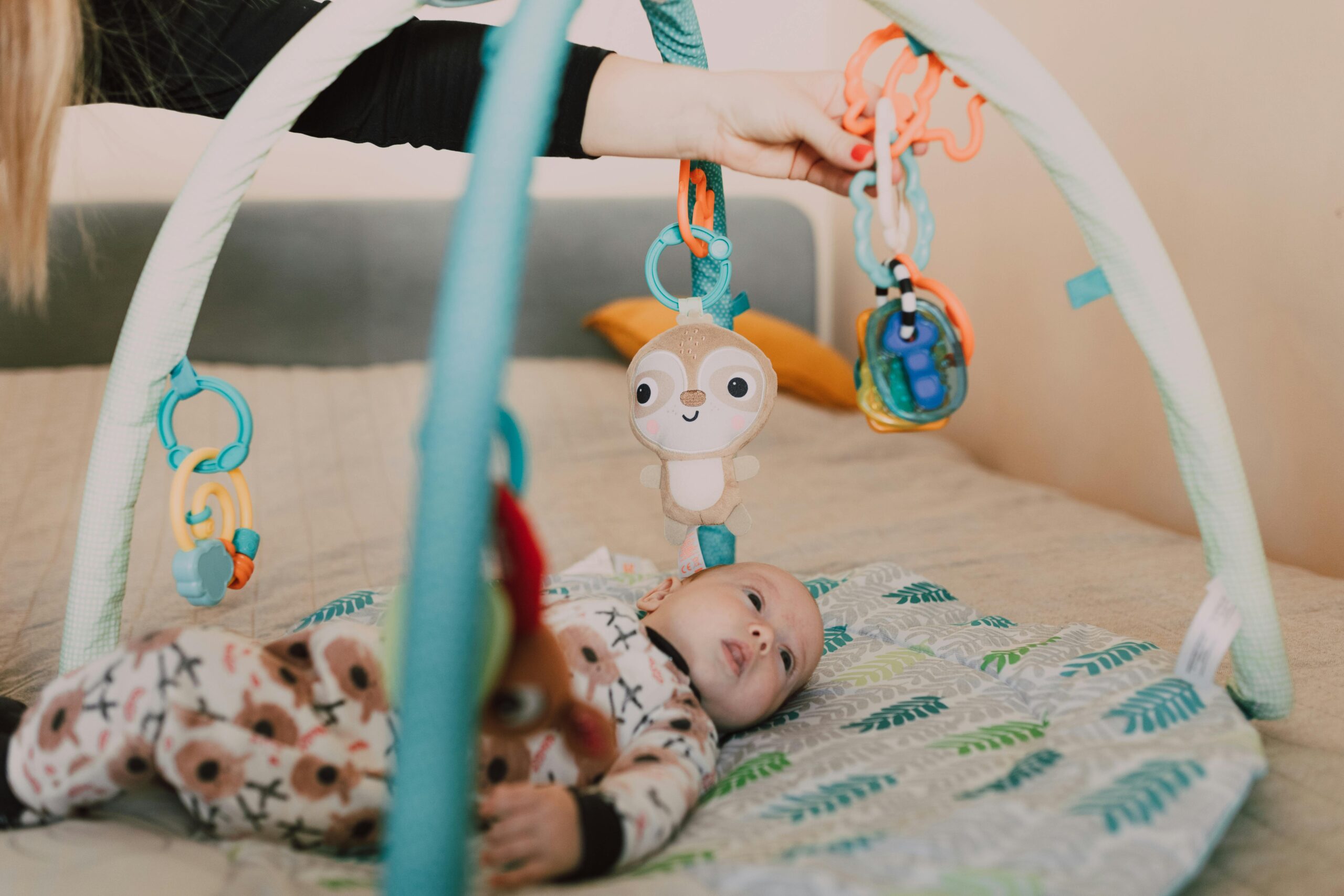
There are some hospital goodbyes that do not feel like goodbyes at all. A parent kisses their baby, whispers that they will be back soon, and then walks out of a room they never wanted to leave in the first place. For families with babies in the neonatal intensive care unit, that moment can repeat day after day.
Contents
show
For Joelle Haley, that reality arrived just after Christmas, when she gave birth to her son Kieran at only 24 weeks. Instead of bringing him home, she had to leave him in the care of doctors and nurses inside the Children’s Hospital of Michigan NICU at DMC Hutzel Women’s Hospital in Detroit. Like so many parents of premature babies, she found herself caught between gratitude and heartbreak: grateful that her child was receiving specialized care, and heartbroken that she could not simply scoop him up and take him home.
In the middle of that uncertainty, Haley found comfort in something small, handmade, and surprisingly powerful. She began crocheting tiny octopuses from colorful yarn, hoping they might offer a little softness in a space dominated by monitors, wires, and medical alarms. What started as a deeply personal act of coping soon became something much bigger. Before long, hundreds of handmade octopi were making their way into the NICU, offering comfort to fragile babies and peace of mind to anxious families.
What makes the story resonate is not only the image of those tiny yarn creatures tucked beside newborns. It is what they represent: care in its most human form. In a place where medicine is highly technical and the stakes are impossibly high, a soft crocheted toy became a symbol of tenderness, community, and hope.
A Christmas Birth That Turned Into a Long NICU Journey
Haley’s story began on Christmas Day, when she went into labor. Two days later, she gave birth to Kieran far earlier than expected. Babies born at 24 weeks are considered extremely premature, and they often require intensive support to survive and grow. That can mean breathing assistance, feeding tubes, constant monitoring, and weeks or even months of specialized care.
For many people who have never stepped inside a NICU, it can be difficult to understand just how emotionally complex that environment can be. It is a place of extraordinary medical expertise, but also one of deep vulnerability. Parents are often introduced to a whole new vocabulary overnight. Terms like oxygen saturation, intubation, feeding lines, and respiratory support suddenly become part of everyday life.
For Haley, those early days were not just physically exhausting. They were emotionally disorienting. The experience of giving birth is usually tied to closeness, bonding, and bringing a baby home. A NICU stay changes that script entirely.
She later explained that one of the hardest parts was leaving her son behind, even while knowing he was in good hands. That tension is something many NICU parents know intimately. They trust the nurses and doctors, but trust does not erase the ache of separation.
There is a unique helplessness that can come with watching your child fight to grow stronger while being unable to fix the situation yourself. For some parents, that feeling shows up as tears. For others, it turns into routines, journaling, research, prayer, or repetitive activities that offer a little structure in the middle of chaos. For Haley, that outlet became crochet.
Why These Tiny Octopuses Matter More Than People Realize

The crocheted toys Haley began making are known as amigurumi, a Japanese art form centered on crafting small stuffed figures from yarn. They are often whimsical, colorful, and cute. But inside a NICU, these little octopuses are more than decorative.
The tentacles can serve a practical purpose for premature babies who are still developing and often instinctively grasp whatever is within reach. In a hospital environment, that can be a serious issue. Babies may accidentally tug at breathing tubes, feeding lines, or other critical equipment that helps keep them stable.
Dr. Jorge Lua, medical director at the Children’s Hospital of Michigan NICU at DMC Hutzel Women’s Hospital, explained why that matters. Some babies require breathing support, and keeping those tubes in place is essential. If a baby pulls one out, it can create immediate complications, from drops in oxygen levels to the need for urgent restabilization.
That is where the octopus design becomes unexpectedly useful. The soft curled tentacles give tiny hands something safer to hold onto, redirecting that instinctive grabbing behavior away from medical tubing.
It is such a simple concept that it almost sounds too small to matter. But anyone who has spent time in a hospital knows how often the smallest interventions can make a real difference. Comfort and safety are not always dramatic. Sometimes they come in the form of a knitted blanket, a dimmed light, a nurse’s voice, or a handmade toy no bigger than a hand.
And there is another layer to it as well. For parents, seeing their baby with something soft and personal nearby can be deeply reassuring. It adds a touch of warmth to a setting that can otherwise feel sterile and intimidating.
For Haley, that mattered immensely. She has spoken about the comfort of knowing her son had something near him when she could not be there herself. That emotional significance cannot be measured on a monitor, but it is no less real.
What Began as a Coping Tool Turned Into a Mission
Crocheting was not a random hobby Haley picked up during a difficult season. It was already part of her life. She learned as a child and had been crocheting since second grade. She has said her mother taught her partly as a way to help with anxiety, and the repetitive motion became something grounding for her over the years.
That detail makes the story even more moving, because it shows how one form of comfort can be transformed into another.
When Haley heard a nurse mention that octopi could be helpful in the NICU, she got to work. She started making them herself, one by one. Each one reportedly took her around 30 minutes to complete.
That might not sound like much on paper, but in the life of a NICU parent, time can feel stretched thin. Between hospital visits, emotional exhaustion, and the general uncertainty of having a medically fragile newborn, carving out even half an hour for something meaningful can be a powerful act.
In those small windows of time, Haley was not only making toys. She was reclaiming a sense of agency.
That is often one of the hardest things for parents in medical crises: feeling useful. When your baby is surrounded by specialists and machines, your role can suddenly feel reduced in ways you never expected. You are still a parent, of course, but the usual expressions of caregiving can become limited or delayed.
Projects like this can help restore some of that lost connection. They become a way of saying, “I cannot control everything, but I can still offer something.”
And that is exactly what Haley did.
Then Social Media Turned One Mom’s Idea Into a Community Effort

At first, Haley was simply trying to meet a need she had seen firsthand. But once she shared the idea online, it struck a chord with other people too.
She posted a callout on Facebook and shared the crochet pattern, encouraging others in her community to join in. The response was immediate and generous. Volunteers from across Michigan and beyond began making octopi and sending them in.
Before long, what had begun as one mother’s personal project had turned into a full community donation effort.
Haley made around 20 octopi herself, but the wider response quickly multiplied that number. More than 100 people reportedly contributed, and at one point the total donation count had reached around 175, with more still on the way.
That kind of response says something important about the way people relate to stories like this. Many of those volunteers likely never met Haley or her son. They may not have known the families receiving the donations. But they understood the emotional core of what she was doing.
A premature baby in intensive care is the kind of image that cuts through distraction and reminds people what compassion can look like in practical terms. It is not abstract. It is not performative. It is a person using their own skill to make a frightening situation a little softer for someone else.
There is also something especially meaningful about the fact that the response came through a local network. Haley reportedly shared the idea in a Facebook group connected to Holly, her hometown, and people answered. In an era when social media is often criticized for outrage, misinformation, or shallow engagement, stories like this are a reminder that these platforms can still be used to mobilize kindness.
One person posts a need. Another person shares it. Someone else picks up a crochet hook. A stranger drops off yarn. A hospital room feels a little less lonely.
That is not flashy. But it is powerful.
Inside the NICU, Healing Often Happens in Very Human Ways
Modern NICUs are extraordinary places. They are built around highly specialized care, advanced technology, and teams of professionals trained to support the most vulnerable infants. For premature babies, that care can mean the difference between life and death.
But anyone who has spent time in one of these units knows that healing is not just clinical. It is also emotional, sensory, and relational.
That was reflected in comments from hospital staff, who emphasized that these tiny crocheted octopi represented far more than a cute donation drive. They symbolized compassion, time, and community support during one of the most vulnerable chapters a family can experience.
That perspective matters, because stories like this can easily be flattened into “feel-good content” without fully appreciating the environment they exist within. The NICU is not a backdrop for a heartwarming headline. It is a place where families often live in survival mode.
Parents learn to celebrate tiny victories that other people might overlook entirely:
A stronger oxygen reading.
A little weight gain.
A quieter day.
A feeding that goes smoothly.
A doctor using the word “stable.”
Against that backdrop, a handmade octopus can become something surprisingly meaningful. It is not a cure. It does not replace medical treatment. But it does help make the environment feel more humane.
And that matters.
Healthcare conversations often focus, understandably, on equipment, staffing, treatment outcomes, and access to care. All of those things are essential. But emotional experience matters too. Family-centered care is not just about letting parents visit more easily or explaining procedures clearly. It is also about recognizing that comfort has a place in medicine.
Sometimes, comfort is what allows families to keep going long enough to get through the hardest days.
The Story Resonated Because So Many Parents Know This Feeling

One reason Haley’s story spread so widely is that it touches a nerve for anyone who has ever had a child in the hospital, especially in a NICU.
The details are deeply specific to her life, but the emotions are widely recognizable: fear, helplessness, hope, exhaustion, and the desperate need to do something useful.
Parents in neonatal intensive care units often talk about the strange emotional split they experience. On one hand, they are deeply grateful for the care their baby is receiving. On the other, they are mourning the loss of the newborn experience they thought they would have.
Instead of sleepy first nights at home, there are incubators and alarms. Instead of uninterrupted skin-to-skin cuddles, there may be strict care schedules and medical limitations. Instead of introducing the baby to family members in a cozy living room, there are updates filtered through rounds, tests, and treatment plans.
That kind of emotional whiplash can be hard to explain to people who have not lived it.
It also helps explain why Haley’s octopi are so compelling. They are not simply adorable. They are emotionally intelligent. They meet a real need in a real place.
And unlike some charitable efforts that require huge financial resources or formal organizations, this one was deeply accessible. It showed that ordinary skills can become extraordinary acts of support.
A person does not need to be a doctor to make a difference in a hospital setting. Sometimes they just need to pay attention to what families and staff actually need.
That is one of the most powerful lessons in this story.
It Also Says Something Bigger About How People Cope With Crisis

There is another reason this story lingers beyond the initial emotional reaction. It offers a very real example of what coping can look like when life becomes overwhelming.
When people go through trauma or prolonged stress, they often search for rituals, patterns, or repetitive activities that help regulate their nervous system. Crochet, knitting, sewing, baking, gardening, and other tactile hobbies can become more than pastimes in those moments. They can become anchors.
Haley has openly described crochet as something that helps with anxiety. The repetitive motion gave her something to focus on and helped her feel calmer.
That is not a trivial detail. It speaks to something many people intuitively understand but do not always articulate well: creating something with your hands can be stabilizing when everything else feels uncertain.
And in Haley’s case, that coping strategy did not remain inward-facing. It turned outward. Her way of self-soothing became a way of caring for others.
There is something profoundly moving about that transformation.
Not every painful experience can be turned into a community project, and no one should feel pressure to “make meaning” out of hardship before they are ready. But when that transformation happens naturally, it can be incredibly powerful.
Haley was not trying to become a symbol. She was trying to survive an emotionally brutal chapter while helping her son and others like him. That authenticity is part of why people responded so strongly.
It did not feel polished or manufactured. It felt real.
The Donations Represent More Than Yarn and Time

By late February, Haley had helped organize the delivery of more than 175 handmade octopi to NICU babies at Children’s Hospital of Michigan facilities, including the unit at DMC Hutzel Women’s Hospital.
On paper, that is a donation number.
In practice, it is hundreds of hours of labor, care, washing, organizing, and community participation. It is people choosing to spend their time making something for a baby they will never meet.
And that matters because time is often the clearest expression of care.
The same can be said for the families receiving them. For a parent sitting beside an incubator, trying to make sense of another difficult day, these tiny octopi are a reminder that the outside world has not forgotten them.
That may sound sentimental, but it is deeply practical too. Families in crisis often describe how isolating hospital life can become. Days blur together. Friends may not know what to say. Life outside the hospital keeps moving while your own emotional world feels frozen.
Small gestures interrupt that isolation. They remind people that they are part of a wider human circle.
There is also something lovely about the visual itself. NICU spaces can be clinically necessary but emotionally stark. A burst of colorful yarn beside a tiny baby changes the emotional temperature of the room, even just a little.
And in difficult places, “a little” can go a long way.
A Story About Premature Babies, But Also About What We Owe One Another
At its core, this is a story about a mother and her son. But it is also about something larger: what people can do for one another during the most fragile chapters of life.
Premature birth can be terrifying, and NICU stays can leave lasting emotional marks on families long after the hospital chapter ends. The babies may be tiny, but the experience is enormous.
What Haley created was not a solution to all of that pain. No handmade object could be. But she did create something meaningful in the middle of it. She made a way to offer comfort where there was fear, softness where there was stress, and connection where there could easily have been isolation.
That is part of what makes this story linger.
It reminds us that compassion is often most powerful when it is practical. Not abstract concern. Not distant sympathy. Real care, shaped into something useful.
In Haley’s case, that care took the form of colorful crocheted octopi for babies who are still learning how to hold on.
And maybe that is what makes the story feel so emotional to so many people. Because in one way or another, most of us know what it is like to need something small to hold onto during a difficult season.
For some families in a Detroit NICU, that “something” just happens to have eight tiny tentacles and a whole lot of love stitched into every thread.