
Your cart is currently empty!
New ICE Warrant Policy Erodes a Fundamental American Right, Experts Say

The revelation that Immigration and Customs Enforcement officers may now enter private homes without a judge’s warrant has triggered intense concern among constitutional scholars, immigration attorneys, and civil liberties advocates. What alarmed experts most was not only the substance of the policy, but the way it surfaced. The internal memo, issued quietly in May 2025 and later revealed through a whistleblower complaint, authorizes ICE officers to force entry into homes using only administrative warrants. For legal experts, that single change upends centuries of legal tradition built around the sanctity of the home and the requirement that an independent judge stand between citizens and the power of the state.
Contents
show
Even within an administration known for aggressively expanding law enforcement authority, the directive stood out. The prohibition against warrantless searches of private property predates the founding of the United States and directly informed the Fourth Amendment. Mark Graber, a constitutional law scholar at the University of Maryland, underscored the gravity of the shift with biting clarity. “The Bill of Rights, we thought, were the first 10 amendments,” he said. “I guess now we’re down to nine.” For many experts, the memo is not a technical adjustment but a declaration that a core constitutional protection no longer applies in immigration enforcement.

Why the difference between warrants matters so much
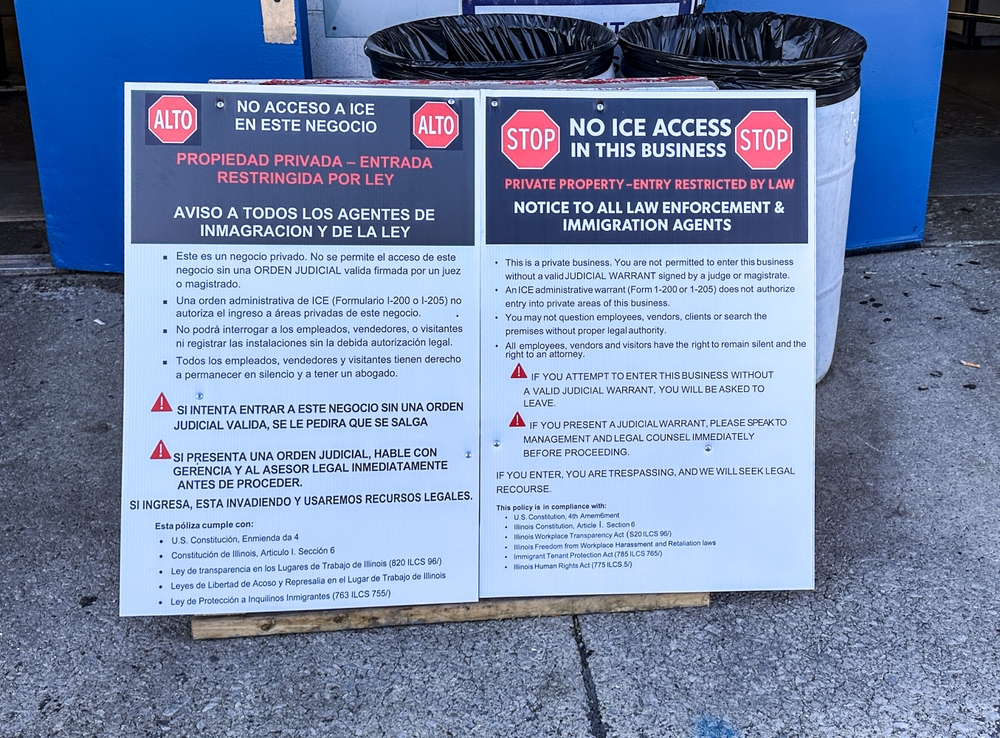
For decades, immigration arrests have relied on two distinct legal tools, judicial warrants and administrative warrants. Judicial warrants are signed by judges after reviewing evidence and are what allow law enforcement officers to enter homes or non public areas of businesses. Administrative warrants, by contrast, are signed by executive branch officials and have historically authorized arrests but not forced entry into private residences. That distinction has served as a critical legal guardrail.
Most immigration arrests are carried out using administrative warrants because they are easier to obtain and require a lower evidentiary threshold. However, that ease came with limits. Officers could not cross the threshold of a home without consent or a judicial warrant. The newly discovered memo removes that barrier entirely, allowing ICE officers to treat administrative warrants as sufficient authority to enter homes by force.
Legal scholars say this shift effectively removes the neutral third party that the Fourth Amendment demands. Without a judge reviewing evidence before entry, the same agency investigating, accusing, and arresting an individual becomes responsible for authorizing its own search. Experts argue that this consolidation of power is exactly what the Constitution was designed to prevent.
Experts warn the memo abandons foundational safeguards
Emmanuel Mauleón, an associate professor of law at the University of Minnesota, described the policy in stark terms. “It would essentially be the same as if you were at the local police department, and the police officer that is both collecting the evidence and arresting you then goes and types up his own warrant to search your house because he thinks he has probable cause,” he said. For Mauleón, the danger lies not only in potential abuse but in the absence of accountability.
“It’s deeply concerning, because there’s absolutely no safeguards and no accountability built into the system,” he added. The history of the Fourth Amendment is filled with attempts by law enforcement agencies to stretch or erode its protections, often through incremental changes tested in courts over time. What makes this memo different, according to multiple experts, is its sweeping assertion that constitutional limits simply do not apply in this context.
Mauleón characterized the move as a point of no return. “It is what you might think of as crossing the Rubicon,” he said. “It is declaring that the fundamental protections that every court has recognized up to this point just don’t apply to DHS and to immigration stops.” For critics, that statement captures why the memo is seen as a profound break from legal precedent rather than a routine policy update.
The administration’s justification and internal confusion
The Department of Homeland Security has defended the directive by arguing that individuals served with administrative warrants have already received due process. In a statement, DHS spokesperson Tricia McLaughlin said people subject to these warrants already had “full due process and a final order of removal.” From the administration’s perspective, the memo is framed as a tool to carry out existing court orders more effectively.
Officials have also pushed back against claims that the policy authorizes indiscriminate home raids. A Trump administration official told CNN that the directive is “not a green light to randomly kick down doors.” Supporters of the policy point to government data showing that hundreds of thousands of people were issued removal orders last year, many after failing to appear in immigration court.
Yet confusion surrounding the memo has fueled additional concern. Unlike major policy shifts that are formally distributed within agencies, this guidance was not broadly circulated to ICE field offices. In some cases, officers learned of the change only after it was reported by the Associated Press. Civil liberties advocates argue that vague or verbal guidance on a policy of this magnitude increases the risk of inconsistent enforcement and abuse.

Political backlash and civil liberties concerns
The memo’s disclosure prompted swift condemnation from Democratic lawmakers and civil liberties groups. Senator Richard Blumenthal of Connecticut called on Homeland Security Secretary Kristi Noem and acting ICE Director Todd Lyons to testify before Congress, arguing that the policy demands public scrutiny. Minnesota Governor Tim Walz warned that the implications extend far beyond immigration enforcement.
In a post on X, Walz said “every American” should be “outraged by this assault on freedom and privacy.” His state has experienced one of the most intense surges of immigration enforcement in the Department of Homeland Security’s history, making the issue especially salient for residents who fear the normalization of warrantless home entry.
Kathleen Bush Joseph, an attorney and analyst at the Migration Policy Institute, said the memo reflects a broader enforcement philosophy. “This administration’s general stance is that immigrants are ‘invaders’ and immigration officials should be allowed to expedite their arrest, detention and deportation,” she said. In doing so, Bush Joseph warned, “they are pushing so many legal boundaries and doing things that have not been tried before in this way.”
Why legal experts say this affects everyone
Although the directive targets immigration enforcement, scholars stress that constitutional erosion rarely remains confined to one group. The Fourth Amendment protects citizens and non citizens alike, and its weakening in one arena can influence how courts view protections in others. Once an exception is carved out, it becomes easier to argue for additional ones.
Legal historians note that many past erosions of civil liberties began with marginalized populations before expanding more broadly. Experts fear that if courts accept the premise that administrative warrants can justify forced home entry, similar logic could be applied in other areas of law enforcement.
For that reason, critics argue the memo should be understood not simply as an immigration policy change but as a test of how resilient constitutional protections remain when they conflict with executive priorities.
A defining test for constitutional limits
The future of the memo will likely be decided in court, where judges will be asked to determine whether administrative warrants can constitutionally authorize entry into private homes. Legal challenges are expected, and the outcome could shape immigration enforcement for years to come.
What is already clear is that the policy has reignited a national debate about executive power, judicial oversight, and the meaning of due process. For many experts, the concern is not only about what the memo allows today, but about the precedent it sets for tomorrow.
As scrutiny intensifies, the question facing the country is not limited to immigration. It is whether foundational constitutional protections are negotiable, and who ultimately decides when those protections no longer apply.