
Your cart is currently empty!
This Sungrazing Comet May Light Up the Sky in Early April

In January, astronomers scanning the clear, dark skies above Chile’s Atacama Desert noticed something unusual moving slowly against the backdrop of distant stars. What they found was a new comet, officially named C/2026 A1 (MAPS), now racing toward a close encounter with the Sun. If it survives that fiery passage in early April, it may become bright enough to see with the naked eye, perhaps even glowing faintly in daylight for a brief moment in time.
Contents
show
For skywatchers, this is thrilling. For astronomers, it is scientifically significant. And for those attuned to the symbolic language of the cosmos, it feels like something more. Throughout history, comets have appeared unexpectedly, blazing across the sky like celestial messengers. They have inspired awe, fear, prophecy, and wonder. Now, as this ancient traveler makes its return from the outer reaches of the solar system, we are invited to watch closely, not only with telescopes, but with awareness.
This is not just an astronomical event. It is a reminder that the universe is alive with motion, timing, and cycles far older than human civilization.
The Discovery of C/2026 A1 and Its Daring Path
C/2026 A1 was discovered on January 13 by a team of amateur astronomers using a remotely operated telescope in Chile. Almost immediately, researchers recognized that it belongs to a rare and dramatic class of comets known as the Kreutz sungrazers.
Sungrazing comets follow extreme orbits that carry them extraordinarily close to the Sun. In early April, this comet will dive toward perihelion, passing only a small fraction of the distance between Mercury and the Sun. At its closest approach, it will be traveling at staggering speed, experiencing intense gravitational forces and solar radiation.
Most sungrazers do not survive this encounter. They fracture, vaporize, or disintegrate under the immense heat and tidal stress. But sometimes, a larger fragment makes it through. When that happens, the result can be spectacular.
The Kreutz family itself is believed to be the remnants of a single massive comet that broke apart roughly 1,700 years ago. Over centuries, fragments have returned in waves, occasionally producing what astronomers call Great Comets. These are comets so bright they can be seen during the day, their luminous tails stretching dramatically across twilight skies.
Whether C/2026 A1 will join that lineage remains uncertain. For now, astronomers watch and wait.
What Makes Sungrazers So Bright

Comets are often described as dirty snowballs, composed of ice, dust, and rock. When they are far from the Sun, they are relatively quiet and dark. But as they approach the inner solar system, solar heat causes the ice to sublimate, transforming directly from solid to gas. This process creates a glowing coma around the nucleus and often produces long, streaming tails that point away from the Sun.
Sungrazers amplify this process dramatically.
As C/2026 A1 nears perihelion, the intense solar radiation will cause massive outgassing. Jets of gas and dust may erupt from its surface. The comet’s brightness could surge rapidly. Some researchers speculate that if it holds together, it might briefly rival Venus in brightness. There are even cautious predictions that it could reach negative magnitudes, making it faintly visible in daylight.
Yet there is a paradox here. The very forces that could make it shine so brilliantly are the same forces that could destroy it.
This tension between illumination and dissolution is deeply symbolic. In many spiritual traditions, transformation requires proximity to the fire. To approach the source of light is to risk burning away what cannot endure.
A Fragment of an Ancient Visitor

The Kreutz family traces its origins to a colossal progenitor comet that likely fragmented in the distant past. Historical records from East Asia and Europe describe spectacular comets appearing simultaneously in the sky in the fourth century. Later returns produced the Great Comets of 1106, 1882, and 1965.
These events were unforgettable. Some shone brighter than the full Moon. Others cast visible shadows at night.
Each fragment that returns carries within it a piece of that ancient body. In a literal sense, C/2026 A1 is a shard of cosmic history, a remnant of something vast that once traveled intact through our solar system.
Spiritually, there is resonance in this idea. A fragment returning centuries later reminds us that time in the cosmos operates on scales beyond human comprehension. Cycles unfold across generations. Patterns reappear in new forms.
We are witnessing not something entirely new, but something returning.
When and How to See the Comet
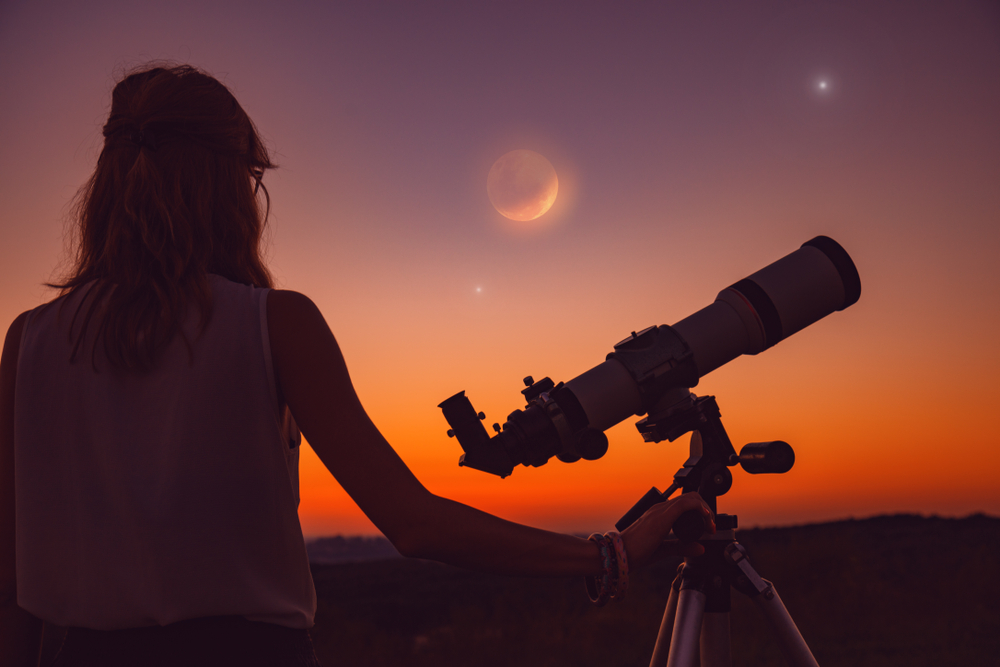
If the comet survives perihelion on April 4 or 5, the days that follow may offer the best viewing opportunities.
Observers in the Southern Hemisphere are expected to have the clearest view, as the comet’s trajectory will favor southern skies. In the Northern Hemisphere, it will appear low in the western sky just after sunset. Clear horizons will be essential. Buildings, trees, or mountains could easily block the view.
The ideal time to look will likely be 30 to 45 minutes after sunset during the first week of April. Binoculars or a small telescope may help, especially at first. If the comet brightens significantly, it could become visible to the naked eye, possibly near the bright glow of Venus.
For those in India and regions closer to the equator, southern locations may have slightly better conditions. Patience and timing will matter.
Yet even if the comet does not reach spectacular brightness, simply knowing that a piece of ancient ice is swinging around our Sun at extraordinary speed can shift perspective. The sky becomes less static, more alive.
The Astrology of a Sungrazer

Astronomy tells us how a comet moves. Astrology asks what it means.
Comets have traditionally been viewed as omens. In ancient astrology, they were associated with sudden change, upheaval, revelation, and collective turning points. Because they appear unexpectedly and often disrupt the familiar order of the sky, they were seen as harbingers of events that disrupt earthly patterns.
Modern astrology tends to approach comets less as predictors of catastrophe and more as catalysts of awakening. A sungrazer, in particular, carries potent symbolism.
Consider the themes embedded in its journey:
• Extreme proximity to the Sun, the astrological symbol of consciousness and identity
• Intense heat that strips away layers
• A possible fragmentation followed by sudden illumination
• A brief but brilliant visibility before fading back into darkness
This is the archetype of purification.
When a celestial body dives into solar fire, we can interpret it as a collective invitation to examine what in our lives can withstand intensity and what must dissolve. The Sun represents clarity, purpose, vitality. A comet passing so close may act as a mirror, reflecting areas where hidden material is forced into the light.
In early April, as this comet approaches perihelion, many people may feel heightened emotion, inspiration, or restlessness. Not because the comet mechanically causes events, but because symbolic events in the sky have always synchronized with shifts in human awareness.
The sky is a clock of archetypes.
Fire as Transformation
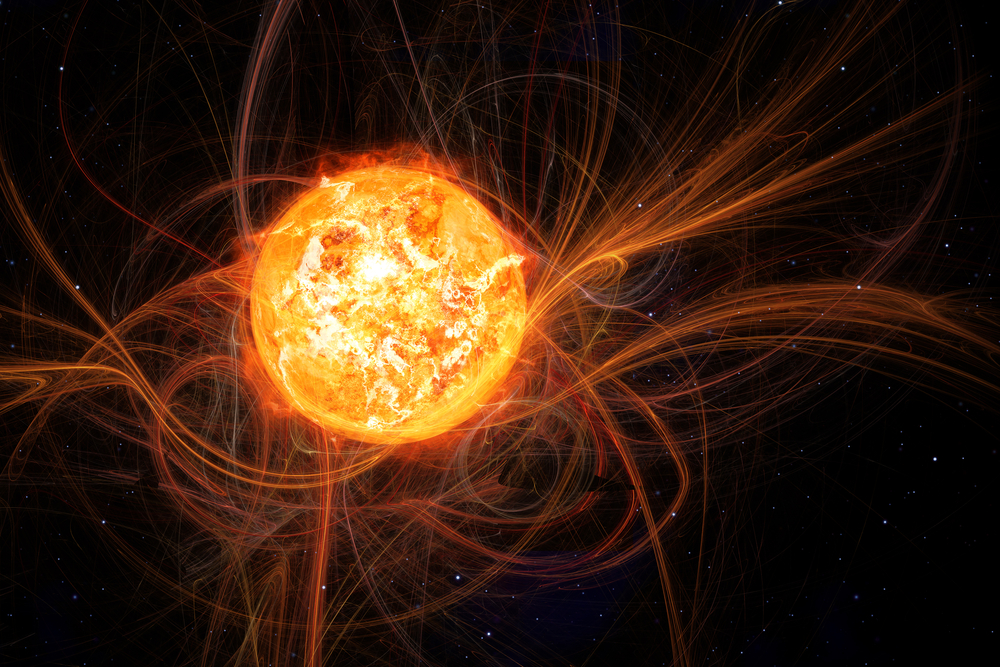
Fire is a universal spiritual symbol. It destroys, but it also refines. Metals are purified in fire. Forests regenerate after fire. Ritual fires in many cultures are used to release the old and call in the new.
C/2026 A1’s close solar approach echoes this pattern. It may be torn apart. Or it may emerge altered, shining even brighter.
There is something profoundly human in that possibility.
We, too, encounter moments when life brings us close to overwhelming intensity. Pressure builds. Heat rises. Old structures fracture. In those moments, we either disintegrate or transform.
Watching this comet offers a chance to meditate on that process. What in your life feels close to the fire? What patterns are being exposed? What might be burning away so something luminous can emerge?
The universe often reflects inner journeys through outer events.
The Collective Moment

This comet arrives during a period when humanity is navigating rapid change. Technological acceleration, climate shifts, social transformation, and evolving consciousness are all converging.
In such times, celestial events capture attention not only for their beauty but for their symbolism. A sungrazer is not subtle. It is dramatic, unpredictable, and intense.
There is also humility in recognizing how small we are in comparison. While we debate daily concerns, a frozen fragment of ancient cosmic debris is traveling millions of miles per hour, tracing a path set centuries ago.
That awareness can be grounding. It can reduce ego and widen perspective.
It can remind us that we participate in something vast.
The Uncertainty Is the Message

Astronomers repeatedly emphasize that it is too soon to predict how bright C/2026 A1 will become. It may flare brilliantly. It may fade. It may break apart dramatically. Or it may disintegrate quietly before we ever see it clearly.
There is a French expression shared by one of the astronomers involved in its discovery that translates loosely to not making plans based on a comet. The phrase captures the uncertainty inherent in these objects.
Spiritually, that uncertainty is meaningful.
We live in a culture that seeks certainty, forecasts, guarantees. Comets resist that impulse. They remind us that some phenomena must be witnessed without expectation.
There is beauty in anticipation itself. There is presence in looking west after sunset, scanning the horizon, not knowing whether you will see a faint glow or nothing at all.
The act of watching becomes a ritual.
Ritual for the First Week of April
If you choose to engage with this event consciously, consider a simple practice during the days around April 4 to April 10.
Find a place with a clear western horizon. Arrive before sunset. As the sky darkens, take a few slow breaths.
Reflect on the following questions:
• What in my life is ready for illumination
• What is being purified or clarified
• What fragments of my past are returning for integration
Whether you see the comet or not, offer a moment of gratitude for the cosmic cycles unfolding above.
This is not about superstition. It is about participation.

A Rare Chance to Witness Ancient Light
Even if C/2026 A1 does not become a Great Comet, it remains a rare opportunity. Most sungrazers are discovered only days before they vanish into the Sun. This one was detected unusually early, giving astronomers and skywatchers time to follow its journey.
That early discovery mirrors awareness itself. The more conscious we become of approaching change, the more prepared we are to meet it.
If the comet survives and brightens, it may hang briefly in the twilight, its tail possibly stretching upward like a luminous brushstroke. If it fragments, it may flare unpredictably, shining intensely for a short period before fading.
Either outcome is instructive.
In the grand scheme, this event is fleeting. The comet will not remain in our skies for months. Its arc is brief, concentrated, intense.
So is life.
Watching the Sky, Watching Ourselves
A newly discovered comet is racing toward the Sun. In early April, it will face a trial by fire. If it survives, it may shine brilliantly in our evening skies. If it does not, it will dissolve into solar light, another fragment returning to the cosmic cycle.
Astronomically, this is a story of ice, gravity, radiation, and orbital mechanics. Spiritually, it is a story of transformation, purification, and timing.
We cannot control whether C/2026 A1 becomes the spectacle some hope for. We can only look up, remain present, and allow ourselves to feel the wonder of living in a universe where such events occur.
When you step outside in early April and gaze toward the fading glow of sunset, remember that you are witnessing not just a comet, but a conversation between fire and ice, between destruction and brilliance.
And perhaps, in that glowing horizon, you may glimpse something luminous within yourself as well.