
Your cart is currently empty!
Only Seven EU States Require Full Disclosure Of Political Party Donors
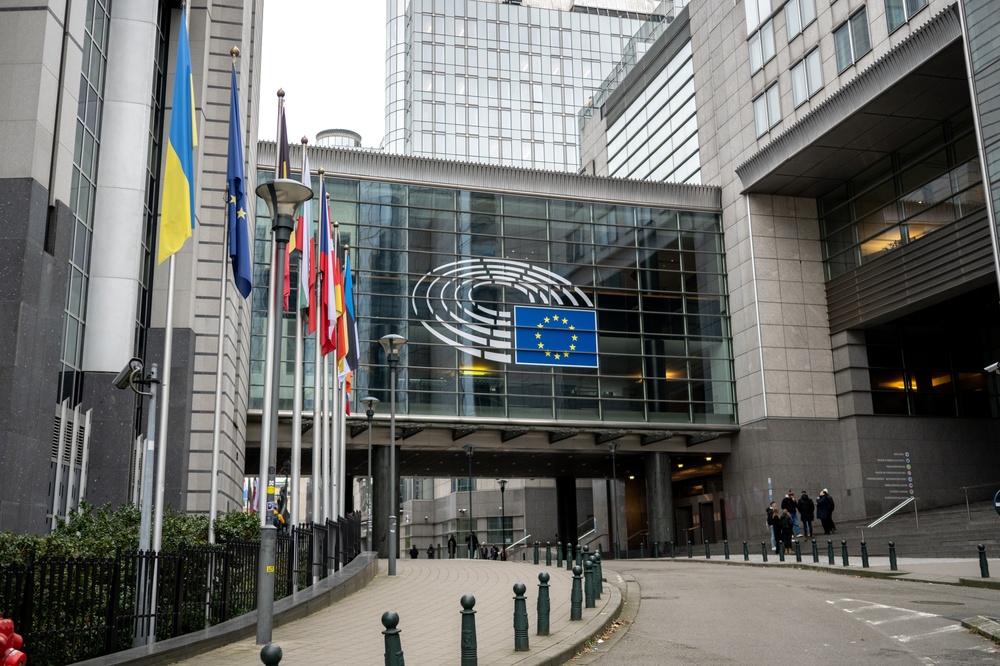
As Europe prepares for another round of European Parliament elections, attention is turning not only to campaign promises and political alliances but also to the money that powers modern politics. Behind every campaign, rally, advertisement, and strategy meeting lies a network of funding that allows parties to operate and compete. While political donations are a normal part of democratic systems, the degree to which those donations are visible to the public varies dramatically across the European Union. A large cross‑border investigation has now revealed that in many cases voters simply do not know who is financially supporting the political movements asking for their votes.
Contents
show
The investigation, coordinated by the investigative platform Follow the Money and carried out by The Guardian alongside more than 25 European media partners, examined the annual financial reports of more than 200 political parties across the EU. The project, titled Transparency Gap, set out to understand how transparent political financing really is across the bloc. What researchers found was a complicated and uneven system where rules differ from country to country and large amounts of political funding can move through structures that remain difficult for citizens and journalists to fully trace.
A Transparency Gap Across Europe
The investigation found that only seven of the European Union’s 27 member states require political parties to reveal the identity of every private donor. These countries are Bulgaria, the Czech Republic, Estonia, Greece, Latvia, Poland, and Croatia. Together they represent roughly one quarter of the EU. In these states, transparency rules require parties to disclose the sources of political donations in a way that allows oversight bodies and often the public to verify where the money is coming from.
In the rest of the European Union the situation is far more complicated. Each country operates under its own legal framework governing political donations, disclosure thresholds, and oversight. In some cases donations below certain limits can remain anonymous, while in others the identities of donors are revealed only to regulators but not to the public. This patchwork of rules means that the visibility of political funding depends heavily on where a party operates.
Political scientist Dr Wouter Wolfs described the findings in stark terms. “If you look at the numbers that are available and the transparency of the finances of political parties and their candidates, the overall picture is very disappointing,” he said. “It is just not sufficient … In an atmosphere in which politics in general and certain institutions in particular are already under pressure, this is fundamentally problematic.”
The investigation highlights how the lack of consistent transparency standards across the EU can leave major questions unanswered about who may be influencing political parties and policy agendas.
Eastern Europe Leading in Transparency
One of the most unexpected discoveries in the analysis is that several of the strongest transparency rules are found in countries that transitioned from communist one party systems only a few decades ago. While older Western democracies are often assumed to have the most advanced political institutions, the data suggests that newer democracies in Eastern Europe have adopted some of the most rigorous oversight mechanisms when it comes to party financing.
Latvia in particular is often cited by experts as one of the best examples of transparent political funding. The country bans foreign donors, anonymous donations, corporate funders, and trade unions from financially supporting political parties. Every donation must be declared to the country’s anti corruption bureau, KNAB, which reviews the information and checks for violations of campaign finance rules.
The transparency process does not stop there. Once donations are verified, the names of donors are published in a national database that is accessible to the public. This allows journalists, researchers, and ordinary citizens to see exactly who is supporting political movements financially and to identify potential conflicts of interest.
Fernando Casal Bértoa, an expert on European political party systems at the University of Nottingham, pointed to Latvia as a particularly strong model. “In terms of oversight, Latvia is one of the best. There is even a system for whistleblowers to report donations that have not been declared,” he explained.
Western Europe’s Unexpected Weakness
In contrast to the strong oversight found in parts of Eastern Europe, some of the EU’s oldest democracies appear to lag behind when it comes to political finance transparency. According to experts involved in the research, this situation may partly be the result of historical circumstances. Many Western European countries established their political financing rules decades ago and have not significantly updated them since.
Dr Wolfs referred to this as a “first-mover disadvantage”. According to him, early democracies created systems that seemed adequate at the time but later failed to modernize them as expectations around transparency and accountability increased.
“In the old democracies the thinking stopped and no effort was made to update or modernise. When it concerns the transparency of political funding they are really not doing well,” he said.
The result is a situation where some countries widely regarded as institutional leaders in Europe now have weaker transparency requirements than nations that rebuilt their political systems more recently.
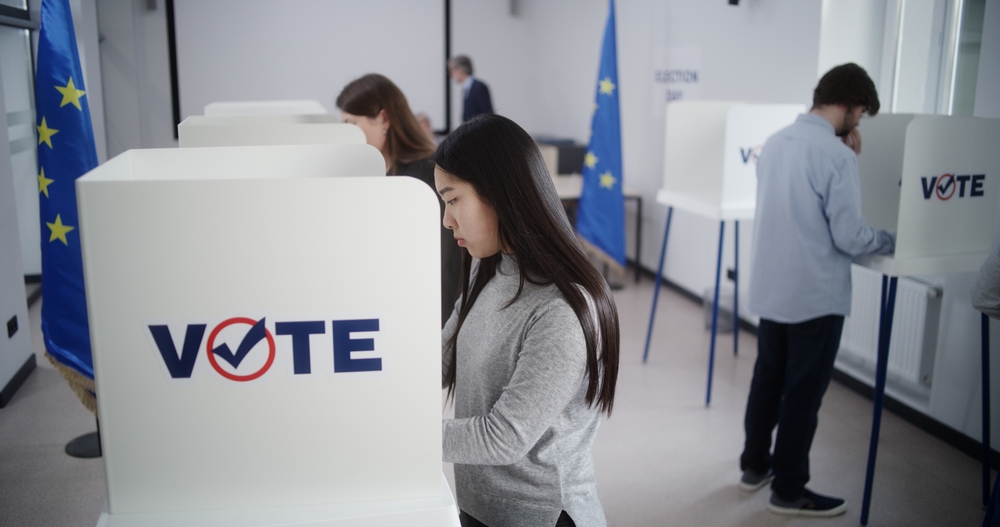
France: Donations Hidden From Public View
France provides one of the clearest examples of the transparency gap highlighted in the investigation. While the country does enforce strict limits on political donations and has an oversight authority responsible for monitoring campaign finances, the identities of donors are not made public.
According to the country’s political financing auditor, privacy concerns are the primary reason for this policy. The Commission Nationale des Comptes de Campagne et des Financements Politiques explained the reasoning in an email statement. “Information relating to the identity of a person making a financial donation for the benefit of a political party is likely to reveal their political opinions,” the authority said. “Therefore, subject to the confidentiality of their private life.”
France does impose several rules designed to limit potential abuses. Anonymous donations larger than 150 euros are banned and individual contributions to parties are capped at 7,500 euros per year. Donations above 150 euros must be made using traceable payment methods such as bank transfers, cheques, direct debit, or bank cards so that authorities can verify the transactions.
Despite these safeguards, the identities of donors remain hidden from the public unless they are revealed through leaks or voluntarily disclosed. According to the investigation, private donors contributed almost 46 million euros to 15 French political parties between 2019 and 2022, yet the individuals behind those contributions largely remain unknown to voters.
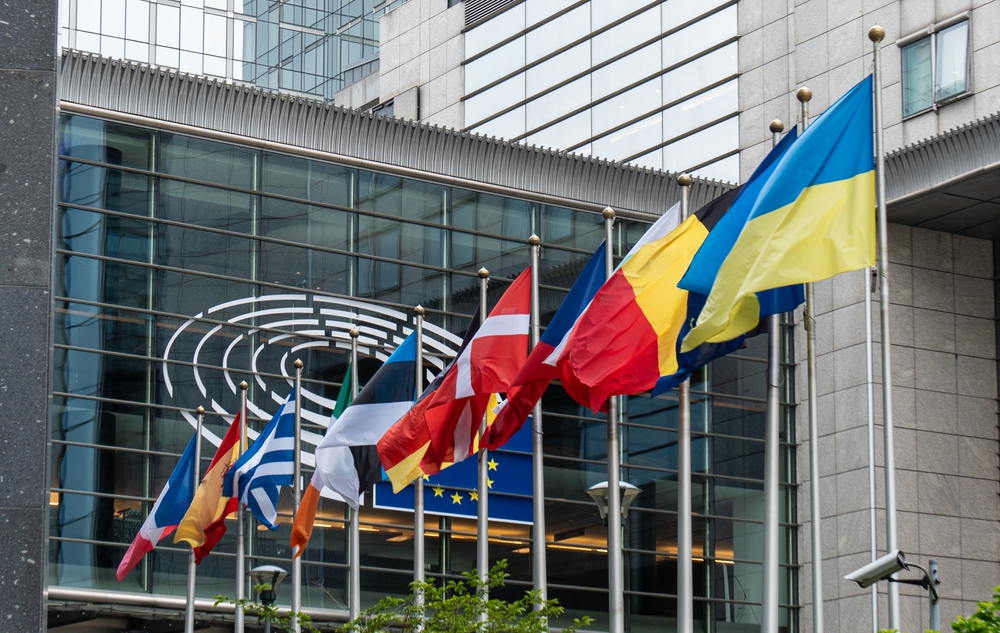
Spain and Germany: Partial Transparency
Spain and Germany occupy a middle ground between full transparency and complete anonymity. In Spain, political parties must report the identities of donors to the country’s court of auditors. However, the court is not required to publish this information, which means the public may still have limited visibility into who is financing political activity.
Spanish law requires parties to publicly disclose the names of donors only when contributions exceed 25,000 euros. According to the investigation, there have been no reported donations above that threshold since 2016. While this could mean that large donations have not occurred, it could also reflect the way donations are structured to remain below disclosure limits.
Germany uses a tiered system of disclosure thresholds. Donations under 10,000 euros can remain anonymous to the public. Contributions exceeding 35,000 euros must be reported immediately to the president of the Bundestag, Germany’s federal parliament.
These rules can leave a large portion of party funding without clearly identifiable sources. For example, the far right Alternative für Deutschland reported 6.4 million euros in private donations in 2022. However only 1.3 million euros of that amount came from donors whose identities were publicly known, leaving roughly 80 percent of the funding without a named source.
Corporate and Foreign Donations
Another major issue raised by the investigation is the role of corporate and foreign funding in political campaigns. Rules governing these types of donations vary widely across EU member states. In more than a dozen countries companies that have significant public sector or government contracts are still permitted to donate to political parties.
A 2021 report commissioned by the European Parliament found that countries such as Greece, Poland, and Spain allow such corporate contributions. Critics argue that this can create conflicts of interest if businesses financially support political parties that later make decisions affecting public contracts or regulatory policies.
Foreign donations present another challenge. While many EU countries ban financial contributions from outside their borders, several do not impose a full prohibition. According to the European Parliament report, Belgium, Denmark, Sweden, Luxembourg, and the Netherlands do not have outright bans on foreign political donations. Germany permits such donations up to 1,000 euros.
Casal Bértoa emphasized that the issue should be viewed in terms of democratic participation. “Foreign interests should not have an interest in the funding of national politics or elections,” he said. “People need to understand that funding is another way of participation, so if you legally cannot participate in an election you should not be allowed fund, it is very straightforward.”
Technology and the Future of Transparency
Many experts argue that modern technology makes greater transparency both practical and necessary. Financial systems today can track transactions almost instantly, and digital databases allow information to be published and updated quickly. Because of this, researchers say there are few technical barriers preventing governments from providing clearer information about political donations.
Several reforms have been suggested to improve oversight and reduce corruption risks. These include lowering the financial thresholds that trigger donor disclosure requirements, creating public online databases of party finances, and allowing citizens to access financial statements more easily. Some proposals also recommend aligning disclosure thresholds with average monthly income levels to prevent large donations from being split into smaller contributions to avoid reporting requirements.
Supporters of these reforms argue that transparent political financing strengthens democratic legitimacy. When citizens can clearly see who funds political parties, they are better able to evaluate potential influences on policy decisions.
The Bigger Question for European Democracy
The debate over political financing transparency arrives at a particularly important moment for the European Union. The upcoming European Parliament elections will determine the makeup of a legislature with 720 seats, and thousands of candidates from across the continent are competing for those positions.
At the same time, Europe is experiencing economic pressure from inflation, growing concerns about migration, and fears about disinformation and foreign interference in democratic processes. In this environment, questions about who funds political campaigns take on added importance.
For some observers, stronger transparency rules could help restore public trust in political institutions by showing voters exactly how parties are financed. Others continue to argue that donor privacy must be protected to prevent political intimidation or retaliation.
What the investigation makes clear is that across much of Europe the financial forces shaping politics remain only partially visible. As debates about democratic accountability continue, the question of how much voters should know about the money behind political power is unlikely to disappear anytime soon.
campaign finance Europe, democracy transparency, election funding, election transparency, EU elections, EU governance, EU member states, EU political parties, EU politics, European democracy, European Parliament elections, European political system, European Union, Follow the Money investigation, money in politics, political accountability, political donations, political donor disclosure, political funding transparency, political transparency Europe