
Your cart is currently empty!
People All Over the World Are Now Coming Out as ‘Symbiosexual’

Human attraction and identity are more diverse and fluid than ever. Traditional labels like “gay,” “straight,” and “bisexual” have long defined sexual orientation, but new identities are emerging. One of these challenges conventional understandings of desire—a pull not toward a single person, but to the energy between two people as a couple.
Contents
show
As more people identify outside traditional norms, understanding these evolving attractions is essential for fostering inclusivity. What does it mean to be drawn to the connection between others, and how is this reshaping our views on love and identity?
New Forms of Attraction: Symbiosexuality and Beyond
Recent studies highlight a new form of attraction: symbiosexuality. This describes an attraction to the collective energy of a couple’s relationship rather than to an individual. The concept was first identified in a study led by Dr. Sally W. Johnston at Seattle University, published in the Archives of Sexual Behavior. Her research examined how people can be drawn to the “energy, multidimensionality, and power” shared between two individuals in a committed relationship.
From The Pleasure Study, which involved 373 participants, 145 reported being attracted to the synergy within a couple. Instead of pursuing a one-to-one relationship, participants felt drawn to the emotional and sexual dynamics between couples. Symbiosexuality is especially common in queer and polyamorous communities but isn’t limited to them.
For example, one participant described an attraction to the “cohesiveness” of a couple’s connection, while another expressed a desire to be “in the middle” of a relationship. Symbiosexual individuals often describe themselves as extroverted, craving intimacy and attention, and are less prone to jealousy in relationships.
This form of attraction challenges traditional views on desire and sexuality, opening new conversations on how we perceive diverse experiences of love, especially in both monogamous and non-monogamous contexts.
Growing LGBTQ+ Identification Across Generations
Over the past decade, the number of U.S. adults identifying as LGBTQ+ has more than doubled. According to recent Gallup data, 7.6% of U.S. adults now identify as LGBTQ+, up from 3.5% in 2012. This increase is primarily driven by younger generations, especially Generation Z and millennials, who are more likely to identify outside traditional heterosexual norms than older generations.
More than one in five Gen Z adults (22.3%) identify as LGBTQ+, compared to nearly one in ten millennials. In contrast, less than 5% of Generation X and only 2% of baby boomers do the same. Bisexuality is the most common identity among these younger generations, particularly among women. Nearly 30% of Gen Z women identify as LGBTQ+, with bisexuality being predominant, while around 10.6% of Gen Z men identify as LGBTQ+.
These generational differences reflect growing societal acceptance and cultural shifts, allowing younger people to explore and express their identities more openly. This trend points to a future where diverse sexual orientations become increasingly normalized, reshaping social norms and expectations around identity and attraction.
Understanding Sexual Orientation and Gender Identity

Sexual orientation refers to who you’re attracted to and who you want to form relationships with. Common orientations include terms like gay, lesbian, straight, bisexual, and asexual.
It’s important to understand that sexual orientation is different from gender identity. Sexual orientation is about attraction—who you’re romantically or physically drawn to. Gender identity, on the other hand, is about who you are—whether you identify as male, female, nonbinary, or something else. For instance, being transgender (when your gender doesn’t align with your assigned sex at birth) is a gender identity, not a sexual orientation.
There are different ways people describe their sexual orientation:
- Straight: Attraction to someone of a different gender.
- Gay/Lesbian: Attraction to people of the same gender.
- Bisexual: Attraction to both men and women.
- Pansexual/Queer: Attraction to people of any gender identity.
- Asexual: Lack of sexual attraction to others.
- Questioning: People who are unsure about their sexual orientation.
Some folks don’t feel like any of these labels fit them, or they simply prefer not to use labels at all—and that’s totally fine. Everyone has the freedom to identify in a way that feels right to them.
Resilience and Challenges of LGBTQ+ Individuals
LGBTQ+ individuals face unique challenges that impact their mental and physical health. However, resilience plays a key role in reducing negative outcomes, especially among youth. Research from The Trevor Project shows that LGBTQ+ youth with high resilience have significantly lower risks of anxiety, depression, and suicide attempts. Youth with higher resilience have 59% lower odds of attempting suicide and 79% lower odds of experiencing recent depression compared to those with lower resilience.
Resilience, defined by the American Psychological Association as the ability to adapt well in adversity, is supported by factors like affirming family environments, supportive schools, and strong community connections. LGBTQ+ youth with affirming families and schools exhibit higher resilience, leading to lower rates of mental health struggles.
Despite their resilience, LGBTQ+ individuals still face discrimination, stigma, and violence, contributing to higher levels of anxiety and depression. The COVID-19 pandemic highlighted how LGBTQ+ adults demonstrated resilience through creative coping strategies, such as maintaining social connections and reevaluating life priorities. These experiences underscore the need for systemic changes to reduce the social barriers faced by the LGBTQ+ community.
Fostering resilience requires community support, affirmative policies, and inclusive environments. Advocacy for systemic change is essential so that LGBTQ+ individuals are empowered to thrive, not just survive.
Creating Inclusive and Affirmative Spaces
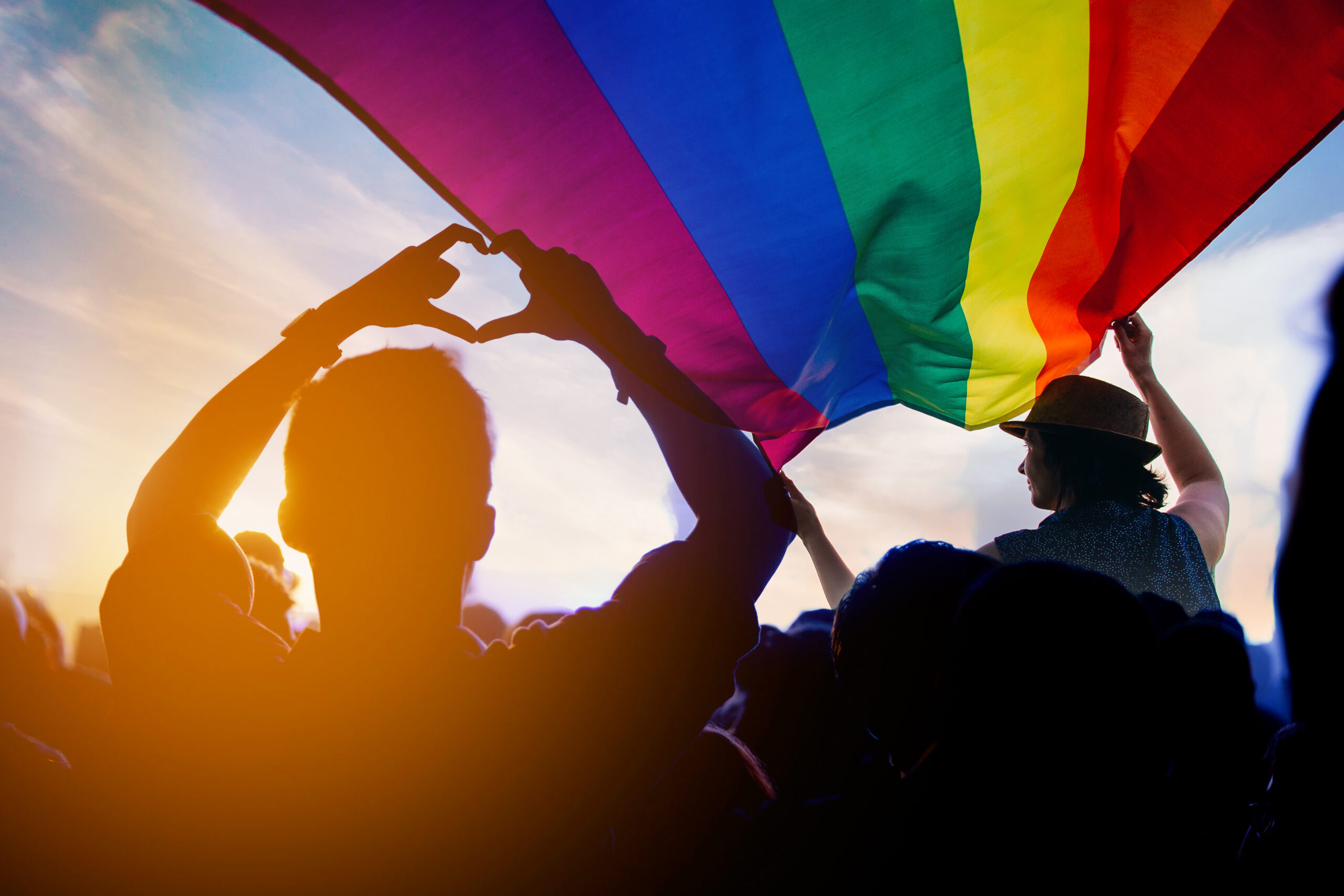
Inclusive spaces really matter for the well-being of LGBTQ+ individuals, especially young people. Whether it’s at school, at home, at work, or in the community, having a place where you feel safe and accepted can make a huge difference. In fact, just having one affirming space can lower the odds of LGBTQ+ youth attempting suicide by 35%. That’s a powerful impact.
Schools are one of the biggest game changers, with 62% of LGBTQ+ youth saying their school provides that kind of support. It’s a place where feeling accepted can significantly reduce the risk of suicide. But it’s not only about schools—homes, workplaces, and community events are also key. For transgender and nonbinary youth, being in spaces that affirm their identity is even more important, as it directly improves their mental health.
Beyond physical spaces, online platforms, community centers, and LGBTQ+ forums create crucial support systems. These spaces connect people, offer resources like counseling, and give them a sense of belonging, even when local support might not be available. That connection and solidarity build resilience and help with overall emotional well-being.
Making spaces inclusive is about more than just physical safety; it’s about showing up, challenging discrimination, and embracing all identities. Schools and workplaces can set the tone by having clear policies that protect LGBTQ+ rights, while mental health providers and community organizations can offer the kind of care that truly supports and celebrates LGBTQ+ experiences. When we do this, we create a world where everyone, no matter their identity, feels valued and supported.
Embracing Evolving Understandings of Attraction and Identity
As we continue to understand more about attraction and identity, it’s clear that everyone’s experience is a little different. Take something like “symbiosexual” attraction—it’s not just about being drawn to one person, but the energy and connection between a couple. It shows that attraction can be way more complex than we used to think. At the same time, more people—especially younger generations—are openly identifying as LGBTQ+, which is a great sign that society is becoming more accepting.
That said, it’s not all easy. LGBTQ+ individuals still deal with discrimination and mental health challenges. But the resilience of the community is inspiring, especially when they have supportive spaces where they can truly be themselves. It shows that with the right kind of support, we can create a world where everyone feels comfortable being who they are.
So, how do we get there? By creating spaces that welcome and affirm all kinds of identities, by building stronger communities, and by encouraging acceptance. If we do that, we’ll help LGBTQ+ individuals not just survive but thrive—and we’ll be moving toward a more inclusive and compassionate world for everyone.