
Your cart is currently empty!
People Noticed Something Strange About NASA’s New Earth Photo And There’s A Clear Explanation
A newly released image of Earth taken during NASA’s Artemis II mission has sparked huge discussion online, with many people stunned by just how different the planet looks compared to the iconic pictures most of us grew up seeing in classrooms, documentaries, textbooks, and online posts. For decades, the 1972 “Blue Marble” image has shaped the public imagination of what Earth looks like from space, with its deep ocean blues, crisp white cloud swirls, and striking clarity making it feel almost timeless. So when NASA shared a more recent image showing Earth looking softer, dimmer, and almost faded in comparison, it immediately sent people into speculation mode. Across social media, people began zooming in, comparing side-by-side images, and asking whether they were looking at a technical issue, a visual illusion, or something more serious.
Contents
show
The reaction has been so strong because people do not just see these kinds of images as scientific photographs. They see them as emotional symbols of home. A picture of Earth from space has a way of making people stop scrolling and stare for a few extra seconds, because it carries a kind of quiet weight that most images do not. It makes people think about distance, fragility, beauty, and the strange fact that everything we know exists on that one glowing sphere. That is why so many people were unsettled when the Artemis II image did not match the clean and familiar version of Earth they expected. But the reason behind that difference is not only simple, it is actually far more fascinating than most of the theories being thrown around online.
Why the Artemis II Earth photo looks so different
The biggest reason the Artemis II image looks so different is because it was taken under completely different lighting conditions than the famous Apollo-era Earth photographs. The older “Blue Marble” image showed a fully sunlit Earth in conditions that naturally created a bright, vibrant, and highly detailed full-disk portrait of the planet. The newer Artemis II image, however, captures Earth in a much more unusual moment, where much of the side visible to the astronauts was in darkness or very close to nighttime. That alone dramatically changes how the planet appears, because the camera is no longer capturing a brightly lit daytime world, but a much subtler and more difficult scene where atmosphere, reflected light, and faint illumination become far more important.
A photographer, Javier de la Cuadra, helped explain the difference in a way that quickly resonated with people online. He said, “Why does it look more washed out than the one from ’72? Because it turns out that on the side of the Earth we see in that photo, it’s nighttime; if you zoom in, you can see the glow of nighttime lighting.” That observation is key because it changes the entire way people should look at the image. Instead of expecting the kind of bold contrast seen in older photos, what viewers are actually seeing is a nighttime or near-night Earth being pulled into visibility through very sensitive imaging. It is not that the planet looks “worse,” but that the image is capturing an entirely different visual reality.
He went on to explain the technical side of the image in a way that made it even more impressive, saying, “But how, if it’s nighttime, can it look like daytime? Because the photo was taken with a super high ISO of 51200! ISO is the sensor’s sensitivity to light. With most digital cameras, at ISOs over 6400, the noise is so much that the photo looks practically unreadable.” That means the camera had to be pushed into extreme sensitivity just to bring out the details visible in the frame. Once people understand that, the image stops looking dull and starts looking extraordinary, because it becomes clear that the photograph is revealing a side of Earth that is rarely seen in such detail.

The role of camera technology and extreme conditions
Taking a photograph of Earth from deep space is nothing like taking a clear daytime image from a spacecraft in a more stable environment. The Orion spacecraft is operating far beyond low Earth orbit, and as it travels, the relationship between the Sun, Earth, and spacecraft constantly changes. That means the crew is not simply pointing a camera at a brightly lit object and pressing a button. They are working in an environment where light conditions can shift dramatically, where reflections and angles matter enormously, and where every image is affected by the technical limitations and challenges of shooting through spacecraft windows while moving through space.
This is where the high ISO setting becomes such an important part of the conversation. In photography, raising ISO allows the camera sensor to become more sensitive to available light, which is essential when photographing something dim or partially unlit. But this comes with trade-offs. Higher ISO often means lower image purity, softer details, and less of the rich contrast people associate with polished planetary imagery. In everyday terms, it is a bit like turning up brightness in a dark room. You can see more, but what you see may not have the same clean definition you would get under perfect daylight conditions.
That is exactly why the Artemis II image should not be judged against older photographs as if they were taken under the same circumstances. They were not. The 1972 image became iconic partly because the conditions were ideal for producing a bold and clean portrait. The Artemis II image is remarkable for the opposite reason. It manages to capture a low-light, technically difficult, atmospheric view of Earth from enormous distance, preserving subtle details that would otherwise be invisible. Rather than being visually weaker, it is in many ways more demanding, more delicate, and more revealing.
One of the most interesting things about the online reaction is that many people initially focused on what the image seemed to lack instead of what it was actually showing. At first glance, some viewers saw a softer and paler Earth and assumed the image was somehow less impressive than the famous planetary portraits of the past. But once people began looking more carefully, it became obvious that the photo was capturing features that are rarely visible in such a haunting and atmospheric way. Instead of presenting Earth as a brightly lit icon, the image presents it as something more fragile, more luminous, and more alive.
Javier de la Cuadra pointed out what may be the most extraordinary detail in the entire frame when he said, “The most magical thing about this photo — even more than the northern lights — is how you can see the sunlight, which is on the other side of the Earth, illuminating our atmosphere.” That thin glow around the edge of the planet is not just visually beautiful. It is scientifically and emotionally powerful because it reveals the atmosphere itself, the incredibly thin layer that protects life and makes Earth habitable. In many ways, that glowing edge says more about our planet than a bright daytime photo ever could.
He then added, “That’s pure magic, because that atmosphere has a composition that’s perfect down to the millimeter to allow life, as we know it, to be possible. This photo is a precious gift to humanity.” That line helps explain why the image has resonated with so many people. It is not just a space photo. It is a reminder of how delicate and improbable Earth really is. The more washed-out look that confused people at first is actually part of what gives the image its emotional power, because it makes the atmosphere, the auroras, the faint city lights, and the planet’s fragile glow feel almost unreal.
Astronauts describe a moment that stopped them completely
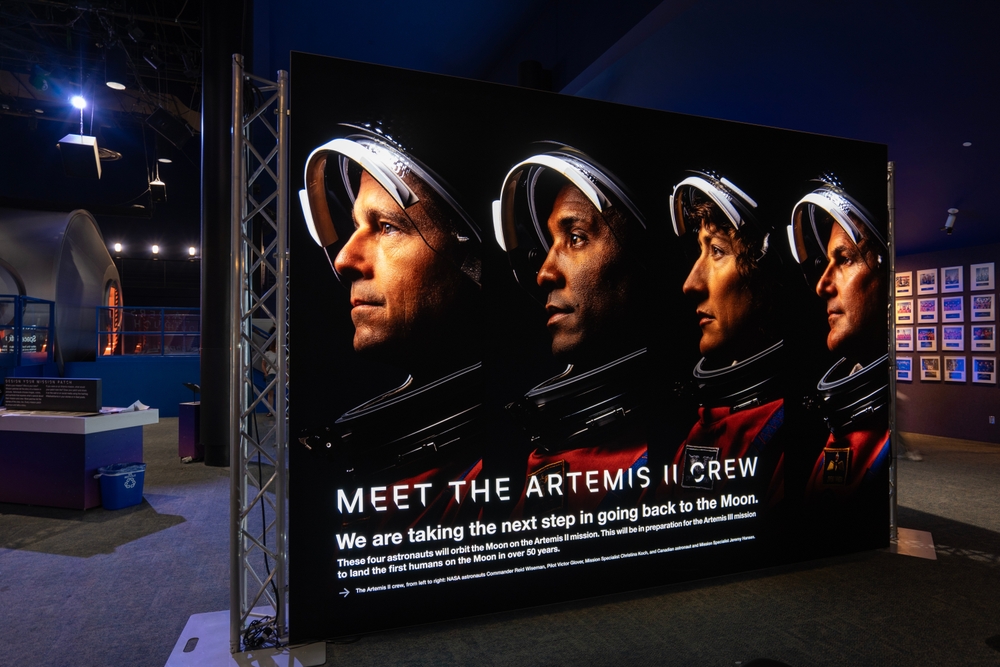
For the Artemis II crew, this image was not just another photograph taken during a mission checklist. It came from a moment that appears to have genuinely overwhelmed all four astronauts on board. There is a difference between seeing a beautiful image later on a screen and actually looking at Earth from deep space with your own eyes, knowing that the entire human world is hanging there in the distance. That is the kind of experience astronauts have often struggled to describe over the years, because it tends to move beyond science and into something far more emotional and personal.
Commander Reid Wiseman gave one of the most striking descriptions of that moment, saying, “There was a moment about an hour ago where Mission Control Houston reoriented our spacecraft as the sun was setting behind Earth, and I don’t know what we all expected to see in that moment. It was the most spectacular moment, and it paused all four of us in our tracks.” That quote says a lot because astronauts are among the most highly trained people on the planet, and yet even they can be reduced to silence by what they see when looking back at Earth from that kind of distance. It suggests that no amount of training, simulation, or scientific understanding can fully prepare someone for that view.
Christina Koch added her own emotional reflection on the experience, saying, “There’s nothing that prepares you for the breathtaking aspect of seeing your home planet both lit up bright as day and also the moon glow on it at night with the beautiful beam of the sunset.” That line captures something people on Earth can only really imagine. The image itself is powerful enough, but hearing how the astronauts describe it adds another layer entirely. It turns the photograph from a viral image into evidence of a moment so visually and emotionally intense that even the people who lived it seem to struggle to fully contain it in words.
The overview effect and a shift in perspective
The emotional response from the Artemis II crew fits into something that has been reported by astronauts for decades and has become known as the “overview effect.” This is the profound psychological shift that often happens when people see Earth from space and suddenly understand, not just intellectually but emotionally, how small, borderless, and interconnected human life really is. It is one thing to hear someone say that we all share the same planet. It is another thing entirely to see the whole world floating in darkness and realise there are no visible borders, no political lines, and no signs of the divisions that dominate life down here.
Victor Glover captured that perspective in a way that has deeply resonated with people following the mission. He said, “Trust us, you look amazing, you look beautiful. And from up here you also look like one thing. Homo sapiens, all of us, no matter where you’re from or what you look like, we’re all one people.” That quote cuts through a lot of noise because it strips away all the usual categories people use to divide themselves. Seen from that far away, the planet does not look like a collection of rival nations or competing identities. It simply looks like home.
That same feeling was echoed by David Melendrez, who explained why these images matter so much beyond their scientific value. He said, “When you see all the strife and the things that are going on in the world today, I think it’s really important to see us as a whole. You look at that picture – there’s no borders in that picture, it’s just all of us. I think that’s one of the biggest things we can take out of this, is reminding everybody, everybody, that that’s our home. And we all have to share it.” It may sound simple, but that is exactly why images like this continue to go viral. They remind people of something they know deep down but rarely feel this clearly.
Why people are comparing it to the 1972 image
The reason so many people immediately compared the Artemis II photo to the 1972 “Blue Marble” image is because that older photograph has become much more than just a scientific image. It has become one of the most culturally important photographs ever taken. It is the version of Earth that has lived in the public imagination for decades, and because of that, people often unconsciously assume that Earth should always look exactly like that when photographed from space.
But that assumption creates a false standard. The Apollo 17 image was captured under highly favorable visual conditions, with Earth fully illuminated and positioned in a way that produced a bright, balanced, and visually stunning portrait. The Artemis II image, by contrast, is not trying to recreate that exact moment. It captures a different angle, different light, and a different emotional atmosphere entirely. That does not make it inferior. If anything, it makes it more honest about how variable and dynamic Earth really looks depending on when and how it is seen.
What makes the comparison so interesting is that it reveals how attached people are to a familiar version of home. The newer image feels strange to some viewers not because Earth has changed into something unrecognizable, but because the image disrupts the polished mental picture people have carried for years. In that sense, the Artemis II photo is doing something powerful. It is reminding people that Earth is not a static symbol or a fixed wallpaper image. It is a living planet seen through shifting light, perspective, and human emotion.
A mission that is about more than just images
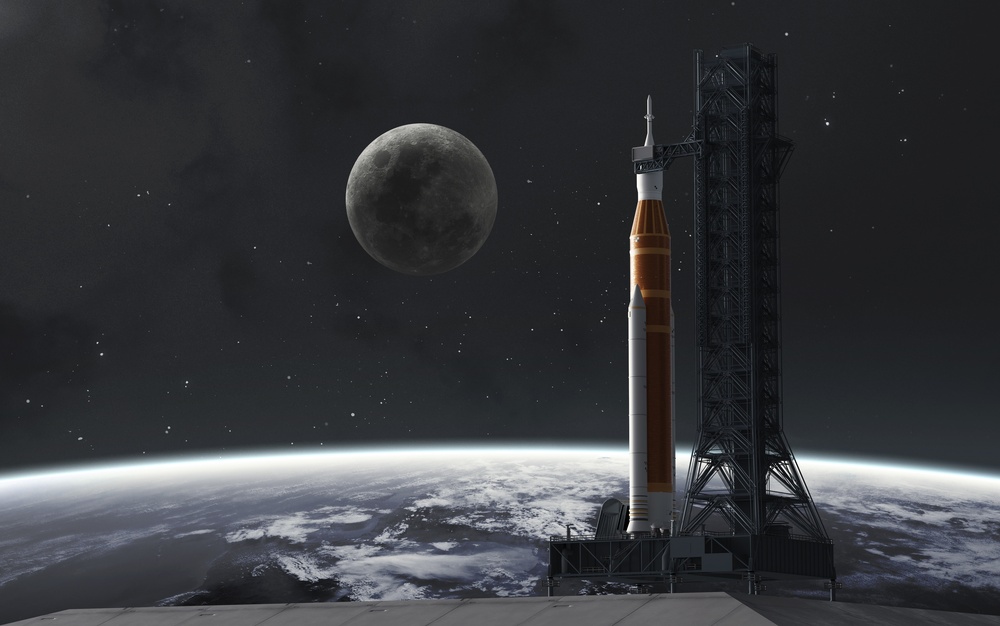
The Artemis II mission is significant for far more reasons than this one viral image, although the photo has certainly helped bring public attention back to human space exploration in a major way. This mission marks the first time in more than 50 years that humans have traveled beyond low Earth orbit and headed toward the Moon, making it one of the most important crewed space missions in modern history. Its purpose is not just symbolic either. Artemis II is testing the systems, hardware, and human performance needed for future lunar missions and, eventually, crewed journeys to Mars.
That makes every part of the mission meaningful, including the imagery being captured along the way. The Orion spacecraft is equipped with 32 cameras and devices, including 15 mounted systems and 17 handheld cameras used by the astronauts themselves. That means the mission is documenting not just engineering milestones, but also moments of awe, perspective, and visual discovery in real time. NASA understands very well that public imagination is often shaped by what people can see, and these images are helping connect a new generation to space exploration in a deeply personal way.
There is also something especially striking about the fact that some of the most talked-about images from the mission are being captured with technology that feels familiar to ordinary people. The fact that modern devices, including smartphones, are part of the visual story makes the mission feel less distant and more immediate. It gives the public a strange and powerful sense that while this is one of humanity’s most advanced exploration efforts, it is still being documented in ways that feel recognisable and human.
The reason this image has exploded online is not just because people love space photos. It is because this particular image arrived at a moment when many people seem hungry for perspective, whether they realise it or not. In a world shaped by political tension, climate anxiety, economic pressure, war, and nonstop digital noise, an image of Earth from deep space can hit people in a surprisingly emotional way. It strips everything back. It removes the clutter. It offers a rare visual reminder that all the complexity of human life exists on one fragile world suspended in darkness.
That is why the softer, more fragile-looking appearance of Earth in the Artemis II image may have affected people more strongly than they expected. It did not just look different. It felt different. It made some viewers uneasy, others emotional, and many simply curious. But that reaction says as much about the moment we are living in as it does about the image itself. When people look at Earth from far away, they often end up confronting their own fears, hopes, and sense of belonging.
In that way, the viral reaction is understandable. People were not only asking why the image looked washed out. They were also responding to what it seemed to symbolise. A quieter, dimmer, more delicate Earth has a way of making people think more deeply than a glossy, familiar image ever could. That may be why this photograph has stayed in people’s minds long after the first wave of online comparison posts.
What this image ultimately reminds us
At its core, the Artemis II Earth image is a reminder that perspective changes everything. The planet itself has not become less beautiful or somehow unrecognisable. What changed was the light, the angle, the timing, and the technical conditions under which it was captured. Yet that small shift was enough to make millions of people pause and look again, which says a lot about how rarely we truly examine the familiar things that surround us.
What makes this image so powerful is not just the science behind it, but the emotional space it opens up. It captures exploration, vulnerability, technology, wonder, and reflection all at once. It is a photo that asks people to slow down for a second and remember that Earth is not just a place where things happen. It is the only known home any of us have ever had.
And perhaps that is the real reason this image has resonated so widely. It did not give people the Earth they expected to see. It gave them one that felt softer, stranger, and somehow more real. And in doing that, it reminded a lot of people of something easy to forget when life gets noisy: from far enough away, home is still breathtaking.