
Your cart is currently empty!
Photographer Sparks Outrage After Painting Elephant Bright Pink Before Its Death
The image stopped people mid-scroll. A towering elephant stood completely covered in bright pink, posed against the ornate backdrop of Rajasthan, its skin transformed into something that looked almost unreal. At first glance, it felt like a piece of bold, surreal art. But as the image spread across social media, fascination quickly turned into discomfort. Questions began to surface. Why was the elephant painted? Was it safe? And most importantly, should something like this ever be done at all?
Contents
show
What began as a visually striking photoshoot soon evolved into a global controversy that refused to fade. When news broke that the elephant, named Chanchal, had died on February 4, 2026 at the age of 67, the conversation intensified dramatically. Even though officials stated the animal died of natural causes and there was no evidence linking the photoshoot to its death, the timing alone was enough to fuel outrage. At the center of the storm stood photographer Julia Buruleva, now defending not only her creative choices but also the ethics behind them.
🇮🇳🐘🎨Elle PEINT un éléphant entièrement en rose pour un shooting artistique : l’animal DÉCÈDE quelques semaines après la séance.
— Cultination (@Cultination1) April 7, 2026
À Jaipur, la photographe Julia Buruleva a COLORÉ un éléphant entièrement en ROSE lors d’un shooting artistique, s’inspirant des traditions locales.… pic.twitter.com/ioDWBPeDIf
The Photos That Sparked Global Outrage
When Julia Buruleva first shared the images in December 2025, the reaction was mixed but relatively contained. The photos showed a fully pink-painted elephant alongside a model, set against traditional Rajasthani architecture. The visuals were striking and deliberately theatrical, designed to stand out. It was only months later, when the images resurfaced and went viral in February 2026, that the tone of the conversation shifted.
The unusual nature of the image played a huge role in how people responded. For many viewers, seeing an elephant covered in a single, bold color felt unnatural and unsettling. The emotional reaction was immediate and strong, especially among those who viewed the animal as being used purely for aesthetic purposes. Questions about animal welfare quickly followed, with many asking whether the elephant had experienced stress or harm during the process.
The situation escalated further when news of Chanchal’s death became public. Even though there was no proven connection between the photoshoot and the animal’s passing, the proximity in timing created suspicion. Online discussions became increasingly heated, with some users drawing conclusions before all the facts were fully understood.
This combination of striking visuals, emotional reactions, and unfortunate timing created the perfect conditions for a viral controversy. What may have started as an artistic experiment quickly turned into a global debate about ethics, responsibility, and the treatment of animals.
🐘Cette éléphante, peinte en rose pour un shooting photo, est morte quatre mois plus tard. pic.twitter.com/SnujxANYOT
— Vakita (@vakitamedia) April 9, 2026
Who Was Chanchal? Understanding the Elephant at the Center
Chanchal was an elderly elephant who had been living under human care for many years. According to the owner, Shadik Khan, the animal was around 65 to 67 years old at the time of its death. This detail became important as discussions around the photoshoot intensified, because it helped frame the broader context of the elephant’s health and lifespan.
Officials confirmed that the elephant died of natural causes associated with old age. There has been no evidence presented that links the photoshoot to Chanchal’s death in any direct or indirect way. Despite this, many people found it difficult to separate the emotional weight of the images from the reality of the situation.
The emotional response is understandable. When an animal becomes the focal point of a viral story, especially one involving controversy, people naturally feel protective. The timeline alone led many to assume the worst, even in the absence of proof. This highlights how powerful perception can be, particularly in the age of social media.
At the same time, it also raises questions about how quickly conclusions are formed and shared online. In situations like this, the truth can often become secondary to the narrative that gains traction first.
The Photographer’s Vision: Art Meets Cultural Inspiration
Julia Buruleva has consistently defended her work, explaining that the photoshoot was deeply inspired by the culture and visual identity of Rajasthan. She described how the idea came to her during a six-week stay in Jaipur, where she was surrounded by vibrant colors, intricate architecture, and symbolic imagery at every turn.
“It was probably worth coming to India just for this shoot.” she said, reflecting on how strongly the experience influenced her. She explained that after just one week, her mind was already overwhelmed with the visual richness of the city, which ultimately sparked the concept. “After the first week, when my brain was already overloaded with all the colours and images of the city, this idea appeared: a pink elephant against classic Rajasthani gates.”
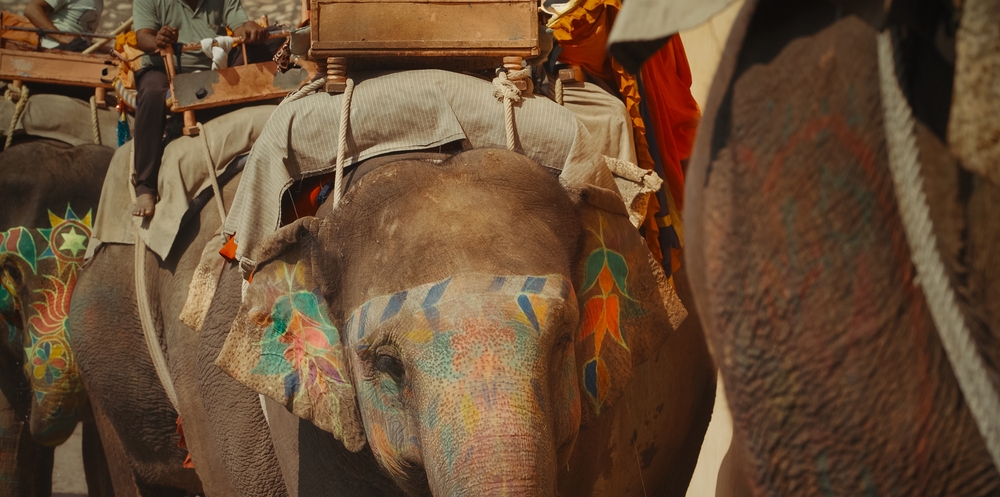
She also emphasized the cultural significance of elephants in the region. “Elephants are everywhere there – streets, ornaments, architecture,” she said. “Practically the main symbol of Rajasthan. I just couldn’t pass by without including one.” She pointed out that elephants are often decorated during festivals and celebrations, sometimes with bright colors and patterns, which influenced her artistic direction. “They’re often decorated for festivals and celebrations – locals paint them in all sorts of colours. I decided on one solid bright pink elephant, the most popular colour in Rajasthan.”
However, while her explanation provides cultural context, critics argue that there is a difference between traditional practices and staged artistic projects. The debate continues over whether cultural inspiration justifies the choices made during the shoot.
What Actually Happened During the Shoot?
According to Buruleva, organizing the photoshoot was a complex and demanding process. She described visiting several elephant farms before finding one willing to cooperate. “At the farm with the most reasonable manager, I went four times to show I was serious,” she explained, highlighting the effort involved in bringing her vision to life.
She also described the logistical challenges of finding a suitable location and model. The shoot eventually took place at an abandoned Hindu temple, after she found a model who was willing to participate. The preparation process included painting both the model and the elephant in the same bright pink color to create a unified visual effect.
For those concerned about the animal’s safety, Buruleva addressed the issue directly. “For anyone worried about the elephant – we used organic, locally-made paint, the same kind locals use for festivals so it was absolutely safe for the animal.” She further stated that the paint was applied for a very short period and was easily washable.
The elephant’s owner supported this account, stating that the process lasted around 10 minutes and that the color was washed off immediately afterward. The powder used was described as temporary and non-staining. Buruleva also insisted that the elephant was calm throughout. “The entire session was brief and conducted under the supervision of the elephant’s handler, who is responsible for its daily care and well-being.”
The Internet Reacts: Outrage, Misinformation, and Debate
As the images spread across social media, reactions became increasingly polarized. Many users expressed anger, accusing the photographer of exploiting the animal for artistic gain. Others focused on the broader issue of using animals in staged environments, arguing that even if no physical harm occurred, the situation itself was ethically questionable.
At the same time, a number of people came to Buruleva’s defense. Supporters argued that the paint used was safe and culturally relevant, and that the elephant’s owner had given full consent. They also pointed out that elephants in the region are often part of ceremonies and public life, which adds complexity to the discussion.
Buruleva addressed the backlash directly, expressing frustration over what she described as misinformation. “There’s been a lot of misinformation spreading about this project with the Pink Elephant,” she said. “I don’t know who started it, but from what I’ve been told, the elephant passed away recently due to old age and this is sad, but the photoshoot happened more than FOUR months earlier and had nothing to do with it.”
She urged people to be more careful before sharing claims online. “Please check your sources before sharing false information!” Her response highlights a key issue in viral controversies, where narratives can spread quickly regardless of their accuracy.
Authorities Step In: Investigation Launched
As the controversy grew, authorities in Rajasthan took notice and launched an investigation into the photoshoot. Their goal is to determine whether proper permissions were obtained and whether animal welfare regulations were followed during the process.
This step reflects the seriousness of the concerns raised by both the public and animal rights organizations. Even in cases where no harm is proven, the use of animals in media and artistic projects is subject to legal and ethical scrutiny.
The investigation also underscores the need for clear guidelines and enforcement. Situations like this often exist in gray areas, where cultural practices, artistic expression, and animal welfare intersect in complicated ways.
Animal rights advocates have used the incident to call for stricter regulations, arguing that clearer boundaries are necessary to prevent potential harm and ensure accountability.
A Wider Question: Where Do We Draw the Line?
The pink elephant controversy is about more than just one photoshoot. It raises broader questions about how animals are treated in the context of art, culture, and media. These questions are not easily answered, which is why the debate continues to resonate with so many people.
One of the central issues is the balance between artistic freedom and ethical responsibility. While artists often push boundaries to create impactful work, the involvement of animals introduces a different level of consideration. The question becomes not just what is possible, but what is appropriate.
Cultural context also plays a significant role. Practices that are normalized in one region may be viewed differently by a global audience. This can lead to misunderstandings, especially when images are shared without explanation or context.
Ultimately, the situation highlights the importance of thoughtful discussion. Rather than rushing to judgment, it encourages a deeper examination of how we define harm, responsibility, and respect in a rapidly connected world.
A Story That Stays With Us
The image of a bright pink elephant is not easily forgotten. It captures attention instantly, but it also leaves behind a trail of questions that are far more complex than the image itself.
On one side is an artist who insists her work was safe, culturally inspired, and misunderstood. On the other is a global audience grappling with concerns about animal welfare and ethical boundaries. Both perspectives reveal something important about how we interpret and respond to what we see.
In the end, this story serves as a reminder of the power of images and the responsibility that comes with creating them. It also highlights the need for careful thinking in an age where information spreads rapidly and emotions can shape narratives before facts are fully understood.
The real takeaway may not be about choosing sides, but about asking better questions. Questions that challenge assumptions, encourage understanding, and help us navigate the complex relationship between creativity and compassion.