
Your cart is currently empty!
When These Plumbers Discovered Their Client Was a Holocaust Survivor, the Bill They Handed Her Left Her in Tears

Most home repair visits follow a predictable script: a problem is assessed, the work is done, and a bill is paid. Yet, a recent service call in the city of Haifa broke this routine when two brothers walked into the home of a 95-year-old woman to fix a burst pipe. What began as a standard, noisy repair job quietly transformed into a profound exchange of history and humanity, proving that sometimes the most meaningful connections happen when we least expect them.
Contents
show
An Unexpected Act of Kindness in Haifa
In the northern port city of Haifa, what began as a standard emergency call for a burst pipe evolved into a powerful display of compassion. Brothers Simon and Salim Matari arrived at the residence of 95-year-old Rosa Meir to address a severe plumbing issue. As Simon attended to the water blast, Salim struck up a conversation with the homeowner, uncovering a history that shifted the brothers’ perspective entirely. During their exchange, Meir revealed that she was a survivor of the Holocaust.
The revelation resonated deeply with the brothers. Simon later recounted to Israel’s Channel 12 News that Meir’s life story touched his heart, leading to an immediate decision that they could not accept payment from her. The bill for the emergency repairs and labor totaled 1,000 New Israeli Shekels, approximately $285. However, rather than presenting Meir with the invoice, the Matari brothers handed her a receipt with a balance of “0 shekels.”
On the document, they penned a handwritten note honoring her resilience: “Holocaust survivor, may you have health until 120.” This specific number is significant in Jewish tradition, representing the lifespan of Moses and serving as a traditional blessing for a long life. The brothers also promised that if she ever required assistance in the future, they would return to fix her plumbing at no cost. Meir expressed that the gesture was “moving and uplifting,” noting that the brothers had genuinely surprised her with their generosity.
A Message of Solidarity and Ongoing Support

Upon completing the repairs, the brothers presented Meir with an invoice that was far from ordinary. Rather than listing the costs for parts and labor, the document featured a handwritten note explicitly acknowledging her history. The message read, “Holocaust survivor, may you have health until 120,” a phrasing that mirrors a traditional Jewish blessing for longevity. Besides the total amount due, the plumbers simply wrote “0 shekels.”
This generosity extended beyond a single waived fee. The Matari brothers reportedly informed Meir that should she require plumbing assistance in the future, they would return to provide their services at no cost. This open-ended pledge of support turned a business transaction into a lasting commitment to her well-being.
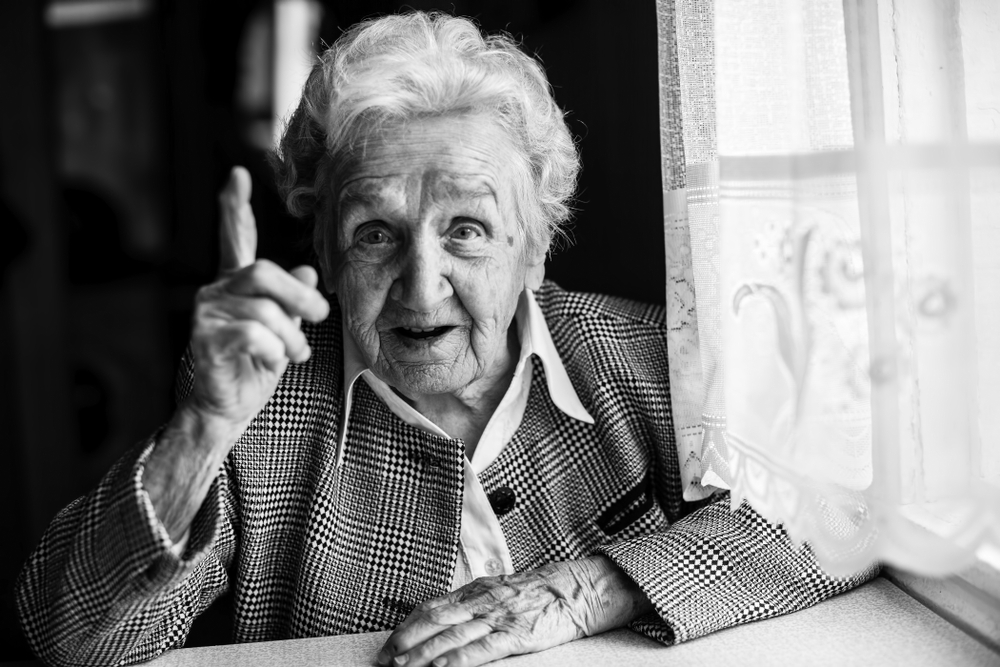
The gesture left a profound impact on the homeowner. Meir expressed that the brothers “really surprised” her, describing the encounter as “moving and uplifting.” According to reports, the unexpected kindness from strangers who took the time to honor her past moved the nonagenarian to tears. This reaction underscores how a simple act of service, when coupled with genuine empathy, can resonate deeply with those who have endured significant historical trauma.
A Beacon of Hope Amidst Rising Tensions

The brothers’ visit to Meir’s home arrived during a particularly volatile week for relations between Jewish and Arab citizens. Just days prior, thousands of Arab-Israelis staged a general strike in the north to protest a sharp rise in local violence. The demonstrations in Majd al-Krum drew a crowd of over 20,000 people following a deadly brawl involving knives and guns that left three men, including two brothers, dead.
For many in the Arab sector, which represents roughly 20 percent of the population, this violence was not an isolated incident but a symptom of systemic neglect. Residents have long argued that law enforcement ignores crime within their neighborhoods, leaving them vulnerable. Official statistics seemed to support these concerns; police reported over 70 killings in Arab communities that year, a figure nearly double that of previous years.
The unrest rippled all the way to the Knesset. Thirteen newly elected Arab members of Parliament chose to skip their own swearing-in ceremonies to stand with the strikers. While Prime Minister Benjamin Netanyahu released a statement condemning the recent deaths and promising more resources for minority protection, the atmosphere remained heavy with distrust and frustration. It was against this backdrop of national friction that Simon and Salim walked into Rosa’s home and chose connection over division.
A Gesture Rooted in Respect

The phrasing the brothers chose for their handwritten note reveals a level of cultural fluency that often goes unnoticed in broader conflict narratives. Wishing someone health “until 120” is a specific Jewish blessing, referencing the biblical age of Moses. By using these words, Simon and Salim offered more than just free labor; they extended a gesture of deep familiarity and respect for Rosa’s heritage.
Simon later explained that hearing Rosa’s history simply “touched [his] heart,” a personal sentiment that immediately overrode business concerns. In the plumbing trade, emergency calls for burst pipes are standard income, yet the brothers viewed this specific job differently. They treated Rosa’s vulnerability not as a business opportunity, but as a reason for protection.
This interaction highlights a quiet reality often obscured by political headlines: the daily, shared existence of diverse communities. By explicitly writing “Holocaust survivor” on the invoice and using a traditional blessing, the Matari brothers acknowledged Rosa’s past and honored her age. Their decision was driven by a moral compass that prioritized the dignity of an elderly neighbor over the profit of a day’s work.
Small Acts, Big Impact

The story of Simon, Salim, and Rosa reminds us that we have more power than we think. In a world that often feels angry and divided, it is easy to believe that small acts of kindness don’t matter. But for Rosa, that waived fee meant everything. It was not just about saving money; it was about feeling seen and cared for by her neighbors during a difficult week.
Simon and Salim did not set out to make a political statement. They simply went to work, listened to a customer, and made a choice to be generous. They saw a 95-year-old woman who had survived the unthinkable, and they decided to make her life a little easier. It serves as a gentle reminder that we don’t need to fix the entire world to fix someone’s bad day.
We do not need to be professional tradesmen to follow their lead. Every day offers a chance to soften the edges of a hard world for someone else. It might be listening to a stranger’s story, helping a neighbor with a heavy load, or simply being patient when things go wrong. The brothers chose to lose money to gain a connection. That is a trade anyone can make. When we choose to be kind, especially when it costs us something, we remind each other that we are all in this together.