
Your cart is currently empty!
Scientists Solve a 200-Year-Old Volcanic Mystery That Turned the Sun Blue and Triggered Famines Across the World
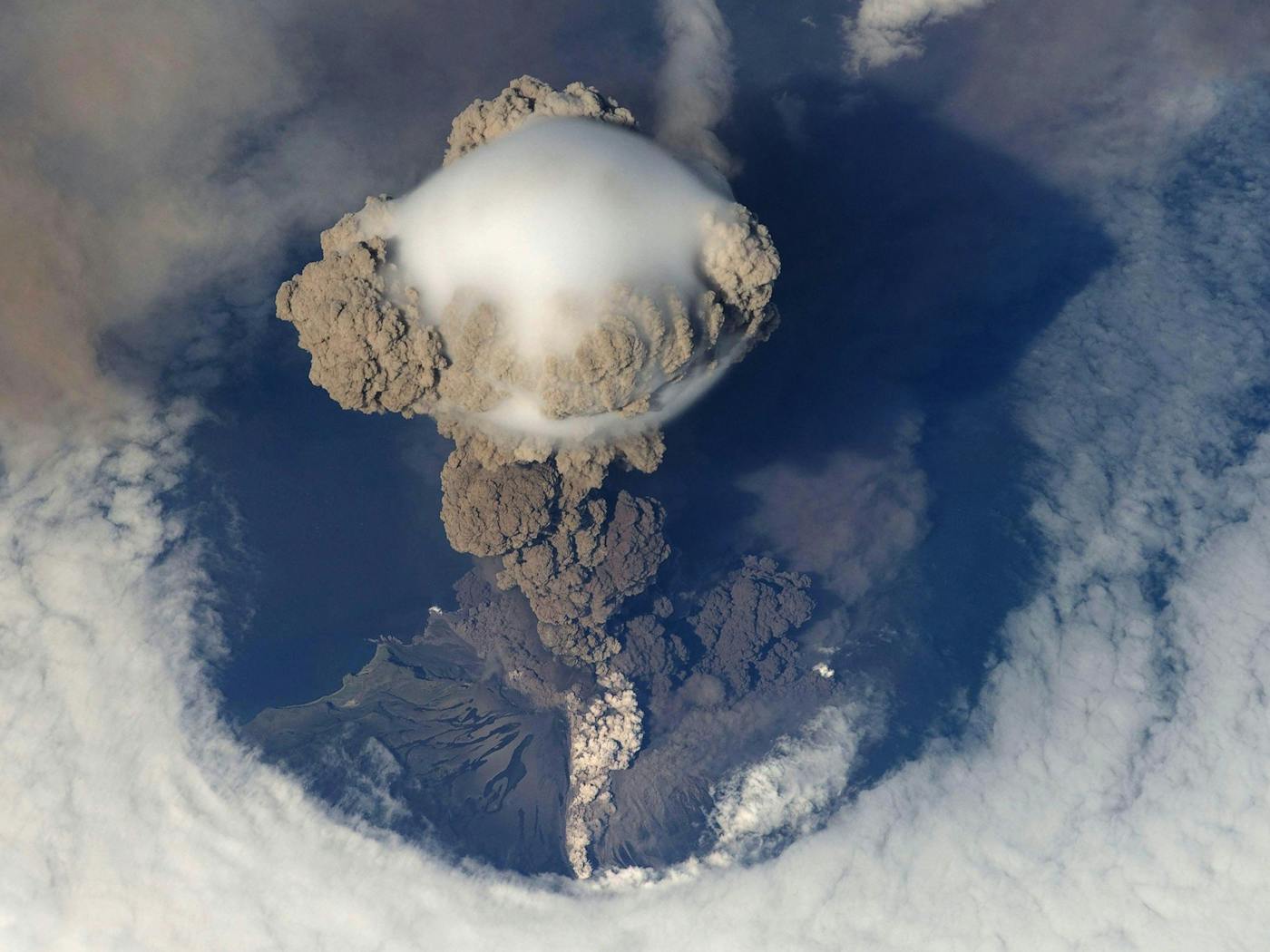
Something was wrong with the summer of 1831. Across the Northern Hemisphere, people looked up and saw a sun that had changed color. Blue. Purple. Green. Not at sunset, not through cloud cover, but in the middle of the day. Crops that should have grown did not. Temperatures dropped in ways that made summer feel like winter. Famines swept through India and Japan. Millions went hungry. And nobody, at the time, could fully explain why.
Contents
show
Two centuries later, a team of scientists finally has an answer, and it came from one of the most remote, fog-shrouded, rarely visited islands on Earth.
A Composer, a Cold Summer, and a Clue Nobody Followed
Felix Mendelssohn spent part of 1831 traveling through the Alps. He was a young composer at the height of his powers, moving between Italy and Germany with his notebooks and his observations. What he recorded that summer had nothing to do with music.
Writing from the Alps during what should have been the warmest months of the year, Mendelssohn described conditions that alarmed him. “It is as cold as in winter,” he wrote, “there is already deep snow on the nearest hills.”
He was not alone in noticing. Across Europe and further east, people reported the same bleakness: gray skies, failing crops, weather that refused to behave like summer. And those reports of a sun that appeared in colors it should never appear in were filed by credible observers in multiple countries, describing the same phenomenon independently of each other.
Scientists who later pieced this together knew what it meant. A volcanic eruption, large enough to push millions of tons of sulfur gas into the upper atmosphere, had scattered sunlight in ways that changed how it reached Earth’s surface. When enough sulfur aerosol hangs in the stratosphere, the sun stops looking like the sun. Temperatures fall. Rain patterns shift. Harvests fail.
A volcano had done this. Exactly which one, however, would remain an open question for nearly two hundred years.
Nearly Two Centuries Without an Answer
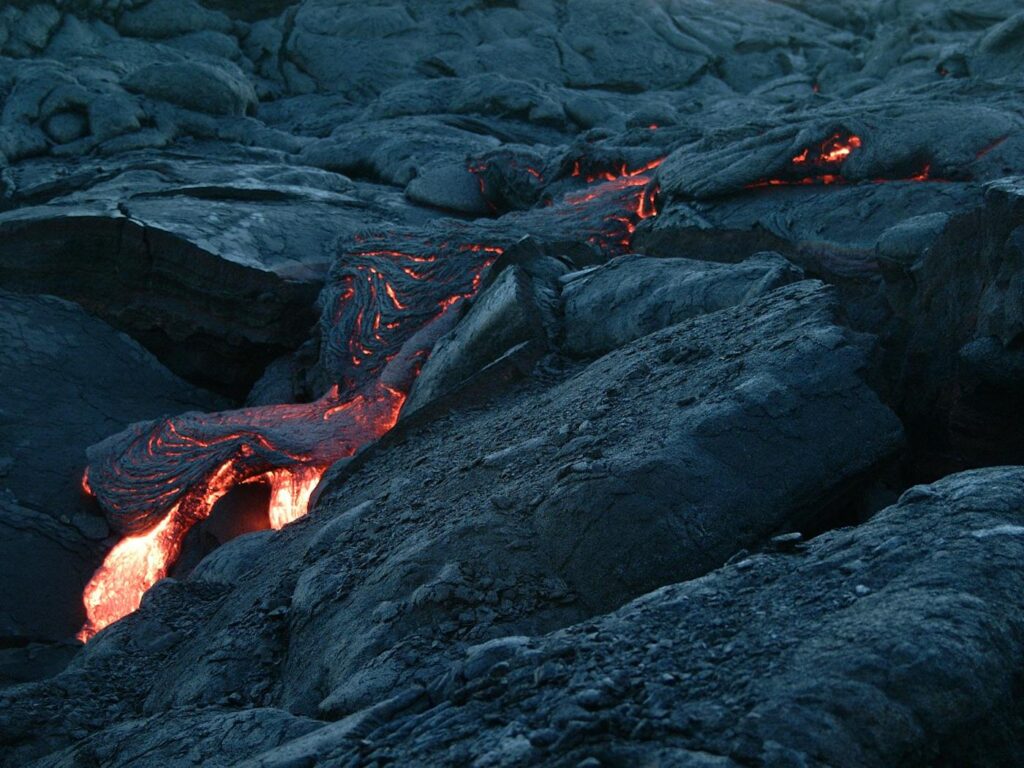
Not all volcanic eruptions make it into the history books. When a major volcano blows in a populated area, people document it in newspapers, diaries, official records, and eventually scientific literature. When one erupts in a place where almost nobody lives, it can happen in near-total silence, its effects felt across half the globe while its origin goes unwitnessed and unrecorded.
For a long time, the leading candidate for the 1831 eruption was Babuyan Claro, a volcano in the Philippines. Closer to the equator, better known, and positioned in a region with more documented volcanic history, it seemed plausible. But closer examination found no firm evidence of a major eruption there at the right time. Other candidates were proposed and examined over the years. None of them held up.
Researchers working on what volcanologists call “mystery eruptions,” events large enough to leave a clear signature in global climate records but never matched to a specific source, placed 1831 at the top of their list. Ice cores drilled from Greenland and Antarctica carry a chemical record of volcanic activity going back hundreds of thousands of years. When sulfur levels spike in those cores, it means a large eruption happened. Scientists could see the spike from 1831. What they could not do was trace it back to a volcano. That changed last year.
A Volcano Nobody Was Watching
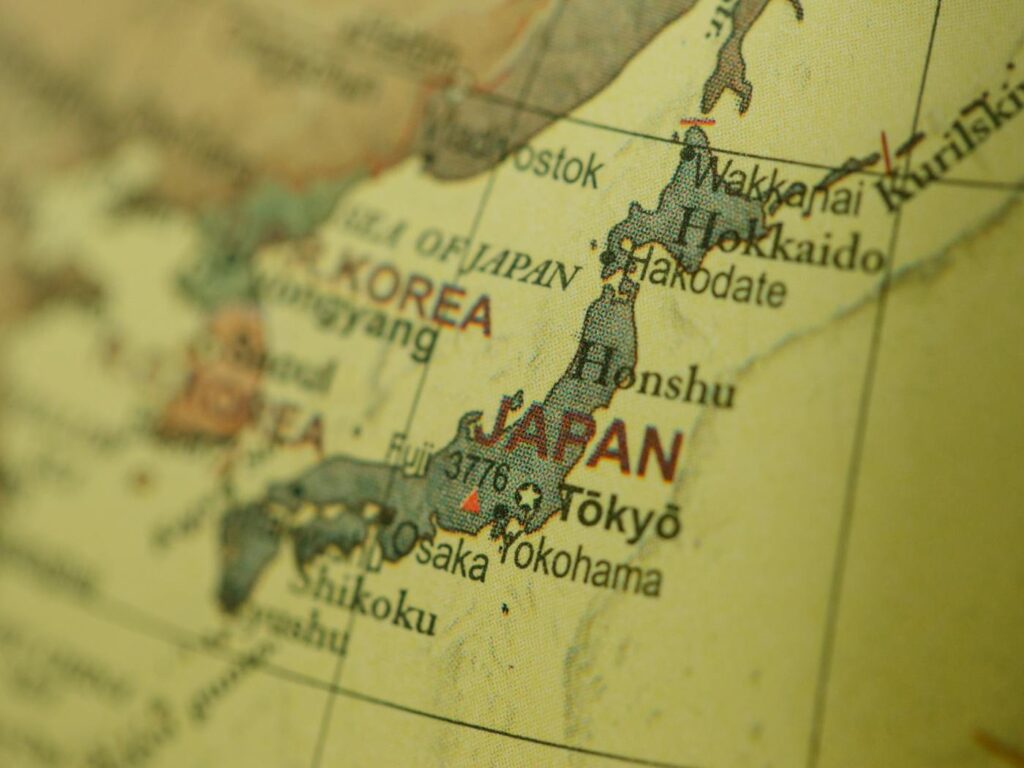
Simushir Island sits in the Kuril Islands, a volcanic archipelago stretching across the northwest Pacific between the northern tip of Japan and Russia’s Kamchatka Peninsula. Russia controls the islands. Japan disputes some of them. Almost nobody lives there.
Simushir itself is a strange and isolated place even by the standards of the Kuril chain. Thick fog rolls over it for much of the year. Ships passing through left occasional diary entries in the 18th and 19th centuries, and those entries represent most of what the written historical record contains about the island. At one point during the Cold War, the Soviet Union docked nuclear submarines inside a flooded volcanic crater on the island, a detail that sounds like fiction but sits plainly in the historical record.
On that island, inside one of its calderas, sits a volcano called Zavaritskii. Before a study published in December 2024 in the Proceedings of the National Academy of Sciences, Zavaritskii’s last confirmed eruption was thought to have occurred around 800 B.C. Nobody monitored it. No instruments tracked its seismic activity. Its eruptive history was, for practical purposes, a blank.
As a candidate for one of the 19th century’s most consequential volcanic events, it was, as lead researcher William Hutchison put it, “completely off the radar.”
Reading the Ice
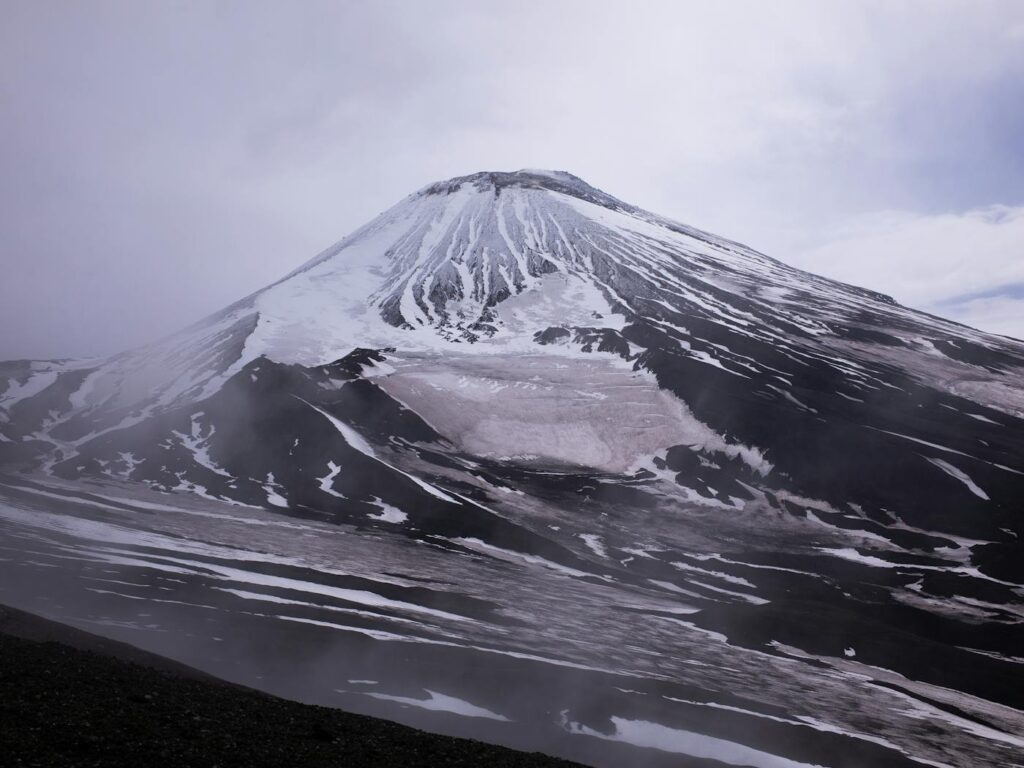
Hutchison, a volcanologist at the University of St Andrews in Scotland, led the team that cracked the case. His method combined old-fashioned detective work with some of the more precise analytical tools science has developed in recent years.
Ice cores from Greenland were the starting point. When researchers analyzed those cores, they found that sulfur fallout from the 1831 event was roughly 6.5 times greater in Greenland than in comparable samples from Antarctica. That asymmetry was significant. It pointed to a large eruption from a mid-latitude volcano in the Northern Hemisphere rather than a tropical one, which would have distributed sulfur more evenly between the two poles.
Embedded in those Greenland ice cores were something even more useful: tiny shards of volcanic glass and ash that had been carried thousands of miles through the upper atmosphere before settling into the ice. Each of those shards carried a chemical signature as specific as a fingerprint. Hutchison’s team extracted them, analyzed their chemistry, and began comparing the results against known volcanic sources across the Pacific.
Japan was an early match, chemically speaking. But Japan’s volcanic record from the 19th century is thorough. No large eruption in 1831 appeared anywhere in it. That left the Kuril Islands, with their sparse population, their fog, and their largely undocumented volcanic history.
Colleagues in Japan and Russia provided samples collected from Kuril volcanoes over previous decades. When Hutchison’s team compared the ice core ash against material from Zavaritskii, the numbers aligned. “It was really a terrific day,” Hutchison said. “One of the best days I’ve ever had in the lab.”
Radiocarbon dating of ash deposits on Simushir Island placed a major eruption from Zavaritskii within the past 300 years. Analysis of the caldera’s volume, the bowl-shaped depression left behind when a volcano empties its magma chamber, confirmed an eruption large enough to match what the ice cores recorded. Zavaritskii became what the study authors called the “prime candidate” for the 1831 mystery.
What That Eruption Did to the World
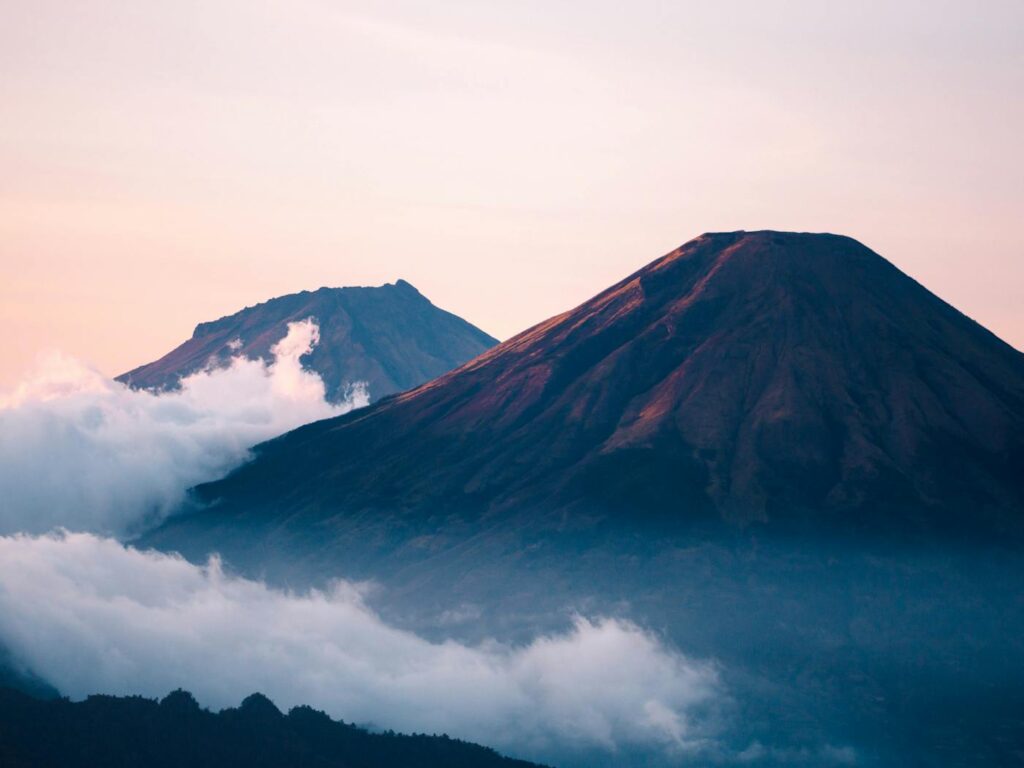
Once researchers established where the eruption came from, they could begin to map what it had done. Zavaritskii appears to have fired around 13 million metric tons of sulfur into the stratosphere. Sulfur at that altitude behaves like a planetary sunscreen; it scatters incoming solar radiation before it can reach the surface, reducing the amount of warmth and light that gets through. Average Northern Hemisphere temperatures fell by roughly 1 degree Celsius. That number sounds modest, but at a global scale, applied across growing seasons and rainfall patterns across entire continents, 1 degree carries enormous weight.
The famines that swept through India and Japan in the early 1830s have long been attributed to poor weather. Researchers now understand those poor weather conditions as likely connected, at least in part, to what happened on Simushir Island in the summer of 1831. Cooler temperatures disrupted monsoon patterns. Harvests failed. Food systems that depended on predictable seasons were thrown into disorder.
As for the colored sun sightings, the blue, purple, and green sky observations that puzzled people across the Northern Hemisphere that August, those were the visible signature of volcanic aerosols scattering sunlight in the upper atmosphere. A similar phenomenon was recorded after the Krakatoa eruption in 1883. People who saw it in 1831 had no framework to understand what they were seeing. They simply wrote it down, and those records sat in libraries and archives for nearly two centuries until researchers went looking for them.
Zavaritskii’s eruption, the study found, was roughly comparable in force to the 1991 eruption of Mount Pinatubo in the Philippines, one of the largest volcanic events of the 20th century and one whose effects on global temperature were observed and measured in real time.
A Warning Wrapped in History
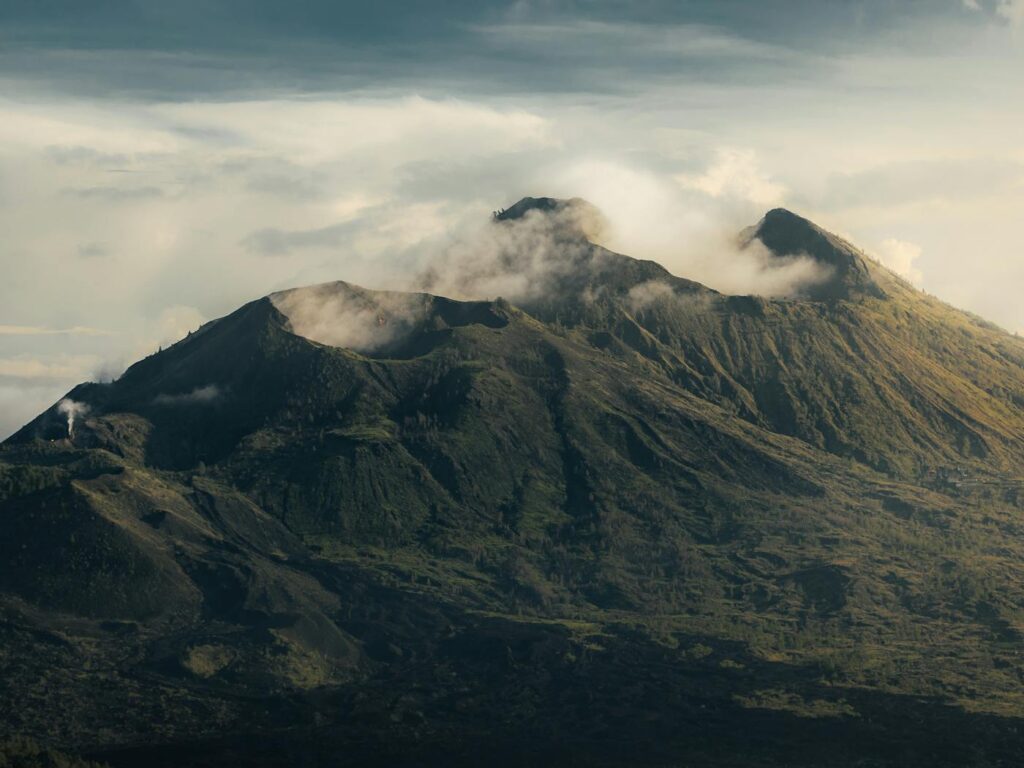
Solving a nearly 200-year-old mystery might seem like purely historical work, but Hutchison and his colleagues made a point of framing it otherwise. Zavaritskii sits in one of the most volcanically active regions on Earth. No instruments monitor it. No early warning systems would detect a new eruption before it was already underway. And it is far from alone in this regard across the Pacific, across remote stretches of the Indian Ocean and the Southern Hemisphere, hundreds of volcanoes sit in similarly unmonitored isolation.
If an eruption on the scale of 1831 happened today, the question of which volcano caused it might still take weeks or months to answer. The climate effects would not wait for that answer. Crop cycles would not pause. Food systems dependent on stable weather would feel the disruption long before scientists had finished their analysis.
“We don’t really have a coordinated international community to kick into gear when the next big one happens,” Hutchison said. “That is something we need to think about as both scientists and as a society.”
For now, the 1831 eruption has a home. Zavaritskii caldera, on a fog-covered island in the northwest Pacific that most people will never hear of and almost none will ever visit, altered the climate of an entire hemisphere. It turned the sun blue over European cities, contributed to famines that killed people thousands of miles away, and prompted a German composer to write home about snow in summer. Nobody saw it happen. It took two hundred years and ice cores drilled from Greenland to find it. Somewhere out there, chances are, another one like it is waiting.
Source: Hutchison, W., Sugden, P., Burke, A., Abbott, P., Ponomareva, V. V., Dirksen, O., Portnyagin, M. V., MacInnes, B., Bourgeois, J., Fitzhugh, B., Verkerk, M., Aubry, T. J., Engwell, S. L., Svensson, A., Chellman, N. J., McConnell, J. R., Davies, S., Sigl, M., & Plunkett, G. (2024b). The 1831 CE mystery eruption identified as Zavaritskii caldera, Simushir Island (Kurils). Proceedings of the National Academy of Sciences, 122(1), e2416699122. https://doi.org/10.1073/pnas.2416699122