
Your cart is currently empty!
The Human Body Has More Senses Than We Were Taught

For most of our lives, we are taught a simple story about how humans experience the world. We are told there are five senses. Sight. Hearing. Smell. Taste. Touch. The idea is so deeply ingrained that it rarely gets questioned, even in adulthood. It feels settled, almost unquestionable, like a basic law of nature.
Contents
show
But over the past few decades, scientists across neuroscience, psychology, and sensory research have been quietly challenging that story. The more closely they examine how the human body gathers information, the more complicated the picture becomes. According to a growing body of research, humans may not have five senses at all. We may have anywhere from 22 to as many as 33 distinct senses working together at all times.
This is not about gaining supernatural abilities or discovering some hidden psychic power. It is about recognizing that the body is far more perceptive than we were ever taught, and that perception itself is deeply layered, interconnected, and surprisingly subtle.
Where the Five-Sense Idea Came From

The concept of the five senses dates back more than two thousand years to ancient philosophy. Aristotle proposed that humans experience the world through sight, hearing, smell, taste, and touch. At the time, this framework made sense. Each sense seemed tied to a visible organ, and the categories were easy to explain and observe.
Over time, this idea became foundational. It was taught in schools, repeated in textbooks, and passed down through generations without much scrutiny. Even as science moved forward and many early theories were revised or abandoned, the five senses remained.
One reason it endured is simplicity. The five senses are easy to remember and easy to demonstrate. Another reason is that early science lacked the tools to examine what was happening inside the nervous system. Without modern imaging or neurological research, there was no clear way to see how deeply sensory information was divided and processed.
As neuroscience advanced, however, researchers began to realize that human perception did not behave like five independent channels. Everyday experiences felt too complex, too blended, and too dynamic to fit neatly into that framework.
Why Scientists Started Questioning It

Think about eating a meal. What you experience is not just taste. It is smell, texture, temperature, sound, appearance, and even expectation. A crunchy apple tastes different from a soft one, even if the flavor compounds are the same. A brightly colored dish often feels more flavorful before it even touches your tongue.
The same applies to watching a movie, walking through a forest, or riding a roller coaster. These experiences involve balance, motion, body position, internal sensations, and emotional responses, all happening simultaneously.
Scientists began to realize that what we call a single sense is often a combination of many sensory inputs working together. Once those inputs are separated and studied individually, the number of distinct senses grows rapidly.
This shift in thinking led researchers to ask a new question. Instead of asking how many senses humans have, they began asking what actually qualifies as a sense.
What Counts as a Sense Anyway
At its core, a sense is a system that detects specific information and sends it to the brain in a structured way. By that definition, the body is filled with sensory systems that have nothing to do with sight, sound, smell, taste, or touch.
For example, the body has specialized receptors that detect changes in temperature, levels of pain, stretching of muscles, position of joints, blood oxygen levels, blood pressure, carbon dioxide levels, fullness of the stomach, and expansion of the lungs.
Each of these systems gathers unique information and communicates it to the brain through dedicated neural pathways. They operate constantly, usually without conscious awareness, helping the body maintain balance and respond to the environment.
When researchers begin counting these systems individually, the number of senses increases dramatically.
The Senses We Already Use Without Realizing
Many of the additional senses scientists describe are ones we rely on every day, even though we rarely think about them.
Proprioception is one of the most important. It is the sense that tells you where your body parts are in space without needing to look at them. It allows you to walk without watching your feet, type on a keyboard without staring at your hands, and scratch an itch in the dark.
Closely related is kinesthesia, which helps you perceive movement and adjust it smoothly. This is why athletes, musicians, and dancers can refine complex motions through practice until they become automatic.
Then there is the vestibular sense, which governs balance and motion. It helps you know whether you are standing still, spinning, accelerating, or falling. Without it, simply standing upright would be a challenge.
These senses are not optional extras. They are fundamental to how the body functions, yet they are rarely included when people talk about human perception.
Interoception and the Sense of the Inner Body

One of the most fascinating areas of modern sensory research focuses on interoception. This is the sense that allows you to perceive internal bodily states.
Interoception helps you feel hunger, thirst, nausea, pain, heart rate, and changes in body temperature. It plays a central role in regulating breathing, digestion, circulation, and immune responses.
Most of the time, interoceptive signals stay below conscious awareness. You do not think about your blood pressure or oxygen levels unless something feels wrong. Yet your brain is constantly receiving and interpreting these signals to keep you alive and stable.
Researchers now believe interoception is deeply linked to emotional awareness. Feelings like anxiety, calm, excitement, or dread are closely tied to bodily sensations. When interoceptive processing is disrupted, it can affect mental health, emotional regulation, and decision making.
The Gut, the Brain, and Emerging Sensory Pathways
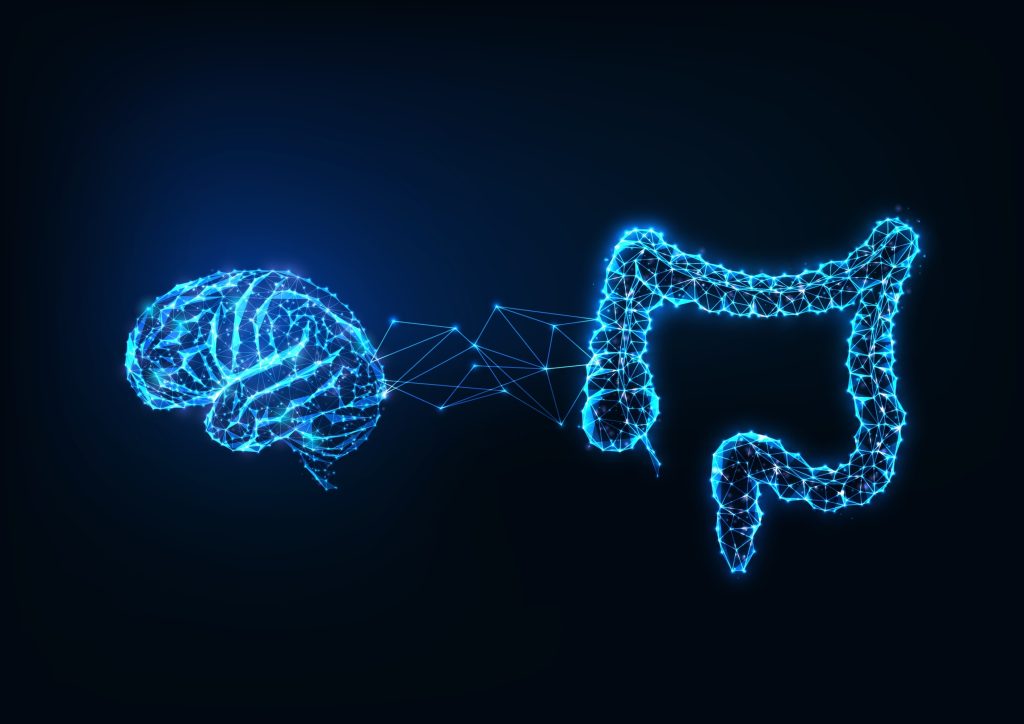
Recent studies have suggested that the gut may have its own direct sensory relationship with the brain. Researchers have identified specialized cells in the digestive system that detect chemical signals produced by microbes living in the gut.
These cells appear to send rapid signals to the brain that influence appetite and behavior. This has led some scientists to describe a potential neurobiotic sense, a system that allows the body to monitor microbial activity in real time.
While much of this research is still in early stages and often based on animal studies, it opens new questions about how deeply the body senses its internal environment. It also challenges the idea that senses are limited to interactions with the outside world.
Touch Is Not Just One Sense

Touch is often treated as a single sense, but it is actually a collection of many different sensory systems.
There are separate receptors for light touch, pressure, vibration, temperature, pain, and stretch. Each of these receptors sends different information to the brain.
The sensation of warmth is not the same as the sensation of pressure, even though both involve contact with the skin. This distinction becomes especially important in medical and neurological research.
Different types of pain are processed through different pathways. A burn feels different from a deep ache, not just emotionally but neurologically.
Seeing, Hearing, and the Illusion of Simplicity
Even the most familiar senses are far more complex than they appear.
Vision is not a single sense. The eyes detect light intensity, color wavelengths, movement, depth, and contrast using different types of cells. The brain then combines this information into a coherent image.
Hearing involves detecting pitch, volume, rhythm, and spatial location. Balance and hearing are closely linked through structures in the inner ear, which is why ear infections can cause dizziness.
Taste is perhaps the most misunderstood. What we call taste is actually a combination of gustation, smell, texture, and temperature. The tongue can detect only a small number of basic flavors. The rich complexity of food comes largely from aroma and mouthfeel.
Multisensory Perception Is the Rule
Modern research increasingly shows that the senses rarely operate in isolation. Instead, they constantly interact and influence one another.
Smell can change how something tastes. Sound can change how crunchy food feels. Visual cues can alter how heavy an object seems. Even fragrance can affect how smooth hair feels after washing, despite no physical change.
These interactions explain why illusions work so effectively. When one sense sends conflicting information, the brain tries to reconcile it by blending inputs, sometimes leading to surprising results.
How Many Senses Are There Really
There is no single agreed upon number. Some researchers estimate around 22. Others argue the number could be closer to 33, depending on how finely sensory systems are divided.
Lists of proposed senses often include light and color detection, hearing and spatial sound, smell, basic tastes, multiple forms of touch, pain types, temperature, balance and motion, proprioception, muscle stretch, internal organ states, blood chemistry, lung inflation, bladder fullness, and hunger and thirst signals.
The disagreement is not about whether these systems exist, but about whether they should be grouped or counted separately.
Why This Changes How We See Ourselves

Understanding that humans may have dozens of senses reshapes how we think about perception, emotion, and behavior.
It helps explain why people experience the same situation so differently. Sensory sensitivity varies from person to person. Some people feel bodily signals more intensely. Others rely more heavily on visual or auditory cues.
It also offers insight into conditions like chronic pain, anxiety, autism, and sensory processing differences. These are not simply issues of perception or emotion. They often involve differences in how sensory information is processed and integrated.
What This Means for Everyday Life
Recognizing the richness of human perception can foster greater self awareness. Paying attention to internal sensations can improve emotional regulation and decision making. Understanding sensory interactions can improve design, education, and healthcare.
It can also encourage patience and empathy. What feels overwhelming to one person may barely register for another, not because of weakness or strength, but because their sensory systems are tuned differently.
A New Way of Thinking About Being Human

The idea that humans have five senses is comforting in its simplicity, but it does not reflect reality. The body is constantly gathering information from the world outside and the world within, using a vast network of sensory systems that work together seamlessly.
We do not simply see, hear, taste, smell, and touch. We balance, orient, stretch, regulate, anticipate, and feel ourselves existing moment to moment.
Whether the final count is 22, 33, or even more, one thing is clear. Human perception is far richer than we were ever taught. And once you start noticing it, you begin to realize just how much is happening beneath the surface of everyday experience.
The next time someone tells you that you are too sensitive, it might be worth remembering this. Sensitivity is not a flaw. It is evidence of just how many ways the human body is designed to perceive the world.