
Your cart is currently empty!
Something Is Shaking Beneath the Nevada Desert, and Nobody in Washington Is Saying Why
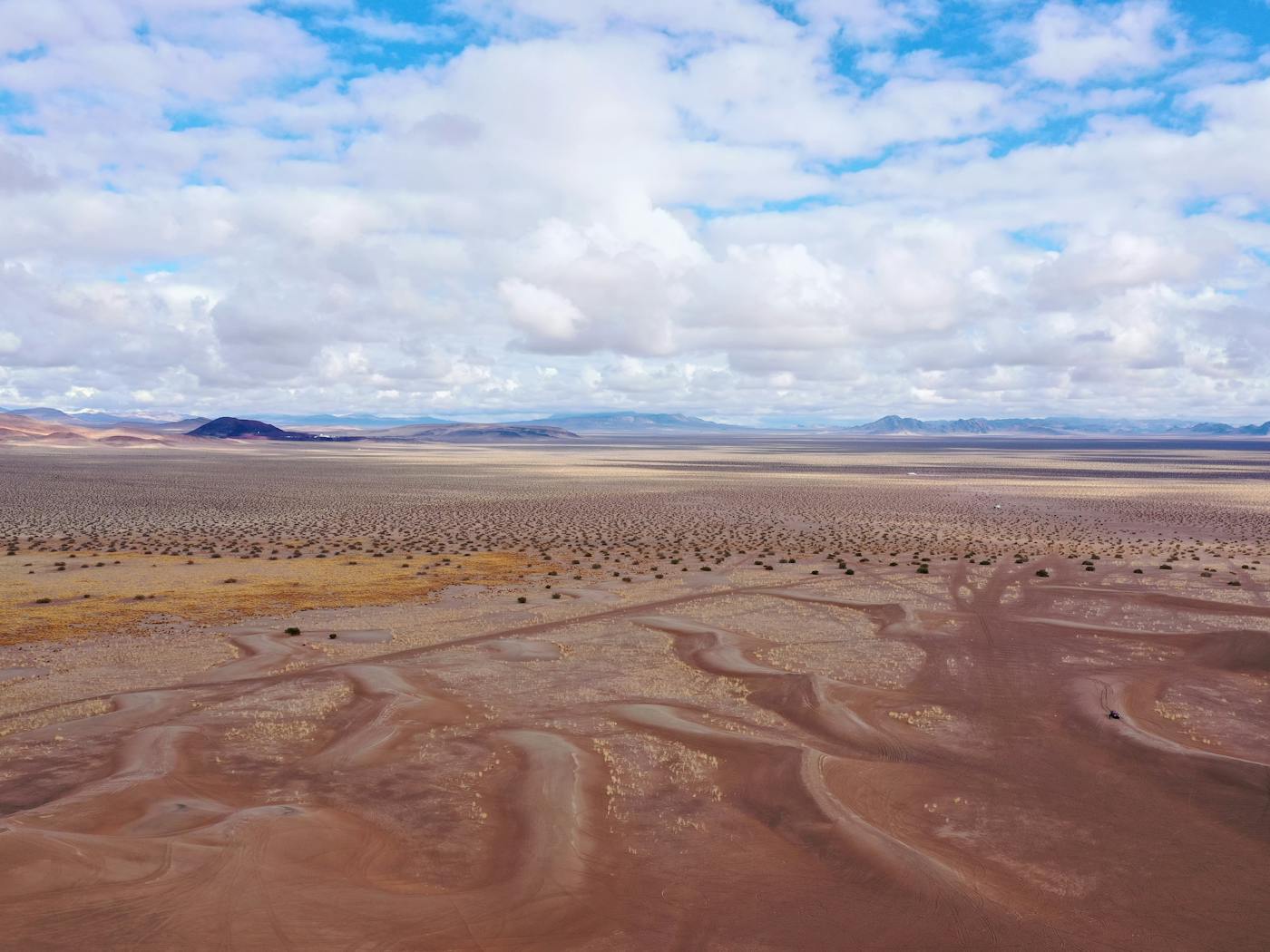
For roughly a week in late February and early March 2026, the ground beneath a remote stretch of the Nevada desert did not stay still. More than 100 earthquakes rippled through the same general area in quick succession, ranging from barely detectable tremors to shocks strong enough to be felt by residents hundreds of miles away. People in Las Vegas reported the shaking. So did people in Carson City, nearly 180 miles to the west.
Contents
show
No buildings collapsed. No injuries were reported. And no official explanation came from Washington.
What made the silence notable was not the earthquakes themselves, but where they were happening and when.
What Is Area 52, Exactly
Most people have heard of Area 51, the classified Air Force facility in southern Nevada that spent decades at the center of conspiracy theories before the US government formally acknowledged its existence. Fewer people know about its neighbor to the north, a facility with an equally classified history and considerably less public attention.
Tonopah Test Range, sometimes called Area 52, sits within the Nevada Test and Training Range, a vast military complex in the Nevada desert operated jointly by the Department of Energy and the Department of Defense. For decades, it has been used to test nuclear weapons delivery systems, not the weapons themselves, but the aircraft, missiles, and mechanisms designed to carry and deploy them. During the Cold War, crews dropped non-nuclear versions of bombs from aircraft to study how they performed in flight and on impact, simulating real nuclear deployments without actually detonating anything.
Beyond delivery testing, the site has hosted classified research into weapons fusing and firing systems, experimental aircraft programs, and other activities that remain largely undisclosed to the public. What has entered the public record, in part through the accounts of former military personnel, is a darker side of the base’s history. Some veterans have claimed that their work at Tonopah exposed them to radioactive material, leading to cancer and serious long-term illness. Those claims have never been officially resolved.
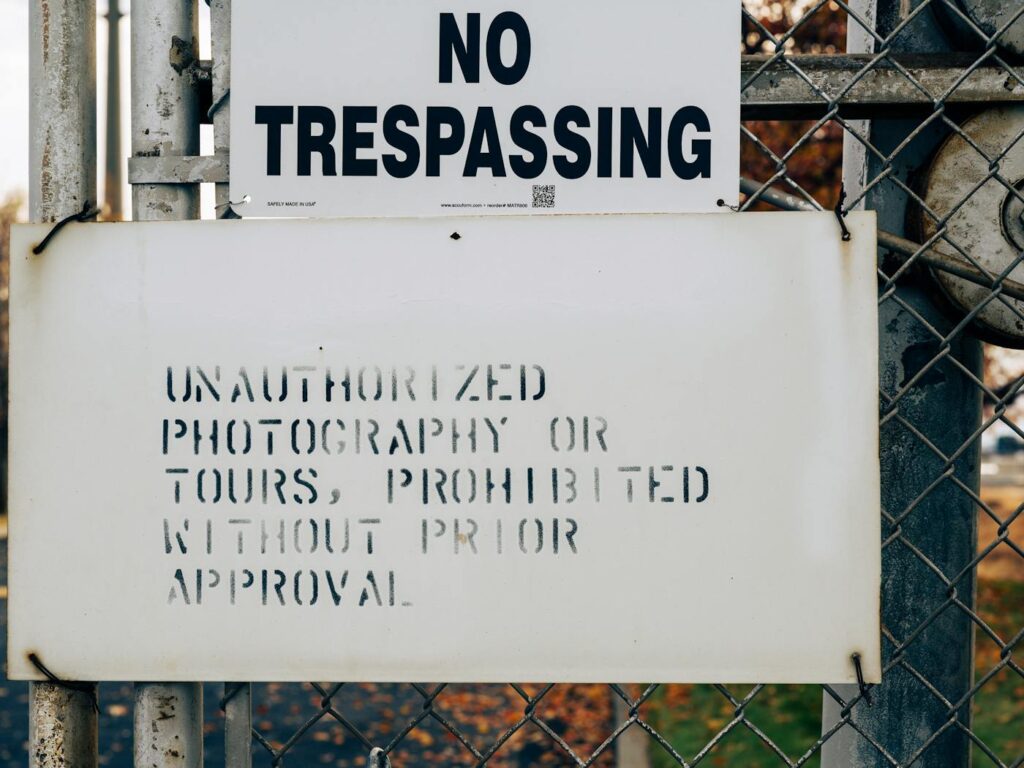
Area 52 is not a place that welcomes outside attention. What happened beneath it during the final days of February 2026, however, attracted attention whether the base wanted it or not.
What the USGS Actually Recorded
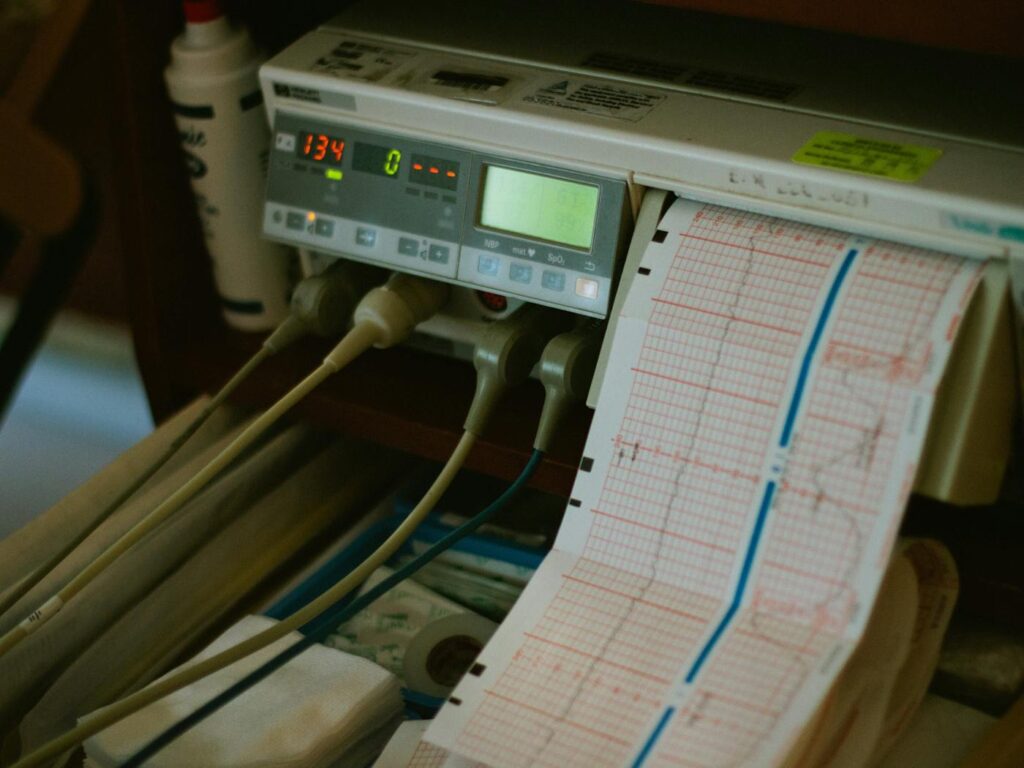
Starting on a Saturday in late February, the US Geological Survey began picking up seismic signals from a concentrated area within roughly 50 miles of the Tonopah Test Range. By the time the most active period of the swarm had passed, USGS instruments had cataloged more than 100 individual events in that zone, with 16 of them registering above magnitude 2.5.
Earthquakes in that range produce real, noticeable shaking at ground level. People standing near the epicenter would feel them clearly. At greater distances, they register as a brief, unsettling rumble. Earthquakes above magnitude 3.0 are strong enough that anyone outdoors nearby would feel the ground move underfoot.
Sunday morning brought the swarm’s strongest event, a magnitude 4.3 earthquake centered roughly 48 miles northeast of Tonopah, recorded at 11:37 AM Eastern time. Shockwaves from that quake traveled far enough to be reported by residents in both Las Vegas and Carson City, neither of which sits close to the epicenter by any ordinary measure. No structural damage was reported, and no injuries followed. What did follow was a wave of questions that the federal government declined to answer.
The Most Likely Explanation
Scientists who study Nevada’s seismic activity were not particularly surprised by the swarm, even if members of the public were. Tonopah and the surrounding region sit within what geologists call the Central Nevada Seismic Zone, a long, narrow corridor running roughly north to south through the middle of the state for somewhere between 200 and 300 miles.
That zone exists because the Earth’s crust beneath the western United States has been slowly pulling apart for millions of years. Tectonic forces tug the land in different directions, and as they do, the crust stretches and fractures along hundreds of small underground faults rather than concentrating stress along one large fault line like California’s San Andreas. Stress builds gradually along those smaller faults and releases in bursts clusters of earthquakes that seismologists call swarms, which can produce dozens or even hundreds of tremors in a short window of time before quieting down again.
Nevada ranks among the most seismically active states in the country, and swarms in the Basin and Range region, the broad geological province that covers much of the western US, are a documented and recurring feature of the local geology. Experts who reviewed the February swarm said natural tectonic movement was the most probable cause, and that the proximity to military facilities was most likely coincidental rather than meaningful.
That explanation is almost certainly correct. It is also, for reasons worth understanding, not quite enough to close the conversation entirely.
Why the Questions Persisted
Underground nuclear weapons tests produce seismic waves. That is not a theory; it is a documented and well-understood physical fact, used by international monitoring bodies to detect weapons tests conducted by countries around the world. When a nuclear device detonates underground, it releases energy that travels through the surrounding rock in patterns that seismic instruments record as earthquake-like events.
USGS instruments catalog those signals the same way they catalog natural earthquakes, at least initially. Distinguishing between the two requires closer analysis. Nuclear explosions tend to release energy near the surface, while natural earthquakes involve fault slippage deeper underground and produce different proportions of seismic wave types. Analysts can usually tell the difference, but the signals are similar enough that the question is worth asking before it is dismissed.
Tonopah’s history makes that question harder to set aside quickly. For decades, the Nevada desert was the location of actual nuclear detonations. Between 1951 and 1992, more than 900 nuclear tests were carried out at the Nevada Test Site, many of them underground, and the seismic traces of those tests looked very much like natural earthquakes. People in Nevada and surrounding states felt them. Some triggered small aftershocks of their own. The landscape of the region carries that history in its geology as well as its public memory.
The Political Timing That Raised Eyebrows
What made the February swarm particularly difficult to dismiss without comment was the cluster of geopolitical events happening at the same moment.
On February 28, the US and Israel launched coordinated strikes on Iran, killing Supreme Leader Ayatollah Ali Khamenei and more than 40 senior Iranian officials. Iran responded with retaliatory strikes against US military positions across nine countries in the region, and President Trump warned publicly that the largest wave of US military action had not yet arrived. American forces went on high alert across multiple theaters.
Weeks earlier, on February 5, the New START treaty, the last remaining nuclear arms control agreement between the United States and Russia, had officially expired, ending a framework that had governed the two countries’ nuclear postures for years. In October 2025, President Trump had already signed a directive ordering the US military to prepare for the resumption of nuclear weapons testing, citing what his administration described as ongoing testing by Russia and China. Preparations at an underground Nevada facility had been underway since late 2025, with new equipment installed to contain microscopic nuclear-scale explosions as part of expanded research programs.
As of early March 2026, no announcement of a full-scale nuclear explosive test had come from the US government. That absence of confirmation is not the same as a denial, and in a moment when the country was engaged in active military conflict, expanding its nuclear research program, and operating without the constraints of its last major arms control treaty, the timing of 100-plus earthquakes near a classified nuclear weapons facility was always going to prompt questions that a geological explanation alone would not fully satisfy.
Where US Nuclear Testing Actually Stands
America’s last confirmed full nuclear explosive test took place on September 23, 1992. Known as Divider, it was the final entry in a programme of 1,032 nuclear tests dating back to the Trinity Test in 1945. Following the Divider, the US implemented a voluntary moratorium on explosive nuclear testing that held, through administrations of both parties, for more than three decades.
That moratorium was never a treaty obligation after the New START expiration. President Trump’s October 2025 directive brought the question of resumption from an abstract policy debate into something more operationally concrete. New infrastructure went into Nevada’s underground facilities. Statements from the National Nuclear Security Administration framed resumed testing as a matter of keeping pace with adversaries rather than a change in strategic posture.
What none of that confirms is whether anything exploded beneath the Nevada desert during the last week of February 2026. Scientists say probably not. The geology of the Central Nevada Seismic Zone accounts for swarms like this one without needing human involvement. Nevada shakes regularly, and Tonopah sits in a region primed for exactly the kind of clustered seismic activity that appeared on USGS monitors.
What Washington has not offered is any statement at all, no confirmation, no denial, and no briefing that might separate a natural event from a deliberate one in the public mind. In a moment as charged as this one, that silence has its own weight.