
Your cart is currently empty!
Starbucks Customer Discovers Offensive Message on Charlie Kirk’s Favorite Drink

In the world of social media and viral moments, stories emerge that leave an indelible mark on public consciousness, both for their unsettling nature and their ability to stir up deep divisions. Recently, a seemingly innocent act of ordering a favorite drink at Starbucks has sparked an intense debate over political expression, corporate responsibility, and respect in retail spaces. It’s a tale that blends political tension, a tragic death, and a message scrawled on a coffee cup that many found impossible to ignore.
Contents
show
It all began innocuously enough. Autumn Perkins, a regular customer at Starbucks, entered a location in Kroger’s Middletown, Ohio, with an order that was becoming popular in the wake of the tragic death of right-wing activist Charlie Kirk. Perkins, a supporter of Kirk and his conservative message, decided to pay tribute by ordering his favorite beverage: a Mint Majesty with two honeys. But what happened next was anything but ordinary. Instead of receiving her drink with a smile, Perkins was confronted with something far more disturbing—a message on her cup that would soon capture the attention of the nation and fuel a debate that goes beyond coffee shops and into the heart of America’s culture wars.
The message written on Perkins’ cup was simple yet jarring: “racists fav drink.” A few words that, for some, were a reflection of the deep political rift dividing the country. For others, it was a clear sign of a workplace issue that could no longer be ignored. What followed was a cascade of online posts, investigations, and public statements, and a swift corporate response that only intensified the questions about Starbucks’ responsibility in navigating politically charged moments.
A Tribute Turned Sour
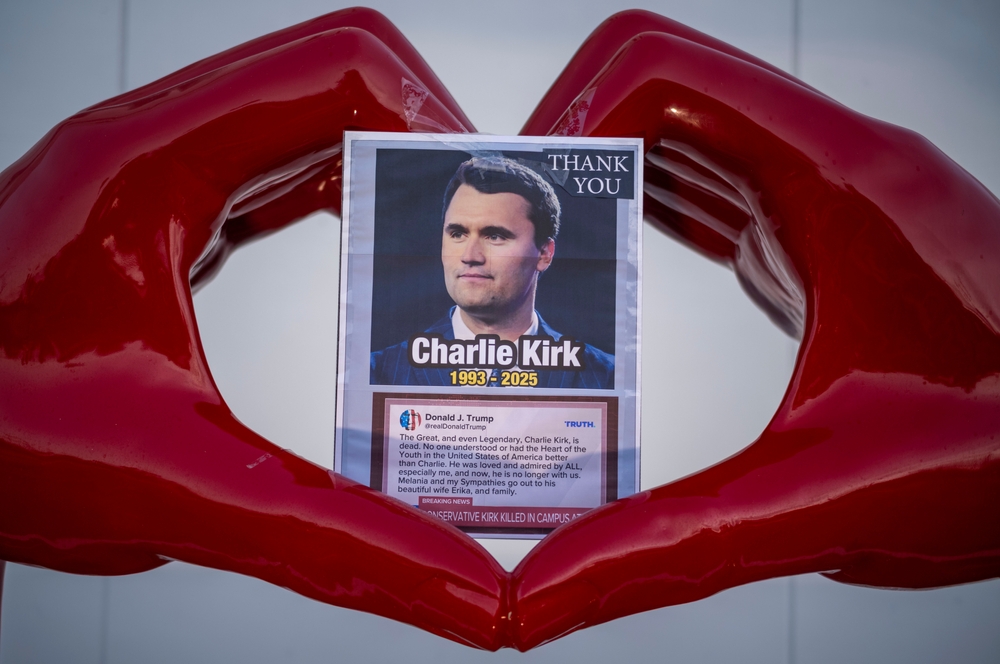
Autumn Perkins was no stranger to Starbucks. While she had reservations about the coffee giant’s politics—citing their “satanic logo” and other corporate stands—she had decided, for once, to order something in honor of Charlie Kirk. Kirk, a prominent conservative voice and the founder of Turning Point USA, was shot dead on September 10, 2025, while speaking at Utah Valley University. His tragic death sent shockwaves through his supporters, many of whom turned to social media to mourn his loss and memorialize him in various ways. For some, one of the most fitting tributes was to order Kirk’s favorite Starbucks drink.
The Mint Majesty tea with two honeys, Kirk’s beverage of choice because he tended to lose his voice during public speaking, became a symbol of remembrance. Perkins, like many others, participated in this viral tribute, ordering the drink with the intention of honoring Kirk’s memory. But when she picked up her beverage from the Starbucks counter, it became clear that what she had anticipated as a simple act of respect had taken a much darker turn.
Instead of the expected acknowledgment of Kirk’s passing, the words on her cup seemed to suggest something else entirely—a biting commentary on Kirk’s political views. The message read, “racists fav drink.” A short, sharp statement that instantly made Perkins feel attacked. But what was behind the message, and how did it come to be written on her order?
Public Outcry and Social Media Backlash
Perkins didn’t take the incident lightly. After snapping a photo of the cup and posting it on Facebook, her message quickly spread. “The girl at Starbucks thought she was cute,” Perkins wrote, alluding to the barista’s apparent attempt at humor. But humor, in this case, seemed to have crossed the line into something far more personal and political.
“I don’t even support Starbucks because of everything they stand for, starting with their satanic logo,” Perkins added. “But I support Charlie Kirk, so I thought you know what… I’ll get his drink.” Her post resonated with a sizable online community, many of whom expressed outrage over the perceived disrespect to Kirk and his followers. The message, to many, wasn’t just about one cup—it was symbolic of the broader culture of hostility that has come to define political discourse in recent years.
As the online firestorm grew, Perkins made it clear she wouldn’t let the matter slide. In a follow-up post, she explained that she had already gone to the store manager to report the incident. However, she couldn’t speak to the manager immediately, as the person in charge wasn’t available at the time. But Perkins wasn’t going to stop there. She committed to taking her complaint to the corporate level, reaching out to Starbucks with the expectation that the company would address the situation.
Starbucks and Kroger: A Corporate Response

Starbucks, which operates its stores in various locations through a licensing model, didn’t waste time issuing a public statement. In response to the viral post and the intense backlash, a company spokesperson swiftly condemned the employee’s actions. “Writing this on a cup is unacceptable,” they said, emphasizing the company’s commitment to a welcoming environment for all customers. They also reaffirmed their clear policies that prohibit employees from writing negative or critical messages on cups.
But the response didn’t end there. Starbucks also addressed the particular location where the incident took place: a Starbucks inside a Kroger store in Middletown. The company clarified that this particular location was licensed and operated by Kroger, which meant that the responsibility for addressing the employee’s conduct fell squarely on the supermarket chain. Kroger, for its part, quickly confirmed that the employee involved had been fired. A Kroger representative added, “This behavior does not reflect Kroger’s values.”
But even as the investigation unfolded, there was a new wrinkle: both Starbucks’ and Kroger’s responses didn’t entirely line up with Perkins’ account. Starbucks took issue with the notion that one of its employees had written the message. According to the company’s investigation, which included a review of video footage, the message wasn’t written by the Starbucks barista but was likely added after the beverage had been handed off. “Our investigation… confirms that in the cases shared so far, the comments were not written by a Starbucks partner,” the spokesperson said, leaving many to wonder if this was the end of the story—or just the beginning.
A Divisive Figure and a Polarizing Message

While the message on the cup might have been the focal point of the controversy, it’s important to understand the context in which it was written. Charlie Kirk was—and remains—a polarizing figure in American politics. Known for his right-wing views and association with organizations like Turning Point USA, Kirk’s beliefs have made him a target of fierce criticism from the left. Critics of Kirk often accuse him of holding racist views, citing his opposition to certain civil rights measures and his stance on racial issues.
It’s no surprise that Kirk’s followers—many of whom align themselves with conservative values—would find such a message deeply offensive. But it’s also important to recognize that the controversy surrounding Kirk, and by extension his supporters, highlights the broader polarization within the United States. The message on the Starbucks cup wasn’t just an attack on a person; it was an attack on an ideology, a political movement, and a worldview that, to some, represents a threat to their values.
The incident sparked a broader conversation about respect and communication in a time of division. As Perkins herself said in an interview with Fox News Digital, “I feel like Charlie stood for respect—we don’t have to agree on everything. We can disagree on a lot of things, but we respect each other.” Her words, while simple, strike at the heart of the issue: Can we disagree politically while still treating each other with dignity and respect?
Fallout and the Power of Social Media
As the story made its rounds on social media, the fallout intensified. Critics of Perkins’ stance—many of whom were opposed to Kirk’s political views—sought to undermine her claims, questioning whether the incident was as clear-cut as it appeared. The debate surrounding the cup became a microcosm of the larger political and cultural battles playing out in the United States. While some supported Perkins’ decision to report the incident and boycott Starbucks, others decried what they saw as an overreaction to a minor issue.
But regardless of the opinions on either side, the fact remained that the situation had sparked a wider discussion about the role of corporations in political discourse. With companies like Starbucks caught in the crossfire, it’s clear that the days of companies remaining neutral in political matters may be numbered. The challenge, moving forward, will be navigating the delicate balance between corporate values and the diverse political ideologies of their customer base.
Impact on Starbucks and Beyond

For Perkins, the fallout from this incident was clear: she wouldn’t be supporting Starbucks in the future. “I don’t intend to spend another penny at Starbucks,” she said, adding that she would discourage her family from doing so as well. Her boycott was a personal choice—but it also spoke to a larger movement within conservative circles that feels increasingly alienated by corporate giants perceived to lean left.
But what does this mean for Starbucks in the long run? As the company navigates this controversy, the question of how to handle employee conduct, political expression, and customer interactions in an increasingly polarized world will only grow more pressing. The outcome of this case may set a precedent for how companies respond to similar incidents in the future, and how they balance the need for inclusivity with the realities of a deeply divided political landscape.
Coffee Cup Stirrs A Political Storm
As the controversy surrounding the Starbucks cup continues to reverberate, it underscores a growing challenge for companies in a highly polarized society. Businesses are increasingly caught in the crossfire of political battles, with customer expectations and corporate values often clashing. The backlash against Starbucks highlights a shifting dynamic where neutrality is no longer an option, especially as customers demand alignment with their own values. For Perkins, this incident is more than a personal grievance—it is part of a larger cultural moment that may influence future corporate policies on free speech, political expression, and workplace behavior.
How companies navigate these complex issues moving forward will be crucial. Do they lean into the diverse political views of their customers, or do they continue to uphold a stance of inclusivity, even if it risks alienating certain groups? As the lines between public spaces and private values become ever more blurred, this incident may just be a precursor to the tough decisions companies will face in the years ahead.