
Your cart is currently empty!
Study Reveals Microplastics Buried in Pre-Industrial Sediment Layers

Microplastics are now so widespread that scientists routinely find them in oceans, polar snow, and even inside the human body. What researchers did not expect, however, was to find them in sediment layers that appear to predate the age of modern plastic production. Yet that is exactly what multiple recent studies have revealed. In lakes in Latvia and in marine sediments stretching from European waters to the Arctic, researchers have detected microscopic plastic particles in layers that should have formed long before plastic became a mass-produced material in the mid twentieth century.
Contents
show
The discovery is forcing scientists to rethink assumptions about how plastics move through the environment and how reliably they can be used to track humanity’s influence on the planet. Many researchers have explored whether microplastics could serve as a geological signal of the Anthropocene, the proposed epoch defined by significant human impact on Earth’s systems. But when plastic fragments appear in sediment layers dating back to the 1700s or early 1800s, the timeline becomes far less straightforward. Rather than offering a clean historical marker, microplastics are revealing a far more complicated environmental story.
Microplastics Found in Sediment Layers Untouched by Modern Humans https://t.co/EVAddeotCP pic.twitter.com/7dLsemsieR
— Reg Saddler (@zaibatsu) March 4, 2024
Rethinking Plastics as a Marker of the Anthropocene
The idea of the Anthropocene centers on the argument that human activity has altered the Earth so extensively that it has created a distinct geological chapter. Many scientists point to the mid twentieth century, often called the Great Acceleration, as the beginning of this era because of rapid industrial growth, population expansion, and soaring material production. Since plastic production increased dramatically after the 1950s, microplastics appeared to be a promising candidate for marking this shift in sediment records.
In theory, if plastics only became widespread after World War II, their first appearance in sediment layers could provide a clear chronological boundary. Researchers have long used ash layers from volcanic eruptions or radionuclide traces from nuclear testing as time markers. Plastics seemed like a modern equivalent. However, new findings challenge that assumption. Scientists studying lake sediments in Latvia discovered microplastics in every layer examined, including one dating back to 1733.
The researchers were direct about the implications of their findings. They wrote, “We conclude that interpretation of microplastics distribution in the studied sediment profiles is ambiguous and does not strictly indicate the beginning of the Anthropocene Epoch.” That statement undermines the idea that plastics offer a clean geological timestamp. Instead, their presence across multiple historical layers suggests that environmental processes may redistribute them in ways that blur chronological boundaries.

What the Sediment Cores Actually Show
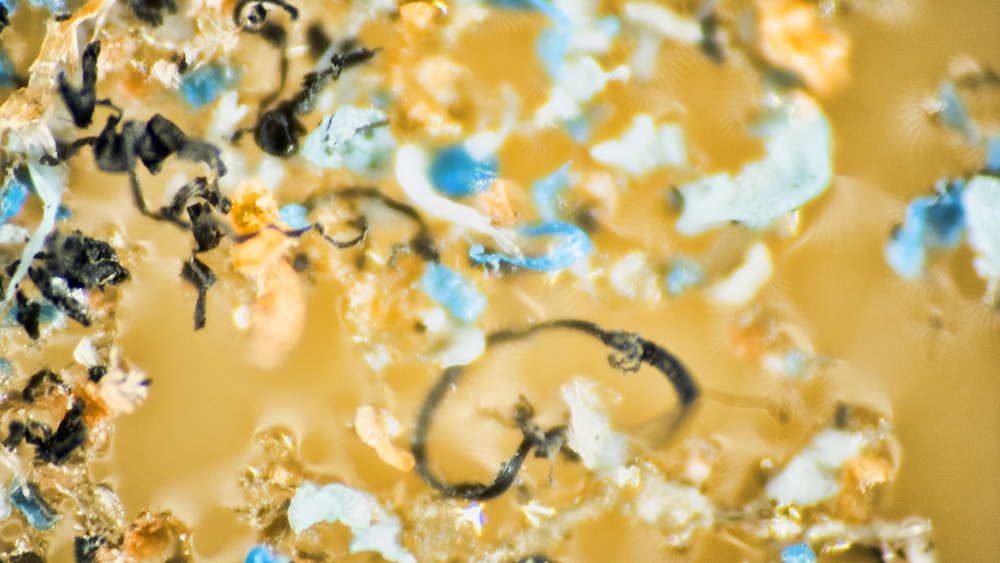
In a separate investigation along the Norwegian Coastal Current, scientists collected five marine sediment cores reaching depths of up to 19 centimeters. Using radiometric dating and micro Fourier transform infrared spectroscopy, they identified microplastics as small as 11 micrometers. This level of sensitivity allowed them to detect extremely fine particles that earlier studies may have missed.
Microplastics were found in all sediment cores and in every sampled layer. Concentrations varied significantly, ranging from 54 to 12,491 particles per kilogram of sediment. The smallest detectable particles dominated most layers, often accounting for the majority of fragments. Researchers identified 18 different polymer types, including polypropylene, polyethylene, polyamide, and nitrile rubber, demonstrating that a wide range of modern plastics had entered marine environments.
Some of the highest concentrations were recorded near Bear Island in the Arctic Circle, an area influenced by powerful ocean currents. The findings indicate that even remote northern regions are not shielded from global plastic flows. Instead of decreasing with depth in a simple historical pattern, microplastic concentrations often fluctuated unpredictably, raising questions about how particles move through sediment over time.
How Do Plastics End Up in Older Layers?
The presence of microplastics in layers predating their invention does not mean plastics existed centuries ago. Instead, scientists point to several mechanisms that could explain their downward movement through sediment. One key factor is bioturbation, the process by which organisms such as worms and burrowing creatures disturb and mix sediment layers. These organisms can transport surface material deeper underground, effectively blending newer particles with older deposits.
Another possible mechanism involves pore water movement. Sediments contain small spaces filled with water, and extremely small particles can migrate through these pathways. Because the Norwegian study detected particles down to 11 micrometers, it captured a size range that is particularly mobile. Smaller particles are more likely to penetrate deeper layers compared with larger fragments.
Human activities also play a role. In areas with intensive fishing, bottom trawling can disturb seabed sediments and mix layers that would otherwise remain relatively stable. In some of the studied cores, dating proved difficult because of signs of physical disturbance. This mixing complicates efforts to treat sediment layers as perfectly preserved historical archives.
The Arctic Is Not Isolated
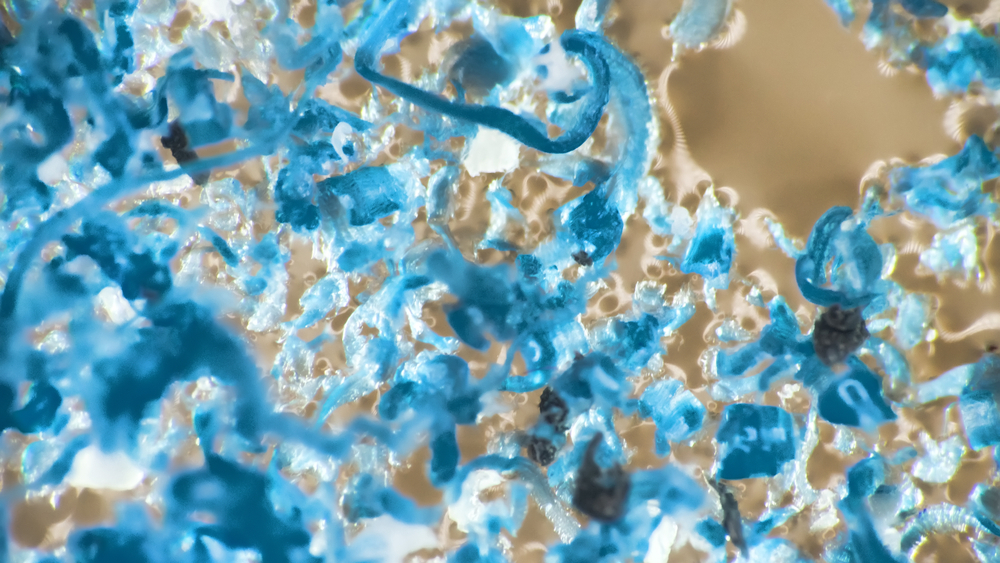
One of the most striking aspects of the research is how far microplastics have traveled. High concentrations were found in Arctic marine sediments and in overlying waters. Other studies have documented microplastics in Arctic snow and sea ice, suggesting that atmospheric and oceanic currents transport plastic particles across vast distances.
The Arctic is often perceived as one of the last relatively untouched environments, yet these findings tell a different story. Microplastics have penetrated deep sea sediments, polar ecosystems, and even organisms that inhabit remote waters. The Norwegian study showed that the seabed acts as a major reservoir for plastic debris, with particles settling and sometimes resuspending at the water sediment interface.
When particles accumulate in these regions, they may affect benthic organisms such as filter feeders and invertebrates that live within the sediment. High concentrations in overlying water layers increase the likelihood of ingestion by marine life. Over time, this contamination can move through food webs, with uncertain consequences for ecosystem health.

Why This Changes the Conversation
At first glance, the debate over whether microplastics can define the Anthropocene may seem technical. In reality, it highlights how persistent and mobile plastic pollution has become. If particles can move downward through sediment and appear in layers that predate their production, it suggests that plastics are not static contaminants. They interact with biological, chemical, and physical processes in complex ways.
The studies also emphasize the difficulty of predicting accumulation zones. Environmental factors such as sediment density, porosity, organic carbon content, and seafloor topography influence how plastics settle and move. Yet correlations differ between locations, making it hard to establish universal rules. The variability observed across the Norwegian cores illustrates how local conditions shape microplastic distribution.
Most importantly, these findings reinforce the scale of the plastic problem. Global plastic production rose from roughly 2 million metric tons in 1950 to more than 400 million metric tons in recent years. As production increased, so did the flow of waste into oceans and freshwater systems. Once microplastics enter sediment, removal becomes extremely difficult, meaning prevention is far more practical than remediation.

A Long Term Environmental Legacy
The discovery of microplastics in sediment layers untouched by modern humans does not rewrite history, but it does reshape our understanding of pollution. Plastics are capable of traveling across oceans, settling into the seabed, and migrating through sediment over time. They are persistent, mobile, and deeply embedded in Earth’s systems.
Although researchers concluded that microplastics cannot serve as a strict indicator of the Anthropocene, they remain a powerful symbol of human impact. Their presence in Arctic sediments and centuries old lake layers shows that waste does not remain confined to where it is discarded. It circulates, sinks, and becomes part of the geological record in unexpected ways.
The broader lesson is clear. Reducing plastic consumption, improving waste management, and designing materials with safer life cycles are essential steps if future sediment layers are to tell a different story. Microplastics found deep beneath the surface remind us that today’s materials can shape environmental records for generations. The question now is whether the next chapters in that record will reflect continued accumulation or meaningful change.
Sources:
- Wu, F., Zonneveld, K. a. F., Wolschke, H., Von Elm, R., Primpke, S., Versteegh, G. J. M., & Gerdts, G. (2024). Diving into the Depths: Uncovering Microplastics in Norwegian Coastal Sediment Cores. Environmental Science & Technology. https://doi.org/10.1021/acs.est.4c04360
- Thompson, R. C., Moore, C. J., Saal, F. S. V., & Swan, S. H. (2009). Plastics, the environment and human health: current consensus and future trends. Philosophical Transactions of the Royal Society B Biological Sciences, 364(1526), 2153–2166. https://doi.org/10.1098/rstb.2009.0053
- Dimante-Deimantovica, I., Saarni, S., Barone, M., Buhhalko, N., Stivrins, N., Suhareva, N., Tylmann, W., Vianello, A., & Vollertsen, J. (2024). Downward migrating microplastics in lake sediments are a tricky indicator for the onset of the Anthropocene. Science Advances, 10(8), eadi8136. https://doi.org/10.1126/sciadv.adi8136