
Your cart is currently empty!
Dwindling to 87 Pounds: A Personal Nightmare Inside the ‘Scromiting’ Epidemic

On a spring break flight her senior year, 17-year-old Sydni Collins started vomiting and could not stop. What she assumed was food poisoning kept returning in violent waves: mornings spent dry heaving, days missed from school, nights curled up in pain while hot showers and baths became her only brief relief. It would take repeated ER visits, a feeding tube, and a string of wrong answers before someone finally named what was happening to her: cannabis hyperemesis syndrome, a reaction linked to long term marijuana use that has been quietly filling emergency rooms as high potency weed becomes easier to get. Sydni never saw herself as a “heavy user,” and almost no one in her life knew how often she was vaping. By the time she realised her habit might be at the center of the horror, her body and her sense of self were both in free fall.
Contents
show
Sydni Collins’ First Brush With “Scromiting”

By the time she finished high school, Sydni Collins’ weed pen was part of her daily rhythm. At first, the nausea felt like random bad days. Then, on a spring break flight during her senior year, it escalated into something much darker: she vomited almost nonstop, unable to keep food or water down for days afterward.
“There were some days when it lasted until noon and I would not go to school because of how bad it was,” Collins, 23, told The Post. “I would be puking all morning. I would let out yells or cries because nothing would come out. I was just dry heaving.”
What she was experiencing was cannabis hyperemesis syndrome, or CHS, a condition seen in long term cannabis users that causes severe, repeated episodes of nausea, vomiting and abdominal pain. Symptoms came in punishing waves. “But I would be in the fetal position on the bed for hours because that was the only way my stomach didn’t hurt as bad,” she said.
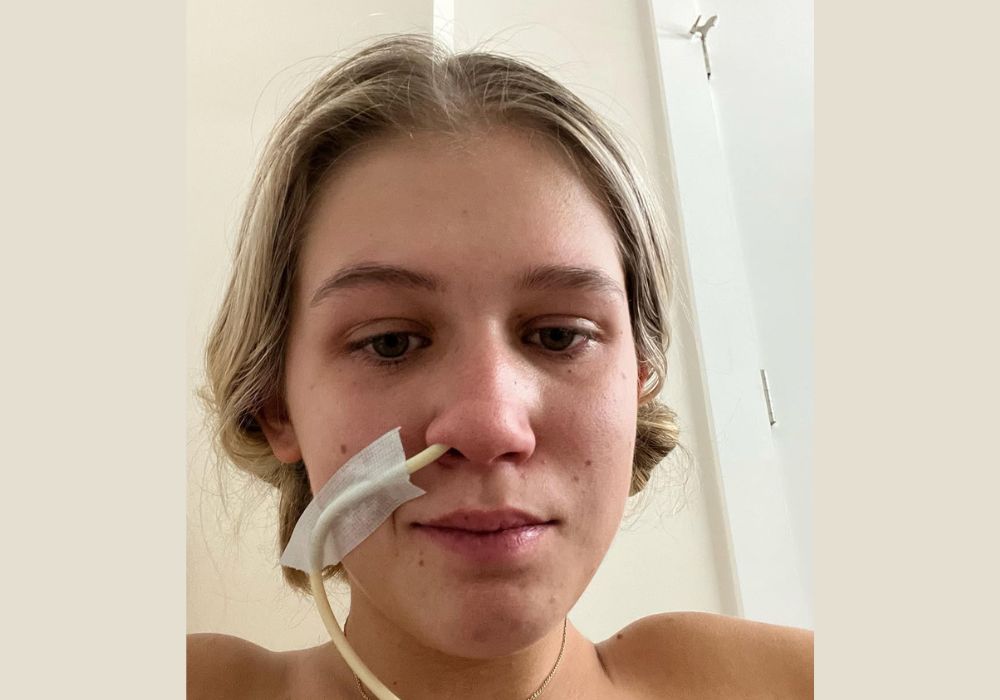
That single flight triggered seven ER visits in one month. Eventually, she was admitted. “When I was finally admitted, [doctors] told me I was 87 pounds and had to get a feeding tube,” she explained. “They said, ‘This is not normal, we need to figure it out.’”
Yet even then, CHS was not recognized. “The most common misconception about CHS is that it is even a real condition,” psychotherapist John Puls noted. “Most physicians, especially in emergency rooms where patients often end up with CHS, attribute the problem to some other type of G.I. issue.”
Inside The Syndrome That Hijacked Sydni’s Body

After that first brutal month in and out of emergency rooms, Sydni’s life narrowed to managing symptoms she did not understand. Her body felt unpredictable, veering between brief respites and sudden collapse.
“There would be some days where I felt better than others and I would feel fine,” she explained. “I was like, ‘I can go eat. I can go out of the house.’ And then, within hours, I would go back to vomiting and stomach pain.”
Doctors now recognize this pattern as typical of cannabis hyperemesis syndrome. CHS tends to unfold in stages. In the prodromal phase, people may have morning nausea and stomach discomfort for months or years. During the hyperemetic phase, symptoms peak in intense waves of vomiting, abdominal pain, and dehydration that often send patients to the ER, sometimes multiple times. Only when cannabis use stops completely do patients enter recovery, with symptoms gradually easing.
Like many with CHS, Sydni stumbled on hot water as a coping tool. She started taking long, hot baths to get temporary relief, even though she was already dangerously dehydrated. At home, eating became almost impossible. “My mom got me a bunch of nutritional supplements and I could not bear the taste of anything, even Gatorade,” she shared. “I would chew on ice cubes. I would lick the salt off pretzel rods. Cold washcloths helped.”
Behind those rituals was a body in crisis, struggling with the very substance she once relied on for calm.
A Missed Diagnosis In The Middle Of A Growing Crisis

When Sydni was finally admitted to the hospital at 87 pounds and put on a feeding tube, doctors still did not connect her symptoms to cannabis. Collins’ doctors initially diagnosed her with superior mesenteric artery syndrome, a rare digestive disorder. It was a plausible explanation on paper, but it did not account for the pattern that kept repeating every time her weed use stayed heavy and her nausea surged.
Misdiagnosis is common. For years, CHS was not widely taught, and there was no standard diagnostic code. Patients like Sydni were often told they had food poisoning, the stomach flu, or another gastrointestinal condition. Only recently have institutions like the World Health Organization and the Centers for Disease Control and Prevention added official diagnostic codes for CHS, a move meant to help doctors recognize and track the syndrome more reliably.
Behind Sydni’s story is a larger shift in how cannabis is used. More than 2.5 million US teens were casual cannabis users in 2023, with an additional 600,000 considered addicted. At the same time, marijuana has become more potent, and high strength concentrates are easier to access, especially for young people.
Clinicians suspect that this intensity and frequency of exposure overwhelm the body’s own cannabinoid system. “Personally, I see it most in people who use THC in some form or another on a daily basis,” said Dr Brian Kendall, an emergency medicine physician. “It is thought that chronic use of THC over stimulates the CB1 receptors … leading to the whole system misfiring and causing hyperemesis.”
The Vicious Cycle That Kept Sydni Sick

After her first month in the hospital, Sydni did what doctors urged. She stopped using weed. For about nine months, the decision held. Then another diagnosis arrived: Crohn’s disease, a chronic inflammatory condition that can cause nausea, weight loss and stomach cramps, just like the episodes that had derailed her life.
“Getting diagnosed with that made me think that’s probably what [the original symptoms] were from and it wasn’t the weed,” she said.
So she went back. “I started doing [weed] again, and three years from my first big episode, I had another one and went to the hospital a bunch of times. [I] ended up having to get a feeding tube and lost a bunch of weight again,” Collins added.
CHS often strikes in intermittent flares, which makes it easy for patients to pin their misery on something else and keep using. Some, like fellow patient Dan McGovern, lean on the very drug that is harming them to try to cope. “Both [smoking and hot showers] usually got rid of the nausea,” McGovern explained. “But it was an unfortunate vicious cycle where if you smoked more, it just exacerbated the symptoms.”
Clinicians warn that the stakes are not just “uncomfortable.” Prolonged vomiting can lead to severe dehydration, electrolyte imbalances that may trigger heart rhythm problems, kidney injury and even tears in the esophagus. In hospitals, IV fluids and anti nausea drugs can stabilize patients, but the only way to stop CHS for good is to stop cannabis.
Rock Bottom, Then A Way Out
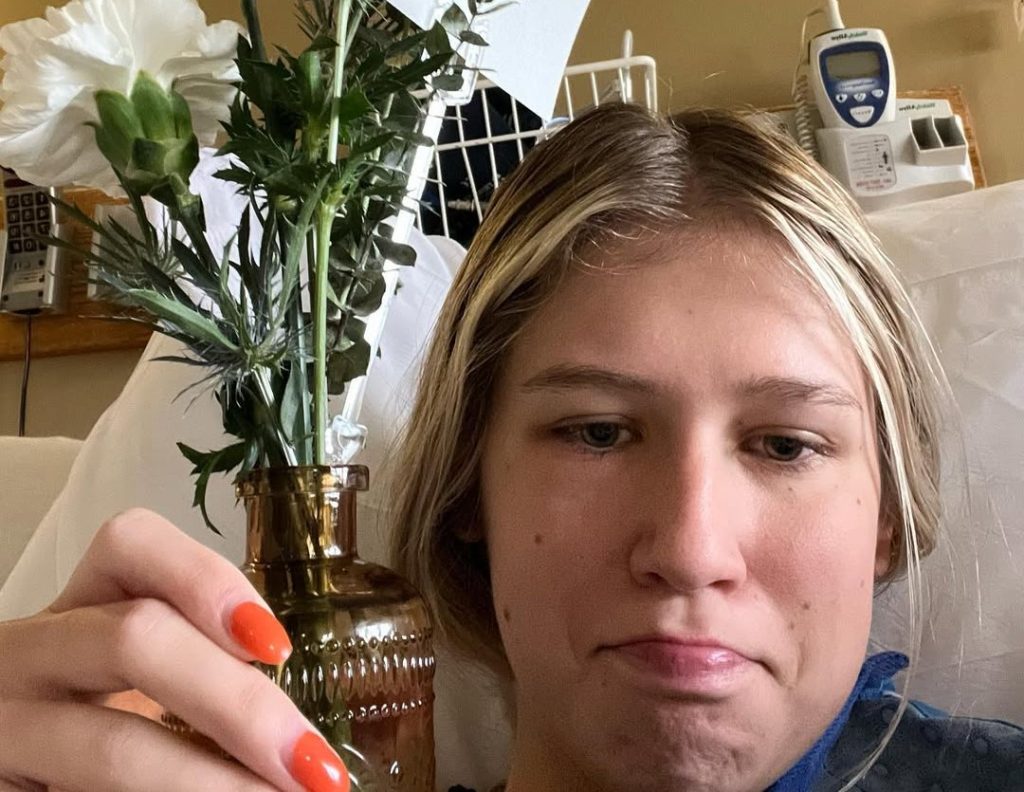
By her final hospital stay, Sydni was no longer just exhausted, she was shaken. “After 10 days of nonstop puking, I broke down and told my mom I didn’t want to be here anymore,” she said. On top of the physical pain, there was shame. “I also just felt embarrassed having to tell my whole family that I smoke. I’m not what you would think of as your typical stoner … and people outside of my friend group and close family didn’t even know I smoked.”
She knew something had to give. “The only way to figure out if [my symptoms] were from weed is if I stopped,” she said. “So I did, and I got better.”
Recovery was not just about quitting, but about rebuilding a life that had been organized around using. Sydni found an online CHS community after sharing her story on social media, and started using an app to track her smoke free streak. “That definitely held me accountable,” she said. “It was cool to see if I can do it for a day, then I can do it for a week. If I can do it for a week, I can do it for a month.”
Clinicians note that stopping cannabis remains the only known way to end CHS long term. Behavioral therapies, addiction counseling, support groups and treatment for underlying anxiety or depression can all play a role in helping heavy users make that leap and stay with it.
Stronger Weed, Sicker Teens: The Rise of a Hidden Epidemic
On the surface, Sydni Collins looked like any other young woman juggling school, friends, and stress. Her weed pen was just part of that picture, something she kept mostly private. “I’m not what you would think of as your typical stoner … and people outside of my friend group and close family didn’t even know I smoked,” she said. Yet that quiet habit left her at 87 pounds, dependent on feeding tubes, and telling her mother after 10 days of constant vomiting that she did not want to be here anymore.
Her story is unfolding at a time when cannabis is more available and stronger than it has ever been. In 2023, more than 2.5 million US teens were casual cannabis users, and about 600,000 were considered addicted. At the same time, average THC levels have climbed from around 4 percent in the 1990s to nearly 20 percent, with some concentrates reaching 70 to 95 percent. Clinicians are now linking this heavy, high potency use to rising cases of cannabis hyperemesis syndrome, especially in younger patients who may have started using in their mid teens.
For Sydni, the turning point was brutally straightforward. “The only way to figure out if [my symptoms] were from weed is if I stopped,” she said. “So I did, and I got better.” For anyone caught in a loop of unexplained vomiting, stomach pain, hot showers for relief, and regular cannabis use, her experience raises a hard but important question: is the thing that helps you unwind also making you sick?
Featured Image Source: Sydni Collins @sydnicollinsss on Instagram