
Your cart is currently empty!
The Man Who Can ‘Prove’ Life Is a Simulation With Just a DMT Vape and a Laser
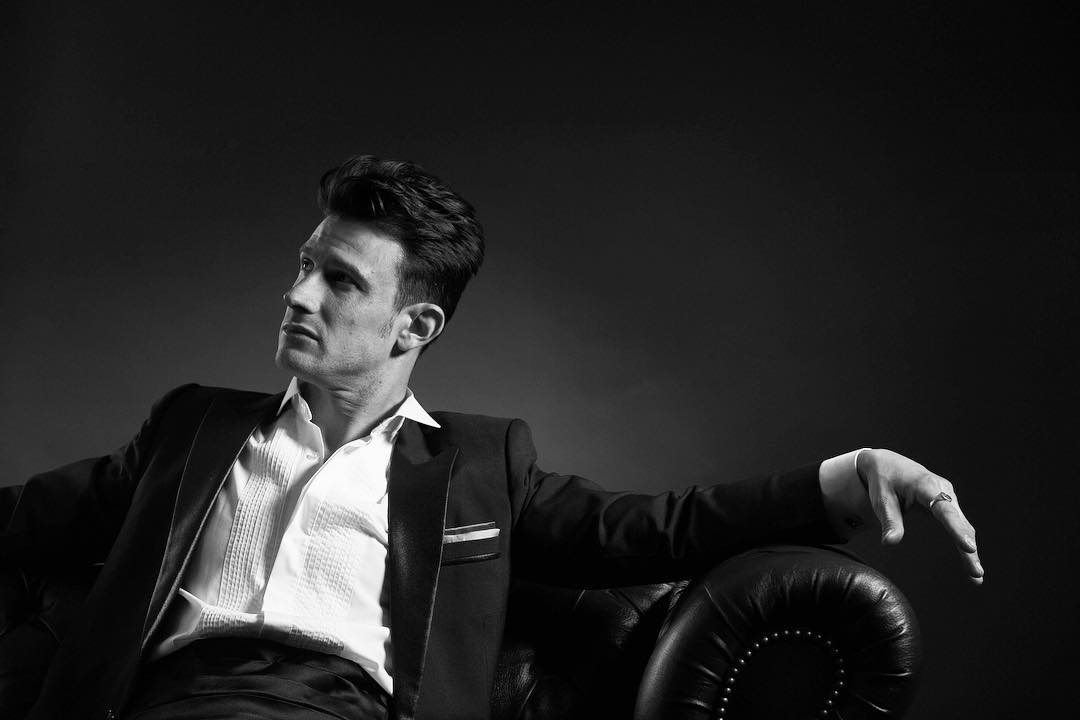
A beam of crimson scatters across a wall, unremarkable to most eyes. Yet for Danny Goler, under the haze of DMT, it transforms into something else entirely. He insists the patterns are not random but a language shimmering in the glow. “I saw the code,” he says, convinced it is proof that life itself may not be what it seems.
Contents
show
What if an ordinary laser could reveal the scaffolding of reality? The question lingers, teasing the line between illusion and revelation.
The Experiment, the Audience, and the Market for Mystery
What began as a private pattern in one man’s trips has been shaped into a public ritual. Danny Goler markets a protocol: inhale DMT, fix your gaze on a diffracted 650 nm red laser’s cross-shaped reflection, and report what emerges. He has packaged the setup, website, branded “Project Veilbreak” materials, and trip-ready laser kits, and the story has attracted a small but fervent following as well as a documentary spotlight that amplified interest far beyond psychedelic subcultures.
@dannygoler 🌌 We Live in a Simulation! 🌌 🚀 We’re making a movie about it. 🌟 If you’d like to help us make the movie that will change how we see reality, our GoFundMe link is in my Linktree in my bio ☝️ For full context visit my Youtube channel 👉 Dan Go Thoughts (link is also in my Linktree☝️) Aaron Vanden, the incredible director behind the film: 👉 Website – www.aaronvanden.com 👉 Instagram – @aaronvanden 👉 Tik-tok – @aaronvanden 👉 Х – @aaronvanden #simulation #simulationtheory #dangothoughts #discovery #laser ♬ original sound – Danny Goler
That combination, personal testimony turned staged experience, changes how the phenomenon circulates. The documentary trailer and social clips place participants inside a highly curated environment: coaching, visual framing, and the social proof of other viewers. Those elements do more than inform; they shape expectation, attention, and the kinds of claims that people make afterward. The shift from private vision to public product also raises questions about motive, responsibility, and how modern spiritual entrepreneurship blends spectacle with serious psychological effects.
Not everyone treats Goler as a visionary figure. Even sympathetic observers frame him as part prophet, part promoter. As one commentator noted in a meditation on this new ritual, “Goler is a distinctly modern type of prophet.” That line captures the uneasy mix of charisma and commerce that now surrounds the experiment, an experiment whose claims invite scientific scrutiny even as it courts spiritual meaning.
When Light Meets the Mind
What looks like a code to one person may be physics and biology to another. A diffracted 650 nm red laser produces what scientists call a speckle pattern, grainy fields of shifting dots created as light scatters and interferes. Ophthalmologists even use this effect to study blood flow in the retina, because the speckles shift predictably with eye movement. In a sober state, the dots fade into background noise. Under altered conditions, they can become a canvas for meaning.
The structure of the human eye also plays a role. At the center of vision, cone cells form densely packed mosaics, arranged in near-hexagonal patterns. This regularity means that when a speckle field drifts across the retina, the brain is already predisposed to assemble it into repeating shapes. Researchers have mapped these mosaics in detail, showing how they set the stage for letter-like motifs to emerge even when no “language” is there.
Psychedelics add yet another layer. DMT, like other classic hallucinogens, activates serotonin 5-HT2A receptors and disrupts how the visual cortex constrains perception. Clinical research confirms that its effects unfold within minutes, flooding awareness with rapid and elaborate imagery. In that heightened state, ambiguous inputs such as speckle patterns are transformed into complex symbols that feel external and significant, even though they arise from the interplay of light, eye, and brain.
From Vision to Verification
If Goler’s “code” is ever to be taken seriously in scientific circles, the pathway is clear: it needs to withstand the discipline of controlled testing. A convincing design would be both randomized and double-blind, placing participants into conditions where neither they nor the researchers know whether they are receiving DMT or a placebo, or whether they are looking at a real laser pattern or a sham matched for brightness. Only under these conditions can reports of symbols be meaningfully compared. Success would be defined in advance, symbols consistently identified above chance by independent raters who are blind to the setup.

The difficulty, as psychedelic researchers often point out, lies in expectancy. Studies have shown that participants who believe they are under the influence often report stronger effects, even when they have unknowingly taken placebos. Using active placebos, tracking who guessed their condition, and analyzing how those guesses correlate with outcomes are safeguards against this bias. Without them, the line between genuine perception and suggestion remains blurred.
Another critical element is timing. DMT’s effects arrive quickly and fade just as fast, making it difficult to gather reliable data. Scientists such as Andrew Gallimore and Rick Strassman have proposed intravenous infusion models that hold the drug’s effect at a steady level, creating a longer observation window under safe clinical supervision. Pair this with objective tools, calibrated cameras capturing the laser display, eye-tracking equipment logging subtle movements, and preregistered analysis pipelines and the claim could finally be judged on evidence rather than anecdote. Until then, it remains a story awaiting a trial.
When Belief Becomes Contagious
The spread of Goler’s “code” owes as much to culture as to chemistry. Once Project Veilbreak was launched, reports of the phenomenon multiplied through online forums, a slick documentary trailer that drew millions of views, and mentions on high-profile platforms. Each new voice amplified the idea, weaving it into the wider conversation on psychedelics and simulation theory. In this sense, the claim did not move in isolation, it rode the same channels that shape trends in entertainment, wellness, and digital culture.
Psychology provides a simple but powerful lens for this momentum: expectancy. A 2024 review in Biological Psychiatry: Cognitive Neuroscience and Neuroimaging emphasized that expectations and the way they “unblind” participants can inflate reports in psychedelic studies. Primed to find symbols in a speckle field while under DMT, people may perceive precisely what they have been told is there.
The effect is not hypothetical. A large self-blinding microdosing study published in eLife revealed that participants who only believed they were microdosing reported benefits, even when they were unknowingly taking placebos. Expectation alone was enough to create coherent, believable effects. Paired with the Qualia Research Institute’s earlier “psychedelic cryptography” experiments, patterns unreadable when sober but legible under altered perception, the picture becomes clearer. These experiences do not emerge from nowhere. They emerge at the intersection of a suggestive stimulus and a suggestible state.
From Subculture to Spotlight
Danny Goler’s laser-and-DMT ritual has moved well beyond underground circles. Project Veilbreak gained traction through viral TikTok clips, a forthcoming documentary, and coverage in mainstream outlets, transforming a fringe experiment into a trending conversation piece.
That visibility has a cost. Clinical reviews of psychedelics show that substances like DMT can trigger acute psychotic episodes, even in individuals without clear risk factors. VICE also reported firsthand accounts tied to Goler’s method, one participant describing a prolonged period of nihilism, another experiencing a psychotic break. These outcomes highlight the gap between viral intrigue and personal safety.
As the story circulates, the central tension remains: curiosity drives the clicks, but caution shapes the consequences. For readers, the real takeaway is less about proving or disproving “the code” and more about asking how cultural hype can blur the line between exploration and risk.
The Allure and the Risk of the Extraordinary
The rise of Danny Goler’s “code” illustrates how quickly unconventional ideas can migrate from obscure subcultures into the cultural mainstream. A combination of viral media, influencer amplification, and the public’s fascination with simulation theories turned a private ritual into a trending headline.
At the same time, the story underscores a recurring challenge in entertainment and wellness reporting: separating spectacle from substance. While the visuals and testimonies surrounding Project Veilbreak have captured attention, documented cases of distress remind us that not every experiment translates safely beyond its niche.
Now, the broader question is not whether the code is real but what its popularity says about culture today. In an era where ideas travel fast and blur the line between performance, belief, and commerce, the “code” becomes less a revelation about reality and more a reflection of how we search for meaning and how easily that search becomes content.
Featured Image form @dannygoler on Instagram