
Your cart is currently empty!
The Netherlands’ Fireworks Ban: A New Era of Peace and Animal Protection

The Netherlands is on the verge of a profound cultural shift. After a long and complex public debate, the Dutch Senate passed the “Safe New Year’s Eve” bill on July 1, 2025. This landmark legislation schedules a national ban on consumer fireworks, set to take effect for the first time at the turn of the year 2026 to 2027.
Contents
show
This decision, following an 18-month implementation period, marks the end of a deeply rooted tradition. It is a move fueled by a decades-long shift in public consciousness, where a growing desire to protect vulnerable animals and the natural environment has converged with an urgent, undeniable need to address a worsening public safety crisis.
A Quieter World for Animals and Nature

For over two decades, animal welfare and environmental groups have formed the moral foundation of the campaign for a ban. The Partij voor de Dieren (Party for the Animals), which has advocated for this policy for 20 years, hailed the Senate’s decision as “fantastic news for both animals and people,” in the words of party leader Esther Ouwehand.
The evidence of harm to animals is extensive. Animal welfare organizations note that the weeks surrounding the celebration are a period of intense stress for pets, with many exhibiting severe panic reactions. A 2024 Dutch study found 64% of owners reported hearing fireworks “from September onwards,” creating chronic anxiety. Shelters consistently report a 30% increase in missing pets during this period as terrified animals flee the noise. The impact extends to farm animals and wildlife. Ornithological studies have shown that fireworks cause birds to “collectively take off in panicked night flights,” leading to exhaustion and collisions, while other wildlife is driven from their habitats onto dangerous roads.
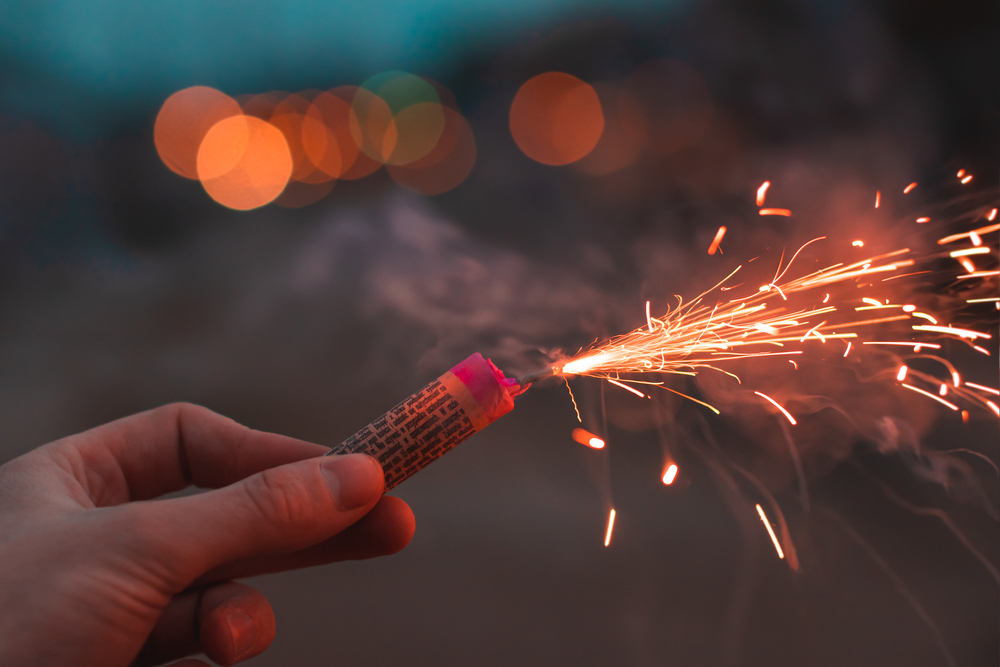
The environmental toll is just as stark. In the first hours of the New Year, air quality plummets as the concentration of particulate matter (PM10) skyrockets, creating a pollution spike noted in one study at an average increase of 598 μg/m3. This acute pollution releases a toxic cocktail of heavy metals like lead and barium, posing a significant health risk to those with respiratory illnesses. These chemical compounds, along with perchlorates, fall back to the ground, contaminating soil and water systems. Furthermore, the tradition leaves behind an estimated 400 to 1,000 tons of waste annually, requiring a massive public cleanup operation.
The Human Cost of the Celebration
Alongside the environmental case, the political will to enact the ban was ultimately triggered by a public safety crisis that had degenerated into a predictable, annual collapse of public order. The “fireworks frenzy,” as it is known, causes “hundreds of injuries” and “millions of US dollars in damage” each year.

During the 2024–2025 New Year’s celebrations alone, 1,162 people were treated for fireworks-related injuries, with eye injuries (32%) and burns (38%) being most common. Medical professionals, particularly from the Oogziekenhuis (Eye Hospital) in Rotterdam, have long campaigned for a ban to stop these preventable, life-altering injuries. Their case was tragically proven during the temporary COVID-19 ban (2020-2021), which saw a 75% reduction in firework-induced eye injuries, directly linking legal sales to public harm.
The crisis was most acute, however, in the targeted violence against first responders. During the 2023–2024 New Year, 295 police officers and 49 ambulance and fire officers were attacked. This “excessive violence,” as police unions termed it, prompted the long-hesitant VVD political party to execute a policy “U-turn” in March 2025, creating the decisive majority needed to pass the bill.
This reality highlights a core policy dilemma. A 2025 report to the Senate detailed that legal fireworks (F1/F2) were responsible for 39.3% of all injuries, providing a clear justification for the ban. However, the same report showed that 50.5% of injuries were caused by fireworks that are already illegal. This validates the opposition’s argument that the ban is not a complete solution and does not, in itself, solve the problem of the black market.
A Guide to the 2027 Fireworks Prohibition

The national ban is the result of the “Safe New Year’s Eve” bill, an initiative long championed by MPs Jesse Klaver (GroenLinks-PvdA) and Esther Ouwehand (Partij voor de Dieren). Its adoption by the Dutch Senate on July 1, 2025, codified a nationwide prohibition.
Crucially, the ban is not immediate. The upcoming 2025–2026 New Year’s Eve will not be affected. State Secretary Thierry Aartsen has indicated that an 18-month implementation period is required to draft a detailed General Administrative Order (AMvB), which will set the specific conditions for professional shows and enforcement plans. Consequently, the ban will first take effect for the 2026-2027 New Year.
The legislation is specifically targeted at fireworks that pose a medium to high risk. It will prohibit the sale and use of Category F2 fireworks—which include most popular items like fountains, cakes, and Roman candles—as well as the already restricted F3 and F4 professional-grade items.
However, the ban is not absolute. Category F1 fireworks will remain legal for consumer purchase. This “novelty” category includes low-risk items such as sparklers, small ground flowers, and “knalerwten” (snap pops), allowing for a small-scale, traditional celebration to continue. Yet, even this category is not without risk. A government inspection in October 2025 revealed that over a third of 40 tested F1 types did not comply with safety norms, posing a danger to their primary users: children.
This unified national solution was a direct response to the widely acknowledged failure of piecemeal local prohibitions. By the 2024–2025 New Year, 19 of the 342 Dutch municipalities, including the major cities, had such a ban. But they were, in the words of Amsterdam mayor Femke Halsema, given “no chance of success.” Police chief Janny Knol echoed this, stating a local ban was impossible to enforce. The public largely ignored the local rules, as fireworks remained legal to purchase in a neighboring municipality. This “enforcement paradox” created an untenable legal landscape for police and was a primary driver for a single, national solution.
The Search for New, Safer Traditions

While a majority of the Dutch population (between 57% and 64%, according to various polls) supports the ban, the transition to a quieter New Year is fraught with significant challenges. The 18-month implementation delay has created a dangerous “last hurrah” mentality. With the 2025-2026 New Year confirmed as the final legal celebration, fireworks dealers reported a 25-30% surge in sales, setting the stage for a potentially volatile New Year.
Furthermore, a policy vacuum is emerging. The private tradition is being banned before public alternatives are secured. The country’s most prominent public events, “Het Nationale Vuurwerk” in Rotterdam and the Scheveningen Fireworks Festival, were both canceled due to major funding shortfalls. A crowdfunding campaign to save the USD 1.2 million Rotterdam show was a “fiasco,” raising only USD 28,000 of its USD 800,000 goal. This demonstrates a gap between public support for alternatives and the willingness to pay for them.
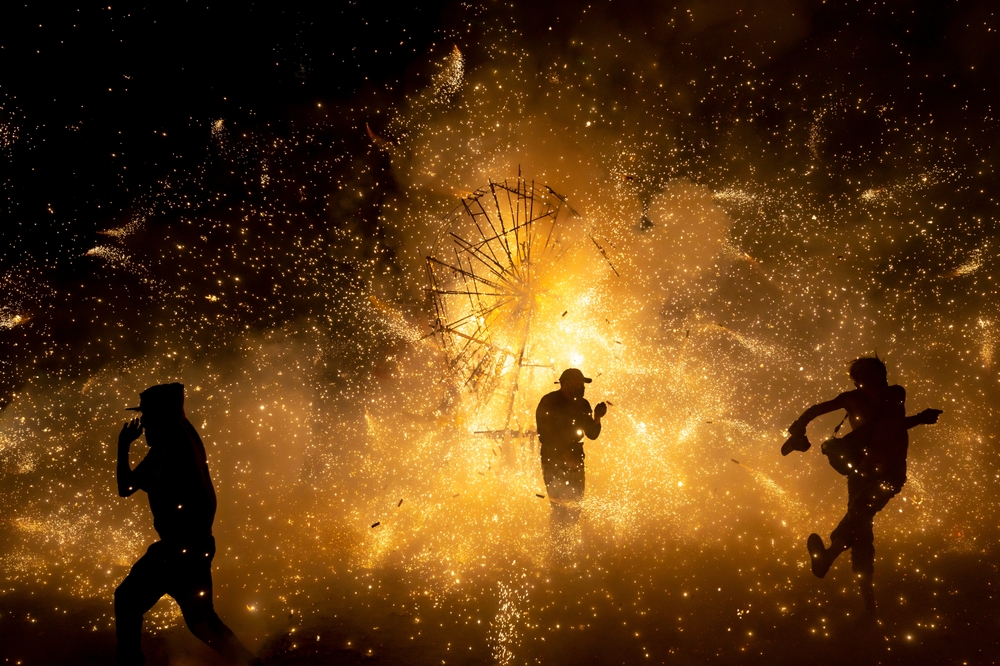
The ban’s greatest challenge remains the robust illegal market. With 50.5% of injuries already caused by illegal fireworks, the ban on legal F2 items threatens a “waterbed effect,” pushing the USD 118 million domestic market underground.
This creates two new battlefields. The first is economic: the fireworks industry is demanding USD 895 million in compensation, far exceeding the USD 100 million to USD 150 million the government has suggested. The second is enforcement: police unions are skeptical, as the state must now shift from regulating a 3-day sale window to policing a 365-day-a-year total prohibition against a powerful, cross-border black market.
Reimagining a Dutch New Year
The national fireworks ban is not an end point; it is the beginning of a new national conversation. The 18-month delay, which means the upcoming 2025-2026 New Year will be “last hurrah,” provides a window for this dialogue. With dealers reporting a 25-30% surge in sales for this final year, the urgency to plan for the future is clear.
The challenge for the Netherlands is to move beyond what the ban is against—the noise, the danger, the pollution—and to decide what it is for. It is a call for communities to create new, collective traditions that are inclusive, safe, and truly celebratory. The legislation has opened the door; it is now up to the public to design a new way to welcome the new year, one that honors the in’s initial impulse for the ban: a deeper commitment to peace, community, and the well-being of all inhabitants, human and animal alike.