
Your cart is currently empty!
The Truth Behind the Bermuda Triangle May Be Scarier Than UFOs

For over a century, the Bermuda Triangle has captivated imaginations with tales of ships vanishing without a trace, airplanes dropping from the sky, and eerie theories involving everything from alien abductions to supernatural portals. The mystery of this patch of ocean between Florida, Puerto Rico, and Bermuda has inspired novels, documentaries, and even cult-favorite shows like Lost. But now, one scientist claims to have cracked the case and his explanation may be scarier than UFOs.
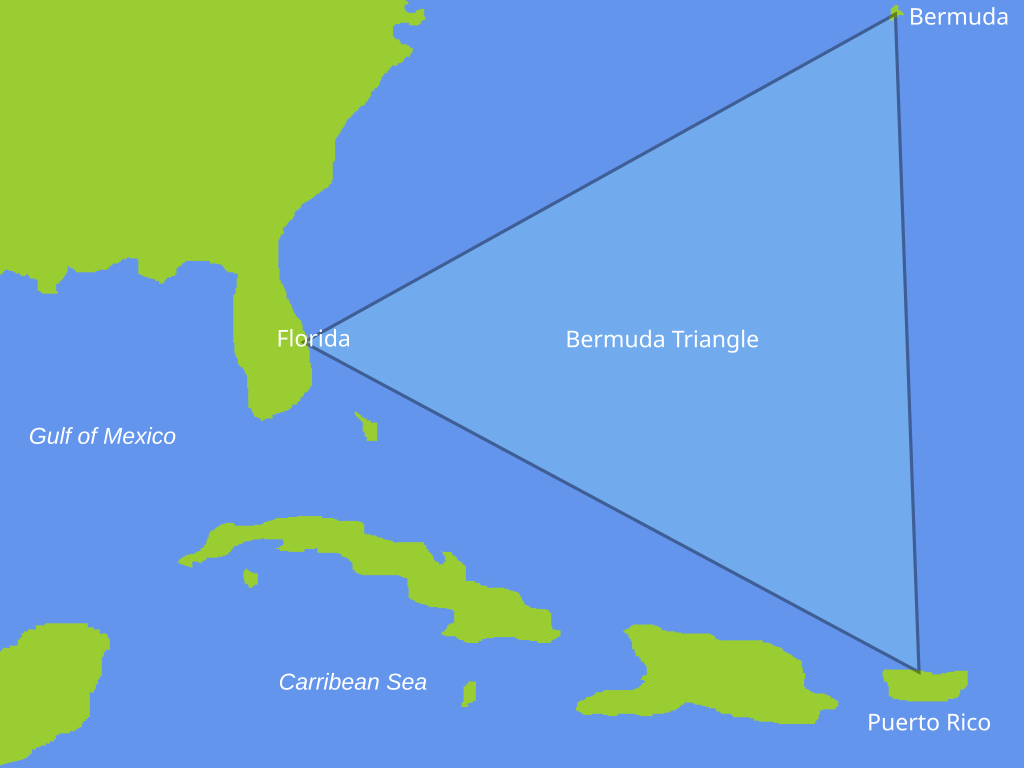

A Century of Disappearances
The modern legend crystallized from a handful of well‑documented cases spanning decades, each recorded in official archives rather than rumor. In March 1918, the U.S. Navy collier USS Cyclops vanished en route from Bahia (Salvador), Brazil, to Baltimore with 306 aboard; no distress call was received and no confirmed wreckage recovered, an absence noted in Navy records that has fueled speculation ever since. On 5 December 1945, five TBM Avenger torpedo bombers on a routine over‑water navigation exercise from NAS Fort Lauderdale, known collectively as Flight 19, became disoriented and were lost; a Martin PBM Mariner dispatched to search also disappeared with 13 crew, as detailed by the Naval History and Heritage Command.
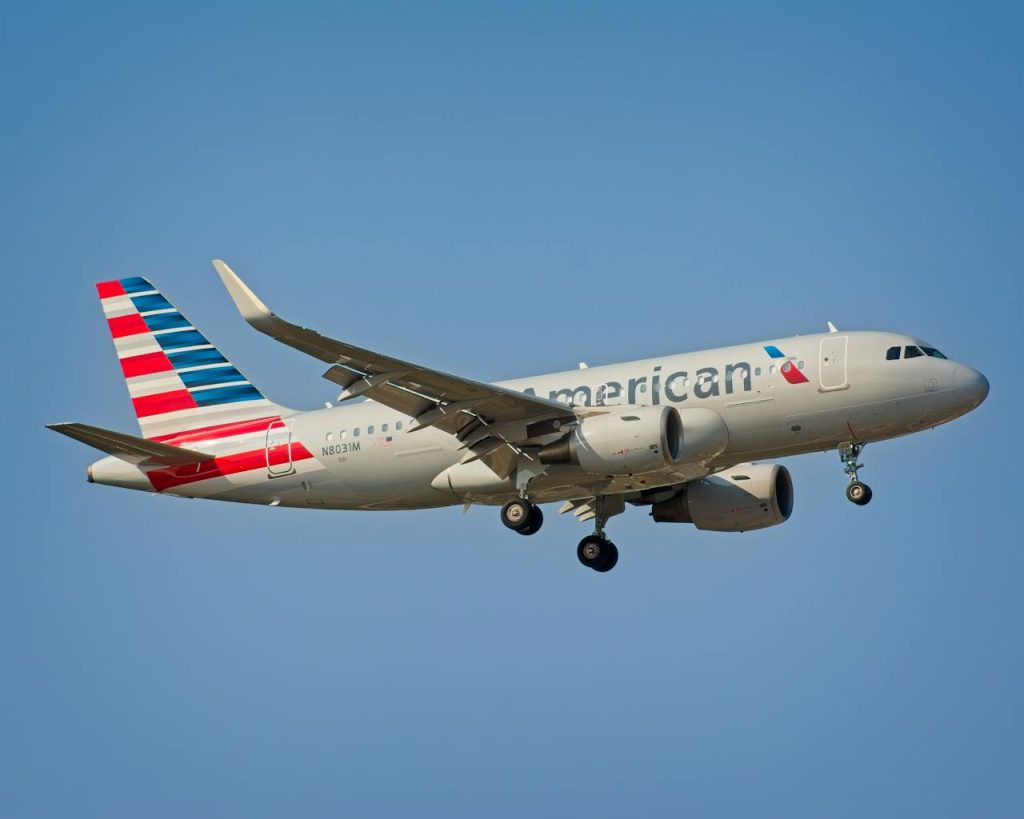
Commercial aviation added its own mystery three years later. On 28 December 1948, a Douglas DC‑3 (registration NC16002) operating from San Juan to Miami disappeared near the end of its night flight after intermittent radio reports; the official Civil Aeronautics Board accident report documents electrical and communication issues before departure, multiple position messages in flight, an extensive search, and an undetermined cause. Maritime losses persisted into the 1960s: the T2 tanker SS Marine Sulphur Queen, converted to carry molten sulfur, departed Beaumont, Texas, on 2 February 1963 and was subsequently reported missing with 39 aboard; the U.S. Coast Guard Marine Board of Investigation’s report records the presumed loss of all hands and the absence of a definitive cause.
Taken together, the archival trail shows a pattern that made the Triangle famous: long ocean transits, routine departures, radio traffic that abruptly stops, large searches that find little or nothing, and official conclusions that often read “cause undetermined.” Those particulars, rather than speculative explanations, are what gave the region its enduring mystique.
Enter Dr. Simon Boxall
According to Dr. Simon Boxall, an oceanographer from the University of Southampton, the truth is far less otherworldly but perhaps more terrifying. Boxall is a specialist in physical oceanography who has long studied extreme sea conditions, particularly how wind, currents, and storm interactions shape the open ocean. His work, often featured in broadcast science programming, emphasizes the importance of recognizing the sea’s ability to generate rare but destructive events.
When addressing the Bermuda Triangle, Boxall frames the problem as one of physics rather than fantasy. Instead of alien abductions or supernatural vortices, he points to rogue waves, short-lived, steep, and chaotic surges that occur when multiple wave systems converge. He underscores their lethality by noting: “Any ship struck by one of these monster waves could sink in a matter of two or three minutes.” To illustrate the plausibility, Boxall collaborated on the Channel 5 documentary The Bermuda Triangle Enigma, where he and colleagues built scale models of historical vessels to test how such waves might overwhelm them. The simulations showed that a vessel the size of the Cyclops could break apart almost instantly when struck at the right angle and intensity.
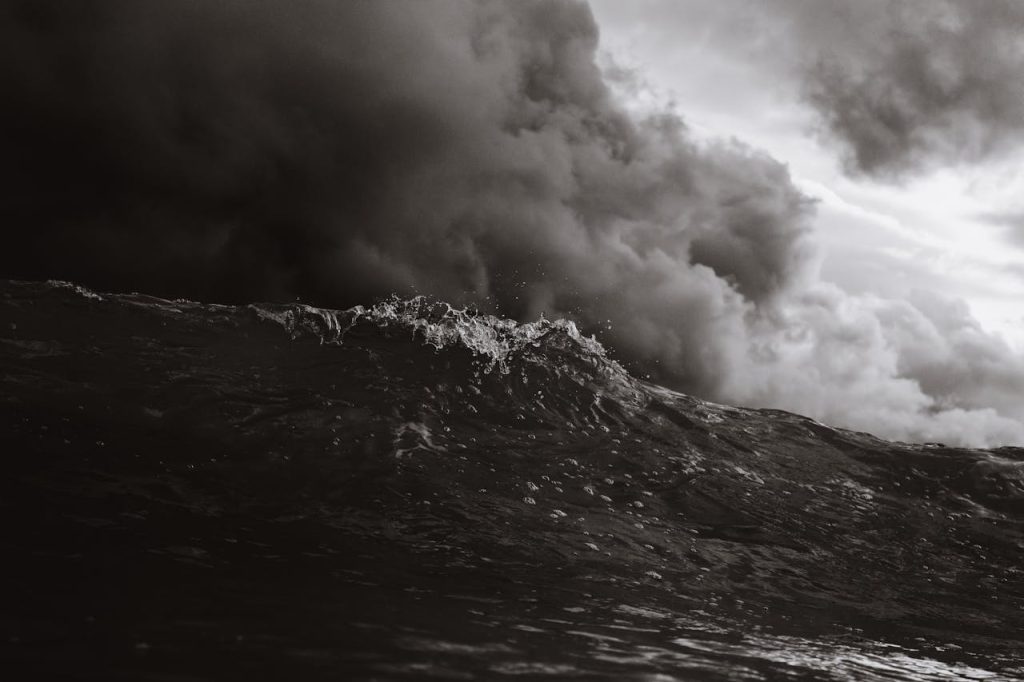
Beyond demonstration, Boxall highlights why the Triangle might be particularly susceptible: its geography funnels storms from several directions, while the Gulf Stream accelerates surface currents. This creates conditions where multiple weather systems can overlap, amplifying wave height far beyond what is normally encountered in open seas. His conclusion is not that every loss in the Triangle can be attributed to rogue waves, but that the phenomenon provides a scientifically grounded mechanism for many of the most puzzling disappearances. By shifting the discussion to measurable ocean dynamics, Boxall reframes a century of speculation into a question of natural science rather than paranormal lore.
How Rogue Waves Form
In technical terms, a rogue wave is an individual crest whose height exceeds roughly twice the significant wave height of the surrounding sea, making it a rare statistical outlier that can present as a near‑vertical “wall of water.” These events arise from several well‑studied physical mechanisms that can act alone or together: (1) constructive interference of multiple wave trains, where random phases momentarily align to focus energy into a single, extreme crest; (2) nonlinear modulation (Benjamin‑Feir) instability, in which energy within a long‑crested wave packet self‑focuses into a few exceptionally steep waves; and (3) wave–current interaction, where opposing or shearing currents compress wavelengths and steepen seas, locally magnifying wave height.
Remote sensing and in‑situ records provide hard evidence: satellites have documented clusters of abnormally high crests on short timescales and in specific oceanographic settings, often where strong currents or eddies act like a lens to concentrate wave energy, while platforms and buoys have captured the full time series of individual events. See NOAA’s overview of rogue waves and training notes on wave physics for definitions; the European Space Agency’s analysis of satellite detections for current‑related focusing; and the detailed instrumented record of the 1 January 1995 Draupner event for a canonical measured case.
From a forecasting standpoint, rogue waves are transient and localized often forming over minutes and within areas on the order of a few wavelengths, so they are difficult to predict deterministically. Probabilistic methods estimate risk from sea-state statistics like Hs thresholds and wave steepness. Research shows that combinations including long-crested seas, broad energy spread across frequencies, and sharp current gradients increase the chance of an extreme crest. Contemporary studies blend satellite altimetry, reanalysis, and high‑resolution wave–current models to identify hot spots where these mechanisms coincide, advancing from folklore to quantifiable hazard without invoking the ship‑ or case‑specific narratives covered elsewhere.
The NOAA’s Perspective
The National Oceanic and Atmospheric Administration (NOAA) has consistently maintained that there is nothing inherently extraordinary about the Bermuda Triangle. In its public fact sheets, NOAA stresses that “there is no evidence that mysterious disappearances occur with any greater frequency in the Bermuda Triangle than in any other large, well-traveled area of the ocean.” That position is echoed by the U.S. Navy and Coast Guard, which both categorize the area as subject to the same navigational and weather hazards as other heavily trafficked maritime corridors.
Rather than focusing on paranormal explanations, NOAA points to environmental and geographic realities that complicate safe passage. The Caribbean is studded with islands that create numerous shallow banks and reef systems; these present real navigational dangers, especially before modern electronic charting. Sudden shifts in weather, tropical storm development, and the swift Gulf Stream current compound the risks. NOAA notes that such factors, combined with high traffic density, naturally result in more recorded accidents. Importantly, the agency highlights how human error and mechanical failure are often contributing elements, reminding readers that aviation and maritime incidents worldwide typically arise from multiple overlapping causes rather than a single mysterious force.
By framing the Bermuda Triangle within the same risk context as other ocean regions, NOAA provides a counterbalance to theories of uniqueness. Its message is clear: the Atlantic between Florida, Puerto Rico, and Bermuda is a dynamic but explainable environment, and the perception of heightened danger is largely a product of selective storytelling and cultural fascination rather than anomalous science.
Why the Rogue Wave Theory Matters
Understanding the rogue wave mechanism carries consequences that go beyond resolving a cultural mystery. For ocean engineers and mariners, the phenomenon represents a quantifiable but still unpredictable hazard that has influenced ship design standards, offshore platform resilience, and safety protocols. The International Maritime Organization and classification societies have incorporated extreme-sea considerations into structural codes, partly in response to documented rogue wave encounters. Offshore oil and gas operations in the North Sea and Gulf of Mexico have reported damage and near-capsizes, underscoring that the threat is not confined to lore but to the daily risk management of global industries.
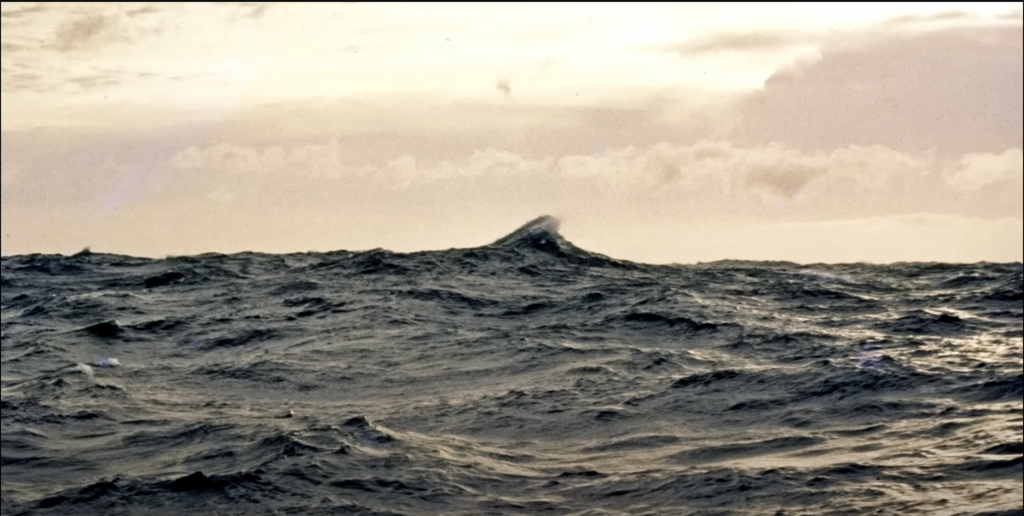
_Image_of_a_rogue_wave_in_the_western_North_Atlantic_during_the_Atlantic_Remote_Sensing_Land,Ocean_Experiment_(ARSLOE).png)
For the scientific community, the Bermuda Triangle debate highlights the importance of communicating how statistical extremes can appear supernatural when misunderstood. By reframing disappearances as part of a wider pattern of rare but real events, the rogue wave theory provides a bridge between public fascination and peer-reviewed oceanography. Research programs now actively use satellite altimetry, directional wave buoys, and coupled atmosphere–ocean models to refine probability estimates of extreme waves. These initiatives illustrate how a narrative once dominated by conspiracy has stimulated advances in applied science and safety.
For the public, the implications are sobering. Accepting that natural forces like rogue waves can overwhelm even large, modern vessels challenges assumptions about human mastery of the sea. It also repositions the Bermuda Triangle not as an anomaly, but as a case study in how concentrated environmental factors can raise risk profiles in specific ocean basins. The theory’s importance therefore lies not only in demystifying a legend, but in reminding society that maritime safety depends on vigilance, continual research, and respect for conditions that remain beyond full human control.
Scarier Than UFOs
For decades, the Bermuda Triangle has been a playground for speculation, with ideas of alien abductions and time portals dominating the narrative. But Dr. Boxall’s findings suggest the truth is both natural and terrifying in its immediacy. A rogue wave towering 100 feet high, forming out of nowhere and swallowing a massive ship in minutes, is far more chilling than any Hollywood tale of extraterrestrials.
Perhaps the enduring lesson is this: we don’t need to look to the stars to find mystery and danger. Sometimes, the most frightening forces are already here on Earth, hidden beneath the waves.