
Your cart is currently empty!
The Universe Waited Four Years to Reveal This Black Hole’s True Power
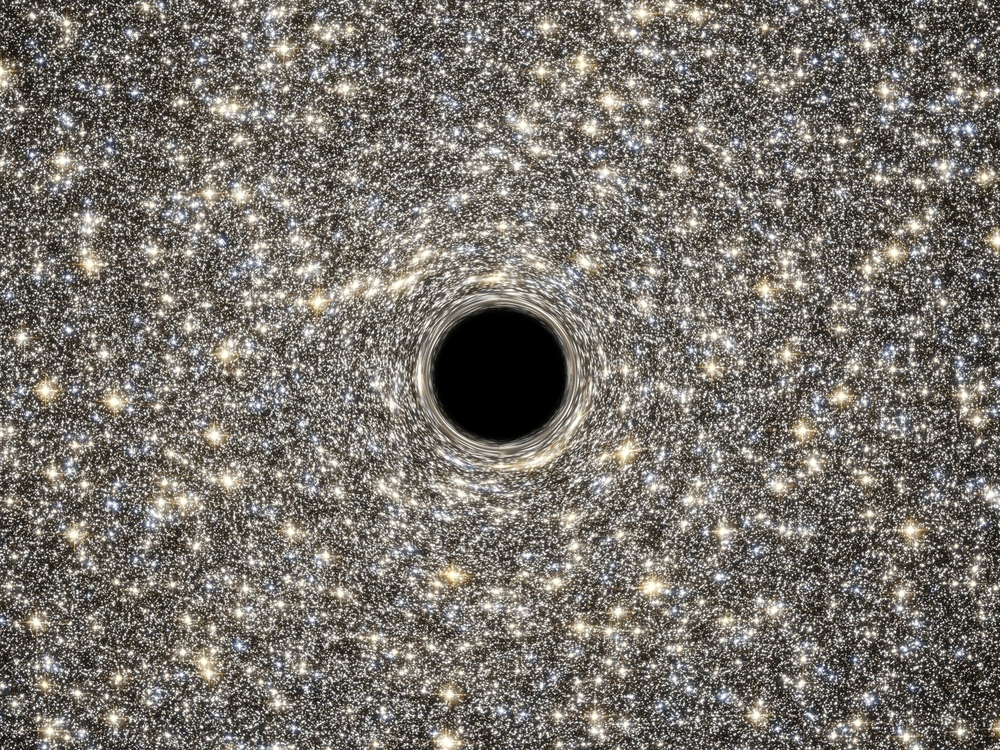
Science fiction has long given us dramatic ways to imagine cosmic destruction. The Death Star, capable of obliterating entire planets in the Star Wars universe, represents one of the most iconic fictional superweapons ever conceived. But recent astronomical observations suggest that reality does not need cinematic exaggeration to inspire awe.
Contents
show
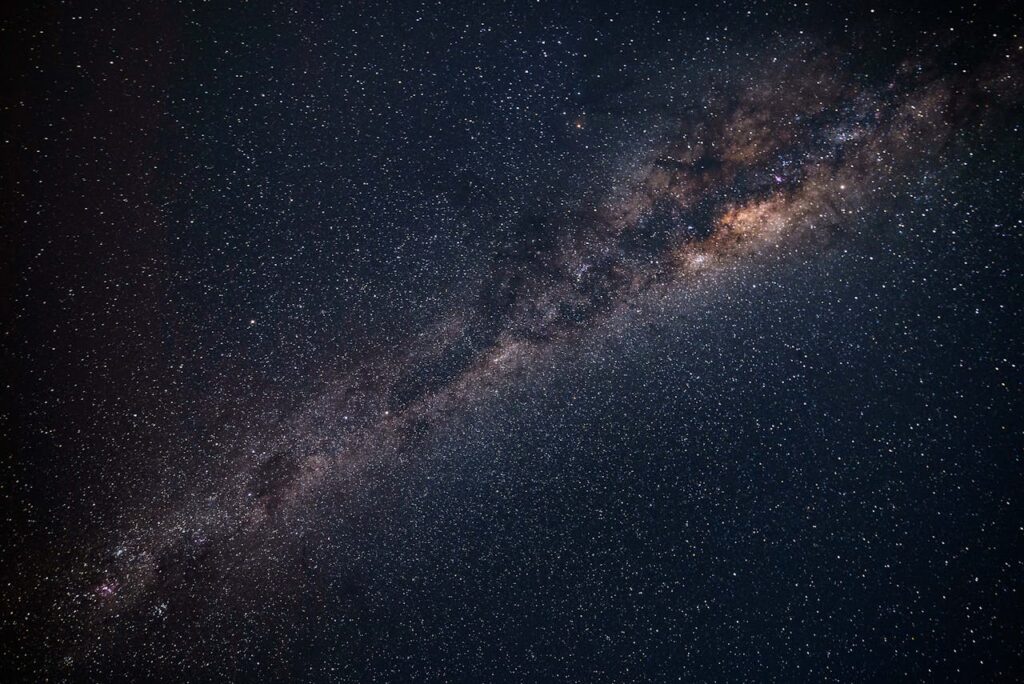
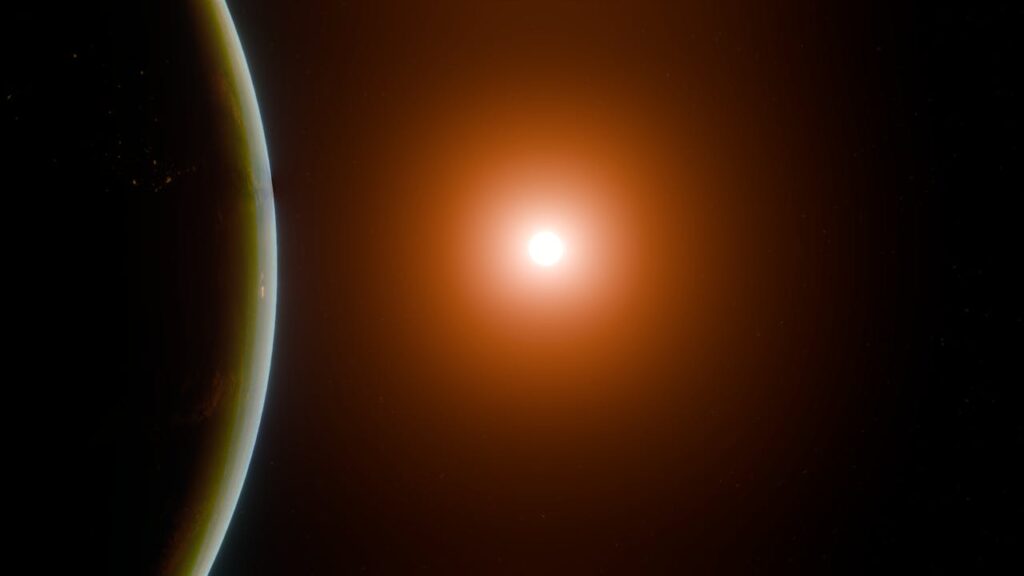
Astronomers have identified a jet of charged particles launched from a supermassive black hole that releases vastly more energy than estimates of the Death Star’s fictional laser. The event, catalogued as AT2018hyz, is not merely a dramatic headline. It is a rare tidal disruption event TDE that is reshaping how scientists understand black hole behavior, delayed jet formation, and long term cosmic evolution.
This discovery is not about spectacle alone. It is about patience in science, the humility of uncertainty, and the power of continued observation.
What Happened: A Star Wandered Too Close
AT2018hyz was first detected in 2018 in a galaxy approximately 665 million light years away, in what astronomers described as an otherwise quiet host galaxy. The supermassive black hole at its center had not shown signs of sustained active feeding prior to this event. When the flare was first recorded, its optical signature aligned with previously documented stellar disruptions, placing it among just over one hundred confirmed tidal disruption events observed to date.
The early data showed a rise and decline in brightness consistent with models in which stellar debris is partially accreted while the remainder is flung outward under extreme gravitational stress. Spectroscopic measurements helped astronomers estimate the velocity and temperature of the material, confirming that a star had indeed been torn apart rather than the signal originating from a supernova or another transient phenomenon. The classification as AT2018hyz followed standard astronomical naming conventions tied to the year of detection, reflecting its year of discovery and sequence among recorded transients.
According to report, the initial discovery of AT2018hyz did not raise alarms. As radio astronomer Yvette Cendes explained: “There was nothing from that initial discovery that made us think something like this was going to happen years later.”
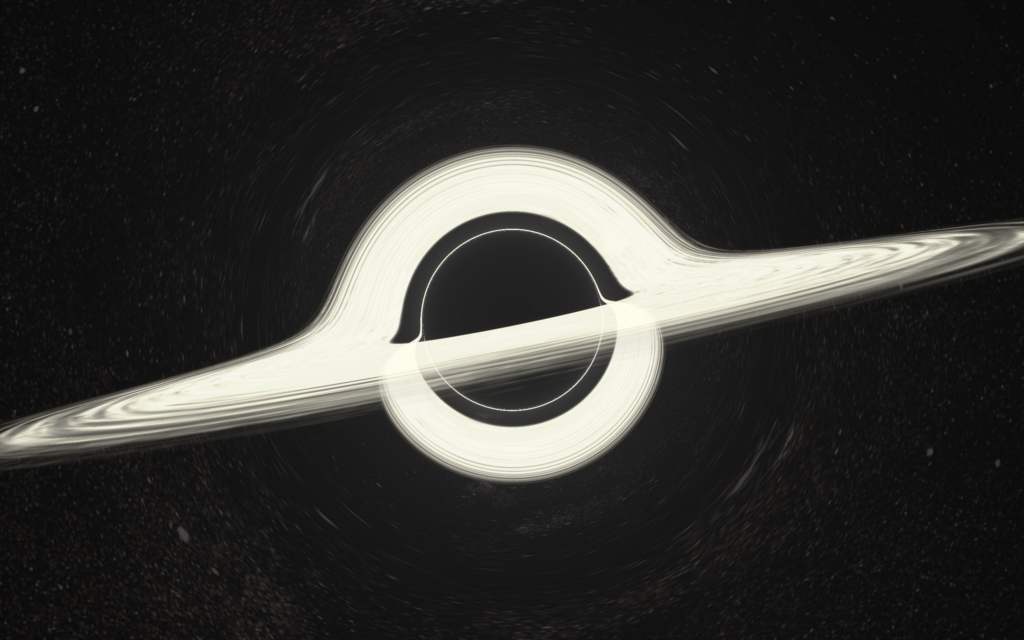

In other words, based on the data available in 2018, the event fit comfortably within existing theoretical expectations. There was no immediate indication that this particular disruption would evolve into one of the most energetic jet producing systems ever recorded. That assumption would only be challenged with time and continued monitoring.
The Jet That Refused to Fade
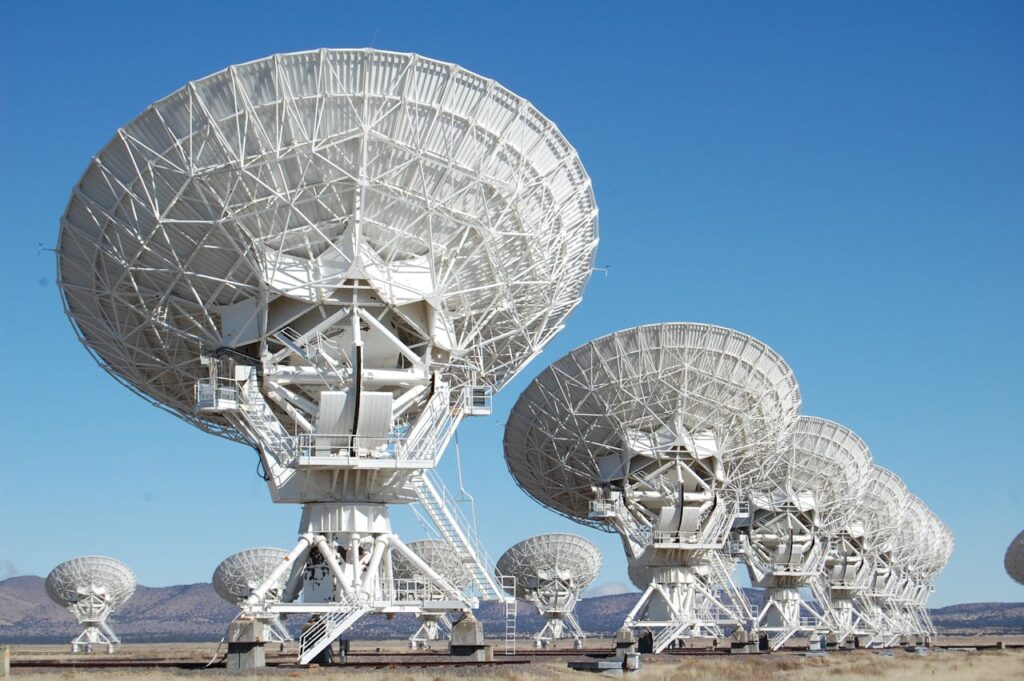
In 2022, four years after the original stellar disruption, radio observatories detected an unexpected resurgence from AT2018hyz. Instead of fading into obscurity as most events of this kind do, the source began emitting increasingly strong radio signals. The change was not subtle. Follow-up observations confirmed a sustained rise in radio luminosity, indicating that high energy particles were being accelerated and interacting with the surrounding environment at significant intensity.
The pattern of emission was consistent with synchrotron radiation, which occurs when charged particles spiral within magnetic fields at near light speed. This process produces a distinctive radio signature that allows astronomers to infer both particle acceleration and the presence of structured outflows. Careful monitoring showed that the radio brightness did not plateau quickly. It continued climbing over successive observing periods, suggesting an evolving outflow rather than a brief flare.
Relativistic jets are rare in tidal disruption events, occurring in roughly 1 percent of observed cases. Most TDEs produce slower, more spherical outflows. What makes AT2018hyz exceptional is not just the presence of a jet, but its increasing luminosity years after the initial event.
The jet is now about 50 times more luminous in radio emissions than when first detected.
Cendes remarked on the potential consequences of such an event, saying, “Planets are going to be destroyed for the first few light-years. I’m just not sure how far out from the jet this would be the case.”
The continued brightening implies ongoing energy injection into the outflow rather than a single explosive release. That sustained behavior is what makes this system scientifically valuable. It provides a rare opportunity to observe how jet material interacts with interstellar matter over time, offering data that static snapshots cannot capture.
How Powerful Is It, Really?
Estimating the total energy released by AT2018hyz requires translating observed brightness into physical output. Astronomers do this by modeling how radiation propagates through space and by accounting for geometry, distance, and emission mechanisms. The resulting values are expressed in ergs, a standard unit of energy in astrophysics that allows meaningful comparison across cosmic events.
Current modeling presents two distinct energy scales depending on the structure of the outflow. If the emission were distributed more evenly in all directions, the total energy would be approximately 2 × 10^50 ergs. If instead the energy is concentrated within a relativistic jet, the inferred output rises dramatically to about 5 × 10^55 ergs. That difference reflects how tightly focused energy can amplify apparent luminosity when directed along a narrow channel.
For context, the Sun reaches roughly 10^33 ergs per second at peak luminosity. Even without invoking fictional comparisons, this places AT2018hyz among the most energetic stellar disruption events ever measured. The scale is not simply large. It approaches the upper limits of what current tidal disruption models predict.
To help contextualize these numbers, researchers compared the event’s energy output to fan estimates of the Death Star’s planetary destruction laser. AT2018hyz is estimated to be unleashing between one trillion and 100 trillion times more energy than those fictional calculations.
Still, the researchers remain cautious. “I am hesitant to give a final energy estimate — there are too many things that it will depend on that will become clear once we actually see the peak,” Cendes said.
The uncertainty stems from variables that are still evolving, including how efficiently the jet converts kinetic energy into radiation and how interaction with surrounding material may alter observed brightness over time. Models suggest the jet’s luminosity may continue increasing until around 2027 before gradually declining, meaning current estimates remain provisional rather than definitive.
Why the Delay? A Scientific Mystery
One of the most puzzling features of AT2018hyz is the multi-year gap between the original optical flare and the later surge in radio emission. The time separation suggests that the processes governing energy release near a supermassive black hole may unfold in distinct stages rather than as a single continuous episode. Instead of an immediate and fully developed outflow, the system appears to have undergone an internal reorganization before producing the powerful radio signal detected years later.
One possibility involves the gradual redistribution of stellar debris after the disruption. Material returning toward the black hole does not necessarily settle into a stable configuration immediately. Turbulence, shocks, and angular momentum exchange can delay the conditions required for efficient jet launching. The buildup of magnetic flux near the event horizon may also require time, particularly if large-scale magnetic fields must be amplified or reorganized before they can channel energy into a narrow, relativistic stream.

Geometric factors may further complicate interpretation. If a jet forms with a narrow opening angle that is not initially aligned with Earth, its radiation can be significantly de boosted and therefore difficult to detect. As the outflow interacts with surrounding material, it can slow and expand, increasing the fraction of emission directed toward our line of sight. Cendes noted. “And now it is entering our line of sight as the jet decelerates.”
The delayed visibility does not necessarily mean delayed formation, but it does highlight how observational perspective shapes scientific conclusions. Distinguishing between a jet that formed late and one that only became visible later remains an open question. Resolving that distinction will require continued monitoring and refined modeling of how energy, geometry, and environment interact in the aftermath of stellar destruction.
Where Patience Reveals Power
There is something quietly humbling about AT2018hyz. When it was first catalogued, it appeared consistent with existing expectations and drew little special attention. Only years later did it reveal a scale and complexity that demanded deeper investigation. The lesson is subtle but enduring. Not everything unfolds on our preferred timeline, and significance is sometimes visible only through sustained attention.
The black hole jet associated with AT2018hyz is more powerful than any fictional superweapon, not because scientists sought spectacle, but because the universe operates on scales that exceed imagination. What ultimately defines this discovery is not the comparison to science fiction, but the discipline behind it. Careful measurements, cautious estimates, and transparent acknowledgment of uncertainty transformed an ordinary classification into a landmark observation.

As observational tools improve and monitoring continues, events like AT2018hyz remind us that the cosmos is dynamic and still full of unanswered questions. It evolves, it surprises, and it rewards patience. In that sense, the most striking aspect of this discovery is not only its power but the methodical persistence that allowed its true significance to emerge.