
Your cart is currently empty!
Trump Handwritten Notes Go Viral During White House Appearance

In an era where every frame of a political appearance can be paused, zoomed, and dissected, even the smallest slip can quickly evolve into a widespread online conversation. That is exactly what unfolded during a recent White House press briefing involving President Donald Trump, when a seemingly routine moment turned into a viral spectacle.
Contents
show
What might have otherwise been an ordinary policy update instead became a focal point for public curiosity. Cameras captured handwritten notes that were never intended for public consumption, and within minutes, viewers across social media began attempting to decipher what was written on the page. The moment sparked debate, humor, and deeper questions about leadership, communication, and perception in modern politics.
As the images spread, the conversation grew beyond the notes themselves. It began to touch on broader themes, including transparency, political messaging, and the balance between substance and spectacle in a media landscape driven by immediacy.
A Routine Briefing That Quickly Shifted Focus
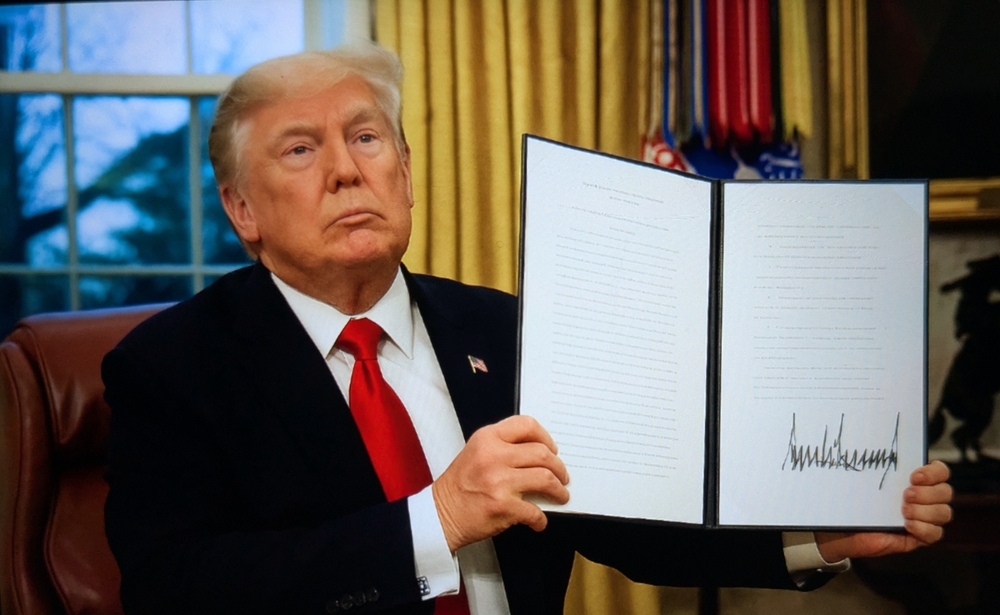
The moment occurred during an Oval Office appearance where Trump addressed reporters after signing an executive order related to election procedures, particularly surrounding mail-in voting. The president has consistently framed this issue around the concept of voter integrity, arguing that stricter controls are essential to maintaining trust in democratic systems.
Yet the policy discussion did not remain the center of attention for long. Observers quickly noticed that Trump was holding a sheet of handwritten notes, written in thick marker and large lettering. The writing was bold enough that cameras could capture portions of it even from across the room.
In a different era, such a detail might have gone unnoticed. Today, however, audiences are highly attuned to visual cues. Within moments, clips were being shared, screenshots were being analyzed, and viewers were attempting to reconstruct the text.
The shift in focus was immediate. What began as a briefing about election procedures transformed into a viral guessing game, with audiences asking a simple but compelling question: what exactly did those notes say?
The Ballroom Controversy in the Background

While the notes themselves drew attention, their perceived content pointed toward a much larger and more consequential issue. Many viewers believed the writing referenced the ongoing legal dispute surrounding Trump’s proposed $400 million ballroom project at the White House.
The ballroom plan has been controversial from the beginning. It involves significant alterations to a historic building that serves not only as a residence but also as a symbol of American governance. Critics have questioned whether such a project exceeds the authority of a sitting president, while supporters argue that modernization and private funding justify the effort.
The situation escalated when a federal judge intervened and ordered a halt to major aspects of the construction. The ruling prohibited further demolition, excavation, and structural work, except for actions deemed necessary for safety and security.
The decision carried a clear message. The president may occupy the White House, but does not own it in a personal sense. Instead, the role is one of stewardship, with an obligation to preserve the building for future administrations.
This legal setback appeared to be fresh in Trump’s mind during the briefing. As he addressed reporters, he referenced the ruling and suggested that congressional approval might be required to proceed with the project. The notes he held seemed to serve as a guide for these talking points.
For many viewers, the timing made the connection obvious. The notes likely contained a summary of the judge’s decision and the administration’s response. This interpretation quickly became the dominant theory across social media discussions.
When the Message Gets Overshadowed
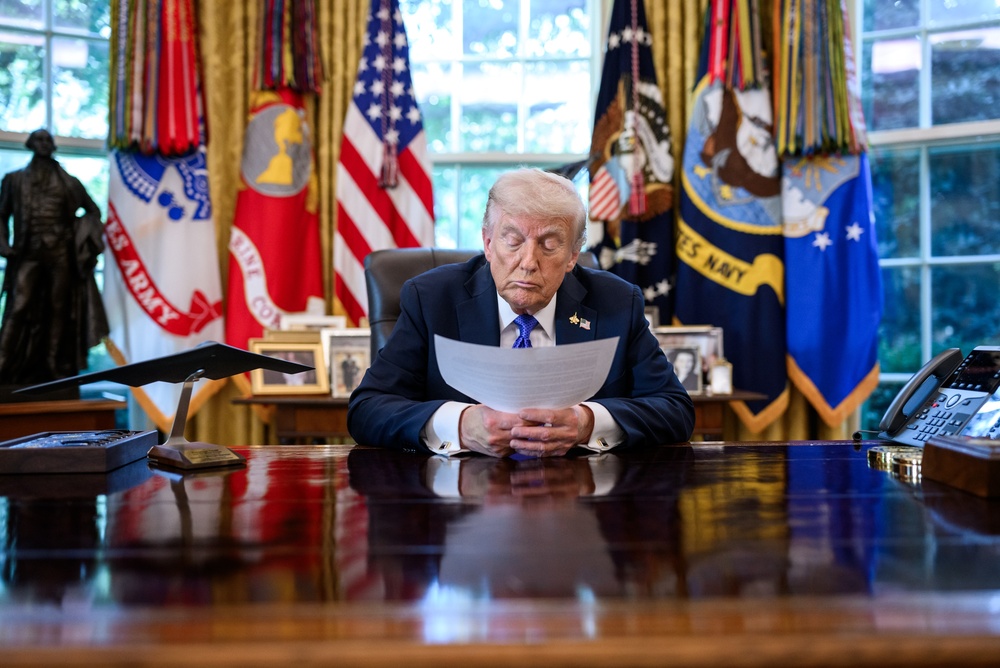
One of the most striking aspects of the moment is how quickly the intended message of the briefing was overshadowed. Trump had been discussing election policy, a topic with far-reaching implications for governance and public trust. Yet the conversation shifted almost entirely toward the visual detail of the handwritten notes.
This reflects a broader pattern in modern media. Political communication is no longer defined solely by words. Visual elements, gestures, and even minor props can become central to the narrative.
In this case, the notes introduced an element of intrigue. They invited viewers to participate, to analyze, and to speculate. The act of trying to decode the writing became a form of engagement, turning passive viewers into active participants.
The result was a moment where the medium became the message. The presence of the notes mattered more than the content of the speech itself, at least in terms of public attention.
Struggles With the Notes Add Another Layer

The situation became even more widely discussed because of how Trump interacted with the notes during the briefing. Despite the large lettering, he appeared to struggle at moments while reading from the sheet.
There were pauses, hesitations, and occasional stumbles as he attempted to interpret his own handwriting. At one point, he seemed to lose track of a sentence while referencing safety and security measures related to the White House grounds.
These moments were quickly circulated and analyzed. Some observers viewed them as minor slips that can happen in any live setting. Others interpreted them as part of a broader pattern of verbal missteps in recent appearances.
The White House responded by dismissing any negative interpretations. Officials emphasized that Trump remains energetic and fully engaged, arguing that isolated moments should not be taken out of context.
Still, perception plays a powerful role in politics. Even brief moments of hesitation can contribute to larger narratives, particularly when they are captured on video and shared widely.
Social Media Turns Observation Into Spectacle

Social media platforms played a central role in amplifying the moment. Within minutes of the briefing, users began posting screenshots and offering their own interpretations of the notes.
Some treated the situation humorously, joking about the use of thick marker and the visibility of the writing. Others approached it more analytically, comparing the visible text with publicly available information about the courtroom ruling.
There were also debates about whether the notes were intentionally large for readability or whether the format unintentionally made them visible to cameras. This added another layer to the discussion, blending speculation with interpretation.
The rapid spread of these reactions highlights how political moments are now shaped in real time by online communities. The audience does not simply consume information. It actively reshapes and redistributes it.
In this case, the notes became a kind of shared puzzle. People collaborated, debated, and joked, all while contributing to the viral spread of the story.
The Broader Political Context
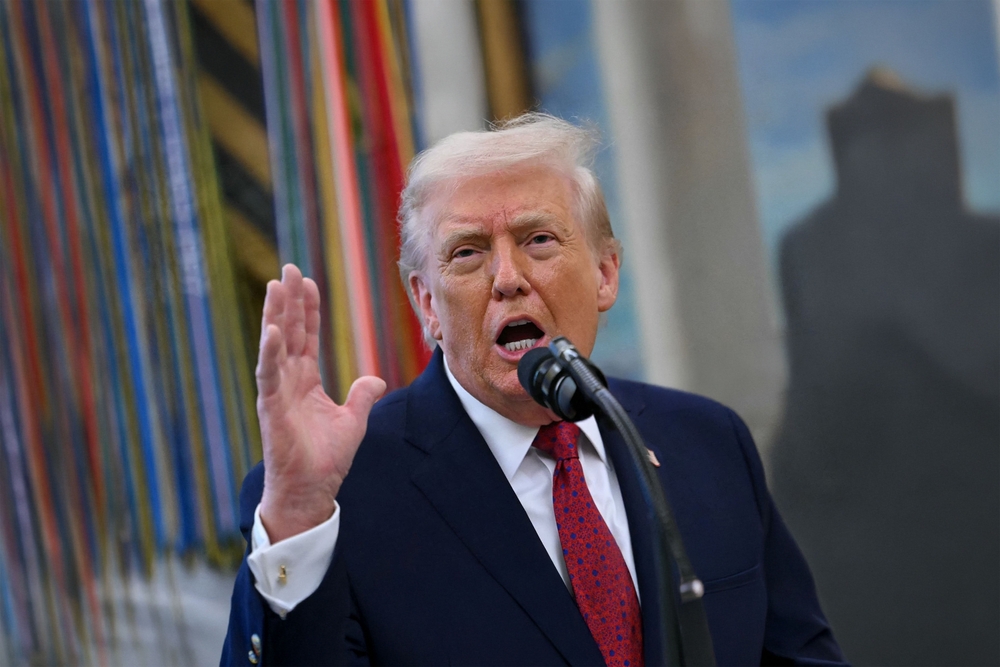
The incident occurred during a period of heightened political activity for Trump. Alongside the ballroom controversy, he has been advancing policy proposals related to election procedures and engaging in a series of high-profile public appearances.
The push to reform mail-in voting reflects ongoing debates about election security and accessibility. Supporters argue that stricter measures are necessary to prevent fraud and ensure confidence in results. Critics, however, warn that such measures could create barriers to participation, particularly for certain groups of voters.
At the same time, the legal battle over the ballroom project raises questions about the limits of executive authority. It touches on issues of historical preservation, institutional norms, and the role of private funding in public spaces.
These are complex and significant topics. Yet the viral nature of the notes moment demonstrates how easily attention can shift away from substantive issues toward more visually engaging details.
Communication in the Age of Constant Scrutiny
The episode underscores how much political communication has evolved. Public figures now operate in an environment where every detail is subject to scrutiny. A single frame of video can be analyzed from multiple angles, often within seconds of being broadcast.
This creates a unique set of challenges. On one hand, it increases transparency and allows the public to engage more directly with political events. On the other hand, it can distort priorities by elevating minor details over meaningful discussion.
For leaders, this means that preparation extends beyond speeches and policies. It includes awareness of how every visual element may be perceived.
Trump’s communication style has long been characterized by spontaneity and informality. This approach can create moments that feel authentic and unscripted, but it also increases the likelihood of unexpected developments.
The visible notes incident is a clear example of how quickly such moments can take on a life of their own.
A Moment That Reflects a Larger Pattern
Although the incident may seem minor, it fits into a broader pattern of how political narratives develop in the digital age. Small details can become focal points, and brief moments can generate sustained attention.
Throughout his political career, Trump has often been at the center of such moments. Whether through remarks, gestures, or visual elements, his appearances frequently generate reactions that extend beyond the immediate context.
This dynamic is not unique to any one individual. It reflects a wider shift in how information is consumed and shared. The combination of live broadcasting and social media creates an environment where anything can become significant if it captures attention.
The notes episode is a clear illustration of this phenomenon. A simple piece of paper became a symbol of curiosity, speculation, and engagement.
What the Moment Reveals
At its core, the story of Trump’s visible notes is about more than just a briefing or a sheet of paper. It is about the nature of modern political communication and the ways in which information is interpreted and amplified.
The incident highlights the tension between substance and spectacle. Important discussions about election policy and presidential authority were taking place, yet much of the public conversation focused on handwriting and visibility.
It also serves as a reminder of the level of scrutiny faced by public figures. Every action, no matter how small, can become a defining moment if it resonates with audiences.
For readers, there is a broader takeaway. In a world filled with constant updates and viral content, it is easy to focus on the most eye-catching detail. But understanding the full picture requires looking beyond the moment and engaging with the deeper issues at play.
The notes may have sparked curiosity, but the context surrounding them offers a far more meaningful perspective. It reveals how quickly narratives can shift, how audiences participate in shaping those narratives, and how the balance between information and entertainment continues to evolve in the political sphere.
Ultimately, the moment serves as both a case study and a reflection. It shows how a routine event can transform into a viral phenomenon, and it invites readers to consider what truly matters when evaluating political leadership and public discourse.