
Your cart is currently empty!
Trump Won’t Sign Anything Else Until This Voting Bill Passes. Here’s What’s Actually In It.
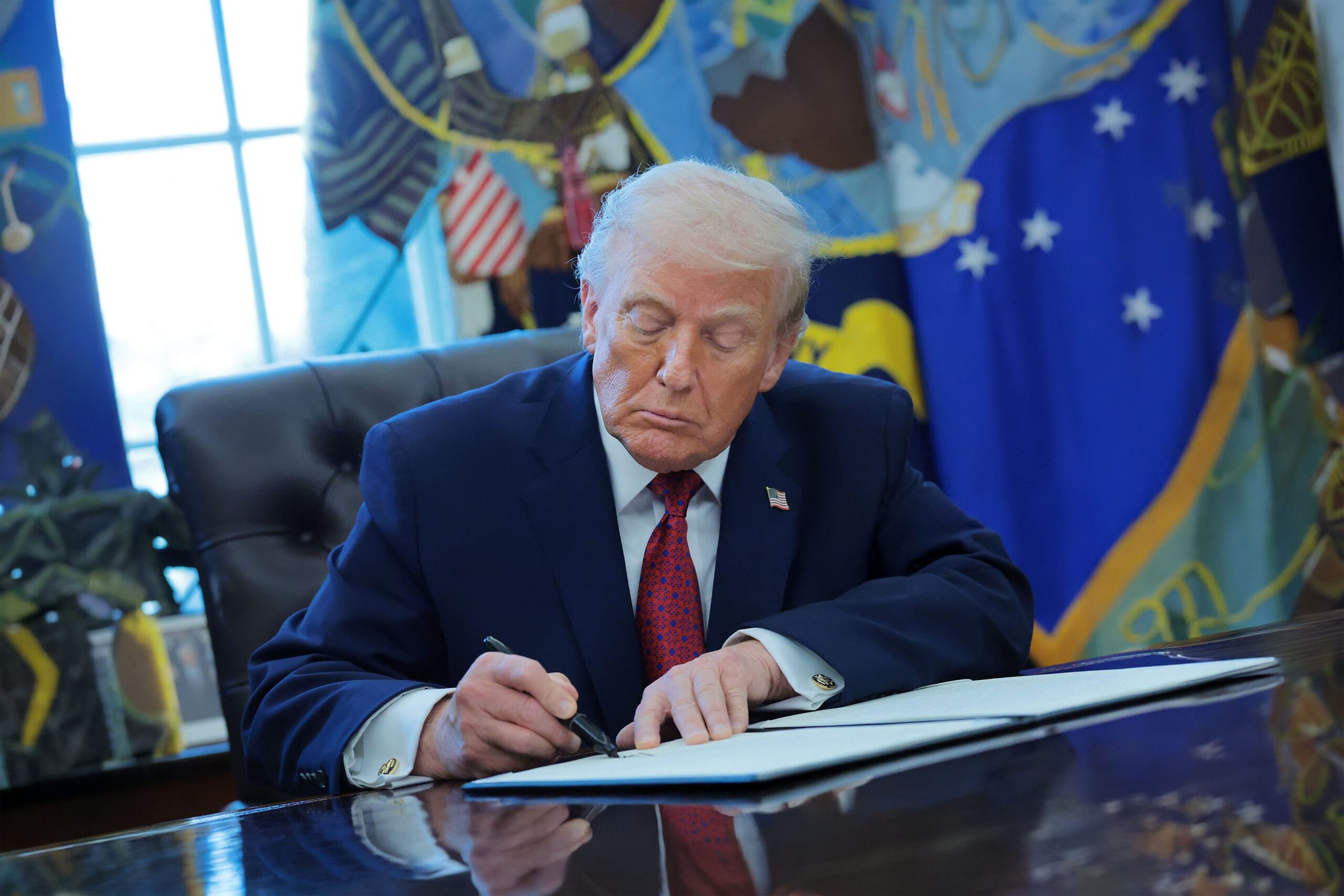
Donald Trump has made his position clear in a way that leaves little room for interpretation. He will not sign any other legislation until the SAVE America Act reaches his desk. Not a budget bill, not a spending package, not anything else his party wants to move through Congress. The Safeguard American Voter Eligibility Act is, by his own declaration, the thing that matters most right now, and he has staked considerable political capital on getting it done before November’s midterm elections, which he has argued the bill will effectively guarantee Republicans win.
Contents
show
Whether that confidence is warranted is a separate question from what the bill actually contains and why its path to becoming law has become so complicated. The House passed it in February 2026, 218 to 213, largely along party lines. Since then, it has sat in the Senate, where the arithmetic is not working in its favour, and where Trump has made the situation considerably more complicated by demanding additions that have little to do with the bill’s original purpose.
What the Bill Actually Does
At its foundation, the SAVE America Act does two things. It requires individuals to present documentary proof of US citizenship when registering to vote in federal elections, and it requires valid photo identification when actually casting a ballot. Both requirements represent a significant departure from the current system, under which voters sign an attestation, under penalty of perjury, that they are US citizens. The bill would replace that self-certification approach with documentary verification that election officials can confirm in person.
Acceptable proof of citizenship would include a US passport, a birth certificate, a naturalization certificate, or a REAL ID that indicates citizenship status. However, not all states issue REAL IDs that specify citizenship, which means that the document would only satisfy the requirement for residents of a handful of states. Acceptable photo ID for voting would include state-issued driver’s licenses, military ID, tribal ID, and US passports, but the bill notably excludes student and college-issued identification, a decision critics argue specifically disadvantages younger voters.
For people who register online or by mail, the bill adds a layer of friction that does not currently exist. Those using non-in-person registration methods would still be required to appear at their election office in person to show their citizenship documents, effectively eliminating the convenience that online and mail registration was designed to provide. Voters casting absentee ballots would need to submit copies of their ID both when requesting the ballot and when submitting it.
The bill also creates significant new obligations around voter rolls. States would be required to take ongoing steps to remove ineligible individuals from their lists of eligible voters, using a federal citizenship-verification tool that the Trump administration revamped last year, as well as other databases. Crucially, those requirements would extend beyond new registrants. Currently registered voters whose citizenship status is put into doubt by the roll review process would also need to provide documentary proof to remain eligible, not just people registering for the first time.
On enforcement, the bill takes a notably aggressive posture toward election officials themselves. Any official who registers a voter without obtaining the required proof of citizenship would face criminal penalties. Private individuals and groups would gain the right to file civil lawsuits against election officials who register ineligible voters, opening a channel for third-party legal action that does not currently exist. Non-citizens found to have been unlawfully registered could face investigation and potential deportation.
The Case Supporters Are Making
Proponents of the bill argue it addresses a genuine structural vulnerability in the current system. Jason Snead, who leads the Honest Elections Project and supports the legislation, has argued that because the overwhelming majority of people already register to vote in person through the DMV, the additional step of showing citizenship documents would not be a meaningful burden for most voters. Supporters point out that presenting identification is already required for activities like boarding a commercial flight or applying for a passport, and that applying a comparable standard to participation in federal elections is neither radical nor disproportionate.
The bill’s author, Rep. Chip Roy of Texas, framed the legislation as a necessary safeguard against efforts to dilute the votes of US citizens through ineligible participation. Supporters have also pointed to international comparisons to argue that the US is unusually permissive by global standards, noting that countries including India, Brazil, Germany, Canada, Denmark, and Sweden all apply stricter verification requirements to their elections than US federal law currently demands.
On the question of public appetite, a Pew Research Center poll found that 83% of respondents support requiring government-issued photo ID to vote, a figure that includes 71% of Democratic or Democratic-leaning voters and 95% of Republican or Republican-leaning voters. Sen. Mike Lee of Utah has called the bill “essential for the legitimacy of our democratic institutions.”
The Case Critics Are Making
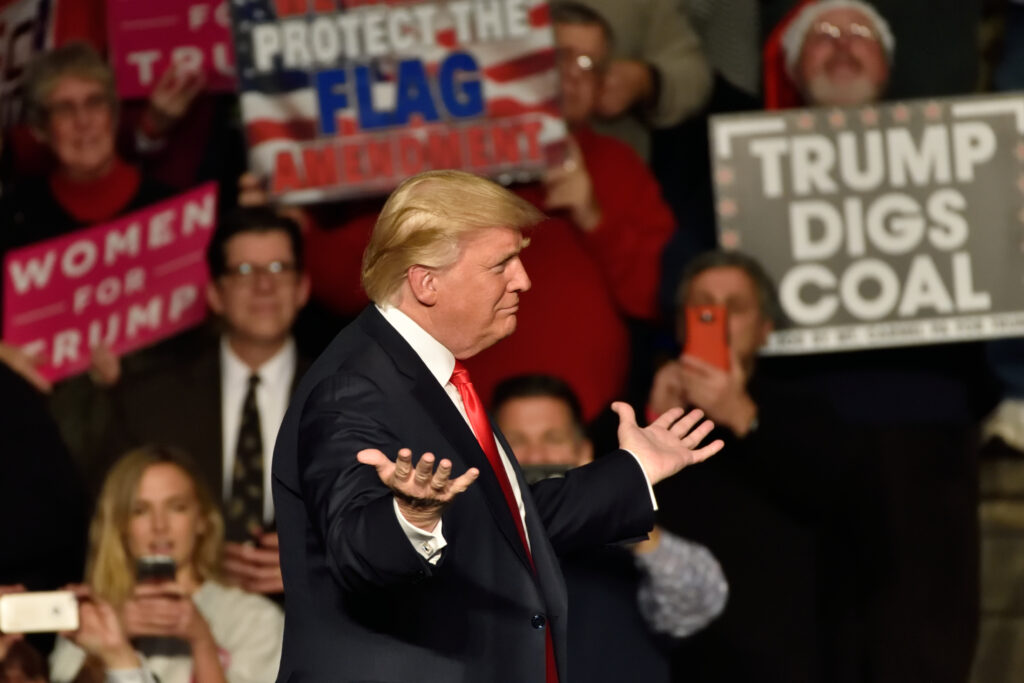
The opposition’s arguments run in several directions simultaneously. The most fundamental is that the problem the bill is designed to solve is not, by available evidence, a serious one. Election experts note that documented cases of noncitizen voting in US elections are exceedingly rare. Even the right-leaning Heritage Foundation’s database of confirmed voter fraud cases shows fewer than 100 examples of noncitizens improperly casting ballots across the entire period between 2000 and 2025. The scale of the proposed remedy, critics argue, far exceeds the documented scale of the problem.
Access to the required documents is a more concrete concern. According to research from the Brennan Center for Justice and the University of Maryland’s Center for Democracy and Civic Engagement, an estimated 21 million otherwise eligible voters do not have easy access to citizenship documents, and 2.6 million Americans lack any form of government-issued photo ID. For married individuals whose names have changed since their birth certificates were issued, the bill creates additional complexity, requiring supplementary documentation to explain the discrepancy before registration can proceed.
Senate Minority Leader Chuck Schumer did not choose his words carefully when he described the legislation to his colleagues and the public. “The SAVE Act is nothing more than Jim Crow 2.0. It would disenfranchise millions of Americans. Every single Senate Democrat will vote against any bill that contains it.” That framing, however contested, captures the intensity of Democratic opposition and makes clear that the bill will not receive the bipartisan support it would need to clear the Senate under current rules.
The enforcement provisions have drawn concern from a different quarter. Michael McNulty, policy director of Issue One, an organisation focused on democracy, noted that election offices already face a high turnover rate as a result of the threats and harassment administrators increasingly experience. Adding criminal penalties and civil lawsuit exposure to the job description, he said, could significantly worsen that problem.
Trump’s Expanding Wish List
Even as the bill faces resistance in its existing form, Trump has been pushing to load it with additional provisions that have little or no connection to voter eligibility. He has demanded that the legislation effectively end most mail-in voting, restricting absentee ballots to voters who are disabled, ill, serving in the military, or traveling. Currently, 36 states and Washington DC allow no-excuse mail voting or conduct their elections entirely by mail, meaning the proposed restriction would affect a practice that millions of voters in both red and blue states depend on.
Trump has also pushed for language banning transgender athletes from competing in sports aligned with their gender identity and prohibiting gender-related surgeries for minors. Neither provision has any relationship to election administration, and both appear designed to appeal to Republican base voters rather than to address the bill’s stated purpose of protecting voter eligibility.
Those additions have complicated Republican unity in the Senate. Thune responded to the mail voting demand with notable restraint, suggesting that while he understood Trump’s position, a narrower restriction on third-party ballot collection would have more support among his colleagues than a broad prohibition on a voting method many of their own constituents use regularly.
The Senate Problem Nobody Has Solved
Republicans hold a 53-47 majority in the Senate but need 60 votes to overcome a Democratic filibuster under current rules. Thune has acknowledged publicly that Republicans do not have the votes to abolish the filibuster outright, and that the procedural alternatives being floated carry significant risks. Some conservative advocates have proposed forcing a talking filibuster, which would require Democratic senators to hold the floor continuously with speeches to prevent a final vote, but that idea lacks sufficient Republican buy-in and is widely understood as effectively dismantling the filibuster under a different name.
The Republican coalition is not entirely unified on the bill itself either. Senator Lisa Murkowski of Alaska became the first Senate Republican to publicly oppose the measure, and the addition of Trump’s preferred amendments has introduced further points of potential defection. Democrats have been unambiguous. Every Senate Democrat has pledged to vote against any bill containing the SAVE America Act’s provisions.
When Trump was asked about Thune’s assessment of the vote problem, he offered a response that captured his frustration with Senate leadership without offering a solution to the underlying arithmetic. “Well, he’s got to be a leader,” he said.
What Is Actually at Stake
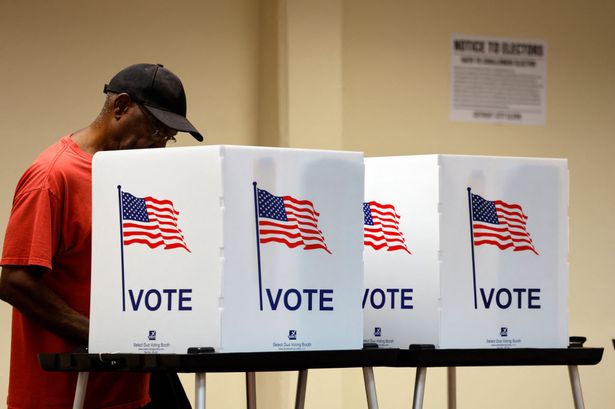
A last-minute change made to the bill before it passed the House means that if it were enacted, its requirements would take effect immediately rather than phasing in gradually. Election experts have warned that immediate implementation would create significant disruption for the November midterms, affecting voter registration processes, election administration workflows, and potentially millions of voters who would need to produce documents they have not previously been required to present.
Trump has argued that the bill’s passage will guarantee Republican success in the midterms and has framed it as the thing voters are most urgently demanding from their representatives. Whether the Senate can find a procedural path to a vote, let alone passage, remains genuinely unclear. What is clear is that the bill’s fate will shape the relationship between Trump and Senate Republicans for the remainder of the year, and that the version of the legislation that might conceivably pass the Senate looks considerably different from the version Trump says he wants to sign.
Brennan Center, Chip Roy, Chuck Schumer, Democratic Opposition, Donald Trump, election integrity, election law, John Thune, Lisa Murkowski, Mail-In Voting, Midterm Elections 2026, Proof of Citizenship, Republican Legislation, Safeguard American Voter Eligibility Act, SAVE America Act, Senate Filibuster, US Federal Elections, Voter ID, Voter Registration, Voter Roll Purge