
Your cart is currently empty!
Trump’s $2,000 Tariff Dividend Promise: What the Record Shows
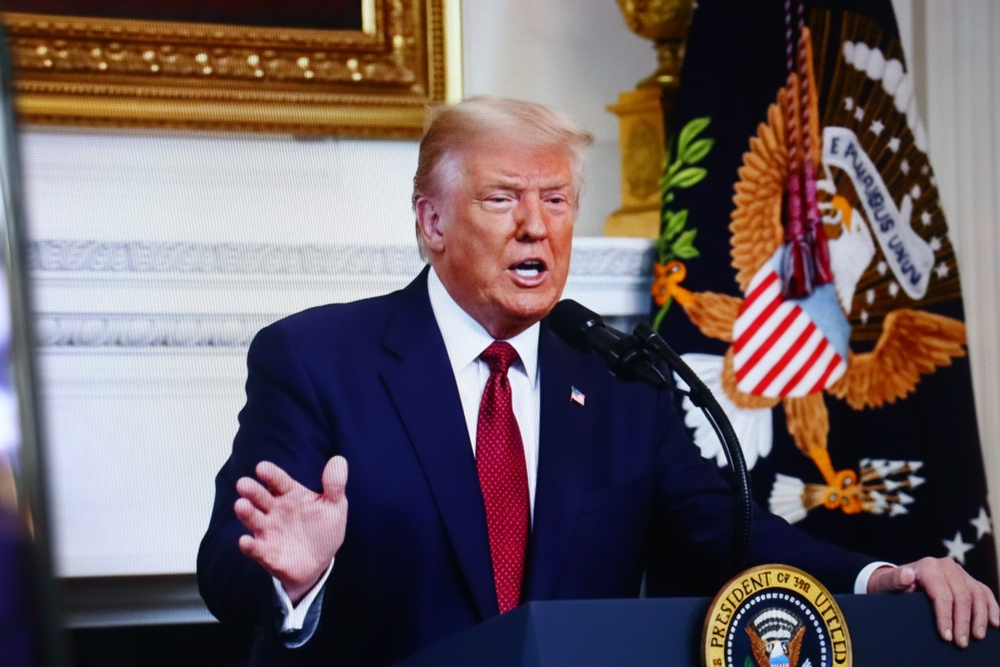
President Donald Trump has spent months promoting the idea of a $2,000 “tariff dividend” for Americans, a proposal he has framed as a refund made possible by revenue collected through his administration’s aggressive tariff policies. The idea has generated public attention not only because of its dollar amount, but because of the questions it raises about feasibility, legality, and timing.
Contents
show
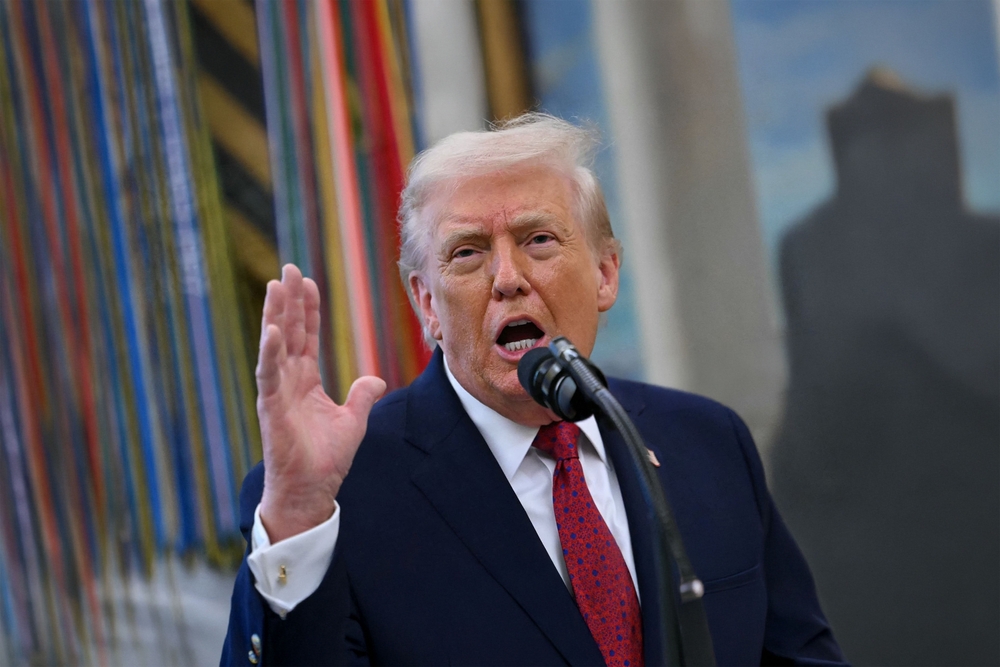
Recent interviews and public statements, however, suggest that the promise remains fluid. In some moments, the proposal has been described as imminent; in others, even its origins appear uncertain. As the issue continues to circulate through news coverage and public debate, the gap between rhetoric and reality has become harder to ignore.
Taken together, the record shows a proposal whose contours remain unsettled, even as economists, lawmakers, and policy analysts continue to question whether Americans will ultimately see the promised checks.
A Promise Revisited and Momentarily Forgotten
The most widely discussed moment in the tariff dividend saga came during a January interview with The New York Times, when Trump appeared unsure about his own proposal. Asked by reporter Katie Rogers when Americans could expect the $2,000 checks he had previously promoted, the president responded: “I did do that? When did I do that?”
The exchange, which occurred during a two-hour interview with four White House correspondents, quickly drew attention. As Rogers attempted to clarify, Trump interjected that he was recalling a different payment, the recently issued $1,776 “warrior dividend” sent to members of the U.S. military.
Later in the same interview, when pressed again by reporter Tyler Pager, Trump returned to the tariff dividend idea, stating: “Well, I am going to the tariff money is so substantial. That’s coming in, that I’ll be able to do $2,000 sometime. I would say toward the end of the year.”
The moment underscored a recurring theme in coverage of the proposal: while the concept has been publicly promoted for months, its details remain unsettled.
The Economic Reality Behind the Tariff Dividend
A central claim behind the dividend proposal is that tariff revenue is substantial enough to fund direct payments. Trump has repeatedly cited figures exceeding $600 billion.
However, multiple independent estimates challenge that number. The Bipartisan Policy Center has estimated that U.S. gross tariff revenue in 2025 was closer to $289 billion. Data from Customs and Border Protection places customs duties collected that year at roughly $200 billion.
Brett House, an economics professor at Columbia Business School, addressed the discrepancy directly, stating: “Let’s be clear: President Trump’s claim that the U.S. government collected $600 billion from tariffs in 2025 is incorrect.”
House also questioned the framing of the payments themselves, noting that tariffs are effectively paid by U.S. businesses and consumers through higher prices. “It’s not a dividend when you give money back to people that they paid earlier,” he said.
Tariffs are often presented as a tool for protecting domestic industries, but their effects on consumers are well documented. A November analysis by the Budget Lab at Yale found that Americans faced an average effective tariff rate of 16.8%, the highest since 1935.
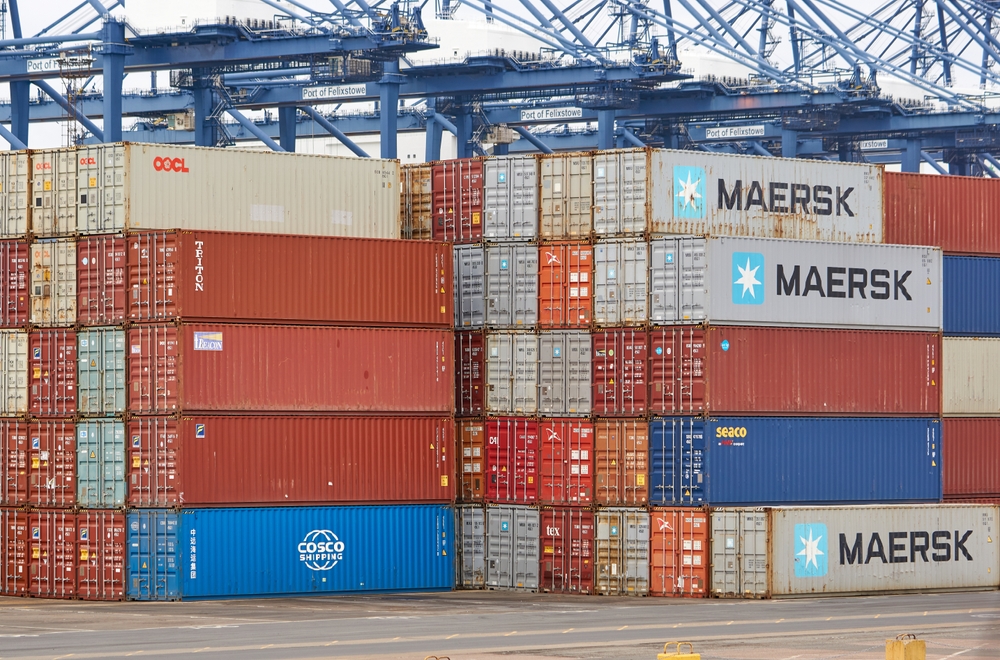
According to the same analysis, those higher prices were expected to cost the average household approximately $1,700 in 2025 alone.
Against that backdrop, the idea of a one-time $2,000 check has resonated with households feeling financial strain. The Conference Board reported that consumer views of their current financial situation turned negative in December for the first time since mid-2022.
Yet economists caution that the math remains challenging. The Yale Budget Lab estimates that a single $2,000 payment to individuals earning under $100,000 annually would cost approximately $450 billion, nearly double the projected tariff revenue for 2026.
Legal and Legislative Hurdles
Beyond the financial questions, the tariff dividend faces structural obstacles. Despite Trump’s suggestion in interviews that congressional approval may not be necessary, administration officials and policy experts have offered a different assessment.
Treasury Secretary Scott Bessent has previously said that any tariff revenue refund would require legislation. National Economic Council Director Kevin Hassett echoed that view in a December interview on CBS’ Face the Nation, stating that the proposal would depend on what happens with Congress.

Currently, no such legislation exists. Senator Josh Hawley of Missouri introduced the American Worker Rebate Act of 2025 last July, which proposed a rebate funded by tariff revenue, but the bill remains in committee.
Adding further uncertainty is an impending decision from the Supreme Court, which is expected to rule on whether Trump’s global tariffs are lawful under the International Emergency Economic Powers Act. If the tariffs are struck down, companies that have already paid duties could be entitled to refunds, potentially erasing the revenue pool the dividend would rely on.
Married Couples and Income Threshold Questions
Eligibility rules remain among the least defined aspects of the proposed tariff dividend, with married couples facing particular uncertainty. While Trump has stated that “high income people” would be excluded from receiving checks, the absence of a clear definition leaves open critical questions about how household income would be calculated and how joint filers would be treated.
In the absence of formal guidance, some policy analysts have looked to past federal payment programs for clues. Pandemic-era stimulus checks used a structure in which eligibility was determined on a household basis rather than individual earnings alone, meaning married couples were assessed jointly even when one spouse earned significantly more than the other. Applied to a new rebate, such an approach could result in some single earners qualifying for payments while two income households with modest combined earnings do not.

This distinction matters because household income does not always reflect financial flexibility. Families with one higher earner and one non-earning or part time spouse may face different cost pressures than dual income households, yet a joint threshold would treat them uniformly. Without explicit criteria from the administration or Congress, questions about fairness and distribution remain unresolved, particularly for families near any potential cutoff.
A Contrast With the ‘Warrior Dividend’
The administration’s recent issuance of a $1,776 “warrior dividend” to service members has often been cited by supporters as proof that direct payments can move quickly when the White House makes them a priority. The comparison has intuitive appeal, but it can also blur a key practical point. The military checks were narrow in scope, routed through a single federal employer system, and aimed at a defined population whose pay and identity records are already centralized.
Financial analysts have emphasized that the funding pathway also mattered. Stephen Kates, a certified financial planner at Bankrate, explained that the military checks were funded through already appropriated Defense Department housing funds included in a broader defense-related budget package, according to the reporting. That distinction is not just procedural. When money is already allocated inside an agency and the beneficiary group is administratively contained, the government can repurpose and distribute funds with fewer moving parts than a broad based household program.
That is why Kates cautioned that the tariff plan would be harder to execute in practice. “A potential tariff dividend would be significantly more difficult to implement than the warrior dividend,” Kates said, noting that the latter did not require new legislation. Even setting aside the politics of whether a larger program should happen, the operational challenge is that a nationwide rebate would need clear eligibility rules, a mechanism for verifying them at scale, and a distribution system capable of reaching tens of millions of households without delays, errors, or uneven treatment. The warrior dividend precedent shows that checks can be sent, but it does not resolve the administrative complexity that comes with expanding the idea beyond a discrete group.
What the Promise Represents
Whether or not the $2,000 tariff dividend ever materializes, the proposal has become a revealing case study in how economic policy is communicated and understood. It reflects the distance that can emerge between ambitious political messaging and the institutional, legal, and fiscal realities that ultimately shape outcomes.
For supporters, the promise speaks to a broader desire for trade policy to deliver visible, household level relief rather than abstract macroeconomic goals. The appeal lies less in the mechanics of tariffs than in the expectation that government action should translate into something concrete and personal. For critics, the proposal highlights the risks of reducing complex fiscal systems into simplified guarantees that may be difficult to deliver in practice.

What remains striking is how the idea has persisted even as its contours have shifted. Timelines have moved, estimates have been challenged, and procedural obstacles have multiplied, yet the promise itself continues to resonate in a moment defined by economic unease. That persistence underscores how deeply questions of affordability, fairness, and trust now shape public response to policy proposals.
Until clearer answers emerge, the tariff dividend occupies an uncertain space between aspiration and execution. The debate surrounding it ultimately reveals less about tariffs alone and more about what Americans hope economic policy can offer in a period of sustained financial pressure.